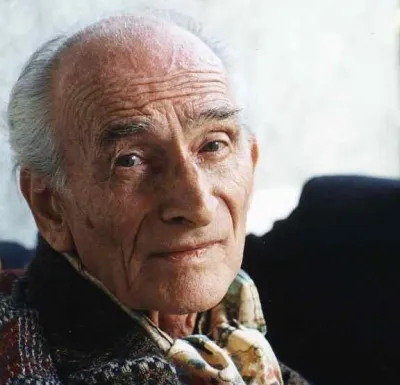
José Socrates
Human Design Chart
Biography
He was prime minister from 12 March 2005 – 21 June 2011. On 23 March 2011, he submitted his resignation to the president after parliament rejected his government's austerity measures in a vote, leading to the Portuguese legislative election of 2011. After losing the election, held on 5 June 2011, he resigned as Secretary-General of the Socialist Party.
On 21 November 2014 at 22:30, he was arrested in Lisbon, accused of corruption, tax evasion, and money laundering, becoming the first ex-PM in the history of the country to be thus accused. On 24 November 24, Sócrates was remanded in custody on preliminary charges of corruption and tax fraud.
What does Manifesting Generator 3/5 mean for José Socrates?
Manifesting Generator 3/5 — Design at a Glance
José Socrates revealed through his design as someone who possessed a hybrid energy structure. As an Manifesting Generator, he had the constant power of the Sacral Center, similar to classical generators. This suggested that his fundamental strategy was not to initiate himself but to react to external impulses and only act when his inner center agreed.
At the same time, he differed by the ability to skip steps in action. This mechanism allowed him to quickly draw results into his life. However, this speed also carried risks: He tended to overlook important stages or take on multiple projects simultaneously. If his internal authority did not agree with this, it could quickly lead to frustration - the specific non-self theme of this type.
For José Socrates, it was therefore crucial to regularly check whether the paths he had started were still supported by his Sacral Center. Only when he reacted to impulses and included his authority could he draw deep satisfaction from his work. In this state, multitasking was no obstacle but rather promoted his creative play mode and his productivity.
Sacral Authority
José Socrates showed himself as someone whose decision-making came directly from the body. His inner authority was the Sacral Authority, a mechanism available exclusively to the Generator type and which also represents its internal guidance strategy. This alignment simplified his process: He did not need to think but listen to his body.
A prerequisite for this was his open Emotions Center, ensuring that he did not act impulsively but waited for real resonance. The Sacral Authority expressed itself in him as a gut feeling or surge of energy - often audible through grunting, humming, or an agreeing 'Mhm'. As long as his sacral motor responded to a stimulus, he felt vital and had inexhaustible energy. He could immerse himself enthusiastically in activities without them needing external purpose; the joy of work itself was sufficient.
Additionally, his activated Spleen Center acted as supporting authority. This gave him particular speed and spontaneity in reactions. Through direct access to his physical well-being and instinctive perception, he could reliably guide himself. This combination allowed José Socrates to quickly and intuitively decide, with the Sacral Authority always taking precedence. He therefore did not live out of his head but reacted to life with a clear, bodily confirmation or rejection.
The 3/5 Profile — Martyr / Heretic
José Socrates revealed as someone who learned through personal experimentation and then applied this knowledge to solve problems for others. His design followed the pattern of the experimenter and hero: Initially, he believed in nothing predetermined but had to collect experiences himself. This process of trial-and-error was essential for him to develop practical solutions.
The third line of his profile emphasized the necessity of personal experience. He learned through mistakes and needed the support of others during this process since it was a collective process dependent on exchange with the environment. Without this support, there was a risk of failure in early phases.
At the same time, he carried the fifth line, which stood for selflessness and sharing experiences. Once José Socrates had learned from his own mistakes, he became a resource for others. He solved crises with knowledge he had practically acquired. This role as helper was central to his identity. The public was drawn to him because his reservoir of experience was attractive and helped others overcome similar hurdles. This alternation between personal experimentation and the subsequent rescue of others shaped his path. However, pride in this heroic act could be painful if he failed before many eyes before finding a solution.
Single Definition — Defined & Open Centers
José Socrates was characterized by a design marked by constant mental pressure and clear identity. His defined Head and Ajna centers created a permanent inspiration that drove him to ask questions and develop concepts. This mental process was not arbitrary but followed a fixed structure, allowing him to inspire or put others under pressure without having the energy for direct implementation himself. Simultaneously, his defined G Center gave him a reliable self-identity and a clear sense of direction. He knew who he was and could show others new paths without being dependent on their expectations.
This inner stability contrasted with the sensitivity of his open centers. His open Heart Center lacked consistent willpower; it tended to want to prove itself through promises, often leading to frustration as the energy for this was not sustainably available. Similarly, his open Solar Plexus absorbed the emotions of the environment. José Socrates had to learn not to identify these foreign feelings as his own in order to avoid emotional decisions and disengage from conditioning moods.
His defined Sacral Center generated daily vital energy, which was only correctly available through reacting to external stimuli. Initiatives from the mind led here quickly to resistance and exhaustion. Instead, his design required patience: waiting until life asked him before responding with a clear yes or no answer. Only in this way could he use his energy sustainably without overburdening himself. The challenge lay in accepting the mental pressure of inspiration without prematurely transforming it into actions, while simultaneously observing the emotional and stress-induced conditioning through his open Root and Spleen centers without succumbing to them. His path consisted in trusting this mechanical response of his Sacral energy, supported by the clear orientation of his G Center.
Channels for reflection, rhythm, insight and abstraction.
José Socrates was someone whose life was marked by a deep inner pulse and the ability to translate complex experiences into clear structures. His design tended not only to act in the flow of the moment but later to reflectively categorize these moments and think innovatively.
Central to this is Channel Rhythm 5-15, connecting the Sacral Center with the G Center. Gate 5 holds fast to fixed habits and rituals, while Gate 15 brings a love for the diversity of humanity. This channel generates a universal life rhythm that is neither steered by reason nor emotional waves but exerts a natural magnetic attraction that pulls others into his energy flow and moves them forward.
Simultaneously, José Socrates shaped his perception through Channel Structuring 23-43, connecting the Ajna Center (mind) with the Throat Center (expression). Gate 43 receives spontaneous insights which are then assimilated and clearly expressed by Gate 23. This allowed him to formulate innovative perspectives that promoted efficiency and mutated collective thinking – provided he waited for the right timing for these expressions.
The reflection of his life paths occurred through Channel Lost Son 13-33, connecting the G Center with the Throat Center. Gate 13 listens and collects memories while Gate 33 withdraws to patiently process these experiences. This created a stance of conscious observation: José Socrates learned from the past, sorted secrets and lessons before sharing them, finding therein confirmation that life ultimately makes sense.
Additionally, gates like Gate 63 (Doubt as Motor for Security) and Gate 35 (Well-being through Interaction and Change) drove his mental process and prepared him for change through experience. His design thus promoted a synthesis of rhythmic vitality, structured innovation, and reflective wisdom.
Collective Circuitry — Circuit Signature
José Socrates was characterized by a design that combined logical structuring with emotional meaning-making. His simple definition created a coherent energetic flow from the Head over Ajna and Throat centers to Identity and Sacral center. This allowed him to directly translate intuitive impulses (Head-Ajna) into words (Ajna-Throat, Channel 43-23 “Structuring”), while his will to act (Sacral-Identity, Channel 15-5 “Rhythm”) underpinned these statements with consistent power.
The Knowledge Circuit endowed him with the ability to forge his own paths and express new insights through clear communication. Simultaneously, the Understanding Circuit provided a rational, future-oriented strategy that remained free of distracting emotions. The Meaning-Making Circuit complemented this by processing past experiences: Here he connected abstract ideas (Head-Ajna, Channel 64-47 “Abstraction”) with the ability to convey these to the collective (Throat-Identity, Channel 33-13 “The Lost Son”).
This configuration marked José Socrates as someone who not only thought and felt but translated both into coherent action. The connection of Ajna and Throat allowed him to articulate complex thoughts in a structured manner, while the connection of Identity and Sacral center ensured that his statements stood on a stable, rhythmic energy base. Thus emerged a profile that combined logical clarity with emotional depth to initiate change through authentic expression.
Right Angle Cross of Consciousness 3
José Socrates was characterized by an inner dynamism that stemmed from a quest to understand the meaning behind things. His design indicated a tendency not just to register superficial impressions, but to grasp deeper connections and spiritual dimensions. This attitude arose from the configuration of his right consciousness cross 3 in his chart.
This element describes a specific kind of perception: it involves recognizing patterns that go beyond the merely visible. José Socrates was predisposed by this structure to ask questions seeking higher order or transcendent background. It wasn’t abstract philosophy floating in empty space, but rather a living impulse to connect his own path with something greater. The energy of this cross fostered an attitude of humility before the unknown and simultaneously the trust that answers exist – even if they don’t immediately reveal themselves.
For José Socrates, this meant that his consciousness was constantly seeking meaning. He tended to view experiences not in isolation but within a larger context. This ability helped him find inner stability during moments of confusion or change by focusing on underlying principles. It was a driving force that encouraged him to experience life not just as it happened, but also to understand and give deeper significance to his life.
Saturn Return · Uranus Opposition · Chiron Return · 2nd Saturn Return — Life Cycles
José Socrates showed himself as someone whose life was marked by significant structural changes. His design indicated a tendency towards cyclical phases where inner maturation translated into outer reality. In 1987, at the age of 30, he was elected to the Portuguese Parliament. This coincided with his first Saturn return – a time when years of groundwork often condenses into a solid result and fundamental life structures are reinforced.
Further development led him into a phase of full blossoming. In 2005, at the age of 48, he won elections and was appointed Prime Minister. This marked his Chiron return – a fulfillment cycle where one's incarnation cross unfolds and meaning as well as purpose become experiential. Here the bloom of his life mission was evident.
Later, another turning point occurred. In 2014, at the age of 57, he was arrested for corruption, tax evasion, and money laundering. This corresponded to his second Saturn return – a phase of deep examination and realignment where old structures often need to break down to make way for new truths. This sequence illustrated the mechanics of his chart configuration: from consolidation through fulfillment to necessary destruction of old patterns.
Manifesting Generator · Sacral Authority — Synthesis
A central red thread in this design is the dynamic connection between initiation and reaction. As a Manifesting Generator (MG), he possesses the ability to accelerate processes and quickly set things in motion – an impulse that is amplified by his defined Sacral Center. At the same time, his sacral authority challenges him to respond to external stimuli rather than initiate independently. This combination of inner drive and need for resonance shapes a lifestyle marked by rapid developments but always mindful of energy flow (Channel Rhythm). The profile as Experimenter/Hero underscores this aspect by emphasizing trying new paths in order to ultimately pass on experiences.
The central paradox lies in the tension between his defined Mental Center – a source of continuous inspiration and need for understanding – and sacral authority that trusts immediate physical reactions. While the defined Head Center tends towards continuous analysis and questioning, the Sacral Center demands an intuitive “Yes” or “No,” without much deliberation. This discrepancy between mental processing and instinctive action generates an inner dynamic that brings both creative impulses as well as potential decision-making difficulties – especially when the fast pace of a Manifesting Generator (and associated tendencies to skip steps) intensifies this tension.
4 Defined Channels
Incarnation Cross - Right Angle Cross of Consciousness 3
Solar Return
The Solar Return shows the moment when the sun returns to its exact birth position - your personal solar year.
Life Cycles
Discover the life cycles with a detailed triple view (birth chart, cycle chart, composite).
Human Design Profile
- Strategy
- To respond - wait for something to respond to
- Authority
- Sacral Authority
- Profile
- 3/5 - Martyr / Heretic
- Definition
- Single Definition
- Incarnation Cross
- Right Angle Cross of Consciousness 3
- Date of Birth
- 06.09.1957 21:00
- Place of Birth
- Porto, PORT
Frequently Asked Questions
What is the Human Design type of José Socrates?
What Profile does José Socrates have in Human Design?
What Authority does José Socrates have?
Which incarnation cross is active for José Socrates?
When was José Socrates born?
Discover your own Human Design
Are you also a Manifesting Generator? Find out in a personal reading how to unfold your multi-talents and direct your energy wisely.
More Personalities
Back to overviewAldair

Alizée

Angeli

Arletty

Artus

Balthus