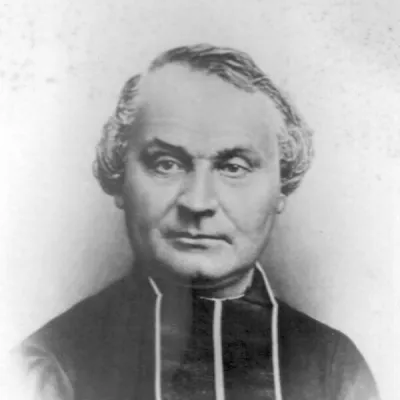
Joseph Gratry
Human Design Chart
Biography
What does Projector 1/3 mean for Joseph Gratry?
Projector 1/3 — Design at a Glance
Joseph Gratry's design inclined towards focused perception. As a projector, he did not have a constant, intrinsic source of life energy but rather acted like a bright flashlight, directing its beam precisely at weaknesses in his environment. This aura was dense and concentrated, leading him to immediately recognize where systems or people were 'in the dark.' However, this direct radiation could be perceived as unpleasant by others if he addressed mistakes immediately.
Therefore, his design's mechanics required restraint. Instead of imposing himself, his strategy was to wait for a respectful and honest invitation. When he received such an invitation, he could effectively convey his insights. Without such invitations, he tended to withdraw to conserve energy. Since projectors must alternate phases of high activity with necessary rest phases to avoid burning out, this pause structure was essential for him. The conventional work life, which often demands continuous performance, was in conflict with his natural rhythm.
If Joseph Gratry lived according to this pattern – that is, through patience in waiting for invitations and respectful handling of his energy waves – he was rewarded with success. If he ignored this structure and tried to swim against the current, this would sooner or later lead to his non-self theme: bitterness. His design thus clearly indicated that his strength did not lie in constant action but in precise, invited leadership.
No Inner Authority
Joseph Gratry did not possess inner, physical authority. This rare configuration marked him as a mental projector. His design showed no center activation below the throat center. This fundamentally distinguished him from people with a defined decision-making authority.
His orientation did not arise from an inner compass but through exchange. Joseph Gratry sought dialogue with many different people. In these interactions, energetic exchanges activated dormant potentials in his open centers. This allowed him to view issues from numerous perspectives and express them diversely. His high resonance ability helped him find the right environment and conversation partners.
Evaluating these diverse impulses was a complex process requiring time and solitude. Joseph Gratry needed withdrawal to recognize the red thread. He learned to distinguish between meaningful information and what truly belonged to him. Through this filtering, he developed his specific intelligence: extracting the essence from a mass of data, organizing, and structuring it. This formed his capital of success.
Central to him was staying in an environment where he felt comfortable. There, he met people with whom he could exchange confidently. This confident dialogue deepened his sense of what was right for him over time. Joseph Gratry used this external resonance to gain inner clarity, rather than relying on an immediate, physical determination.
The 1/3 Profile — Investigator / Martyr
Joseph Gratry's design inclined towards a dynamic connection between theoretical foundation and practical experimentation. As a person with the Profile 1/3, the Researcher and Experimenter, his life task was a constant movement between the deep desire to accumulate knowledge and the necessity to validate this knowledge through direct experience. The Line 1 promoted the desire for solid grounding and control, while the Line 3 established the process of trial and error as an essential learning mechanism.
This configuration meant that Joseph Gratry did not simply accept insights but worked them out himself and tested them thoroughly. His judgment thus rested on a double verification: theoretical understanding and practical validation. The mechanics of Line 3 emphasized that errors were not failures but necessary steps towards vitality and truth. At the same time, the energy of Line 1, especially in the context of themes like self-determination and respect, helped him clearly define his limits and competencies. When Joseph Gratry took a position, it was the result of intensive inner work, balancing the tension between the desire for perfect planning and the reality of action. His design marked him as someone who gained authority through personal experience, and whose recommendations rested on tested experience, not just theory.
Single Definition — Defined & Open Centers
Joseph Gratrys Design points to a tendency for constant mental activity and clear articulation. His defined Ajna Center ensures a trustworthy, specific way of conceiving; he always thinks in a fixed pattern, unaffected by the mental mood of others. This mental structure flows directly into his defined Throat Center, allowing him to reliably express what he conceives. His voice serves as a pivot point to transform inner thoughts into outer communication and action.
At the same time, Joseph Gratry is strongly exposed to his environment through several open centers. His open Head Center receives mental pressure and inspiration from the outside, making him prone to dealing with questions that are not his own. He tends to wonder if he has found the right answer instead of trusting his inner authority. His open G Center means he does not have a fixed, unchanging identity but reflects in relationships and places; he seeks the correct environment to feel comfortable rather than dictating a rigid direction.
Furthermore, his open Heart Center shows a vulnerability to the pressure to prove himself. He can feel driven to make promises to demonstrate his worth, even though he does not have the constant energy for it. His open Sacral Center makes him sensitive to the vital energy of others, which can lead to overexertion if he does not know this "borrowed" energy. The open Solar Plexus Center absorbs emotional waves of the environment, while the open Root Center intensifies external stress. His open Spleen Center seeks security through others, making spontaneous decisions risky. Joseph Gratrys Mechanics require him to use these open fields as mirrors rather than identifying with them.
Channels for logical order and mental acceptance.
Joseph Gratrys Design inclined towards precise logical order. He was someone who mentally structured information before articulating it verbally. This approach stemmed from Channel 17-62, which connected the Ajna Center with the Throat Center. Gate 17 visualized patterns, while Gate 62 translated these into language. Joseph Gratry organized details within his inner system to create a coherent worldview. He only understood what he could categorize, which created a constant pressure to speak and communicate his opinions and understanding of connections.
Additionally, other Gates influenced him. Gate 21 directed his interest towards control and material life in service to the community, where respect was important. Gate 48 promoted the recognition of deeper patterns and logical corrections, though this could lead to frustration in the collective. Gate 38 represented resistance and the defense of individual integrity, activated by pressure. Gate 39 provided the impulse for mutations through provocation and analysis. Gate 56 enabled the abstraction of mental processes into pictorial narratives. This configuration shaped Joseph Gratrys way of logically penetrating and structuring complex issues.
Collective Circuitry — Circuit Signature
Joseph Gratrys design points to a tendency towards clear, logical communication. He was someone who structured and focused on conveying insights, driven by the desire to improve things and lead society towards a better future. This attitude stemmed from his simple definition, which directly connected the Ajna Center (Mind, Focus) with the Throat Center (Expression).
This connection formed his Understanding Circuit. Since only the Channel "Accept" (Gate 17-62) was active, energy flowed specifically between these two centers. The circuit emphasized sharing rational, logical insights – ideally free from conditioning. As the Solar Plexus Center was not involved, it was a "non-emotional ratio." Joseph Gratry used this mechanism to translate visual and strategic impulses into understandable words. His energy was oriented towards the future, using form and focus to make complex connections tangible. There were no separate groups or parallel, unconnected forces; his expression was consistently and purposefully marked by this direct line between thinking and speaking.
Right Angle Cross of Tension 1
Joseph Gratry's design indicated a tendency towards internal tension arising from the interplay of intuition and logical analysis. This configuration, known in Human Design as the right tension cross 1, described a life task where the unconscious had to engage in dialogue with the conscious. It was not a conflict-free state but a dynamic force that compelled Joseph Gratry to mediate between what he felt and what he understood.
The mechanics of this cross acted as a catalyst for profound internal processes. Joseph Gratry showed himself to be someone who had to learn to use this tension not as a hindrance but as a source of new insights. The challenge was to channel intuitive perception through rational structures without stifling the original power of intuition. This shaped his way of handling information: he sought ways to translate what was often only felt or intuited into tangible, understandable forms.
These internal dynamics significantly determined how Joseph Gratry reacted to his environment. He was dependent on bringing these two poles – feeling and thinking – into harmony to gain the ability to act. Thus, the tension served as a motor for his personal development, compelling him to always integrate both sides of his nature. This resulted in a unique perspective that was neither purely emotional nor exclusively rational but a synthesis of both worlds.
Saturn Return · Uranus Opposition · Chiron Return · 2nd Saturn Return — Life Cycles
Joseph Gratry's design indicated a tendency towards structured life phases in which inner maturity was expressed through concrete institutional or social actions. His path followed the rhythm of Saturn and Chiron cycles, which acted as milestones of self-realization.
In 1832, at the age of 27, he experienced his first Saturn return. This cycle often marks the transition from education to a firm social anchoring. In this year, he became a priest – a clear confirmation of his calling and the establishment of a solid foundation for his further work.
Later, in 1852 at the age of 47, his Chiron return occurred. This period is considered a fulfillment phase, in which the incarnation cross unfolds and the life purpose becomes tangible. Joseph Gratry founded the Oratory of the Immaculate Conception. This was not just a new beginning but the flowering of his long-term spiritual work, now realized in its own structure.
His second Saturn return followed in 1861, at the age of 56. This cycle often brings a deepening of wisdom and a focus on the common good. Joseph Gratry advocated for peace. His action power shifted from institutional founding to interpersonal reconciliation, a sign of how his design in later years promoted the integration of spirituality and social responsibility.
Projector · No Inner Authority — Synthesis
Joseph Gratry was a mental projector whose life was marked by a deep drive for understanding and the ability to recognize patterns and errors in systems (Channel of Acceptance). His defined Ajna Center points to a persistent, logical way of thinking expressed in the formulation and sharing of insights. This need to analyze and organize the world was reinforced by the Profile of the Researcher/Experimentator, who constantly sought new information and verified it through personal experience. He lived the search for clarity and the refinement of concepts to then pass them on.
At the same time, his design revealed a central paradox: as a projector without inner authority, he was dependent on external stimuli and exchange with others to reach a decision. This stood in tension with his ability to quickly recognize errors and draw logical conclusions – knowledge that he could not immediately put into practice due to a lack of inner validation. Instead, it required dialogue and resonance with others to confirm and communicate the correctness of his insights, which was evident in key moments of his career.
1 Defined Channel
Incarnation Cross - Right Angle Cross of Tension 1
Solar Return
The Solar Return shows the moment when the sun returns to its exact birth position - your personal solar year.
Life Cycles
Discover the life cycles with a detailed triple view (birth chart, cycle chart, composite).
Human Design Profile
- Type
- Projector
- Strategy
- Wait for the respectful invitation
- Authority
- No inner authority - learn more
- Profile
- 1/3 - Investigator / Martyr
- Definition
- Single Definition
- Incarnation Cross
- Right Angle Cross of Tension 1
- Date of Birth
- 30.03.1805 22:45
- Place of Birth
- Lille, France
Frequently Asked Questions
What was Joseph Gratry's Human Design type?
What profile did Joseph Gratry have in Human Design?
What authority did Joseph Gratry have?
What incarnation cross did Joseph Gratry have?
When was Joseph Gratry born?
Discover your own Human Design
Are you also a Projector? Find out in a personal reading how to unfold your leadership qualities and recognize the right invitations.
More Personalities
Back to overviewSissy Spacek

Alain-Fournier

Anémone

Ann-Margret

Bourvil
Hergé