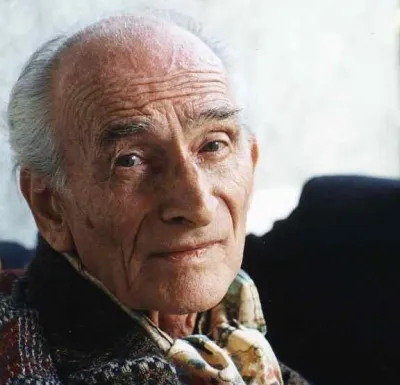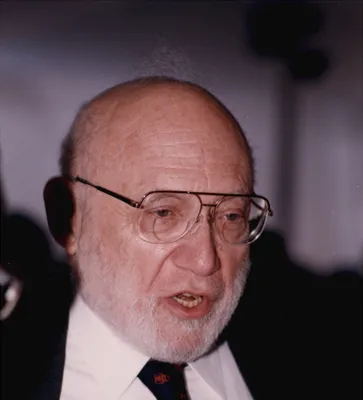
Joshua Lederberg
Human Design Chart
Biography
In addition to his contributions to biology, Lederberg did extensive research in artificial intelligence. This included work in the NASA experimental programs seeking life on Mars and the chemistry expert system Dendral.
Lederberg was a full professor of genetics at the University of Wisconsin 1954-1958 and at Stanford University 1959-1978.
Teaming up with Carl Sagan, his public advocacy for what he termed exobiology helped expand the role of biology in NASA. In the 1960s, he collaborated with Edward Feigenbaum in Stanford's computer science department to develop DENDRAL. In 1978, he became the president of Rockefeller University, until he stepped down in 1990 and became professor-emeritus of molecular genetics and informatics at Rockefeller University, reflecting his extensive research and publications in these disciplines.
Lederberg married fellow scientist Esther Miriam Zimmer in 1946; they divorced in 1966. He married psychiatrist Marguerite Stein Kirsch in 1968, and they had a daughter, Anne Lederberg, and his stepson, David Kirsch. He died on 2 February 2008 at age 82 in New York City.
Joshua Lederberg as a Manifesting Generator 2/5 in Human Design
Manifesting Generator 2/5 — Design at a Glance
Joshua Lederberg's design inclined towards a hybrid approach to work: As an Manifesting Generator, he combined the constant energy source of a Generator with the accelerated expression of a Manifestor. This configuration allowed him to achieve results quickly by skipping steps. However, this speed carried risks. Often, he overlooked necessary intermediate steps, leading to the need to return later to fill in gaps. Such feedback loops caused frustration as they contradicted his natural sense of urgency.
Furthermore, he tended to pursue multiple projects simultaneously, driven by various impulses. Without clear internal agreement, this multitasking ability could turn into overload. His path to satisfaction lay in initially responding to external incentives and then acting only when his Sacral Center confirmed approval. Regular checks to see if his inner authority still supported current projects were crucial for him. When this strategy was followed, he found deep satisfaction in creation. He did not thrive in a linear sequence but in a playful mode that required variety and parallel activities. This structure shaped his work style: fast, diverse, and dependent on constant validation by his inner energy.
Emotional Authority
Joshua Lederberg was someone who did not make decisions on the spot but let them mature consciously. His design featured Emotional Authority, meaning his defined Emotional Center served as the inner authority – independent of other defined areas. This gave him a specific inner rhythm: his perception and judgment were subject to a natural wave of ups and downs. What seemed absolutely right in one moment could appear completely different in the next, colored by a changed mood. For Joshua Lederberg, the immediate feeling was thus only a snapshot, not the final truth. Quick, spontaneous reactions to these initial impressions could destabilize his system. Instead, his mechanics required patience. He had to take time to sleep on decisions and ask himself multiple times. Only when the initial emotional heat had cooled and a cooler distance had set in, true clarity emerged. This process of delay was not an obstacle but the necessary strategy to gain calmness and deep insight. Only through this conscious slowing down could he distinguish between transient mood and lasting inner truth and thus make grounded, long-term decisions.
The 2/5 Profile — Hermit / Heretic
Joshua Lederberg navigated between the intense need for withdrawal and the expectation of his environment to offer solutions. His Profile 2/5, the 'Natural Talent / Hero and Savior', shaped this dynamic: While Line 2, the Hermit Line, demanded time for himself and inner preparation, others sought him out due to Line 5, the Hero Line, to solve their problems. This configuration required clear selectivity from him. He had to carefully weigh where he wanted to actually invest his energy to avoid being drained by constant calls for help.
The mechanics of his Line 2 emphasized the need to withdraw to focus on the essentials in the here and now. This ascetic withdrawal served to gain clarity and decide when and how to act. Simultaneously, Line 5 brought the ability to seek advice and offer practical solutions in certain moments, especially when he was socially recognized. The risk lay in emotional openness that could influence his mind. Therefore, it was crucial for him to use his alone time to figure out for whom he could solve problems without forgetting himself. This balancing act between isolation and service to others defined his way of moving in the world.
Split Definition — Defined & Open Centers
Joshua Lederberg revealed himself as a person whose life was characterized by a constant inner dialogue. His design combined defined Head and Ajna Centers, creating a perpetual mental pressure to ask questions and find answers. This process was not just intellectual for him, but existential: He was constantly engaged in shaping consciousness and developing concepts that he then articulated through his defined Throat Center. His voice served as a channel to translate these mental structures into the world.
At the same time, he had a defined G Center, which gave him a firm identity and direction. He knew who he was and could reflect this clarity to others. However, this inner firmness stood in contrast to his emotional nature. His defined Solar Plexus meant that he did not make decisions immediately but had to wait for the emotional wave. Truth revealed itself to him over time, not in an impulsive moment.
Especially defining was his open Heart Center. Here, the constant energy for willpower in the sense of ego-driven assertion was missing. Lederberg tended to find himself in situations where he made promises he could not keep, driven by an unconscious desire to prove his worth. This often led to frustration, as he lacked the energy to carry these self-imposed obligations over the long term.
His open Spleen Center also played a role. It made him vulnerable to fears about survival and health. He was sensitive to the well-being in his environment and could easily absorb unhealthy conditioning if he did not listen to his inner authority. Spontaneous decisions were risky for him, as they were often made out of this conditioned fear rather than clear intuition. His strength lay in navigating these open areas through patience and waiting, rather than fighting against them.
Channels for powerful leadership, emotional clarity and deep recognition.
Joshua Lederberg showed himself as someone who sought logical leadership with collective alignment. The Alpha Animal Channel 7-31 connected his G Center with his Throat Center. This fostered an attitude based on tested patterns and gained trust through proof of competence. He did not act as a lone ruler but as a leader who had to be invited by the majority to effectively play the role of manager or general. His authority rested on understanding trends and keeping society on the right path without taking the path away from them.
Parallel to this, he possessed immense energy driven by his Sacral Center. The Charisma Channel 34-20 connected the raw physiological power of Gate 34 with the expression in the Throat Center through the Now Gate (20). This configuration drove him to act immediately upon external stimuli. The speed with which his generative power was translated into manifestation rarely allowed him to sit still. He had to learn to use this energy only for things that felt internally correct to him, to avoid obsession and to unfold his true charisma as an inspiring force.
Mentally, he was an individual thinker. The Awareness Channel 61-24 connected the inspiration of the Head Center with the rational response of the Ajna Center. His mind did not seek discovery in the traditional sense but waited for the moment of mutation, the Satori. He could not control his thinking; knowledge entered when it entered. This ability to process sudden insights allowed him to break old cycles and offer new perspectives that lay beyond logical patterns.
Emotionally, he was marked by a restless search for experience. The Recognition Channel 30-41 connected the pressure of the Root with the emotional wave of the Solar Plexus. This created an intense need to experience and feel new scenarios. At the same time, the Ephemeral Channel 35-36 helped him to transform these experiences into concrete changes. He actively sought the new, often by creating crises or questioning the status quo, to gain emotional depth and wisdom. His moods, guided by the Channel of Emotional Release 39-55, determined when he was ready to engage in interactions, as he could only be authentic in the right mood.
Individual Circuitry — Circuit Signature
Joshua Lederberg's design laid a tendency towards a divided but not directly connected energetic structure. This was seen as two parallel power fields: A comprehensive network connected the G Center, the Throat, Sacral, Solar Plexus, and Root Centers, while the Head and Ajna Centers formed a separate, isolated unit. This separation meant that intuitive impulses from Head and Ajna did not automatically flow into the physical action capability of the other centers but worked as separate, parallel sources of knowledge.
Within the Knowledge Circuit, he connected two separate segments: The first connected Head and Ajna Centers through the Awareness Channel (Gates 61-24), promoting innovative mental flashes. The second segment connected Solar Plexus and Root Centers via the Emotional Release Channel (Gates 55-39), converting emotional waves into physical energy. Since these parts were not connected, the creative inspiration remained cognitive while the emotional processing was physical, without both directly merging.
The Understanding Circuit activated the Alpha Animal Channel (Gates 31-7), connecting the Throat and Identity Centers. This allowed him to articulate logical, rational insights free from conditioning and define his identity through clear communication.
In the Meaning Circuit, he connected Throat, Solar Plexus, and Root Centers. The Ephemeral Channel (Gates 35-36) and the Recognition Channel (Gates 30-41) created a flow that allowed him to emotionally process past experiences and share these insights cyclically with the collective to learn together from history.
Finally, the Integration Circuit connected the Throat with the Sacral Center through the Charisma Channel (Gates 20-34). This allowed him to draw strength from the reaction to life and manifest this in the present through authentic expression, making high individual self-confirmation in the here and now effective.
Right Angle Cross of the Sleeping Phoenix 2
Joshua Lederberg was marked by the right cross of the sleeping Phoenix 2. This configuration combined a deep, often unconscious longing for wholeness with a clear, active orientation towards life and its concrete processes. He carried an internal tension within himself: On one hand, the feeling of missing something essential or not being complete, on the other hand, the ability to engage intensively with material reality and its processes.
This design promoted an attitude that used the visible and tangible as an access to deeper connections. Instead of getting lost in abstract theory, he sought the truth in direct encounters with the world. The energy of this cross helped him bridge the gap between what he felt was missing and what was actually there through concrete action and observation. It was less a state of waiting, but a dynamic search for integration through engagement in the here and now. This structure supported him in understanding complex systems not just analytically, but as living, developing wholes in which every part had a meaningful place.
Saturn Return · Uranus Opposition · Chiron Return · 2nd Saturn Return — Life Cycles
Joshua Lederberg's design followed a clear rhythm of structural condensation and renewal. His life was marked by recurring Jupiter-Saturn cycles, alternating phases of consolidation with those of expansion. The first Saturn return marked the transition from the experimental phase to established structure, where early impulses became solid foundations. This did not happen as a single event, but as part of an ongoing process of self-organization.
The opposition to Uranus then brought moments of necessary tearing apart, in which old structures were questioned and replaced by new, often unexpected perspectives. This tension between stability and change shaped his development significantly. It required constant adaptability to maintain the integrity of the design while external circumstances changed.
The Chiron return, that cycle of fulfillment, confirmed the meaningfulness of this path. Here it was shown that life had been lived according to the inner strategy, leading to a deep experience of purpose and fulfillment. It was not a moment of healing in a therapeutic sense, but the bloom of his own potential. The second Saturn return completed this process by bringing the gained insights into a final, stable form. Joshua Lederberg lived this cycle of structuring, change, and fulfillment consistently, thus allowing his design to fully unfold its effect.
Manifesting Generator · Emotional Authority — Synthesis
Joshua Lederberg was a Manifesting Generator, whose life was marked by a constant interplay between the drive for rapid initiation and the necessity of emotional maturation (Manifesting Generator, Emotional Authority). His defined sacral center provided a constant energy source, but through the connection to the throat center, it brought a tendency to skip steps and to quickly implement ideas. This led to an internal tension field, in which he was on one hand driven by the speed of his own energy, on the other hand repeatedly forced to reflect and let decisions mature.
This process was evident in a life marked by the search for new insights and the transformation of existing knowledge (Knowledge Circuit). The defined connection between head and ajna center strengthened the mental pressure to ask questions and understand things, while the profile as a natural talent and hero generated an expectation to find solutions for others' problems (Profile 2/5). He thus lived in a tension relationship between the need for inner peace and the desire to share his inspiration and knowledge with the world.
6 Defined Channels
Incarnation Cross - Right Angle Cross of the Sleeping Phoenix 2
Solar Return
The Solar Return shows the moment when the sun returns to its exact birth position - your personal solar year.
Life Cycles
Discover the life cycles with a detailed triple view (birth chart, cycle chart, composite).
Human Design Profile
- Strategy
- To respond - wait for something to respond to
- Authority
- Emotional Authority
- Profile
- 2/5 - Hermit / Heretic
- Definition
- Split Definition
- Incarnation Cross
- Right Angle Cross of the Sleeping Phoenix 2
- Date of Birth
- 23.05.1925 12:01
- Place of Birth
- Glen Ridge, NJ, United States
Frequently Asked Questions
What was Joshua Lederberg's Human Design type?
What was Joshua Lederberg's Profile in Human Design?
What Authority did Joshua Lederberg have?
What incarnation cross did Joshua Lederberg have?
When was Joshua Lederberg born?
Discover your own Human Design
Are you also a Manifesting Generator? Find out in a personal reading how to unfold your multi-talents and direct your energy wisely.
More Personalities
Back to overviewAldair

Alizée

Angeli

Arletty

Artus

Balthus