
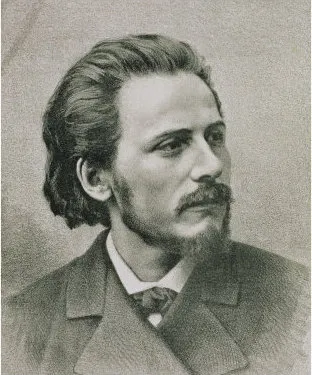
Jules Massenet
Human Design Chart
Biography
A Massenet Revival supported by Richard Bonynge and Joan Sutherland did not enjoy the same critical acclaim of Massenet's time. Modern critics complained that his music was too "sweet." California-born soprano Sibyl Sanderson became his inspiration for several operas he wrote for her and they collaborated in other works. She was his "favorite" as much for her beauty as for her ravishing voice. He would not allow his works to be performed by another soprano while Sanderson was still able to perform. Massenet was known for his use of diplomacy and ability to flatter. However, his "Hérodiade," the biblical story of Salome, won Massenet and his librettist Paul Milliet secondary excommunication.
One of the first individuals to enjoy an unlisted telephone number, a popular story emerged as a result of a conversation with his librettist Jules Claretie. They were deciding how the heroine should die and another caller whose wires managed to cross happened to overhear the key portions of the conversation and threatened to call the police.
Massenet died on 13 August 1912, Paris, France
What does Projector 3/5 mean for Jules Massenet?
Projector 3/5 — Design at a Glance
Jules Massenet appeared as someone who interacted with his surroundings through a dense, focused aura. His design indicated a tendency to immediately recognize errors or imbalances in other people's systems. However, this ability to 'shed light into the dark' could be perceived as unpleasant when he addressed these flaws directly – comparable to a flashlight shining directly into someone's face.
As a projector, Jules Massenet did not have a defined Sacral Center, meaning he did not have a constant, intrinsic source of life energy. Instead, he experienced phases of high activity followed by necessary rest periods to avoid burning out. His path was to not seek the light himself but to wait for others to invite him respectfully and honestly to share his insights.
By following this invitation strategy, he was perceived by his environment as attractive and helpful. People came to him voluntarily to seek advice, rather than feeling attacked by his direct criticism. If Jules Massenet lived in accordance with this principle, he was rewarded with success. Ignoring this dynamic and acting without invitation led sooner or later to his non-self theme: bitterness. His design demanded patience and the willingness to act only when the environment was ready to accept his leadership.
No Inner Authority
Jules Massenet lacked internal, physical authority, a configuration considered extremely rare in Human Design mechanics. His design showed no defined centers below the Throat Center, marking him as a mental projector. This structure meant he could not rely on an automatic, emotional, or intuitive compass but conducted his decision-making through exchanges with other people. Through energetic interactions in his open centers, dormant potentials were activated, allowing him to view issues from numerous perspectives. This high resonance ability served to identify the appropriate environment and the right dialogue partners. The process of information evaluation was complex and required time and withdrawal to filter the essential from a mass of data and organize it meaningfully. Over time, he developed a specific sense of what fit him and what did not. His success capital lay in structuring these accumulated impressions and sharpening his specific intelligence. For him, it was always crucial to be in a trustworthy environment where he felt comfortable and could openly exchange ideas. There, his understanding of his direction deepened, as he learned through dialogue with suitable people to distinguish between meaningful impulses and mere noise. This approach was not a deficiency but a precise mechanism to find orientation in a complex world without succumbing to external pressure.
The 3/5 Profile — Martyr / Heretic
Jules Massenet emerged as someone who gathered knowledge through personal experimentation and failure to offer it later as a solution to others. His design as a 3/5 Profile, the experimenter and hero, established this structure: The third line learned only through trial and error, while the fifth line presented this practical knowledge as a saving authority in crisis times. He initially believed nothing until he experienced it himself, which made him a lively storyteller, whose wealth of experience attracted others. This heroic role flattered him but became painful when experiments failed in public. His third line boldly expressed its individuality, often evoking envy or suspicion, especially when it created secrets around itself. The fifth line brought a sensitivity to practical needs and expected organizations to function without personal distortion. In revolutionary times, his ability to organize was projected onto him, as he understood power and resource distribution. He only explained when it was absolutely necessary, as his knowledge came from practice, not theory. This interplay created an attractive yet vulnerable presence, based on the balance between personal risk and public recognition.
Single Definition — Defined & Open Centers
Jules Massenet had defined Ajna and Throat Centers, which gave him a consistent, trustworthy mental function. He always thought in the same way, unaffected by the environment, and could express his concepts directly. This connection allowed him to reliably carry what his mind conceptualized into the world. His mind served as an external authority that conditioned the mental field in his aura.
At the same time, Jules Massenet showed several open centers that made him vulnerable to specific conditioning. His open Head Center had no consistent way to process inspiration; he tended to get stuck in mental pressure or doubts that were not his own theme. His open G Center meant that he did not have a fixed identity but blended with his environment and waited for initiation by others to find direction. Additionally, his open Heart Center made him not designed to prove willpower but vulnerable to the pressure to make promises to demonstrate his value.
His open Sacral Center also made him sensitive to the energy of others; he could amplify this but could not generate it independently, leading to exhaustion if he ignored his boundaries. His open Solar Plexus Center absorbed and amplified emotions from the environment rather than regulating them himself. The open Spleen Center left him vulnerable to fears and the urge to cling to the healthy well-being of others, while the open Root Center led him to take on external stress and adrenaline without producing this energy himself. This configuration marked him as someone with mental clarity but heavily dependent on the quality of his environment in emotional, energetic, and identity-related areas.
Channels for inspired insight and assimilated expression.
Jules Massenet was someone whose thinking often seemed light-years ahead. His design laid a tendency to spontaneous breakthroughs, which were only recognized when they were clearly communicated at the right time. This dynamic was primarily shaped by the Channel of Structuring 43-23. It connected the Ajna Center with the Throat Center and allowed him to receive inspired knowledge as insight and process it through assimilation. His expression formed a unique perspective that promoted efficiency and changed collective perception. However, this gift required patience: without strategy and inner authority, he risked being dismissed as an outsider because his innovative thinking was not immediately understood.
Alongside this central structuring, other energies also played a role. The Gate of Debeilar 62 brought precise logic and pattern recognition, clarifying facts and building frameworks. This contrasted with the Gate of Transformation 49, which steered emotional waves and principles of sacrifice in the Solar Plexus Center. While Gate 62 stood for detailed excellence, Gate 49 demanded obedience to deep tribal principles.
Additionally, the Gate of Formulation 4 helped him recognize suspicious patterns and develop formulas for future security, freeing him from punishment. The Gate of Inspiration 56 allowed him to translate mental processes into vivid narratives, while Gate 16 refined skills through experimentation. Finally, Gate 20 anchored him in the present, giving him access to his authentic self and integrating his uniqueness. This combination of structured insight, logical precision, and emotional depth shaped his way of conveying knowledge and bringing innovations into the world.
Individual Circuitry — Circuit Signature
Jules Massenet's design laid a tendency towards clear structuring. He showed himself as someone who could translate internal mental processes into tangible, external forms. This ability stemmed from the Knowledge Circuit, which was specifically active in him through the Channel of Structuring. This channel directly connected the Ajna Center, the place of thought and mental conception, with the Throat Center, the center of expression and manifestation through words or works.
Since Jules Massenet had a simple definition, these two centers formed a single, coherent energy group. There were no separate, parallel power fields that contradicted or acted independently of each other. Instead, the energy flowed seamlessly from the mental idea to the concrete expression. The Knowledge Circuit as a whole thematizes the original path and transformation through new knowledge. In Jules Massenet, however, this comprehensive circuit reduced to the specific dynamics between thinking and saying.
The general description of the circuit also mentions creativity from other channels or emotional waves from the Solar Plexus, but these channels were not active in Jules Massenet. Therefore, his expression remained focused on the structuring of what he thought. He did not use his mental impulses for diffuse inspiration but formed them into defined, understandable structures. This direct flow from the Ajna to the Throat Center shaped his way of transforming complex thoughts into clear, structured expressions without being distracted by other, disconnected energetic streams.
Right Angle Cross of Explanation 2
Jules Massenet was marked by the right cross of the Explanation 2. This configuration combined intuition with the ability to articulate complex connections clearly and understandably. It was a specific energetic alignment that allowed him to shape inner perceptions into a form that others could understand and accept.
In Human Design, this cross describes a synthesis of the inner compass knowledge and the language of conviction. Jules Massenet had the capacity not only to sense what was coherent but also to formulate it in a way that was recognized as truth. This did not happen through logical argumentation but through direct, authentic communication that worked on a deeper level.
The mechanics of this design promoted a lifestyle where sharing insights was central. Jules Massenet worked as someone called to clarify confusion and resolve uncertainty through clear, intuitive statements. His way of explaining things was always oriented towards the needs of the other person, without leaving his own intuition. This created a bridge between the individual and the general, making his words often calming and orienting. The energy of this cross supported him in conveying his messages in a way that they would remain in the memory of the listeners and foster their own understanding.
Saturn Return · Uranus Opposition · Chiron Return · 2nd Saturn Return — Life Cycles
Jules Massenet was someone who combined structural stability with innovative expression. His design tended to pour inner values into external forms that were both enduring and contemporary. This dynamic was experienced concretely through his planetary cycles.
In 1871, at the age of 29, he founded the Société Nationale de Musique. This step marked his first Saturn Return. During this phase, years of groundwork condensed into a solid result. The Saturn Return often demands anchoring one's identity in a stable structure. For Massenet, this meant creating an institution that should permanently protect his artistic principles. It was a moment of consolidation, in which he solidified his role in the musical landscape.
Later, in 1884, he achieved international fame with his opera Manon. At the age of 42, he was in the Uranus Opposition. This cycle often brings unexpected changes and a breakthrough from within. The opposition to Uranus can act as a catalyst that suddenly makes hidden potential visible. Massenet's success was no coincidence but the result of a long-term development that now showed its full effect. The opera became a symbol of his ability to connect tradition and innovation. Both events illustrate how Massenet's design responded to cyclical challenges: through building and through surprising confirmation.
Projector · No Inner Authority — Synthesis
Jules Massenet was a Projector who, through his design, possessed a deep ability to recognize patterns and shed light on the dark (Ajna Center). This gift, combined with the profile of an experimenter and helper (3/5), shaped a life path marked by the search for new forms of expression and the sharing of insights. He learned through personal experimentation (Line 3) and applied this knowledge to inspire and support others (Line 5), which is evident in the founding of a society and the achievement of international fame. The lack of inner authority strengthened the need to orient himself through exchange with others and gain clarity through resonance.
A central paradox in Massenet's design lay in the tension between his mental focus (defined Ajna) and the openness of his centers. He was able to develop and structure concepts (Channel 43-23), yet at the same time, he was receptive to the energies and perspectives of others. This led to a dynamic interplay between the need for inner clarity and the search for validation through the environment. This tension created both a source of creativity and a potential vulnerability to external influences.
1 Defined Channel
Incarnation Cross - Right Angle Cross of Explanation 2
Solar Return
The Solar Return shows the moment when the sun returns to its exact birth position - your personal solar year.
Life Cycles
Discover the life cycles with a detailed triple view (birth chart, cycle chart, composite).
Human Design Profile
- Type
- Projector
- Strategy
- Wait for the respectful invitation
- Authority
- No inner authority - learn more
- Profile
- 3/5 - Martyr / Heretic
- Definition
- Single Definition
- Incarnation Cross
- Right Angle Cross of Explanation 2
- Date of Birth
- 12.05.1842 01:00
- Place of Birth
- Montaud, France
Frequently Asked Questions
What was Jules Massenet's Human Design type?
What Profile did Jules Massenet have in Human Design?
What Authority did Jules Massenet have?
What incarnation cross did Jules Massenet have?
When was Jules Massenet born?
Discover your own Human Design
Are you also a Projector? Find out in a personal reading how to unfold your leadership qualities and recognize the right invitations.
More Personalities
Back to overviewSissy Spacek

Aaliyah

Alain-Fournier

Alexia

Alizée

Anémone
