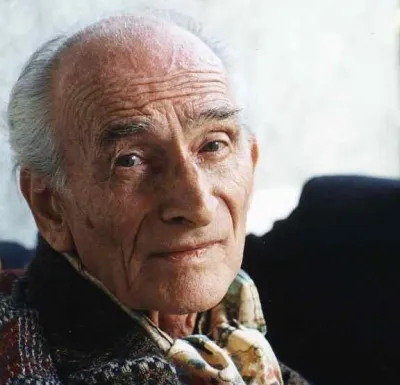
Kareem Abdul-Jabbar
Human Design Chart
Biography
In 1976, he sued his former business manager for $55 million for mismanagement of funds. He himself was sued in February 1987 for $150,000 owed in loans and big debts. In March 1989 he was convicted of misdemeanor charges stemming from an incident the previous April when he reportedly shoved another person at a shopping mall in Phoenix, Arizona.
Abdul-Jabbar retired in 1989 after 20 seasons and six championships. He is the author of "Giant Steps," 1983 "Kareem," 1990 and "Black Profiles in Courage," 1996.
On 15 March 1996, the retired Los Angeles Lakers center was arrested by U.S. Customs officials for the possession of six grams of marijuana at an airport in Toronto, Ontario, Canada. He paid a $500 fine and was released. Abdul-Jabbar's run-ins with the law continued when, on 29 December 1997, criminal charges were filed stemming from a confrontation where the basketball star pinned a man to the ground at a Los Angeles mini-mall because of a parking dispute. He was arraigned on the charges on 29 January 1998.
On 10 November 2009 it was announced that he was suffering from leukemia; he had evidently received his diagnosis nearly a year earlier in December 2008.
Kareem Abdul-Jabbar — Manifesting Generator with Profile 6/2
Manifesting Generator 6/2 — Design at a Glance
Kareem Abdul-Jabbar was someone who could achieve results quickly without having to follow the usual path. His design as an Manifesting Generator combined the constant energy of the Generator with the direct impact of a Manifestor, allowing him to skip steps and draw things into his life that others were still at the beginning of.
However, this speed brought specific challenges. Often, the pace was so high that important intermediate steps were overlooked, which inevitably led to having to return later and make up for them – a source of deep frustration. Additionally, he tended to pursue multiple projects simultaneously as many impulses occurred at once. Without inner confirmation, this energy quickly fragmented.
The key to his satisfaction lay in constantly checking the sacral approval. Only when his inner self gave a clear “yes” to current activities could he use his creative power. In this state, he entered a “play mode,” where variety and fun were at the forefront. Then it was natural for him to handle various tasks simultaneously without the pressure of finishing one thing before starting another. His energy worked best when it reacted rather than initiated, and continually checked whether the current activity still brought joy.
Sacral Authority
Kareem Abdul-Jabbar responded to external stimuli not through cognitive analysis but via immediate physical signals. His decision-making process was guided by sacral authority, which served as the primary instance and is only available for Generator types. This configuration simplified his orientation since strategy and inner authority were identical.
A prerequisite for this function was an open emotional center, ensuring that decisions did not arise from temporary mood swings. The sacral authority in Kareem Abdul-Jabbar manifested as a gut feeling or surge of energy – audible as grunts, hums, or sounds like “Mhm” and “Hm-hm.” These physical noises served as filters to distinguish true resonance from mere reaction.
Upon activation of this authority, he had vital energy and enthusiasm. He did things with joy and satisfaction without the need for external purpose. His actions sprang from an inner drive that made him lively and energetic.
Additionally, an active spleen center acted as a supporting instance. It complemented sacral authority with spontaneous speed and instinctive perception. This allowed Kareem Abdul-Jabbar to react quickly and reliably based on his physical well-being. The combination of sacral confirmation and spleen-supported intuition created a system of immediate, authentic action capability.
The 6/2 Profile — Role Model / Hermit
Kareem Abdul-Jabbar was marked by a design that prescribes a clear two-phase life path. In the first three decades, the energy of Line 2 dominated: a phase of experimentation where trial and error as well as gathering diverse experiences were at the forefront. This early period served to form basic habits through direct confrontation with limitations and adaptation processes, often without full awareness.
After the age of 30, marked by Saturn’s return, the dynamics of Line 6 came into play. This activation triggered a necessary withdrawal – metaphorically staying in a “cave.” In this phase, Kareem Abdul-Jabbar distanced himself from external experimentation to reflect on past years with distance. It was not just a pause but an intensive reflection and healing process aimed at gaining abstract insights from earlier mistakes and learning to trust his life’s journey.
This inner transformation ultimately led to the role of role model. Emerging from isolation, he developed deep self-awareness that allowed him to appear as a figure imparting wisdom. Others could now participate in this growth and learn from his introspective abilities. The structure of his design stipulated that true authority arises not through constant action but through condensed wisdom after a phase of distancing.
Single Definition — Defined & Open Centers
Kareem Abdul-Jabbar's Human Design profile indicated a tendency towards constant but limited expression. His defined Throat Center served as a reliable anchor for communication and action, transmuting information from the body into meaningful output. This structure marked him as someone whose voice was not dictated by fleeting thoughts or emotions but rested on a deeper, mechanical foundation.
This capacity for expression drew directly from his defined Triad: Sacral Center, Spleen, and Throat. The defined Sacral Center generated an enormous daily reservoir of vital energy that was only available through reaction. The strategy involved not initiating actions but waiting for questions or offers to elicit the sacral response—a clear yes-or-no feeling. Only this affirmative reaction bound the necessary power for persistence and satisfaction; mental initiatives quickly led to frustration and exhaustion as the energy would then be unavailable.
Parallel to this stable inner foundation were six open centers: Head, Ajna, G Center, Heart, Solar Plexus, and Root. These open areas acted like mirrors reflecting the environment. Kareem Abdul-Jabbar was susceptible to absorbing mental inspiration or confusion from his open Head and Ajna Centers without identifying it as his own truth. His open G Center meant no fixed identity; he took on directions and love from others, making him vulnerable in environments where he did not feel at ease.
The open Heart Center led to a lack of consistent willpower potential to keep promises or prove worth. Instead, he tended to overextend himself with attempts that he could not fulfill, diminishing his self-worth. The open Solar Plexus Center absorbed and amplified foreign emotions, making him vulnerable to emotional waves that were not his own. Finally, the open Root Center took on external stress, which could drive him into hyperactivity to escape this pressure.
The challenge lay in not interpreting these open centers as his reality. By relying on his sacral reaction and spleen-based intuition rather than mental concepts or emotional validation, he could use the mirror effect of the open centers without being conditioned by them. This protected him from accepting foreign pressures, emotions, or identities as his own truth.
Channels for powerful action, intuition and mastery.
Kareem Abdul-Jabbar lived in a tension-filled dynamic between profound refinement and impulsive action. His design was geared towards connecting intuitive depth with repeated experimentation while his personality carried a swift urge for immediate manifestation.
This structure is defined by the Channel of Wave 48-16, linking Spleen Center to Throat Center, requiring material recognition and resources to refine skills over years. It's about gradual change towards precision where talent emerges as a blend of inspiration and hard work. The design needs time to build mastery and only blossoms when energized by external validation.
Simultaneously, the Personality Design featured the Channel of Charisma 34-20, connecting Sacral Center with Throat Center, bringing raw physiological energy pushing for immediate expression. This is a classic manifestation channel where generative power meets instant action. Without sacral reaction, this energy can chaotically erupt; it needs direction to be properly guided.
The core conflict lies in speed: the design demands slowness and depth for skill development while personality calls for immediate activity. Success arises only when charismatic energy is held back until a sacral confirmation ensures its alignment with perfected ability. Thus, the impulsive urge towards action is channeled through intuitive insight of the design rather than acting blindly. Other Gates in his chart support this dynamic through themes like experience, continuity, and detail work, always emphasizing the need to align inner guidance with outer expression.
Individual Circuitry — Circuit Signature
Kareem Abdul-Jabbar exhibited a foundational stance rooted in logical structure and strategic thinking. His design inclined towards sharing rational insights free from emotional coloring to seek improvements. This stemmed from the Mind Circuit active through Wave Channel between Throat Center and Spleen, linking verbal expression ability with individual intuitive perception, fostering precise visual communication. As Solar Plexus is not involved, it was an 'emotionless ratio' maintaining distance from pure feelings while focusing on future-oriented solutions.
Parallel to this, the integration aspect worked through Charisma Channel between Throat and Sacral Centers. This flow ensured power derived from reacting to life became effective here and now for securing survival through right action and acoustic presence. With Kareem Abdul-Jabbar's Simple Definition, these energies flowed as a cohesive unit: the strategic vision of Spleen was articulated via Throat Center and anchored in momentary sacral endurance. Thus emerged a profile that united logical clarity with immediate effectiveness, always driven by the desire to improve and share insights.
Left Angle Cross of Limitation 1
Kareem Abdul-Jabbar exhibited a fundamental approach characterized by deep inner discipline and a drive for clear structure. His design suggested that he often navigated situations through rigorous self-examination and the establishment of personal boundaries. This orientation aligns with the mechanics of the left cross of Limitation 1. It describes a process where external demands or challenges serve as catalysts for internal clarity. Rather than being overwhelmed by circumstances, Kareem Abdul-Jabbar used these moments to sharpen his own standards and precisely define areas of action. The energy of this cross acts like a filter: it helps distinguish the essential from the non-essential and ensures that decisions are made on a solid foundation of self-determination. This often led him to radiate a calm, yet unshakable presence in interactions, more influenced by thoughtful restraint than impulsive reactions. The limitation was not felt as a restriction but rather as a necessary framework to maintain focus and integrity. Through this inner order, he could also hold his own center and remain capable of action even in complex or chaotic environments without losing himself.
Saturn Return · Uranus Opposition · Chiron Return · 2nd Saturn Return — Life Cycles
Kareem Abdul-Jabbar revealed himself throughout his life phases as someone whose inner stability was challenged by recurring planetary cycles. This configuration marks periods when external circumstances strongly test one's internal alignment and enforce turning points.
1975, at the age of 28, his first Saturn return began. During this phase of life, the design often calls for structure and confirmation of one’s path. Abdul-Jabbar then requested a trade from the Milwaukee Bucks because he did not feel comfortable in Wisconsin. This move illustrates how this cycle underscores the necessity to leave environments that no longer support personal growth to find a more sustainable foundation.
The tension peaked in 1987 with his Uranus opposition, a time when unexpected breaks and conflicts are typical. Here, he was sued for outstanding debts amounting to $150,000. This crisis highlights the disruptive power of this cycle, which often violently dismantles old structures to make way for new realities, even if it comes with financial or legal difficulties.
His Chiron return in 1996, when he was 49 years old, marks the beginning of a fulfillment cycle. Instead of pure healing, this phase is about unfolding one’s purpose. In that year, he was arrested by US customs officials for possession of marijuana. This event fits into the context of profound transformation occurring during this life phase, where external shocks often serve as catalysts for a newly defined identity and sense of purpose, far from earlier patterns.
Manifesting Generator · Sacral Authority — Synthesis
A central red thread runs through the chart: the dynamic interaction between inner power and the necessity to respond to external stimuli. The Manifesting Generator definition with defined centers for communication, sacral energy, and intuition points to a person who possesses both the drive to act as well as deep inner wisdom (Sacral, Spleen, Throat). This combination is, however, modulated by open centers for identity, emotions, and willpower. The chart shows someone who can generate and manifest energy but is also vulnerable to external influences and must constantly adapt – a life in flow, characterized by reaction rather than initiation. The Channel of the Wave (Gate 16/48) amplifies this aspect by emphasizing the perfection of skills through repeated practice, while the Charisma Channel (Gate 20/34) underscores the ability for quick manifestation once the Sacral Center says "yes."
The central paradox lies in the tension between the need for self-actualization and openness to external influences. The defined centers suggest inner stability and a clear drive, while the open centers require constant adaptation to the environment. This leads to a field of tension between the desire to be authentic and pursue one's own goals and the ability to fit into different contexts and respond to others' needs. The cycles confirm this pattern: phases of intense activity (manifesting energy) alternate with periods of withdrawal and reflection to find balance and realign direction.
2 Defined Channels
Incarnation Cross - Left Angle Cross of Limitation 1
Solar Return
The Solar Return shows the moment when the sun returns to its exact birth position - your personal solar year.
Life Cycles
Discover the life cycles with a detailed triple view (birth chart, cycle chart, composite).
Human Design Profile
- Strategy
- To respond - wait for something to respond to
- Authority
- Sacral Authority
- Profile
- 6/2 - Role Model / Hermit
- Definition
- Single Definition
- Incarnation Cross
- Left Angle Cross of Limitation 1
- Date of Birth
- 16.04.1947 18:30
- Place of Birth
- Harlem (New York County), NY, United States
Frequently Asked Questions
What is Kareem Abdul-Jabbar's Human Design type?
What Profile does Kareem Abdul-Jabbar have in Human Design?
What Authority determines Kareem Abdul-Jabbar?
What is Kareem Abdul-Jabbar's incarnation cross?
When was Kareem Abdul-Jabbar born?
Discover your own Human Design
Are you also a Manifesting Generator? Find out in a personal reading how to unfold your multi-talents and direct your energy wisely.
More Personalities
Back to overviewAldair

Alizée

Angeli

Arletty
Artus

Balthus