
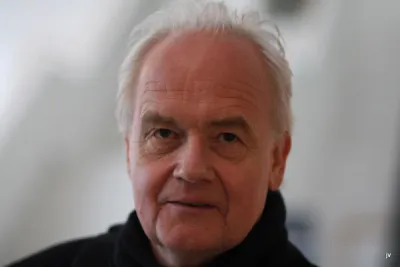
Ketil Bjørnstad
Human Design Chart
Biography
Human Design Analysis: Ketil Bjørnstad as Projector 4/6
Projector 4/6 — Design at a Glance
Ketil Bjørnstad appeared through his focusing aura like a bright flashlight that immediately revealed systemic errors. However, this direct perception could provoke resistance when it actively intervened to correct issues. Instead, his design showed the path of passivity: By radiating his own harmony, he became attractive to others who would seek him out for advice. The central strategy was waiting for an appreciative invitation as a protective mechanism against bitterness – the typical non-self theme of Projectors acting without recognition.
Since his Sacral Center was undefined, he lacked a constant intrinsic energy source. This led to a cyclical rhythm of intense work phases and necessary rest pauses to prevent burnout. Conformist societal structures often ignored this need, but adhering to his own design ensured long-term success and recognition. Ketil Bjørnstad's life path thus not only demonstrated the ability to bring 'light into darkness' for others but also the discipline of accepting leadership roles only when they were sincerely requested, conserving his energy and ensuring resonance.
Emotional Authority
Ketil Bjørnstad exhibited an internal decision-making structure based on patience and conscious delay of reactions. His design suggested that he could not rely solely on initial emotional impulses but needed time to gain clarity. This results from his Emotional Authority: The defined Solar Plexus Center generates a constant wave of mood swings. Through this center, he sees the world through the filter of his current feelings – sometimes enthusiastically, other times negatively. However, these snapshots are not his deeper truth.
Therefore, the mechanics of his design required him to 'sleep on' decisions multiple times. Quick, spontaneous judgments based on emotional heat often led him astray. Only when the initial emotional wave subsided and he had gained distance did calmness set in. Then he recognized the essence behind the transient mood. For Ketil Bjørnstad, this process of waiting and maturing was not a sign of hesitation but a necessary strategy to make long-term decisions that truly aligned with his inner compass. Through patience, he filtered out the noise of current moods and found access to his authentic direction.
The 4/6 Profile — Opportunist / Role Model
Ketil Bjørnstad revealed an internal tension between a deep desire for human connection and simultaneous need for spiritual or intellectual distance. In the first three decades of his life, he was shaped by experimenting in relationships, characteristic of the early phase of Profile 4/6 (Networker/Role Model), where he learned to carefully select his network to avoid injury. With maturity, a fundamental conflict emerged: The heart yearned for belonging and generous sharing, while the mind sought transcendent knowledge and superior position. This dynamic led Ketil Bjørnstad to often hide his true strengths to preserve them – a mechanism described as 'Pluto in Fall'. In later years, he developed into a soft role model that integrated this inner contradiction. He imparted wisdom not through isolation on a remote mountain but through cooperation within his network. His care remained selective; he shared his energy generously, yet only with those who deserved it and did not exploit him. This path from an experimental seeker to a cautious but influential mentor defined his life dynamics.
Split Definition — Defined & Open Centers
Ketil Bjørnstad revealed himself as someone with a stable inner identity and clear life direction, paired with an emotional depth that requires time to mature. His defined G Center gave him a reliable self-image and a sense of his own mission without being dependent on others. This inner security formed the basis upon which his emotional authority rested: The defined Solar Plexus Center required patience as truths only revealed themselves after navigating the emotional wave. He avoided impulsive decisions in favor of deeper clarity that could only be achieved with time.
At the same time, he possessed an existential intuition in the present moment through his defined Spleen Center, which provided him with spontaneous judgments and protective mechanisms against unhealthy stress. This protection was supported by a defined Root Center, providing the pressure needed to nourish emotional intelligence and well-being.
In contrast, there was no consistent mental inspiration or conceptual certainty. His open Head and Ajna Centers made him vulnerable to situational ideas and confusion when trying to force answers that did not come from his inner authority. He tended to absorb mental pressure waves from others rather than forming his own doctrines. Similarly, communication and manifestation were reactive: The open Throat Center meant he waited for invitations to speak instead of proactively seeking attention. Without a defined Heart or Sacral Center, he acted not out of willpower or generative endurance but was guided by the right invitation and emotional clarity, thereby avoiding overexertion through 'borrowed' energy.
Channels for intuitive elegance, restless fantasy and emotional waves.
Ketil Bjørnstad revealed himself as someone whose actions were strongly influenced by an intuitive ability to adapt in the moment. This fundamental approach stemmed from Channel of Perfect Form 57-10, which connects the Spleen Center with the G Center. Through the intuitive insight of Gate 57 and self-behavior at Gate 10, he developed a capacity to let go of unfounded future fears and instead act from deep self-confidence. This allowed for spontaneous, authentic living based less on cognitive planning and more on immediate perception of 'now'.
Parallel to this, the Channel of Recognition 30-41 linked the Root drive for new experiences with emotional fantasy. The pressure from Gate 41 generated restlessness, fueled by an emotional need for intensity at Gate 30. This led to a strong urge to immerse oneself in new situations driven by a longing that could contain both joy and pain.
This dynamic energy was further modulated through the Channel of Emotions Unleashed 39-55. Here, a mercurial force between joy and melancholy challenged the mind provocatively. The emotional wave from Gate 39 met with the consciousness of the mind at Gate 55, allowing mood swings to be used not as weakness but as a mutative, creative source.
Additionally, individual gates like Gate 27 (Care and Self-Preservation) and Gate 28 (Willingness to Take Risks in the Here and Now) contributed to his overall configuration. While Gate 44 promoted vigilance in interactions, Gate 32 stood for a desire for continuity. Gate 48 brought deep analytical pattern recognition but was often associated with frustration as it emphasized understanding over implementation. Together these elements characterized a profile marked by spontaneous intuition, an appetite for emotional experience, and mercurial creativity.
Individual Circuitry — Circuit Signature
Ketil Bjørnstad showed a tension between pulsating knowledge transformation and cyclical emotional meaning-making. His design connected the Solar Plexus Center with the Root Center, creating two separate but parallel energetic streams: the Knowledge Circuit and the Meaning-Making Circuit.
In the Knowledge Circuit, Channel 'Emotions Unleashed' (Gates 55-39) was active. This linked the emotional wave of the Solar Plexus to the acoustic, present-oriented energy of the Root Center. It was about affirming individual identity through the expression of emotions – a pulsating force that initiated change in the here and now.
Parallel to this existed the Meaning-Making Circuit via Channel 'Recognition' (Gates 30-41). Here too, Solar Plexus connected with Root Center. However, this stream was cyclical and retrograde: It served to reflect on past experiences, draw meaning from the past, and share these insights visually and emotionally with others.
The integration of these two streams occurred through the Integration Circuit. Here Channel 'Perfect Form' (Gates 10-57) linked the Identity Center with the Spleen Center. This ensured survival through intuitive reactions in the present. The power from reacting to life was guided by proper behavior and intuitive knowledge to be effective in the current moment.
For Ketil Bjørnstad, these systems were separate: Emotional processing (Solar Plexus/Root) formed one group, while intuitive action capability (Identity/Spleen) another. There was no direct energetic flow between emotional reflection and intuitive action; they existed as parallel forces each fulfilling their own tasks – on the one hand transforming knowledge into expression, on the other securing oneself intuitively in the present.
Right Angle Cross of the Unexpected 1
Ketil Bjørnstad revealed himself through a thinking process that initially appeared rational and structured but was punctuated by sudden, inspiring intuitions. His design combined the clear logic of Gate 43 – the ability to grasp and articulate connections precisely – with the spontaneous energy of Gate 51, which delivers unexpected insights. This configuration, the right cross of the Unexpected 1, shaped an expression form where complex content was not only analyzed but also illuminated through surprising perspectives.
The mechanics of this circle lie in the synthesis of structure and inspiration: While the foundation offers a methodical order, the intuitive component enables leaps that appear new to others. It is not pure logic at work here, but rather a process where spontaneous insights are framed within a clear context. This results in a way of acting and thinking that appears well-founded but stands out for its unpredictability. The energy lies in breaking through known patterns and conveying information so it is experienced as novel. Ketil Bjørnstad followed this inner dynamic, where precision and surprise were inseparable, giving his form of expression a unique, unmistakable quality.
Saturn Return · Uranus Opposition · Chiron Return · 2nd Saturn Return — Life Cycles
Ketil Bjørnstad revealed himself as an artist whose development was structured by clear astrological cycles. His first Saturn Return around the age of 26 marked the transition from preparation to established presence; in this phase, in 1978, the work “Leve Patagonia” emerged, a sign that earlier efforts had condensed into a solid result.
The Uranus Opposition around the age of 41 often brought about necessary liberation from old patterns to find new expression. This is reflected in the publication of “Water Stories” in 1993, when he realigned his artistic direction and left established structures behind.
The Chiron Return between the ages of 49 and 51 is a fulfillment cycle where inner purpose becomes increasingly tangible. In 2001, with the release of “Grace,” this bloom phase came to light: A deep understanding of his own artistic identity became palpable and shaped his work sustainably.
The second Saturn Return around the age of 56 solidified the achieved position and brought further maturity. In 2008, he published “The Light - Songs of Love and Fear” as well as “Life in Leipzig.” These works stand for the confirmation of his long-term work and the integration of his experiences into a mature, coherent body of work. The transits did not act here as random events but as rhythmic structuring elements that propelled and anchored his artistic evolution.
Projector · Emotional Authority — Synthesis
A central red thread runs through the chart: the dynamic interaction between inner perception and outer projection. The defined G Center, coupled with emotional authority and open Throat Center, points to a deep self-identity that is not directly expressed. Instead, he – as a projector – projects his perception onto others, finds faults in the system (Gate 27) and illuminates for them while waiting on invitation. The open centers (Sacral, Heart, Head, Ajna) enhance this ability to absorb and reflect other people's energy, making him a mirror that can recognize both strengths and weaknesses of his environment. This process, fueled by cyclical experiences (Saturn Return, Uranus Opposition), forms a unique perspective on life and human nature.
A central paradox lies in the tension between the need for recognition and the ability to self-sufficiency. The undefined Heart Center points to a lack of consistent willpower, leading to an inner drive to prove oneself (Gate 32). At the same time, the defined G Center allows deep inner security and the capacity to shine independently of external affirmation. This discrepancy generates a dynamic field between the desire for connection and the necessity to remain true to oneself – a constant balancing act between giving and receiving, between projection and authenticity.
3 Defined Channels
Incarnation Cross - Right Angle Cross of the Unexpected 1
Solar Return
The Solar Return shows the moment when the sun returns to its exact birth position - your personal solar year.
Life Cycles
Discover the life cycles with a detailed triple view (birth chart, cycle chart, composite).
Human Design Profile
- Type
- Projector
- Strategy
- Wait for the respectful invitation
- Authority
- Emotional Authority
- Profile
- 4/6 - Opportunist / Role Model
- Definition
- Split Definition
- Incarnation Cross
- Right Angle Cross of the Unexpected 1
- Date of Birth
- 25.04.1952 20:50
- Place of Birth
- Oslo, Norway
Frequently Asked Questions
What is Ketil Bjørnstad's Human Design type?
What Profile does Ketil Bjørnstad have in Human Design?
What authority determines Ketil Bjørnstad?
Which incarnation cross is active for Ketil Bjørnstad?
When was Ketil Bjørnstad born?
Discover your own Human Design
Are you also a Projector? Find out in a personal reading how to unfold your leadership qualities and recognize the right invitations.
More Personalities
Back to overviewSissy Spacek

Aaliyah

Alain-Fournier

Alexia

Alizée

Anémone
