
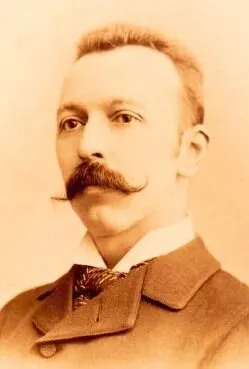
Léon Boellmann
Human Design Chart
Biography
He died on 11 October 1897 in Paris, aged 35.
What does Projector 4/1 mean for Léon Boellmann?
Projector 4/1 — Design at a Glance
Léon Boellmann's design was characterized by a dense, focusing aura that acted like a bright flashlight. This quality allowed him to immediately identify system errors in his environment and bring 'light into the darkness' for others. However, this direct error detection was often perceived as unpleasant and triggered defensive reactions, making his optimal strategy not open criticism but passive attraction. By radiating harmony, he attracted others who would seek out his advice on their own initiative. His design called him to always wait for an honest invitation before sharing his knowledge.
As a Projector, Léon Boellmann did not have a defined Sacral Center, meaning that he lacked a constant source of intrinsic life energy. Instead, he experienced phases of high productivity which were necessarily followed by rest periods to prevent burnout. This cyclical energy management was fundamentally different from the demands of conventional work structures. Living according to this rhythm and his invitation strategy rewarded him with success. However, deviating from it led to the non-self theme of 'bitterness'. His path involved making his unique system analysis ability effective through patience and authenticity rather than fighting against the resistance of his environment.
Splenic Authority
Léon Boellmann's design showed a tendency towards spontaneous, momentary decision-making. He was someone who trusted an inner health and alarm system where the first impulse embodied the truth. This attitude stemmed from his authority in the Spleen Center. For the defined Spleen Center to be an internal authority, both the Emotional and Sacral Centers must be open; therefore, only Projectors or Manifestors had this specific configuration.
The Spleen Center functioned as survival intelligence. It provided spontaneous inner knowledge about whether a situation, environment, or society was right. Physical well-being and intuition served as reliable indicators of health. Léon Boellmann therefore made decisions in the moment. The first impulse immediately served his physical integrity and allowed him to rigorously distance himself from harmful influences.
This Spleen voice was however a very fine impulse that only appeared once in the moment. It could easily be ignored or drowned out by other influences. This required high vigilance from Léon Boellmann. A retreat for decision-making also proved helpful to not miss this fine impulse. Since what is right was always known only in the moment, plans could change at short notice. Long-term commitments were difficult; he needed a lot of free space and flexibility rather than rigid structures.
The 4/1 Profile — Opportunist / Investigator
Léon Boellmann's design anchored an intrinsic essence that barely deviated from his individual path. As a 4/1 (Networker/Forscher), he was the only fixed profile marked by the transition from 'I' to 'You'. His deeply rooted nature led to well-meaning change impulses from outside being felt as attacks on his protected heart, resulting in criticism defense and exclusion of non-accepting people; he was often perceived as stubborn or thick-headed.
The fourth line gave him social influence in the network, depending on recognition. Successful phases brought conflicts with envious individuals and the risk of forgetting helpers. At the same time, the first line called for pauses and thorough consideration before action. There was pressure to provide energy for concentration while early release meant loss of time. The Mars aspect required facing the consequences of actions.
This combination created an inner conflict between the social drive for success and the need for quiet to calm his energy. Only with full self-acceptance did Léon Boellmann become a stable rock in the storm. In this state, he could teach others magnificently as he let his character rest assuredly. The unchangeability of his essence was not a lack but the prerequisite for this stability. Those who did not fully accept him lost access to his great heart. His path was a challenge that required patience and understanding for his need for isolation to concentrate.
Triple Split Definition — Defined & Open Centers
Léon Boellmann's design revealed a tendency towards inner strength and mental intensity. He was someone who possessed highly structured energy architecture, characterized by six defined centers: Head, Ajna, G Center, Heart, Spleen, and Root. This configuration created a constant mental pressure for inspiration and concept formation (defined Head and Ajna Centers), combined with clear self-identity and direction (defined G Center). His consistent willpower (defined Heart Center) as well as his reliable intuition in the present moment (defined Spleen Center) and physical survival pressure (defined Root Center) shaped an autonomous, stable presence.
At the same time, his design was marked by three open centers: Throat, Sacral, and Solar Plexus. The open Throat Center meant that he did not have a consistent form of communication; the urge to speak or seek attention often followed conditioned patterns rather than his own truth. The open Sacral Center led to his energy coming in spurts and him being vulnerable to overexertion by others' generative energy, instead of having constant work capacity. Additionally, his open Solar Plexus absorbed the emotions of the environment, situating him as dependent on the emotional resonance of his surroundings.
The challenge in his design lay in the tension between this massive inner structure and external situationality. His mental inspiration could not be immediately translated into words or actions due to a missing connection to the Throat Center. Instead, he had to learn to accept the mental pressure without exhausting it, waiting for the right timing for expression and activation to avoid resistance and burnout. His strength lay in using his inner authority to distinguish between his own identity and the absorbed energy of his environment.
Channels for judgment, pioneering spirit and mental abstraction.
Léon Boellmann's design was characterized by a triadic structure that combined judgment, competitive initiation, and mental abstraction. This configuration marked him as someone who critically questioned patterns, encouraged individualization through competition, and condensed experiences into mental stories – without being able to rely on inner certainty.
The Judgment Channel 58-18 connected the Root Center with the Spleen Center. Gate 58, Vitality, drove an insatiable urge for 'better and more', while Gate 18, Correction, acted as a lookout post. It checked whether perceptions were healthy or needed correction. This mechanism nourished the art of mastery and the desire to perfect patterns to regain joy in the collective. Léon Boellmann showed himself here as someone who used logic to filter out the best – yet only effectively when invited to share his solutions.
The Initiation Channel 51-25 connected the Heart Center through Gate 51 (Shock) and Gate 25 (Self Spirit). This connection created a natural competitiveness aimed at being first or winning. Yet behind this ego impulse lay the ability for individualization: 'the shock' that initiates a person from collective 'we' to autonomous 'I'. Léon Boellmann had the potential to encourage others through this process and make their uniqueness visible – provided he lived authentically and sought initiation passively, letting it happen.
The Abstraction Channel 64-47 connected Head Center (Gate 64, Confusion) with Ajna Center (Gate 47, Comprehension). It forces one to filter every experience through a kaleidoscope of mental images in search for an inspiring story. Léon Boellmann's mind was always active, seeking perspectives and reinterpreting the past. Yet this channel offers no inner authority; the mind can never be 100% certain. His strength lay in telling inspiring stories or new angles, not solving his own problems solely through thinking.
Additionally, Gates like 46 (Devotion), 52 (Pattern Correction in Silence) and 26 (Ego Innovation) worked to support his presence, concentration, and ability to convince the tribe.
Collective Circuitry — Circuit Signature
Léon Boellmann's design revealed a tendency towards inner strength and individual constancy. The Centering Circuit connected Identity and Heart Centers (Channel 25-51), creating strong self-worth and deep, unspoken convictions. This pulsating energy in the 'now' had melancholic-acoustic effects; lacking Throat connection meant this power was felt through presence, not words. As part of a Triple Definition, two additional energetically separate streams also existed. The Understanding Circuit connected Spleen and Root Centers (Channel 18-58), providing focused, logical judgment for future-oriented strategies – independent of the emotional level. Parallel to this, the Meaning-Finding Circuit connected Head and Ajna Centers (Channel 64-47). This generated cyclical visual impulses towards abstracting past experiences to grasp and share their meaning. These three circuits did not form a cohesive unit but rather parallel acting forces: central individualistic constancy, cool rational strategy, and emotional reflection of the past. Léon Boellmann thus appeared as someone with a fortified inner self, flanked by separate skills for logical future planning and emotional past resolution, without these areas directly flowing into each other.
Juxtaposition Cross of Serendipity
Léon Boellmann's design indicated a tendency towards unexpected and valuable discoveries. His life energy was strongest where seemingly arbitrary connections were made. He found himself successful through chance encounters rather than rigid planning. This configuration describes the potential for luck in the sense of serendipity: finding what one did not actively seek but needed.
The Serendipity Cross of Juxtaposition shaped this dynamic. It referred to a specific arrangement of energies in his chart, aiming to bring disparate elements together. For Léon Boellmann, it meant he had to learn to embrace the unexpected. Instead of predicting every step ahead, he used chance as a tool. When seemingly meaningless encounters or circumstances arose, they often contained keys to new insights or solutions.
His mechanics challenged him to remain open to the chaos of the outer world. Only through this openness could he recognize hidden patterns emerging from random coincidences. It was not a passive stance but an active willingness to accept chance as an information source. Léon Boellmann lived in a system that rewarded him for not swimming against the current of the unpredictable, but rather sailing with it. This ability to derive benefit from the seemingly random formed a central aspect of his energetic alignment.
Saturn Return — Life Cycles
Léon Boellmann's design indicated a tendency towards early structural maturation. He was someone who faced the first major confrontation with personal limits and responsibilities around the age of 29 years. This phase marked the transition from experimental youth to established adulthood.
The first Saturn Return cycle is a universal archetypal structure in Human Design. It functions as a period of serious maturation, where internal and external structures are tested for their durability. During this time, Léon Boellmann had to learn to deal with the real consequences of his decisions and take responsibility for his own life. It was less about conventional success and more about stabilizing one's self-image in relation to the world.
This mechanism worked independently of specific events as a fundamental developmental stage. It forced confrontation with personal limits and demanded clear positioning. For Léon Boellmann, this meant laying the groundwork for his later ability to act by accepting which structures in his life needed to persist and which could be dismantled. This process of demarcation and consolidation shaped his further work sustainably.
Projector · Splenic Authority — Synthesis
Léon Boellmann lived a continuous process of refinement and correction, fueled by a deep connection to the present moment (Spleen Center) and an unceasing mental drive to recognize and understand patterns (defined Head and Ajna Centers). This combination led to a pronounced ability to grasp potential in others – not through direct analysis but through intuitive perception of what could be improved. The Channel of Judgment (58/18) points to an inner compass that drove him to correct things and optimize the world around him, always with an eye for the essential. This ability was strengthened by heart energy, giving him a natural authority when invited to share his insights.
A central tension field in his design lies between the need for internal clarity and the tendency towards mental abstraction (Channel 47/64). While his mind constantly analyzed patterns and developed new perspectives, the connection to the Spleen Center required constant grounding in the present moment. This duality likely led to phases of intense concentration followed by a need for rest and distance to process absorbed energy. The Serendipity Cross underscores this dynamic: a life deeply rooted in the inner world but also open to unexpected encounters and possibilities in the outer world.
3 Defined Channels
Incarnation Cross - Juxtaposition Cross of Serendipity
Solar Return
The Solar Return shows the moment when the sun returns to its exact birth position - your personal solar year.
Life Cycles
Discover the life cycles with a detailed triple view (birth chart, cycle chart, composite).
Human Design Profile
- Type
- Projector
- Strategy
- Wait for the respectful invitation
- Authority
- Splenic Authority
- Profile
- 4/1 - Opportunist / Investigator
- Definition
- Triple Split
- Incarnation Cross
- Juxtaposition Cross of Serendipity
- Date of Birth
- 25.09.1862 08:00
- Place of Birth
- Ensisheim, France
Frequently Asked Questions
What Human Design type was Léon Boellmann?
What Profile did Léon Boellmann have?
What Authority did Léon Boellmann have?
What incarnation cross did Léon Boellmann have?
When was Léon Boellmann born?
Discover your own Human Design
Are you also a Projector? Find out in a personal reading how to unfold your leadership qualities and recognize the right invitations.
More Personalities
Back to overviewSissy Spacek

Aaliyah

Alain-Fournier
Alexia

Alizée

Anémone
