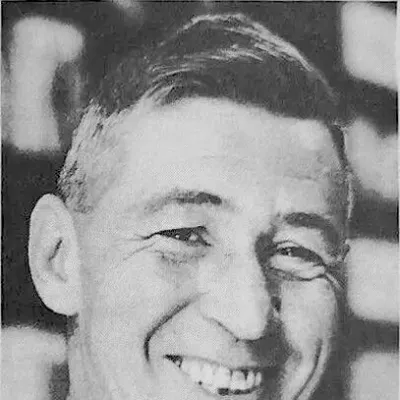
Photo: Wikimedia Commons
Leonardo da Vinci
Human Design Chart
Biography
Born out of wedlock to a successful notary and a lower-class woman in, or near, Vinci, he was educated in Florence by the Italian painter and sculptor Andrea del Verrocchio. He began his career in the city, but then spent much time in the service of Ludovico Sforza in Milan. Later, he worked in Florence and Milan again, as well as briefly in Rome, all while attracting a large following of imitators and students. Upon the invitation of Francis I, he spent his last three years in France, where he died in 1519. Since his death, there has not been a time when his achievements, diverse interests, personal life, and empirical thinking have failed to incite interest and admiration, making him a frequent namesake and subject in culture.
Human Design Analysis: Leonardo da Vinci as Projector 2/4
Projector 2/4 — Design at a Glance
Leonardo da Vinci revealed himself as someone with a dense, focused aura that immediately recognized systemic flaws in his environment. His design inclined him to shine light into the darkness like a bright flashlight and guide others. However, lacking a constant intrinsic energy source, he lived through phases of high activity followed by necessary rest periods to avoid burnout.
The mechanics of his Projector type explained this dynamic: His ability to instantly identify weaknesses in other systems could be perceived as unpleasant during direct confrontation. Instead, he was most effective by shining harmoniously himself, which naturally attracted others and prompted them to seek his advice. The strategy involved waiting for an honest, appreciative invitation rather than forcing himself forward. If Leonardo da Vinci lived this path of patience and attraction, he was rewarded with success. Missing this strategy and seeking direct enforcement or ignoring his need for rest led sooner or later to bitterness as an expression of his non-self. His design thus did not demand constant action but strategic waiting and trusting in the power of his own clarity.
Emotional Authority
Leonardo da Vinci lived with inner authority that required patience and time. His design dictated that he did not make decisions in the first emotional wave. Instead, there was a tendency to trust the ups and downs of his feelings without immediate action.
This configuration stemmed from his defined Emotional Center. This center was the source of his inner guidance, independent of other defined areas in his chart. It generated a permanent emotional wave that constantly colored his perception of the world. In one moment he could be enthusiastic about something, in the next see it negatively. His immediate feeling was only a snapshot and not necessarily the deep truth.
Quick, spontaneous decisions from such emotion were risky and could have negative consequences. The mechanics of his design required delay. The more time Leonardo da Vinci took, the deeper he could perceive. He had to exercise patience and sleep on decisions multiple times. Through this hesitation, intense feelings subsided. He gained emotional distance until clarity and calmness set in. Only then was he through the process and made a well-founded choice. This mechanism was particularly important for long-term decisions with significant influence on his life course. His inner voice spoke only from the calm after the storm, not from the heat of the moment.
The 2/4 Profile — Hermit / Opportunist
Leonardo da Vinci revealed himself as someone who oscillated between a deep need for withdrawal and the urge to be part of a community. As Profile 2/4, the 'Natural Talent / Networker', his design created an inner tension: Line 2 demanded solitude for internal reflection while Line 4 sought exchange with familiar people. This configuration required clear communication about his current phase – whether he needed rest or wanted company – to ensure the quality of his network exchanges. During his 'Me-Time', Leonardo da Vinci immersed himself in his own processes, created clarity and developed brilliant ideas from shared experiences within his network. Line 2 projected a caring aura, although he did not always know how strong it was. Simultaneously, Line 4 externalized fantasies in fixed ways and made friendships crucial to his success. Through awareness of these dynamic interactions, Leonardo da Vinci could set boundaries while also benefiting from collective experience.
Split Definition — Defined & Open Centers
Leonardo da Vinci was characterized by a persistent, independent concept thinking. His defined Ajna Center ensured an uninterrupted mental activity that was hard to influence from the outside and served as a firm internal authority for him. This mental stability combined with his defined Throat Center, which allowed him to reliably implement his thoughts and concepts into communication or action. He did not speak arbitrarily but articulated what his mind constantly produced.
At the same time, he had a defined Solar Plexus Center that conveyed emotional authority. This meant that he did not make decisions immediately but waited for the waves of his feelings until emotional clarity emerged. His defined Spleen Center complemented this with an intuitive present awareness; he reacted spontaneously to instinctive signals from his body that told him what was healthy or correct in the moment. The constant pressure of his defined Root Center propelled him physically forward and helped him cope with stress by nurturing existential awareness.
In contrast, his open Head Center revealed a vulnerability to mental confusion or the urge to answer questions that were not his own. He tended to get entangled in intellectual pursuits to find inspiration rather than trusting his inner authority. His open G Center meant he did not have a fixed identity or direction but reflected these through environment and relationships; he often searched for the right place to feel belonging. The open Heart Center made him susceptible to the temptation to make promises to prove his worth, although he lacked consistent willpower to do so. Finally, his open Sacral Center led to taking in energy from the surroundings and easily overexerting himself because of missing constant boundaries to know when enough was enough.
Channel 17-62: Acceptance — Channels & Gates
Leonardo da Vinci showed a stubborn determination to assert his individual path against resistance, paired with the ability to logically translate complex details into language. This mechanism was driven by the Life Struggle Channel 38-28, which used adrenaline-fueled energy to find personal integrity and meaning in struggle. Simultaneously, his mind permanently organized visual patterns into logic, enabled through the Accepting Channel 17-62, connecting the Gate of Opinions with the Gate of Details. This created a pressure on the Throat Center to give explanations as soon as timing was right to create understanding for others.
At the same time, he acted as a provocative force that revealed the true spirit of others. The Emotions Release Channel 39-55 connected provocation with the mind and generated a moody wave between joy and melancholy. Leonardo da Vinci only acted in the correct emotional mood to preserve authenticity; he used this mood to test the depth of the mind in himself and others. This combination of combative individuality, logical structuring, and emotional provocation shaped his way of interacting with the world. He did not just seek truth but forced it into light through his own resistance and emotional intensity while simultaneously translating details of his observations into understandable formulas.
Individual Circuitry — Circuit Signature
Leonardo da Vinci showed a split energetic structure that contained two parallel, non-directly connected power fields. In one field, the Knowledge Circuit connected Spleen, Root, and Solar Plexus Centers. This area drove the urge for individual mutation and emotional transformation. The Channels 'Life Struggle' (28-38) and 'Emotions Release' (55-39) promoted the expression of his unique identity through emotional waves from the Solar Plexus.
Simultaneously, in the second field, the Understanding Circuit connected Ajna and Throat Centers. Here rational, emotionless logic dominated. The Channel 'Accepting' (17-62) directed strategic thinking towards improving society by sharing clear insights. Since these two circuits were separate in Leonardo da Vinci's design, there was an internal tension between the impulsive, creative emotionalism of one field and the cold, future-oriented strategy of the other. His design suggested that he did not experience these different energies as a continuous flow but as coexisting impulses sometimes contradictory: once deeply emotional self-realization, then at another time detached rational communication of knowledge for societal optimization. This configuration shaped his way to generate innovative ideas as well as communicate strategically without these areas energetically overlapping.
Right Angle Cross of the Unexpected 1
Leonardo da Vinci's design placed a deeper, fateful orientation on surprises and unexpected turns as the central life motif. His life was structured by unforeseeable events; the mechanics indicated that he unfolded his true nature and received impulses in situations of uncertainty or sudden change. This configuration was named 'The Right Cross of the Unexpected 1'. It described more than a mere preference for chaos but a fundamental imprint: The individual found their true rhythm in uncertainty. Sudden breaks or unexpected developments were not to be understood as disruptions, but as essential moments that pointed towards new directions and initiated inner processes. Thus, Leonardo da Vinci was shown to be someone whose development was closely intertwined with the element of the unexpected. The structure of his design challenged him to not cling to rigid plans but remain open for what happened without announcement. In these moments of surprise, his internal compass aligned with his true life tasks. It was a dynamic orientation where the unforeseeable acted as driving force and helped him unfold his potentials precisely in directions that became visible through external circumstances.
Saturn Return · Uranus Opposition · Chiron Return · 2nd Saturn Return — Life Cycles
Leonardo da Vinci showed recurring phases of intense professional reorientation, deepening his work in anatomy and embryology. His design indicated a tendency to shift focus during specific cyclical periods and explore new depths professionally.
In 1482, at the age of 30, he began working for Ludovico Sforza in Milan. This first Saturn Return marked the transition from years of preparatory work to a stable institutional framework for his activities. Seven years later, in 1489 (age 37), he saw anatomy and embryology as fundamental – a moment corresponding with the Uranus Opposition, often bringing new perspectives or paradigm shifts.
Around the year 1500, at age 48 during his Chiron Return, he worked again in Florence, Milan, and briefly in Rome. This fulfillment cycle allowed for the unfolding of his incarnation purpose; his meaning became tangible through the concrete exercise of his expertise in various places.
In 1509, at age 57 during his second Saturn Return, he investigated the position and blood supply of a fetus in the womb initially using a cow's fetus. This cycle condensed his long-term anatomical research into precise, material insights. The sequence of these events underscores how his design combined structured phases of deepening with concrete scientific breakthroughs.
Projector · Emotional Authority — Synthesis
He was a projector whose energy was geared towards recognizing and showcasing others' potential (Design). This recognition did not occur neutrally; an emotional authority required time for feelings to mature before decisions could be made (Authority, Centers). This inner dynamic was amplified by a profile as a natural talent and networker – a constant interplay between the need for withdrawal for internal clarification (Line 2) and the desire for exchange with selected individuals (Line 4). The Channel of Acceptance (Gate 17/62) pointed to an ability to organize information and give it meaning, shaping his way of thinking.
A central paradox lay in the tension between his projection capability – directly pointing out imbalances (Channels/Gates) – and the necessity for emotional maturity. He recognized patterns and errors in systems, yet how he applied this knowledge was colored by his emotional wave. The recurring career cycles marked by research and innovation (Cycles) showed confirmation of his unique path within the circuit of knowledge – always seeking new insights and their transformation (Circuit).
3 Defined Channels
Incarnation Cross - Right Angle Cross of the Unexpected 1
Solar Return
The Solar Return shows the moment when the sun returns to its exact birth position - your personal solar year.
Life Cycles
Discover the life cycles with a detailed triple view (birth chart, cycle chart, composite).
Human Design Profile
- Type
- Projector
- Strategy
- Wait for the respectful invitation
- Authority
- Emotional Authority
- Profile
- 2/4 - Hermit / Opportunist
- Definition
- Split Definition
- Incarnation Cross
- Right Angle Cross of the Unexpected 1
- Date of Birth
- 23.04.1452 21:40
- Place of Birth
- Vinci, Italy
Frequently Asked Questions
What was Leonardo da Vinci's Human Design type?
Which Profile did Leonardo da Vinci have?
What Authority guided Leonardo da Vinci's decisions?
What incarnation cross did Leonardo da Vinci have?
When was Leonardo da Vinci born?
Discover your own Human Design
Are you also a Projector? Find out in a personal reading how to unfold your leadership qualities and recognize the right invitations.
More Personalities
Back to overviewSissy Spacek
Alain-Fournier
Anémone
Ann-Margret
Bourvil
Hergé