Louis Bonaparte
Human Design Chart
Biography
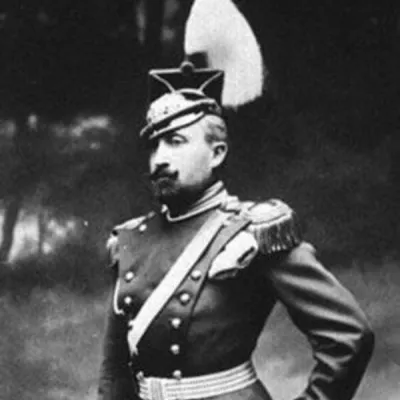
Louis Bonaparte, as he was known, was born in Meudon, France. He was the second son of Prince Napoléon Bonaparte, who was the son of Napoleon's brother Jérôme Bonaparte and of Princess Maria Clotilde of Savoy, daughter of Victor Emmanuel II of Italy.
He was educated with his older brother Victor, Prince Napoléon, then lived a lazy life in Paris at the home of his aunt Mathilde Bonaparte. His father directed him to a military career. As a descendant of Napoleon Bonaparte, he wasn't allowed to join the French Army and therefore became a lieutenant in the Italian Army in Verona, with the approval of his uncle, King Umberto I of Italy.
Because of anti-French sentiment in the Italian Army, he left Italy in 1890 and entered the Russian Army. In 1895 he became a colonel; in 1902 he was stationed in the Caucasus. When riots broke out in 1905 between Armenians and Azeris in Yerevan, he was named governor of the province of Yerevan and ordered to restore order.
In 1910, he retired from the Russian Army as a lieutenant-general and moved to the family estate in Prangins, Switzerland. At the request of the Russian tsar, he became liaison officer for the Russian Army with the Third Italian Army, led by his cousin Prince Emanuele Filiberto, Duke of Aosta.
In 1917, he returned to Prangins, though his later travels included trips to Japan and the United States. He died on 14 October 1932, aged 66, from a stroke. He never married and had no children.
Louis Bonaparte — Generator with Profile 5/1
Generator 5/1 — Design at a Glance
Louis Bonaparte possessed enormous endurance and generative power. His design suggested that his success as well as his deepest satisfaction did not depend on initiating actions but rather on responding to inner impulses. As a Generator, he had abundant sacral energy, which made him similar to a strong workhorse extremely resilient – provided he dedicated himself to tasks for which he actually had this energy.
The central mechanics of his design were reacting instead of taking initiative. When Louis Bonaparte followed this principle and reacted to signals from life, he experienced deep fulfillment. His sacral center functioned as a compass; when it signaled a clear “yes,” he could unleash his power by following up with action. If he deviated from this strategy and tried to initiate things or ignore his inner impulses instead, this inevitably led to frustration, energy loss, and burnout. Therefore, his strength lay not in starting new projects against the current but in consistently implementing what spoke to him from within. Only in harmony with this reactive principle could no one stop him; outside of it, he encountered a lack of energy.
Sacral Authority
Louis Bonaparte had a simplified decision-making structure: As a Generator, his strategy was also his inner authority. His design indicated that true orientation did not arise from intellectual analysis but from the physical reaction to external stimuli. The sacral authority manifested in him through immediate signals from the gut – a grumble, hum or a noticeable surge of energy. This “gut feeling” clearly distinguished between real resonance and lack of drive.
When his sacral motor responded to an issue, Louis Bonaparte experienced vitality; he had inexhaustible energy and carried out tasks with great enthusiasm. His work was done with joy and satisfaction, free from rigid purposefulness. This was not a random feeling but the mechanical function of his design: He was born to immerse himself in his activities.
Additionally, his activated spleen center acted as a supportive instance. It allowed for quick, spontaneous reactions and provided direct access to his physical well-being as well as instinctive perception. Louis Bonaparte could reliably guide himself from these deep, bodily impulses, which enhanced his ability to act decisively in the present moment without falling into excessive overthinking.
The 5/1 Profile — Heretic / Investigator
Louis Bonaparte emerged as someone who gathered profound knowledge to offer others for problem-solving. His design as a 5/1 profile generated almost magnetic attraction: Others actively sought out his solutions and advice. This dynamic stemmed from the tension between the inner research drive (Line 1) and the outer expectation to act as a hero (Line 5).
Line 1 demanded thorough analysis in secrecy. Louis Bonaparte had to chew over details until they were absolutely clear before he could step forward. Only then could Line 5 apply these organized insights practically during crises. But precisely here lay the danger: Without clear boundaries, his willingness to help quickly led to overload. The environment bombarded him with requests, similar to an expert exhausted after a long conference yet still receiving hundreds more questions.
The human risk was being drained by unlimited helpfulness. His mechanics required learning to say “no.” Only in this way could Louis Bonaparte maintain balance: enough space for his own research while effectively utilizing his gifts without being swallowed up by the environment’s insatiable quest for knowledge. The ability to set this boundary was crucial for whether he acted as an inspiring authority or suffered under the constant pressure of expectations.
Split Definition — Defined & Open Centers
Louis Bonaparte was someone with an enormous, consistently available energy base and a stable identity. His design showed a tendency towards magnetic presence that relied strictly on waiting for life impulses. This powerful presence arose from his defined Sacral Center – the motor of his vitality – combined with a defined G Center, which gave him self-love and clear direction. He also had a permanently active thought process (defined Head and Ajna Centers) as well as reliable communication skills (defined Throat). His body awareness was intuitive and health-oriented (defined Spleen).
This configuration generated constant inner pressure towards inspiration and concept formation. Since his mental centers were always „on,“ he tended to ask questions and understand connections. However, this mental pressure could not be implemented through willpower because his Heart Center was open. The open heart meant that willpower was not a consistent trait; he had to learn to avoid making promises to prevent frustration. Instead, the thought process could only come into action through sacral confirmation.
Additionally, his Solar Plexus and Root Centers were open. This meant that emotional stability and stress resistance were not his natural strengths. He was prone to absorbing other people's emotions and being driven by external pressure rather than listening to his inner authority. The challenge lay in not personalizing the absorbed feelings as his own and detaching from the adrenalized pressure of the environment. Only through waiting for sacral answers could he effectively use his immense energy without falling into exhaustion or emotional turbulence. His strength lay in reacting, not initiating or combating mental pressure.
Channels for rhythm, logic, clarity and care.
Louis Bonaparte showed a mind that permanently logically ordered details and precisely formulated opinions linguistically. This inner pressure resulted from the Accepting Channel 17-62: Gate 17 visualized patterns in the Ajna Center while Gate 62 translated these into the Throat Center to create understanding through language. What could not be logically integrated remained ununderstood; thus, the ability to clearly explain complex connections was central to his mental structure and communication.
At the same time, he had a mutative energy that created new directions by trusting sacral reactions. The Beat Channel 14-2 connected the Sacral Center with the G Center: Gate 14 handled material resources for driving change while Gate 2 served as higher knowledge as the driving force. This configuration allowed him to open innovative paths through authentic reaction without having to plan them beforehand. The energy acted impulsively and changed direction for himself and his environment based on trust in life flow rather than intellectual control.
His thought process, however, was not controllable but depended on spontaneous insight. The Awareness Channel 61-24 connected the Head Center with the Ajna Center: Gate 61 brought inspiration and the unknown in while Gate 24 rationalized this until a moment of Satori – sudden knowledge – occurred. Louis Bonaparte could not force his thinking; he had to wait for insight to come. This created a contrast between his logical ability to order expression and his waiting, inspiration-dependent nature of inner truth finding. His design thus combined structural clarity in speaking with deep dependence on timely inspiration in thinking and mutative power in action.
Individual Circuitry — Circuit Signature
Louis Bonaparte's design leaned towards rational, strategic structuring. His mode of expression was marked by clear logic, free from emotional coloring, which helped him filter complex information and convey it as understandable messages – a process stemming from the Understanding Circuit, which directly connected his Ajna Center (mind) with his Throat Center (expression). Here it was about sharing logical insights to guide society or his environment towards a better future – a process of „emotionless ratio.“
Alongside this cognitive clarity, Louis Bonaparte exhibited a second, separate energy group: His defined Sacral Center provided constant life force connected with the Spleen Center (instinct). This connection in the Archer Circuit pertained to themes like protection, preservation, and what is necessary for family or genetic continuity. These were ancient energies of care and defense that existed parallel to his rational expression but did not energetically merge with it.
Additionally, his Knowledge Circuit showed two separate segments: On one hand, he connected the Head Center (inspiration) with the Ajna Center, fostering innovative flashes of insight. On the other hand, he linked the Identity Center with the Sacral Center, reinforcing his unique individuality through constant energy. This split definition meant that Louis Bonaparte always navigated between these different forces – strategic reason on one side and instinctive, identity-forming impulses on the other – without them forming a single, cohesive flow.
Left Angle Cross of Obscuration 1
Louis Bonaparte was characterized by a fundamental disposition marked by constant confrontation with the difference between apparent surface and actual reality. His design suggested that his true nature or intention often remained hidden behind external circumstances, illusions, or unconscious processes. This aligned with the mechanics of the left cross of Veiling 1, a configuration where things are rarely what they initially appear to be.
For Louis Bonaparte, this meant that reality often remained concealed for long periods and was not immediately accessible. The challenge lay in exercising patience and waiting until the truth revealed itself naturally. Actively pursuing knowledge or drawing hasty conclusions contradicted this dynamic; instead, a passive stance allowed circumstances to drop their mask. The gap between appearance and reality was not an error but a central aspect of his experiential world. He had to learn to accept this veiling as a necessary process rather than fighting against it. Only through perseverance and trust in the temporal unfolding could the hidden reality come to light. This mechanism shaped how he dealt with information and interpersonal dynamics, guiding him to wait for revelation instead of forcing it.
Saturn Return · Uranus Opposition · Chiron Return · 2nd Saturn Return — Life Cycles
Louis Bonaparte's career followed clear structural cycles marked by planetary transits. In 1890, at age 26, he joined the Russian army. This corresponds to his first Saturn return: a time when inner discipline and outer commitment often crystallize into a firm life structure. The career did not begin as a spontaneous decision but rather as an anchoring in a system with clear rules.
A decade later, in 1905 at age 41, he was appointed Governor of the province of Yerevan. This step coincided with his Uranus opposition transit. During this period, existing structures are often challenged or expanded; new authority structures emerge that place individuals in positions where they must redefine or take over established orders. It was not merely a promotion but a shift to a higher level of responsibility driven by the need to adapt to changed external conditions.
The cycle closed in 1910 when Louis Bonaparte, at age 46, retired from the army as Lieutenant General. This marks his Chiron return, a fulfillment cycle. In this phase, one's potential becomes visible; those who have followed their strategy experience a kind of bloom or completion of their previous path. The retirement was thus not an end in the sense of failure but the logical consequence of a completed development line where his specific potential had fully unfolded within the military hierarchy. These three events show a coherent movement from anchoring through expansion to fulfillment.
Generator · Sacral Authority — Synthesis
A central red thread in this design is the dynamic between inner authenticity and the need to carry it outward (Channel 61/24, 17/62). The defined sacral authority (Sacral Center) implies deep trust in the gut as a compass for one's actions. This instinctive knowledge is reinforced by mental definition (Head and Ajna Centers), demanding a clear articulation of these inner insights to make them accessible to others. Repeated references to the necessity of being authentic – both regarding inner truths and personal direction (G Center) – shape a character focused on conveying a clear message and sharing knowledge (Line 5/1).
The central paradox lies in the tension between the desire for individuality and the ability to connect with others. The open centers (Heart, Solar Plexus, Root, Spleen) point to high sensitivity to other people's energies, which can potentially lead to conditioning and loss of one's identity. At the same time, this openness allows a deep understanding of collective needs and values (Sagittarius Circuit), enabling the ability to inspire and guide others – but only if one's inner authority (Sacral Center) serves as a guiding principle.
4 Defined Channels
Incarnation Cross - Left Angle Cross of Obscuration 1
Solar Return
The Solar Return shows the moment when the sun returns to its exact birth position - your personal solar year.
Life Cycles
Discover the life cycles with a detailed triple view (birth chart, cycle chart, composite).
Human Design Profile
- Type
- Generator
- Strategy
- To respond - wait for something to respond to
- Authority
- Sacral Authority
- Profile
- 5/1 - Heretic / Investigator
- Definition
- Split Definition
- Incarnation Cross
- Left Angle Cross of Obscuration 1
- Date of Birth
- 16.07.1864 23:00
- Place of Birth
- Meudon, France
Frequently Asked Questions
What is the Human Design type of Louis Bonaparte?
Which Profile does Louis Bonaparte have?
What authority does Louis Bonaparte possess?
What incarnation cross is Louis Bonaparte associated with?
When was Louis Bonaparte born?
Discover your own Human Design
Are you also a Generator? Find out in a personal reading how to use your sacral energy correctly and discover deep satisfaction.
More Personalities
Back to overviewAaliyah

Alexia

Angèle

Anne-Marie

Arcángel

Arno