Photo: Wikimedia Commons
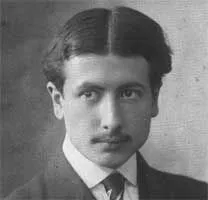
Louis Sclavis
Human Design Chart
Biography
Louis Sclavis — Projector with Profile 1/3
Projector 1/3 — Design at a Glance
Louis Sclavis revealed himself as someone who immediately recognized flaws in the system. His design as a Projector inclined him to penetrate the environment with a dense, focused aura – comparable to a bright flashlight that shines on areas still in darkness for the other person. This mechanism meant that he was destined to bring light into the dark for others and illuminate their path.
However, this direct perception carried a risk: If he addressed these flaws immediately, it seemed as if he was shining his bright light directly into others' faces. This led to his environment quickly turning hostile. The more elegant expression of his design was to simply shine pleasantly, for example, by maintaining a harmonious relationship himself. Other people would then automatically come to him and ask for his insider tips, as a glowing projector is highly attractive.
His best strategy was therefore to wait for a respectful and sincerely meant invitation from others rather than initiating himself. Since his sacral center was undefined, he did not have a constant, intrinsic source of life energy. Instead, he went through phases of high productivity followed by necessary rest phases to avoid burning out. If he lived according to this design, he was rewarded with success; if he deviated from it, his non-self theme of bitterness would eventually surface.
Splenic Authority
Louis Sclavis demonstrated decision-making based on a fine, spontaneous inner impulse. His design indicated that he had to rely on his inner authority in the Spleen center. For this authority to be effective, his chart showed the Emotions center and the Sacral center open. This configuration is specific to Projectors and Manifestors, as it requires freedom from other energy types to follow the subtle signals of the body.
The Spleen center functions as a health and alarm system. It provides immediate survival intelligence that manifests as spontaneous knowledge about whether a situation, environment, or society is beneficial. For Louis Sclavis, the first intuitive impulse was the reliable indicator of his health and well-being. This allowed him to rigorously shield against harmful influences and protect himself.
However, this impulse was very subtle and only present in the moment, requiring high vigilance. It could easily be drowned out by external influences. A short retreat often helped him to hear this voice clearly. Since the right course of action was only recognizable in the moment, long-term plans were often difficult to maintain. Spontaneity and flexibility were therefore crucial to avoid unnecessary commitments and to maintain the necessary freedom.
The 1/3 Profile — Investigator / Martyr
Louis Sclavis revealed himself as someone who not only gathers knowledge but also tests theoretical foundations through consistent practice, thereby profiling himself as both a researcher and an adventurer. This attitude stems from his Profile 1/3, the Researcher/Experimentor. Here, Line 1, which seeks deep understanding and planning, meets Line 3, which learns through trial and error.
Often, the energy of Line 1 dominated in Louis Sclavis, leading to hesitation because the feeling arose that he did not know enough to proceed with implementation. Yet, Line 3 challenged him to take precisely this step, as mistakes were considered essential learning steps. Through this dynamic, he gained insights that were both theoretically grounded and practically tested. When Louis Sclavis evaluated an activity or an object as good, it was the result of this double testing process: He had empathically absorbed the matter – supported by the ability to take in stories and secrets from various sources – and then tested it in reality. His judgment was therefore trustworthy because it was based on authentic experience, not mere speculation. The challenge always lay in overcoming the initial uncertainty of planning and using the adaptability of Line 3 to express himself authentically in the flow of the experiment.
Split Definition — Defined & Open Centers
Louis Sclavis revealed himself through a reliable inner identity and direction, supported by his defined G Center. This gave him a deep sense of belonging and the ability to show others new perspectives without being dependent on them. His communication was clear and authentic, shaped by his defined Throat Center, which acted as a pivot for messages. Supported by his defined Spleen Center, he often acted from spontaneous intuition and body awareness, trusting the momentary 'now' rather than following rational considerations. The defined Root Pressure provided a steady energy, propelling him forward in the material world and helping him cope with stress.
At the same time, Louis Sclavis was open to the mental and emotional environment. His open Head Center made him vulnerable to mental confusion and the pressure to answer questions that were not his own; he had to learn to remain a detached observer of his thoughts. His open Ajna Center allowed for a flexible mind but led to the tendency to interpret the concepts of others as his own truth or to pretend certainty to be accepted. His open Heart Center lacked consistent willpower, which could push him into a cycle of promises and self-doubt when he tried to prove his worth. Additionally, his open Sacral Center was sensitive to the energy of others, which could lead to exhaustion if he did not listen to his inner authority to set boundaries. His open Solar Plexus Center allowed him to absorb and amplify the emotions of the environment, putting him at risk of personalizing foreign feelings and avoiding confrontation to maintain stability.
Channels for reflection, memory and persistent ambition.
Louis Sclavis revealed himself through a design that not only collects experience but condenses it patiently before sharing it. This attitude stems from the Lost Son Channel 13-33. It connects the G Center with the Throat Center: Gate 13 listens and stores secrets, while Gate 33 withdraws to reflect on these data. This mechanism requires timing; the truth reveals itself only when the surface is calm. Sclavis’ design tended to act as a witness observing the magic of completion rather than projecting premature expectations.
Simultaneously, a driving force of transformation 54-32 was at work. This channel connects the Root Center with the Spleen Center. Gate 54 brings the ambition to rise through constant effort, driven by the fear of failure or the inability to keep up. Gate 32 uses the instinct to recognize talents and secure continuity. Here, the drive to achieve a higher position through competence and loyalty to the 'tribe'—the supportive community—is evident. The transformation is not an isolated act but requires mutual dependence and recognition.
Additionally, other gates shaped his perspective. Gate 1 emphasized uniqueness and creative creation in the here and now, while Gate 2 created receptivity to new evolutionary directions. Gate 7 projected leadership structures and future patterns tested through experiments. On the personality side, Gate 19 promoted the search for resources and spiritual connection in the community, Gate 25 mystical innocence and centering, and Gate 50 conservative protection of values and traditions. In the design itself, Gate 56 acted as a storyteller, translating mental processes into vivid representations, and Gate 53 as a pioneer, beginning new cycles, though this could lead to temporary depression if the path is not clear without the completion through Gate 42.
Collective Circuitry — Circuit Signature
Louis Sclavis revealed himself through his design as someone who took on emotional waves from the past to translate them into a shared identity. This tendency rooted in the Meaning-Making Circuit, which in him connected the Throat and Identity Centers. While this circuit generally emphasizes reflecting on past events and finding meaning, this energy in Louis Sclavis specifically worked through the channel 'The Lost Son'. This channel linked the visual, cyclical nature of emotions with the ability to share these experiences verbally or artistically with the collective. The emotional insights were not private but served to learn collectively from the past.
Parallel to this, there was a separate energy in the Ego Circuit not connected to the first circuit. Here, Spleen and Root Centers formed a direct line. This circuit focuses on cooperation and the joint creation of resources within a group without the constant life force of the Sacral Center. In Louis Sclavis, this worked through the Transformation Channel, which linked intuitive perception (Spleen) with the reaction to pressure or danger (Root). This created a rhythmic, ratchet-like energy requiring pauses to regenerate resources for the 'tribe'.
As a person with a shared definition, these two systems—the emotional sharing of the past and the intuitive, group-oriented resource conservation—existed as parallel, not directly connected forces. Louis Sclavis navigated between the need to carry inner emotional cycles outward and the need to intuitively retreat into secure, cooperative structures to conserve energy. This duality shaped his way of dealing with his environment and inner experience.
Right Angle Cross of the Sphinx 1
Louis Sclavis was marked by the right cross of the Sphinx 1, a configuration that establishes a deep connection between personal will and collective wisdom. This design tends to make decisions not in isolation but within a larger, often spiritual or archetypal context. The energy of this cross promotes the ability to use intuitive insights to navigate one's life path, always with an awareness of a higher order.
In Human Design, the right cross of the Sphinx 1 describes the interaction between the G-Split and the Root Center, leading to a strong orientation towards meaning-making. People with this configuration tend to connect their individual goals with a higher purpose, often infusing decisions with a nearly mythic or symbolic quality. It's not about mere whimsy, but about recognizing patterns that transcend the everyday.
For Louis Sclavis, this meant that his actions were often guided by an inner logic that was not always rationally explainable, but resonated deeply with universal themes. This mechanism supported a way of life where personal autonomy and trust in a larger structure went hand in hand, without the individual will being subsumed. Instead, he was strengthened and focused through the connection with this larger whole.
Saturn Return · Uranus Opposition · Chiron Return · 2nd Saturn Return — Life Cycles
Louis Sclavis was someone who gradually solidified his musical identity through structural anchoring and external validation. His design tends to transform internal impulses into concrete, tangible forms, with external milestones serving as mirrors for internal development.
In 1982, at the age of 29, he founded his first band, 'Le Tour de France.' This marked his first Saturn Return, a cycle in which years of groundwork often condenses into a viable result and clearly defines one's position in the world. For Louis Sclavis, this was the moment when the abstract search for expression transitioned into an institutional reality.
Validation of this position followed in 1990, at the age of 37, with the receipt of the British Jazz Award. This fell during the Uranus Opposition, a phase often marked by a sudden breakthrough or unexpected recognition that validates the previous path and opens new horizons. The external world here confirmed the internal development.
In 1999, at the age of 46, he composed the film music for 'Es beginnt heute' and 'Grands comme le monde.' This corresponded to his Chiron Return, a fulfillment cycle in which one's incarnation cross unfolds and meaning becomes experiential. Not as a healing, but as a bloom, it showed that the previous work was lived according to his strategy and authority. The compositions were the expression of a mature purpose now visible and audible in the world.
Projector · Splenic Authority — Synthesis
The red thread in this design is a deep, cyclical engagement with experience and its transmission. The projection capability, the recognition of patterns and errors (Throat Center, Gate 11) culminates in a process of listening, collecting, and reflecting (Channel of the Lost Son). This process is not linear but wave-like and emotionally marked (Meaning-Making Circuit), with the Spleen Authority sharpening the instinct for right and wrong in the moment. The recurring cycles, evidenced by career and success experiences, show a pattern of deep immersion in experiences followed by a phase of integration and creative development.
The central paradox lies in the tension between the need to project 'light into the dark' and point out errors, and the risk of encountering rejection. The ability to gain and communicate deep insights is countered by a natural reticence and the need for reflection (Gate 33). This leads to an internal dynamic in which sharing insights is both an impulse and a challenge – a constant weighing between the desire to act and the necessity to protect oneself.
2 Defined Channels
Incarnation Cross - Right Angle Cross of the Sphinx 1
Solar Return
The Solar Return shows the moment when the sun returns to its exact birth position - your personal solar year.
Life Cycles
Discover the life cycles with a detailed triple view (birth chart, cycle chart, composite).
Human Design Profile
- Type
- Projector
- Strategy
- Wait for the respectful invitation
- Authority
- Splenic Authority
- Profile
- 1/3 - Investigator / Martyr
- Definition
- Split Definition
- Incarnation Cross
- Right Angle Cross of the Sphinx 1
- Date of Birth
- 02.02.1953 23:00
- Place of Birth
- Lyon, France
Frequently Asked Questions
What is the Human Design type of Louis Sclavis?
What Profiles does Louis Sclavis have?
What authority does Louis Sclavis have?
What incarnation cross is Louis Sclavis associated with?
When was Louis Sclavis born?
Discover your own Human Design
Are you also a Projector? Find out in a personal reading how to unfold your leadership qualities and recognize the right invitations.
More Personalities
Back to overviewSissy Spacek

Aaliyah

Alain-Fournier
Alexia

Alizée

Anémone