
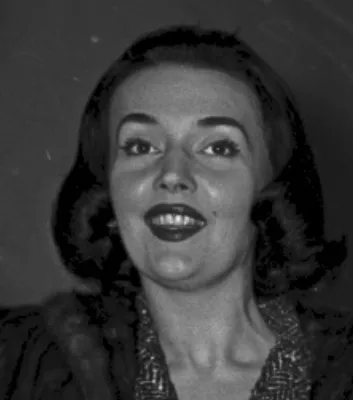
Ludmila Tcherina
Human Design Chart
Biography
She died on 21 March 2004.
What does Generator 2/4 mean for Ludmila Tcherina?
Generator 2/4 — Design at a Glance
Ludmila Tcherinas design points to a tendency for great endurance and inner drive, provided she listens to her own impulses. As a Generator, she has a lot of sacral energy, which gives her the power to materialize things in life. However, this energy is not released through initiated action but exclusively through reacting to signals from the environment. Therefore, her design's motto is: do not initiate, but react.
Her most successful strategy was to wait for a life signal and then, when her sacral center gave a clear "yes," to respond with action. If Ludmila Tcherina lived by this principle, she was rewarded with a feeling of deep fulfillment. Conversely, frustration and energy depletion threatened if she acted against her design, such as by initiating things she actually had no desire to do, or if she was prevented from working when she was still full of power. These two stumbling blocks – energy waste through unwanted activities or interruption when fully motivated – defined the challenges of her energy level. Her character thus showed as someone who acted from the gut, and whose satisfaction directly depended on the authenticity of her reactions.
Emotional Authority
Ludmila Tcherina's design indicated a tendency towards emotional depth and a necessary delay in decision-making. She was someone who always perceived the world through the filter of her current mood, leading to a constant fluctuation of her feelings. This trait stemmed from her emotional authority, carried by her defined Solar Plexus Center. In Human Design mechanics, this authority always takes precedence over all other defined centers, regardless of the rest of the configuration. Ludmila Tcherina was subject to an emotional wave that colored her perspective: the same thing could be inspiring at one moment and negative the next. Her immediate feeling was, however, only a snapshot, not the final truth. Quick, spontaneous decisions made in this emotional heat risked negative consequences. The mechanics required her to be patient and consciously sleep on decisions. Only with time, as intense feelings subsided and emotional distance was gained, did she achieve the necessary clarity and calm. This process of maturation was essential for recognizing the deeper, more comprehensive truth of a situation, especially in long-term decisions that significantly impacted her life course. She needed to take the time to go through the emotional process to reach inner certainty.
The 2/4 Profile — Hermit / Opportunist
Ludmila Tcherina's design reveals a pronounced tension between the deep desire for withdrawal and the wish for close community. She appeared as someone constantly swinging between two poles: the urge to be alone to gain inner clarity and the desire to spend time with her favorite people. For Ludmila Tcherina, it was crucial to create a safe environment where she could clearly communicate these needs – when she sought company and when she wanted to be undisturbed.
During her "me-time," she immersed herself in internal processes to find peace. Once this need was satisfied, she emerged from "her cave" to connect with her network. This profile allowed her to reflect on knowledge from her social contacts in solitude and develop brilliant ideas from it.
Her Line 2, marked by Gate 57, gave her the intuition to recognize appropriate values. These values served her survival and required resolute determination to acknowledge them. At the same time, her Line 4, represented by Gate 53, brought confidence and certainty. As her first transpersonal line, it emphasized the cycle of experiences and reflection. Ludmila Tcherina had the ability to be sure, even in crisis times, that everything has an end, which helped her use difficulties for personal development.
Triple Split Definition — Defined & Open Centers
Ludmila Tcherina's Human Design showed a tendency towards constant mental pressure and deep emotional processing. She was someone who asked questions and formed concepts, driven by a defined Head and Ajna Centers. This mechanism generated a continuous inner urge to understand and comprehend, without the direct execution power from the mind itself being available. Ludmila Tcherina tended to use this mental pressure as inspiration for others, rather than turning it into hasty actions.
Her energy source was a defined Sacral Center, which generated immense vital energy. This meant that Ludmila Tcherina had to wait for stimuli to correctly use her energy and find satisfaction. Her inner authority lay in the defined Solar Plexus Center, which required waiting for the emotional wave before making decisions. Truth revealed itself to her over time, not in impulsive moments. Additionally, she had a defined Spleen Center for spontaneous, intuitive judgments in the moment, as well as a defined Root Center, which provided the physical pressure to move forward in the world and manage stress.
At the same time, Ludmila Tcherina was exposed to certain vulnerabilities through open centers. Her open Throat Center led her to feel the pressure to get attention or speak when she did not trust her authority. She tended to wonder if she was noticed, rather than waiting for invitations to speak to come naturally. Her open Heart Center made her vulnerable to the desire to prove her worth through willpower or promises. Ludmila Tcherina was tempted to do more than necessary to appear competitive, even though her design was not geared towards constant willpower. The wisdom of her design lay in not filling these open fields, but rather allowing the defined energies of Head, Ajna, Sacral, Solar Plexus, Spleen, and Root to work in their specific ways.
Channels for logic, rhythm, ambition and emotional release.
Ludmila Tcherina was someone whose inner compass was strongly influenced by a healthy, skeptical mind. The Logic Channel 63-4 connected her Head Center to her Ajna Center and ensured that she continuously filtered patterns to test her consistency. Doubt was not an obstacle for her but the essential foundation of her thinking; she sought verifiable evidence rather than unfounded belief. This active mind drove her to ask questions and make well-founded predictions, often using the pressure to find answers to serve others.
At the same time, Ludmila Tcherina was deeply embedded in the biological flow of life. The Rhythm Channel 5-15 connected her Sacral Center to her G Center and gave her a natural, inner rhythm. Gate 5 held onto fixed habits, while Gate 15 integrated the diversity of society into this life stream. This channel ensured that she was driven by a universal magnetism that directed her and her surroundings towards a safe future, as long as she followed her own reactions.
Her ambition was driven by the Transformation Channel 54-32, which linked her Root and Spleen Centers. Here she sought talents and aimed to improve her position through constant effort and support the stem. This desire for advancement and continuity was closely intertwined with her emotional nature. The Feelings Release Channel 39-55 connected her Root to her Solar Plexus Center and generated a pulsing wave between joy and melancholy. Ludmila Tcherina used this provocation to awaken the minds of others and express her own emotional truth by learning to wait for the right mood for each action.
Additionally, Gates like the Intuitive Clarity Gate 57 and the Freedom Gate 53 influenced her, enhancing her ability to pioneer new paths and hear clearly in the present moment.
Collective Circuitry — Circuit Signature
Ludmila Tcherina's design was shown as a triad of separate, parallel operating forces that did not merge into a single flow. Her energy divided into three independent areas.
The Knowledge Circuit connected her Solar Plexus to her Root Center. This created a pulsing, acoustic quality that released emotions and translated them into direct impulses. It was about expressing individuality through emotional waves that acted in the present moment.
At the same time, the Understanding Circuit consisted of two isolated segments. One connected Head and Ajna Centers, enabling focused, visual logic and strategic planning. The other segment linked Identity and Sacral Centers, creating a stable, rhythmic life flow. These two areas – cognitive strategy and physical rhythm – were energetically separate, meaning a clear separation of thoughts and action-driving power.
Thirdly, the Ego Circuit worked through the connection of Spleen and Root Centers. This promoted a transformative power based on instinct and survival intuition. As this circuit belongs to the stem group, it served cooperation and the joint creation of resources, but required regular rest periods for regeneration due to the lack of a Sacral connection.
Ludmila Tcherina thus lived with these three distinct systems: emotional impulsivity, separate cognitive planning, and instinctive transformation. None of these energies flowed directly into the others; they existed as independent, parallel potentials, each requiring its own strategy for use.
Right Angle Cross of Penetration 3
Ludmila Tcherina's Human Design profile indicated a tendency towards a deep, often painful intuition that was expressed through a specific configuration in her Human Design chart. She was someone who not only recognized inner truths but also carried this insight into the world with a certain urgency and impact. This resulted from the activation of the so-called 'Right Cross of Penetration 3'. This structure connected the energy of the 3rd Center with that of the Root Center, creating a dynamic, impulse-driven intelligence.
Unlike other intuition types that wait or reflect, Ludmila Tcherina's approach was direct and action-oriented. The 3rd Center, which stands for emotional truth and the processing of experiences, was here linked with the Root energy responsible for stress reactions and survival impulses. This meant that her insights often emerged in moments of tension or pressure and were immediately wanted to be implemented. It was not a calm, contemplative wisdom, but a living, sometimes turbulent force aimed at breaking through obstacles. Ludmila Tcherina lived this mechanism by using her inner impulses as a driving force to shape and understand her own reality. Her path was characterized by this immediate connection between feeling and action, without waiting for long hesitation or external validation.
Saturn Return · Uranus Opposition · Chiron Return · 2nd Saturn Return — Life Cycles
Ludmila Tcherina's design structured her path into phases of deepening and public engagement. In 1973, at the age of 49, she created a charcoal sketch for a bronze work. This period coincided with the Chiron Return, a cycle of fulfillment and blooming. During this phase, one's incarnation cross increasingly unfolds in life, provided the person follows their strategy and authority. Meaning and purpose become experiential, not as healing of old wounds, but as confirmation of one's path. Tcherina's artistic achievement marked a peak of personal unfolding.
A decade later, in 1983 at the age of 59, she published her first novel, 'L'Amour au miroir'. This occurred during the second Saturn Return. This cycle condenses years of groundwork into a solid result. It demands structure, discipline, and the ability to bring learned knowledge into a stable form. The publication of the novel showed how internal processes and long-term developments discharged into a concrete, tangible work. Both events underscore how Tcherina's design utilized specific life phases to transform creative impulses into sustainable outcomes.
Generator · Emotional Authority — Synthesis
Ludmila Tcherina lived deeply within her own inner world, marked by a strong sacral energy (Generator type) and a defined Head and Ajna Center. This combination created a constant inner pressure to question and filter patterns (Channel 63-4), making her an indefatigable seeker. Her profile as a natural talent and networker suggests that she oscillated between the need for withdrawal and the desire for exchange, with the time of internal processes essential for her clarity. This ability to go within and draw from this source formed the red thread of her life, manifesting in the confrontation with new insights and the transformation of these into expression (Knowledge Circuit).
Simultaneously, her design revealed a central paradox: the emotional authority that brought deep experience and intense emotional waves stood in tension with the logical, doubting mind (Channel 63-4). While emotions triggered immediate reactions, logic demanded evidence and consistency before accepting something as true. This led to an inner dynamic in which she navigated between feeling and mind, with time for decision maturation being crucial. A notable event, the publication of a novel, coincided with a Saturn Return, pointing to a phase of reflection and the expression of transformed knowledge.
4 Defined Channels
Incarnation Cross - Right Angle Cross of Penetration 3
Solar Return
The Solar Return shows the moment when the sun returns to its exact birth position - your personal solar year.
Life Cycles
Discover the life cycles with a detailed triple view (birth chart, cycle chart, composite).
Human Design Profile
- Type
- Generator
- Strategy
- To respond - wait for something to respond to
- Authority
- Emotional Authority
- Profile
- 2/4 - Hermit / Opportunist
- Definition
- Triple Split
- Incarnation Cross
- Right Angle Cross of Penetration 3
- Date of Birth
- 10.10.1924 04:30
- Place of Birth
- Paris, France
Frequently Asked Questions
What was Ludmila Tcherina's Human Design type?
What profile did Ludmila Tcherina have?
What authority did Ludmila Tcherina have?
What incarnation cross was Ludmila Tcherina assigned?
When was Ludmila Tcherina born?
Discover your own Human Design
Are you also a Generator? Find out in a personal reading how to use your sacral energy correctly and discover deep satisfaction.
More Personalities
Back to overviewSissy Spacek

Aaliyah

Alexia

Anémone

Angèle

Ann-Margret
