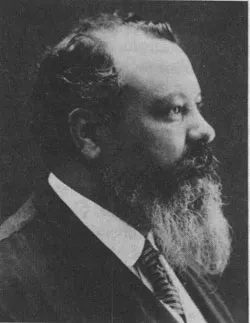
Ludwig Marcuse
Human Design Chart
Biography
His 1962 book, Obscene: The history of an indignation revolves around leading obscenity trials: Friedrich Schlegel's Lucinde (Jena, 1799), Gustave Flaubert's Madame Bovary (Paris, 1857), Arthur Schnitzler's Round Dance (Berlin, 1920), D. H. Lawrence's Lady Chatterley (London, 1960), and Henry Miller's Tropic of Cancer (Los Angeles, 1962). A chapter is also devoted to the crusade of Anthony Comstock and the New York Society for the Suppression of Vice.
Ludwig Marcuse died on 2 August 1971 in Bad Wiessee, aged 77. He was not related to Herbert Marcuse, another exiled German intellectual of Jewish descent.
Human Design Analysis: Ludwig Marcuse as Manifestor 1/4
Manifestor 1/4 — Design at a Glance
Ludwig Marcuse revealed himself as someone with a clear vision who wanted to actively steer the world in a new direction. His design as a Manifestor shaped him into a pioneer and leader who did not engage in trench warfare himself but, like an emperor, sent his soldiers to conquer foreign lands. This role, however, put him in a difficult position: His big dreams and forward-looking nature often led to misunderstandings. He polarized strongly; some loved and followed him for his visions, while others hated or rejected him for the same reason.
To minimize these frictions and find the right followers, it was crucial for him to inform others about his intentions in a timely and precise manner. This strategy of informing was the key to his inner balance. If he lived by this strategy and followed his inner authority, he was rewarded with a deep sense of inner peace. If he acted against his design, without informing or leading, he felt instead a persistent, deep anger. His life was thus a constant struggle to communicate his visions in a way that they were understood rather than just rejected.
Splenic Authority
Ludwig Marcuse revealed himself as someone who made decisions not through long-term planning but through spontaneous, inner impulses. His design inclined him towards flexibility; he needed space to avoid getting lost in rigid structures. This attitude stemmed from his authority in the Spleen. The Spleen Center served as his health and alarm system, equipped with a fine survival intelligence. It provided him with a clear, intuitive signal at the moment of decision whether a situation or environment was right for him. This first impulse served immediately to his physical well-being and allowed him to rigorously distance himself from harmful influences. Since this Spleen impulse was very subtle and only occurred once, its use required high vigilance. He had to learn not to let this fine inner sound be drowned out by other influences, which sometimes necessitated a short retreat for decision-making. As his knowledge was situational and arose in the moment, long-term commitments were difficult for him. His design thus promoted spontaneity over rigid plans, as the right paths only became apparent in the concrete moment.
The 1/4 Profile — Investigator / Opportunist
Ludwig Marcuse revealed himself as a researcher and networker whose design combined a drive for deep knowledge with a need for a familiar community. As a 1/4 personality, he researched things thoroughly and then shared them with a chosen group of familiar people. This configuration created a specific dynamic: His deep knowledge served not only personal insight but was also designed to influence others through his network and make them authorities in their heart matters.
This ability to convey knowledge stood in tension with a deep fear. The Line 4, the line of the great heart, caused him to fear being exposed to his loved ones if he felt he did not know enough. This potential heartache made a loving environment with a firm trust base an essential prerequisite for his talents to come to the fore. Without this security, the potential remained untapped.
At the same time, the Law of Necessity shaped his attitude. He recognized that revolutionary principles must be viable and bring real improvement to gain support. It was necessary to wait for emotional waves to avoid unleashing destructive forces out of principle. His transpersonal fixation on deep knowledge could, however, lead to rigidity, which made effective verbal communication difficult. Only through overcoming these rigid structures could he convey his insights in a way that others actually understood and embraced.
Single Definition — Defined & Open Centers
Ludwig Marcuse revealed himself as a person with a consistent, trustworthy mental function. His defined Ajna Center ensured that he created concepts and theories in a specific way that was hardly influenced from the outside. This mind served as an external authority that conditioned the mental field of his environment. Since his Throat Center was also defined, he could express what his mind conceptualized directly and reliably. This connection allowed him to communicate his thoughts clearly without the message being filtered through emotional fluctuations.
Additionally, he had a defined G Center, which gave him a firm self-identity and a clear sense of direction. He knew where he belonged and could show others new perspectives without being dependent on them. His defined Spleen Center supported this through spontaneous, intuitive intelligence in the present moment. He could perceive existential warning signals and trust his instincts, which gave him a deep sense of well-being and protection. The defined Root Center provided the necessary pressure to move forward in the world and thrive materially.
At the same time, he was exposed to certain conditioning through his open centers. His open Head Center made him vulnerable to the pressure to answer questions that were not his own. He tended to get stuck in mental monologues when trying to find inspiration or solve confusion that actually came from others. His open Heart Center led to the impression that he often felt the need to prove his worth by making promises he could not keep. This created a cycle of self-doubt when he failed because he did not have the consistent energy for strong-willed action.
His open Sacral Center allowed him to absorb the vital energy of his environment and amplify it without generating it himself. He risked overextending and exhausting himself with borrowed energy because he had no consistent boundaries for his availability. Finally, his open Solar Plexus absorbed the emotions of others, leading him to oscillate between happiness and depression without recognizing these feelings as his own. He had to learn not to personalize these emotional waves to maintain his inner peace.
Channels for inspired, deep and transformative expression.
Ludwig Marcuse revealed himself as someone who drew attention through his mere presence and the authentic life of his individuality. This effect did not primarily come from explanatory words but from a exemplary existence. The Channel of Inspiration 1-8 connected his G Center with the Throat Center and allowed him to express a mutative perspective creatively. He was designed to live as an individual and inspire others through his unique nature, provided he acted from inner, authentic authority.
Parallel to this, he had the ability to connect intuitive depth with technical mastery. The Channel of Wavelength 48-16 connected the Spleen Center with the Throat Center. Through the Gate of Depth (48), he instinctively sought life-critical information while the Gate of Skill (16) drove him to perfect skills through repeated experimentation. This transformed raw talent into precise craftsmanship, which, however, required recognition and resources to fully unfold.
His mental process was marked by innovative insights. The Channel of Structuring 23-43 connected his Ajna Center with the Throat Center. He received spontaneous breakthroughs (Gate 43) and processed them into clear, efficient language (Gate 23). His thinking often felt far ahead; to be understood, he had to wait for the right timing, as his innovative knowledge was otherwise rejected as foreign.
Another driver was the ambition to improve through competence. The Channel of Transformation 54-32 connected his Root Center with the Spleen Center. Driven by the fear of the clan's failure (Gate 32) and the desire to rise (Gate 54), he worked hard to secure his position. This energy served social transformation and the building of continuity through loyalty and mutual support.
Additionally, isolated Gates had an effect: Gate 49 brought emotional waves and principle loyalty, Gate 4 developed formulas for future security, Gate 11 used visual memory for situational assessment, Gate 57 sought intuitive clarity, Gate 58 experimented with patterns, Gate 50 preserved traditional values, Gate 44 managed resources through vigilance, and Gate 35 sought change through interaction.
Individual Circuitry — Circuit Signature
Ludwig Marcuse revealed himself as someone who combined structural clarity with inspiring impulses. His design was simply defined, allowing coherent, connected energy flows in the connected centers.
In the Knowledge Circuit, he connected the Ajna Center with the Throat Center and the Identity Center. This promoted the ability to transform and express new insights through structuring and inspiration. The Channels 43-23 (Structuring) and 8-1 (Inspiration) supported this process by bringing creative flashes and emotional waves into understandable forms.
The Understanding Circuit connected the Throat Center with the Spleen through the Channel 16-48 (The Wavelength). This allowed him to communicate logical and rational insights clearly, free from conditioned patterns. The energy of this circuit was focused and aimed at improving society through strategic thinking.
In the Ego Circuit, he connected the Spleen with the Root Center through the Channel 32-54 (Transformation). This promoted the ability to create resources through transformation and mutual support. The energy of this circuit was conservative and traditional, with a focus on long-term stability and cooperation.
In summary, Ludwig Marcuse showed a unique combination of creative inspiration, logical clarity, and transformative cooperation, which enabled him to explore new paths and bring changes into the world.
Right Angle Cross of Explanation 1
Ludwig Marcuse revealed himself through a design that emphasized a clear, explanatory power. His chart featured the right cross of explanation. This configuration combined the ability to penetrate complex connections with the drive to make these insights understandable for others. It was not just information, but a deeper, structural clarity that he conveyed.
The mechanics of this cross promoted a stance of precise analysis. Ludwig Marcuse sought the logic behind things and formulated his insights in a way that they became comprehensible. This was not superficial talk, but a process of enlightenment. He helped others sharpen their own perspective by naming the underlying patterns. His way of communicating was direct and goal-oriented.
Without a specific event mentioned in the raw content, no temporal connection can be established. The focus remains on the described inclination: Ludwig Marcuse used his analytical sharpness to reduce confusion. He was someone who brought order to chaos by naming the structures that others had overlooked. This trait shaped his interactions and his contribution to the exchange of ideas. His design suggested that his strength lay in the ability to make the invisible visible and the hidden understandable.
Saturn Return · Uranus Opposition · Chiron Return · 2nd Saturn Return — Life Cycles
Ludwig Marcuse showed himself as someone who, in moments of crisis, resorted to flight to secure his life and later found a stable identity in his new home. His design indicated a tendency to distance himself from threatening environments when the pressure became too great. In 1933, at the age of 39, he left Germany due to his Jewish heritage. This was not just a biographical necessity, but corresponded to the mechanics of the Uranus opposition: a point where old structures break and radical changes are forced. The crisis served here as a catalyst for the necessary break with the past.
Later, in 1944, at the age of 50, he received American citizenship. This fell into the phase of his Chiron return. In Human Design mechanics, this cycle does not mark the healing of wounds, but a period of fulfillment. If one's own strategy is observed, the life purpose unfolds here. The retention of citizenship was thus a sign that his path in exile had condensed into a viable new foundation. The Chiron return confirmed that the preceding steps – also the painful flight – were part of a meaningful process. Marcuse found not only legal security but also the confirmation that his life had taken a clear, fulfilled course. The mechanics show that the Chiron return is a fulfillment cycle in which the meaning of one's own design becomes tangible.
Manifestor · Splenic Authority — Synthesis
Ludwig Marcuse lived as a Manifestor, who through his visions and the ability to develop new perspectives (Channel Inspiration, Knowledge Circuit) took a pioneering role. His defined mind (Ajna Center) allowed him to form and implement concepts, while authority in the Spleen gave him a keen sense for his own health and the right timing. This combination of mental clarity and intuitive knowledge shaped his path, which was always driven by the search for deep understanding (Profile Researcher/Networker) and the desire to share this knowledge with others.
A central paradox in his design lay in the tension between the drive to shape and inspire as an individual (Gate 1) and the accompanying fear of not knowing enough or being exposed to others (Line 4). The experience of leaving the country (Uranus opposition 1933) and the retention of citizenship (Chiron return 1944) showed how he pursued his path despite this inner conflict and distanced himself from harmful influences. His life was thus a constant balancing act between the expression of his unique individuality and the longing for confirmation in a familiar community.
4 Defined Channels
Incarnation Cross - Right Angle Cross of Explanation 1
Solar Return
The Solar Return shows the moment when the sun returns to its exact birth position - your personal solar year.
Life Cycles
Discover the life cycles with a detailed triple view (birth chart, cycle chart, composite).
Human Design Profile
- Type
- Manifestor
- Strategy
- To inform others before acting
- Authority
- Splenic Authority
- Profile
- 1/4 - Investigator / Opportunist
- Definition
- Single Definition
- Incarnation Cross
- Right Angle Cross of Explanation 1
- Date of Birth
- 08.02.1894 11:30
- Place of Birth
- Berlin, Germany
Frequently Asked Questions
What was Ludwig Marcuse's Human Design type?
What Profile did Ludwig Marcuse have in Human Design?
What Authority did Ludwig Marcuse have?
What incarnation cross did Ludwig Marcuse have?
When was Ludwig Marcuse born?
Discover your own Human Design
Are you also a Manifestor? Find out in a personal reading how to use your initiation power peacefully and dissolve resistance.
More Personalities
Back to overviewChristian-Jaque

Kesha

Lucebert
Masaccio

Nadar
Papus