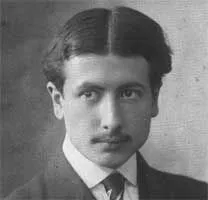
Photo: Wikimedia Commons
Ludwig Tieck
Human Design Chart
Biography
In 1799 Tieck published a translation of Shakespeare’s The Tempest, and he started a translation of Don Quixote (published 1799–1801). After 1802 Tieck’s creative powers apparently became dormant. He studied Middle High German, collected and translated Elizabethan plays, published new editions of 16th- and 17th-century German plays, and acted as adviser to the Shakespeare translation begun by August von Schlegel. He also published works by such contemporary German writers as Novalis and Heinrich von Kleist.
From 1825 to 1842 Tieck served as adviser and critic at the theatre in Dresden. During those years he became the greatest living literary authority in Germany after J.W. von Goethe. His creative energies were renewed; he turned away from the fantasy of his earlier work and found his material in contemporary middle-class society or history. In 1842 he accepted the invitation of Friedrich Wilhelm IV of Prussia to go to Berlin, where he remained the rest of his years, and where, as in Dresden, he became the centre of literary society.
He died on 28 April 1853 in the morning between six and seven o'clock at age 79 in Berlin.
Ludwig Tieck as a Manifestor 5/1 in Human Design
Manifestor 5/1 — Design at a Glance
Ludwig Tieck proved to be a pioneer with the ability to lead the world in new directions. His design established an attitude that made him resemble an emperor in ancient Rome: He possessed the vision of a great whole, but did not personally wage wars and battles himself; instead, he sent others to conquer foreign lands for him. This kind of leadership inevitably polarized people. Since his thoughts often reached further than those around him, he was misunderstood. Some loved and followed him because of these grand visions, while others disliked or even hated him precisely because of them. For the right followership to find him, it was crucial that he informed others in a timely and precise manner about his plans. This formed the ideal strategy for his system. If Ludwig Tieck adhered to this strategy and held onto his inner authority, he was rewarded with a sense of inner peace. Living against this design, however, led him to feel a persistent, deep-seated anger within himself. His path was thus marked by the tension between the necessity of information to avoid resistance and his natural potential to evoke both love and hate through his visions.
Splenic Authority
Ludwig Tieck exhibited an attitude characterized by a palpable, immediate intuition. His inner authority lay in the Spleen Center – a defined area of the design that functions as a health and alarm system. For this specific spleen authority to be effective, both the Emotional Center and the Sacral Center were open, making him either a Projector or Manifestor.
This configuration endowed him with an acute survival intelligence: a spontaneous inner knowledge about whether a situation, environment, or society was right for his well-being. His decisions did not arise from prolonged thought or emotional deliberation but as an immediate impulse in the present moment. This first thought served directly to maintain his health and enabled him to rigorously distance himself from harmful influences.
Since this spleen impulse was very subtle and only occurred once at a time, perception required high vigilance. He had to learn to trust these subtle signals before they were drowned out by other voices. A brief retreat helped him grasp the clarity of that moment. Because his knowledge was always available only in the present, his preferences often changed frequently; long-term commitments were therefore difficult for him. Instead, he needed a lot of freedom and flexibility to react spontaneously to what proved to be right.
The 5/1 Profile — Heretic / Investigator
Ludwig Tieck emerged as someone who gathered deep knowledge to offer others for problem-solving. His design as a 5/1 profile combined Line 1, which promotes intensive research and learning, with Line 5, which possesses a magnetic presence. Others often sought him out for solutions, but this could quickly overwhelm him if he did not set clear boundaries. Similar to a scientist who is exhausted after hours of conferences because their inbox is full of questions, Ludwig Tieck risked losing his energy.
His inner attitude was marked by self-criticism. Line 5, often referred to as the 'spoilsport,' tends to devalue one's own talents and reject external recognition. Only through transformation did he learn to accept these abilities and use them for the collective good. At the same time, Line 1 required calmness in dealing with doubts. These had to be logically refuted to be resolved. It was a challenge for Ludwig Tieck to ask good questions and patiently wait for answers. By learning to also say no, he could maintain the balance between his own research and helping others. Thus, he used his gifts optimally without burning himself out.
Single Definition — Defined & Open Centers
Ludwig Tieck appeared as a person who was constantly under mental pressure to ask questions and understand connections. His design linked the Head Center with the Ajna Center to the Throat Center: He had a firm way of thinking and could directly express these concepts. This connection created a reliable voice that spoke from his mind. Additionally, he possessed a defined Heart Center, which gave him clear willpower. He determined his life himself, kept promises, and sought recognition for his contribution. His defined Spleen Center ensured that he responded to intuitive signals in the moment; his body guided him towards health and well-being through spontaneous judgments.
At the same time, Ludwig Tieck was open in several areas and thus vulnerable to external influences. His open G Center meant that he did not have a fixed identity. He tended to blend with his environment and sought direction through initiation by others. The question "Who am I?" could preoccupy him when he did not trust his strategy. His open Sacral Center led to the lack of an independent generative energy source. He absorbed the life force of others, which could lead to exhaustion if he neglected boundaries or identified with external energy. Furthermore, his open Solar Plexus took on emotions from the environment and amplified them. He had to learn not to personalize these feelings to maintain emotional stability. Finally, his open Root Center absorbed stress and adrenaline from others. This pressure could drive him forward or overwhelm him; he learned to distinguish between his own and foreign stress to avoid burnout.
Channels for logic, abstraction, acceptance, value creation and intuition.
Ludwig Tieck appeared as someone whose mind constantly swung between skeptical scrutiny and the search for hidden patterns. His design inclined towards analytical distance, paired with a need to articulate complex connections precisely.
This attitude was shaped by the Logic Channel 63-4, which linked Skepticism (Gate 63) with Formulation (Gate 4). This channel continuously filtered patterns for their consistency; only what proved consistent and verifiable was considered logically sound. Unfounded belief found no place here – skepticism had to lead through experimental testing to proof. Parallel to this, the Abstraction Channel 64-47 operated, linking Confusion (Gate 64) with Comprehension (Gate 47). This channel placed every experience in a kaleidoscope of mental images to discover an inspiring story or perspective behind the facts. The pressure to understand life often led to inner unrest until clarity emerged suddenly from the flood of possibilities – a moment of "Aha" that had to be shared.
In expression, the Acceptance Channel 17-62 worked, linking Opinions (Gate 17) with Details (Gate 62). It organized visual patterns into language and translated them into understandable theories or hypotheses. Anything not integrated into this inner image was dismissed as incomprehensible. This channel created a foundation for teaching and clear presentation of information, provided the timing of communication matched the receptivity of the counterpart.
Additionally, the Wavelength Channel 48-16 contributed, linking Intuitive Depth (Gate 48) with Technical Skill (Gate 16). Here it was about perfecting a skill through repeated experimentation and dedication. Talent did not arise solely from inspiration but also from the discipline of refining a pattern until mastery was achieved – a process that required recognition and resources to continue.
Individual Gates like Gate 9 (Detail Work) or Gate 18 (Correction of Spoiled) underscored this inclination towards precision and discriminating between essential and non-essential, while Gate 23 (Understanding) promoted the ability to explain otherness and bring mutations into the world.
Collective Circuitry — Circuit Signature
Ludwig Tieck's design inclined towards structured analysis and resource-aware cooperation. His chart showed him as someone who linked logical insights with material security, where two separate energetic streams existed in parallel: a cognitive flow and an action-oriented circle.
The Understanding Circuit formed a continuous stream between the Head Center, Ajna Center, Throat Center, and Spleen Center for Ludwig Tieck. This connected intuitive impulses (Head) with focused logic (Ajna), which was shared through speech (Throat), while the Spleen instinctively filtered useful information. Parallel to this, the Meaning Circuit operated but only linked Head and Ajna Centers. This emphasized a focus on abstract pattern recognition without emotional waves (Solar Plexus) directly influencing this process – a pure, emotionless ratio.
Regardless of this, Heart Center and Throat Center in the Ego Circuit shaped the dynamics of resource acquisition. Here it was about jointly creating prosperity through contracts and mutual support ("Money Line"). Since there was no connection to the Sacral Center, this energy required phases of rest for regeneration.
As a simply defined design, all five centers (Head, Ajna, Throat, Spleen, Heart) worked as unified power. Ludwig Tieck thus appeared as someone who combined rational future visions with pragmatic cooperation, while clear boundaries existed between cognitive processing and emotional reflection.
Left Angle Cross of Identification 1
Ludwig Tiecks Human Design legt eine Neigung zu einer klaren, durchdringenden Wahrnehmung fest. Er zeigte sich als jemand, der Situationen und Menschen mit einem scharfen Blick erfasste, nicht um sie zu verurteilen, sondern um ihre wahre Natur zu erkennen. Diese Haltung entsprang dem Einfluss des linken Kreuzes des Identifizierens 1 in seinem Chart.
Dieser archetypische Impuls beschreibt die Fähigkeit, das Wesentliche von der Oberfläche zu trennen. Es handelte sich nicht um oberflächliche Beobachtung, sondern um eine tiefe, fast intuitive Durchschautung. Ludwig Tieck besaß die mechanische Ausstattung, Muster und Zusammenhänge schnell zu erfassen, die anderen verborgen blieben. Sein Geist suchte nach der zugrundeliegenden Struktur von Ereignissen oder Charakteren.
Diese Konfiguration förderte eine direkte Art des Erkennens. Er neigte dazu, Dinge so zu sehen, wie sie wirklich waren, frei von Illusionen oder romantischen Verzerrungen. Die Energie dieses Kreuzes unterstützte ihn dabei, Klarheit in verwirrende Situationen zu bringen. Es war ein Werkzeug der Unterscheidung, das ihm half, zwischen Schein und Sein zu unterscheiden. Durch diese spezifische Ausrichtung seines Designs gewann er Zugang zu einer Wahrheit, die oft verborgen lag. Seine Wahrnehmung war präzise und zielgerichtet, was ihm ermöglichte, komplexe Realitäten auf ihr Kernanliegen zu reduzieren. Dies prägte seine Art, die Welt zu begreifen und zu interpretieren.
Saturn Return · Uranus Opposition · Chiron Return · 2nd Saturn Return — Life Cycles
Ludwig Tieck zeigte sich als jemand, dessen Lebensweg durch klare strukturelle Wendepunkte geprägt war. 1802, im Alter von 29 Jahren, zog er mit seiner Familie nach Ziebingen. Dieser Schritt fiel in die Zeit seines ersten Saturn-Returns. In der Human Design-Mechanik markiert dieser Zyklus oft den Übergang von der experimentellen Phase hin zu einer stabilen Lebensstruktur; persönliche Verbindungen und familiäre Bindungen gewannen an Gewicht und Verankerung.
Ein zweiter entscheidender Moment trat 7 Jahre später ein, als Ludwig Tieck 52 Jahre alt war und als Berater sowie Kritiker am Theater in Dresden tätig wurde. Dies entsprach dem Chiron-Return, einem Erfüllungszyklus, der sich typischerweise zwischen dem 49. und 51. Lebensjahr ereignet – hier also leicht verzögert oder ausgedehnt. In dieser Phase entfaltet sich das individuelle Inkarnationskreuz zunehmend im Alltag; der innere Sinn wird zur sichtbaren Wirklichkeit. Für Ludwig Tieck bedeutete dies, dass seine spezifische Art, Zusammenhänge zu durchleuchten und zu bewerten, nun eine offizielle Rolle in der Öffentlichkeit einnahm. Die Mechanik zeigt hier keine Heilung alter Wunden, sondern die Blüte dessen, was er war: jemand, der Strukturen prüft und bewertet. Beide Ereignisse unterstreichen, wie seine Design-Konfiguration ihn an bestimmte Lebensstationen band, an denen innere Qualitäten nach außen traten und sich in konkreten Handlungen oder Positionen festigten.
Manifestor · Splenic Authority — Synthesis
Ludwig Tieck lebte ein Leben, das von einem tiefgreifenden Drang nach Erkenntnis und dem Wunsch geprägt war, dieses Wissen weiterzugeben. Als Manifestor mit definierter Spleenzentralität (und dem Kanal der Logik) agierte er impulsgesteuert und vertraute auf seine innere Stimme, um sich in einer Welt zu orientieren, die oft seinen unkonventionellen Ideen misstrauisch gegenüberstand. Das Profil als Held/Forscher verstärkte diese Tendenz: Tieck suchte aktiv nach Lösungen (Linie 5) und vertiefte sein Verständnis durch kontinuierliches Lernen (Linie 1), um dieses Wissen anderen zugänglich zu machen – eine Rolle, die ihn in den Fokus der Aufmerksamkeit zog, aber auch Grenzen erforderte. Die wiederkehrenden Ereignisse im Saturn-Return und Chiron-Return deuteten auf Phasen intensiver Selbstreflexion und Neuausrichtung hin, in denen er seine Erfahrungen nutzte, um sich beruflich weiterzuentwickeln.
Tiecks Design offenbarte ein zentrales Paradox: Er war ein Vorreiter (Manifestor), der durch die Logik (Kanal 63-4) nach Beständigkeit suchte, während sein Spleen-Zentrum ihn gleichzeitig in den gegenwärtigen Moment führte und auf spontane Impulse hinwies. Diese Kombination aus zukunftsorientiertem Denken und instinktiver Reaktion erzeugte eine Spannung zwischen dem Bedürfnis, die Welt zu verstehen und zu gestalten, und der Notwendigkeit, sich im Hier und Jetzt sicher zu fühlen. Dieses Spannungsfeld prägte seine Herangehensweise an komplexe Themen und führte dazu, dass er sowohl innovative Ideen entwickelte als auch auf sein Bauchgefühl vertraute.
5 Defined Channels
Incarnation Cross - Left Angle Cross of Identification 1
Solar Return
The Solar Return shows the moment when the sun returns to its exact birth position - your personal solar year.
Life Cycles
Discover the life cycles with a detailed triple view (birth chart, cycle chart, composite).
Human Design Profile
- Type
- Manifestor
- Strategy
- To inform others before acting
- Authority
- Splenic Authority
- Profile
- 5/1 - Heretic / Investigator
- Definition
- Single Definition
- Incarnation Cross
- Left Angle Cross of Identification 1
- Date of Birth
- 31.05.1773 11:00
- Place of Birth
- Berlin, GER
Frequently Asked Questions
What was Ludwig Tieck's Human Design type?
What Profile did Ludwig Tieck have in Human Design?
What inner authority did Ludwig Tieck possess?
What incarnation cross did Ludwig Tieck have?
When was Ludwig Tieck born?
Discover your own Human Design
Are you also a Manifestor? Find out in a personal reading how to use your initiation power peacefully and dissolve resistance.
More Personalities
Back to overviewAlain-Fournier
Angeli
Christian-Jaque

Juninho

Kesha

Lucebert