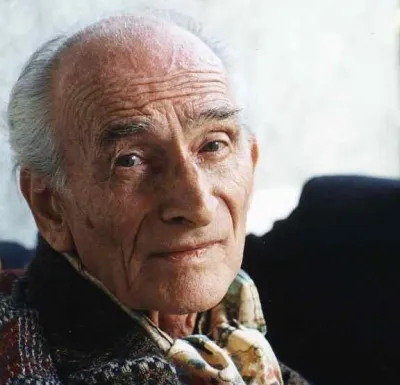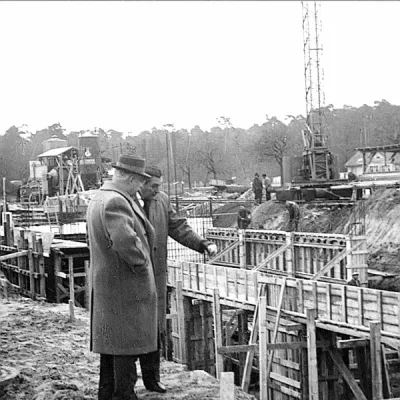
Mads Clausen
Human Design Chart
Biography
He married Dorthea "Bitten" Emma Clausen (née Dorthea Emma Andkjær Hinrichsen; 1912–2016) in 1939. The couple had five children.
Mads Clausen died on 27 August 1966 in transit from Elsmark to Sønderborg at age 60.
The Human Design of Mads Clausen: Manifesting Generator 2/4
Manifesting Generator 2/4 — Design at a Glance
Mads Clausen revealed himself as someone who, through a hybrid energy configuration, combined the endurance of a Generator with the accelerated effect of a Manifestor. His design tended to quickly draw things into his life and skip steps in the process. This ability stemmed from the active connection of the Motor Centers to the Throat Center, which allowed him to act faster than pure Generators.
However, this speed carries specific risks. Mads Clausen’s chart pointed to the danger of overlooking important steps, which inevitably led him to backtrack and make up for missed steps. Such setbacks could cause frustration as they contradicted his inner rhythm. Additionally, his design tended to pursue multiple projects simultaneously, driven by reacting to different impulses.
Mads Clausen’s strategy was not to initiate but to react to life. Only when his defined Sacral Center gave a clear “yes” should he act. This also applied to ongoing projects: regular checks ensured that his inner approval continued. By correctly applying this strategy – reacting instead of initiating and allowing for variety – Mads Clausen found deep satisfaction. His work flourished in “play mode,” where parallel work was not a burden but a source of his energy. The challenge always lay in balancing his speed with the necessary resonance to avoid frustration.
Emotional Authority
Mads Clausen revealed himself as someone who never made decisions in the first emotional wave. His design featured Emotional Authority, meaning his defined Emotional Center took over as his inner guidance – regardless of which other centers were also defined. This configuration was subject to a constant emotional ups and downs; the world always appeared colored by the current mood. What was exciting in one moment could appear negative in the next. Since such feelings were only a snapshot and not yet the deep truth, spontaneous, emotional decisions often had negative consequences.
The mechanics of his authority required patience. Mads Clausen needed time to let decisions ripen. He would dither, sleep on important questions multiple times, and seek distance. Only when the intense feelings subsided did clarity and calmness set in. This process was essential for long-term, life-defining decisions. By waiting, he gained emotional distance and could see the situation more comprehensively before acting. His strength did not lie in speed but in the ability to let the emotional wave subside until the true direction became clear.
The 2/4 Profile — Hermit / Opportunist
Mads Clausen showed a fundamental disposition that swung between a deep need for withdrawal and the desire to connect with a close-knit community. His design inclined him to retreat into "Me-Time" to clarify internal processes before reengaging with his favorite people. This dynamic of Profile 2/4 required clear communication of his needs: when he sought company and when he wanted to be undisturbed.
During his hermit phase (Line 2), Mads Clausen delved inward to gain clarity. Simultaneously, he projected through the second line of Gate 50, expressing determination and personal values outward. This could meet resistance if the foundation of these values was not yet solidified, sometimes leading him to a resolute withdrawal. Friends helped him overcome this resistance.
In the community (Line 4), he worked as a communicator. Gate 56 of the fourth line enabled him to convey ideas through stories and fairy tales. Here, clever calculation and waiting for opportune moments were crucial. Mads Clausen used his solitude to reflect on the knowledge of his network and develop brilliant ideas, which he then shared in the community. This shift between isolation for reflection and connection for implementation defined his way of processing and disseminating knowledge.
Single Definition — Defined & Open Centers
Mads Clausen's Human Design profile indicated a tendency towards reliable communication that is rooted in his own identity. His defined G Center provided him with a stable sense of direction and self-love, while his defined Throat Center carried this inner truth outward. He spoke not from impulsive urges but from a clear, limited way of expressing himself. This combination allowed him to naturally guide others into new directions without controlling their paths.
As a Generator with a defined Sacral Center, Mads Clausen had a tremendous source of vital energy. His strategy was to not initiate but to wait and respond to life. Only through this sacral response—a clear yes or no—did he have the strength for endurance and satisfaction. Initiating actions without this confirmation led to resistance and frustration.
His defined Solar Plexus Center served as an emotional authority. Mads Clausen was designed to wait for the emotional wave before making decisions. Immediate reactions to highs and lows of his mood were misleading; only with temporal distance did emotional clarity emerge. This gave his judgments depth and sensitivity, as he considered the matter from many perspectives before committing.
Additionally, his defined Spleen and Root Centers supported his survival and well-being. The Spleen provided spontaneous, intuitive signals in the present moment that he had to trust without rational analysis. The Root Center offered a steady internal pressure that propelled him forward and anchored him in the material world.
In contrast, his Head, Ajna, and Heart Centers were open. The open Head and Ajna Centers made him susceptible to mental confusion and the pressure to find answers to questions that were not his. He tended to get stuck in intellectual monologues or show uncertainty to be accepted. The open Heart Center lacked consistent willpower; he was conditioned to prove himself through promises and competition, often leading to a cycle of failure and self-doubt as he could not sustain this energy.
Channels for life purpose, change, presence, endurance and emotions.
Mads Clausen demonstrated an evolutionary change by embracing limitations and moving beyond the confusion of new beginnings. This attitude stemmed from the Channel of Mutation 60-3, connecting the Root Center with the Sacral Center. This connection generated a pulsating energy that brought melancholy and drove him to bring innovation to his environment, even amid internal tension.
His design also fostered deep self-confidence and the ability to act in the present moment. The Channel of Awakening 10-20 connected the G Center with the Throat Center. This allowed him to recognize individual principles and translate them into proper action. He spoke for himself and lived authentically, helping others become aware of their own identity.
Another core aspect was his drive to find and fight for meaning in life. The Channel of Life Struggle 38-28 connected the Root Center with the Spleen Center. This was about preserving individual integrity and resisting external forces that could divert him from his true nature. He sought fights that had value and found his life's purpose in this resistance.
Furthermore, Mads Clausen had the persistence to immerse himself in experiences to make discoveries. The Channel of Discovery 29-46 connected the Sacral Center with the G Center. This required patience and letting go of expectations to be in the right place at the right time. His positive response to questions helped him navigate through lengthy processes.
Emotionally, he was marked by a wave-like energy that oscillated between joy and sadness. The Channel of Emotional Release 39-55 connected the Root Center with the Solar Plexus Center. This moodiness was not a weakness but a creative force that he used to strengthen the perception of the mind in himself and others.
Individual Gates underscored these patterns: Gate 50 provided protection and preservation of traditions, while Gate 56 translated mental processes into vivid narratives. Gate 30 helped him recognize feelings and see through illusions of freedom. Gate 31 enabled the transmission of leadership. Gate 59 focused on genetic bonding without emotional reservations. Gate 35 sought change through interaction. Gate 1 brought unique creativity into the present moment. Gate 52 demanded a concentrated pause for pattern correction. Gate 45 expressed tribal energy and willpower.
Individual Circuitry — Circuit Signature
Mads Clausen's design indicated a tendency towards a strongly expressed, individual expression that relied on the synthesis of inner intuition and emotional depth. As a person with a simple definition, he had a continuous, unbroken energetic flow that connected his entire system. This was evident in his ability to translate impulses from the past and intuition directly into tangible actions in the present moment.
The Knowledge Circuit shaped him through the Channels of Mutation, Life Struggle, and Emotional Release. These connected his Sacral Center with the Root, Solar Plexus, and Spleen Centers. This was a pulsating energy that allowed him to transform new knowledge and manifest his unique identity through the expression of his emotional waves and intuitive perceptions. The connection of these centers created a direct line from life energy through emotions and intuition to the ability to express.
Parallel to this, the Meaning Circuit worked. The Channel of Discovery connected his Identity Center with the Sacral Center. This promoted a cyclical way of perceiving, where he reflected on experiences from the past to understand their meaning and share these insights with others. It was about emotional learning from history.
Additionally, the Integration Circuit contributed. The Channel of Awakening connected his Throat Center with the Identity Center. This supported him in drawing power from the reaction to life through proper behavior and intuitive knowledge and expressing this power in the present moment. Together, these circuits created a coherent image of a person who carried their inner truth into the world through emotional authenticity and intuitive clarity.
Right Angle Cross of Laws 3
Mads Clausen's design indicates a deep, often fate-like search for inner truth. He was someone who grappled with the fundamental laws of life, not out of intellectual curiosity, but from a pressing inner need to understand the meaning behind his existence. This attitude was shaped by the presence of the "Right Cross of Laws 3" in his chart. This configuration points to a life task of uncovering hidden connections and living a personal, authentic truth that goes beyond conventional norms. It was a process of self-discovery where Mads Clausen had to learn to trust his inner voice, even when this came with uncertainty or a sense of isolation. The mechanics of this cross describe a path that does not follow a linear course but is defined by phases of reflection and inner transformation. Mads Clausen lived this dynamic by continuously confronting the question of how to place his own existence within the larger whole. This was not a passive stance, but an active, often arduous process of integrating experience and insight. His design challenged him to not only accept the laws that govern his life but to actively explore and live them.
Saturn Return · Uranus Opposition · Chiron Return · 2nd Saturn Return — Life Cycles
Mads Clausen's design showed a tendency towards structural anchoring. He appeared as someone who, during certain phases of life, felt the need to create foundations that would endure beyond the immediate moment. This attitude was shaped by his first Saturn return, a cycle often regarded in Human Design as a phase of maturation and consolidation. During this period, years of groundwork and inner clarity coalesced into a tangible external result.
In 1933, at the age of 28, Mads Clausen founded the company Danfoss. This was not a random step but a typical expression of this mechanical dynamic: The Saturn return marked the point at which his inner alignment manifested in a concrete, sustainable structure—in this case, a company. His design supported him in taking responsibility and building something that rested on a solid foundation. It was not about rapid growth but about creating a stable platform that could support future developments. Through this founding, the potential power of his design was translated into a real, tangible form that served as a basis for further steps.
Manifesting Generator · Emotional Authority — Synthesis
Mads Clausen lived a life marked by an inner dynamic between deep withdrawal and the urge to connect. His profile as a natural talent and networker (Lines 2/4) revealed a constant swing between the need for inner clarity and the desire for exchange with others. This tendency was amplified by the defined throat (linked to the Heart Center), which provided a voice for the impulses coming from within, while the Mutation Channel (3-60) released unpredictable energy that fostered changes and new beginnings. The sacral energy available to him through his Manifesting Generator type enabled him to seize opportunities, yet emotional authority required careful maturation of decisions.
A central paradox in his design lay in the combination of initiating power and the need for reaction. As a Manifesting Generator, he possessed the ability to quickly initiate things, yet the emotional wave required patience and the need to sleep on decisions. This tension between quick action and emotional clarity shaped his path, particularly in the context of founding a company (1933), which was a bold step that needed to be prepared for through emotional alignment.
5 Defined Channels
Incarnation Cross - Right Angle Cross of Laws 3
Solar Return
The Solar Return shows the moment when the sun returns to its exact birth position - your personal solar year.
Life Cycles
Discover the life cycles with a detailed triple view (birth chart, cycle chart, composite).
Human Design Profile
- Strategy
- To respond - wait for something to respond to
- Authority
- Emotional Authority
- Profile
- 2/4 - Hermit / Opportunist
- Definition
- Single Definition
- Incarnation Cross
- Right Angle Cross of Laws 3
- Date of Birth
- 21.10.1905 23:00
- Place of Birth
- Nordborg, Denmark
Frequently Asked Questions
What was Mads Clausen's Human Design type?
What profile did Mads Clausen have?
Which authority guided Mads Clausen?
What incarnation cross did Mads Clausen have?
When was Mads Clausen born?
Discover your own Human Design
Are you also a Manifesting Generator? Find out in a personal reading how to unfold your multi-talents and direct your energy wisely.
More Personalities
Back to overviewAldair

Alizée

Angeli
Arletty
Artus
Balthus