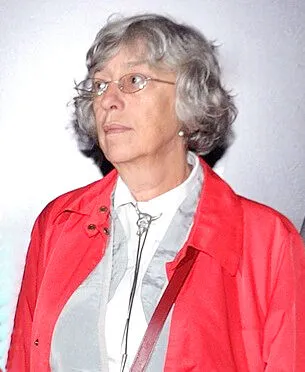
Photo: Wikimedia Commons
Manitas de Plata
Human Design Chart
Biography
He sold a lot of albums through the world: 93 millions!
Plata’s six children were Manéro, Antonio, Tcha, Fernando, Christiane and Carmen. His grandson, Yanis, Antonio’s son, is a guitarist who plans to follow in Plata’s famous footsteps.
What does Projector 2/4 mean for Manitas de Plata?
Projector 2/4 — Design at a Glance
Manitas de Platas design leans towards focused perception. As a projector, his aura acted like a bright flashlight, directly pointing out weaknesses in his surroundings. He immediately saw where systems or people were 'in the dark' and where errors occurred. However, this ability to identify the core of problems was only effective if he did not radiate it aggressively. Direct confrontation would have provoked resistance; instead, he attracted others by radiating harmony himself. His strategy was to wait for a respectful and sincerely meant invitation. Only then did he share his insights, which brought him success. Without this invitation, he risked bitterness as an expression of his non-self. Additionally, he did not have a defined Sacral Center, meaning he did not have a constant, intrinsic life force. Instead, he experienced phases of high productivity, followed by mandatory rest phases to avoid burnout. The conventional work system often ignored this need for rhythm. Manitas de Plata lived in this tension between intense, focused perception and the necessity to conserve energy. His design demanded patience: to shine light, but only where it was welcome.
Emotional Authority
Manitas de Plata showed himself as someone who never made decisions immediately but consciously let them rest until the initial emotional wave subsided. His design leans towards this patient suspension, as he follows emotional authority. This inner leadership carries his defined Emotional Center. In Human-Design, this is a dominant mechanism: once the Emotional Center is defined, it takes over authority, regardless of other defined areas. Manitas de Plata was in a constant wave motion of feelings that colored his perception of the world. What appeared inspiring in one moment could seem negative in the next. However, his immediate feeling was only a snapshot, not necessarily his deeper truth. Quick, spontaneous actions from this fleeting mood often had negative consequences. Instead, he used the time to gain clarity. By repeatedly sleeping on questions and delaying commitment, intense feelings subsided. Only when emotional distance arose and calmness set in did the true answer present itself to him. This process was essential for him, especially for long-term decisions that significantly shaped his life path. He learned to let himself be delayed and to repeatedly question himself until emotional silence pointed to the right direction.
The 2/4 Profile — Hermit / Opportunist
Manitas de Plata showed a pronounced tension between the need for withdrawal and the desire for connection. His design leans towards fluctuating between Line 2, the Hermit, and Line 4, the Community-Oriented. This did not mean arbitrariness, but a rhythmic necessity: he needed phases of absolute silence to go inward, and other times the company of his closest confidants.
This dynamic required clear communication. When Manitas de Plata withdrew, he did so to organize internal processes and gain clarity. In this 'cave,' he could reflect on impressions from his network. Line 2 demanded this solitude to develop leadership skills and self-perception, often away from public view. Simultaneously, Line 4 carried the element of discretion and the right timing. It taught him that higher goals were more important than immediate recognition or loud behavior.
His strength lay in integrating these two poles. After the phase of isolation, he returned to share what he gained in silence with his favorite people. This interaction allowed him to develop brilliant ideas based on deep, private reflection, but sharpened through exchange with the community. His path was marked by this balance: silence to listen and connection to act, always at the right moment.
Split Definition — Defined & Open Centers
Manitas de Plata revealed himself as someone with a clear, magnetic identity and a reliable voice. His design showed a tendency towards consistent self-expression, supported by defined G Center, Heart Center, and Throat Center. This configuration gave him a firm direction, willpower, and the ability to communicate his truth directly and honestly. He had the energy to fulfill promises and exercise his own authority without being dependent on others.
At the same time, his system was marked by open centers, making him vulnerable to external influences. The open Head Center and open Ajna Center meant he did not have a constant mental pressure or conceptual truth. Instead, he tended to be guided by the inspiration and questions of his environment, making him open to new ideas but also to confusion. He had to learn not to take every mental question as his own.
The open Sacral Center and open Root Center completed this picture. He did not have a constant energy flow for hard work and instead absorbed the stress and adrenaline of his surroundings. This led to him being able to take in and amplify the energy of others, which could invigorate him in dynamic situations but also quickly exhaust him. His strength did not lie in consistent endurance but in the ability to intuitively use the energy of the moment, supported by his defined Spleen Center, which gave him spontaneous, existential intuition. Thus, he moved between a clear inner stance and the absorption of the external atmosphere.
Channels for logical leadership, reflection, intuition and community.
Manitas de Plata showed himself as someone who could verbally articulate intuitive knowledge in moments of the present. This ability came from the Channel of the Brainwave 57-20, which led intuitive insight directly from the Spleen to the Throat Center. He possessed the gift of speaking out penetrating self-knowledge in the present moment without much thought, which helped others awaken their own inner survival intelligence.
Parallel to this, the Channel of the Alpha Animal 7-31 worked, connecting logical, collective leadership. Through Gate 7, the role of the Self, and Gate 31, the Leading, he sought influence areas where he was recognized as a trustworthy leader. His leadership did not rely on authority but on understanding patterns and guiding society, waiting for the invitation from the majority.
Another aspect was the Channel of the Lost Son 13-33. Here, as a listener (Gate 13), he gathered information and secrets, then withdrew (Gate 33) to reflect on these experiences. This process of patience and memory allowed him to recognize deeper truths and communicate them later after sorting through the lessons of the past.
Furthermore, Gates 1 and 2 emphasized receptivity and creative mutation in the here and now. Gate 1 promoted his unique creativity without limitations, while Gate 2 served as a foundation for new directions. Gate 46 in his personality stood for devotion and presence, maintaining the physical body as a temple and being in the right place at the right time. Gate 56 allowed him to translate mental processes into vivid narratives. Gate 15 facilitated adaptation to natural rhythms and collective behavior, while Gate 51 provided willpower and adaptability in the face of shocks. Gate 6 regulated emotional waves and growth through friction, and Gate 50 protected traditional values and tribal rules.
Collective Circuitry — Circuit Signature
Manitas de Plata's design showed a tendency towards impulsive, creative outbursts that moved within two separate energetic blocks. The Knowledge Circuit connected his Throat and Spleen Centers through the Channel of the Flash of Insight. This enabled innovative, acoustic impulses that sprung directly from intuition. Parallel to this, the Understanding and Meaning Circuit structured his communication. Both connected the Throat Center with the Identity Center – once through the Alpha Animal (logical, future-oriented clarity), once through the Lost Son (emotional reflection of the past). These two strands remained energetically separate: rational strategy and emotional meaning did not flow into each other but existed as parallel, distinct forces. A third, isolated block formed the Ego Circuit. Here, the Channel of the Community connected the Heart with the Solar Plexus Center. This created a dynamic of giving and taking, steered by emotional waves and the will to cooperate, yet without a direct connection to the life force of the Sacral Center. The Shared Definition split his essence into a creative, intuitive pole (Spleen-Throat) and a complex pole of identity, logic, emotion, and social exchange (Throat-Identity as well as Heart-Solar Plexus). This separation shaped his experiential world as a side-by-side of spontaneous inspiration and reflective, emotionally colored social dynamics, without these areas forming a single, continuous flow.
Right Angle Cross of the Sphinx 3
Manitas de Plata's Human-Design profile indicated a tendency towards a deep, almost mythical connection with the unconscious. He was someone who acted not primarily through rational analysis, but through an intuitive, almost shamanic perception. This configuration, the right cross of the Sphinx 3, describes a specific life task: developing consciousness for the hidden, archetypal forces that steer human destiny.
In Human-Design, this cross represents a connection between the emotional center and the root center, translated into a stance of surrender to the mystery of life. It's not about control, but about trusting the deeper currents that drive life. Manitas de Plata lived this mechanism by opening himself to the dark, often incomprehensible aspects of human existence without judging or fighting them. His energy was directed at making these hidden truths visible, not through words, but through a direct, often painful authenticity. The right cross of the Sphinx 3 demands a kind of courage that involves accepting one's own shadows and using them as a source of wisdom. For Manitas de Plata, this was not an intellectual concept, but a lived reality that shaped his entire aura and actions. He served as a mirror for collective, unconscious fears and hopes by integrating them into his own experience and generating a unique, transformative power from them.
Saturn Return · Uranus Opposition · Chiron Return · 2nd Saturn Return — Life Cycles
Manitas de Plata emerged as someone whose professional breakthrough was closely linked to a sudden, external impulse. His design indicated a tendency towards unexpected turning points that arose not from long-term planning but from encounters with the new. This became concrete in 1961, at the age of 40, when his discovery by Lucien Clergue marked the beginning of his professional career.
This moment marked the Uranus opposition in his chart. In Human-Design mechanics, this configuration represents a cycle of liberation from old structures and opening to radically new paths. Uranus often brings the element of surprise and sudden visibility into play. For Manitas de Plata, this meant that his path did not follow a linear progression but was defined by a specific moment of recognition that catapulted him from anonymity into the public eye. The mechanism here describes less an inner development than an external upheaval triggered by a meeting. The focus was on the sudden change in life circumstances and role in the world. This Uranus influence shaped his biography by making his success heavily dependent on the resonance with others who were ready to recognize and show his talent to the world. It was a moment of revelation that profoundly determined his subsequent career.
Projector · Emotional Authority — Synthesis
Manitas de Plata lived an inner continuity between recognizing patterns and the need for authentic expression. As a projector with emotional authority, he perceived the world through a lens of perception, immediately seeing where things did not work (Throat Center, Gate 31), and possessing the ability to transform and communicate this knowledge. The profile as a natural talent and networker strengthened this drive to connect with others, yet the need for withdrawal and inner clarity (Line 2) was equally present. This shift between social interaction and introspective reflection shaped his life and work.
A central paradox lay in the way Manitas de Plata exercised leadership. The Alpha Channel points to a natural aptitude for logical, collective leadership, yet emotional authority required time to let decisions mature. This led to a tension between the impulse to share knowledge and insights directly and the necessity of riding the emotional wave to ensure that communication came from a deep, authentic source. The Uranus opposition in the life cycle points to a continuous transformation and deviation from conventions, which further intensified this tension.
4 Defined Channels
Incarnation Cross - Right Angle Cross of the Sphinx 3
Solar Return
The Solar Return shows the moment when the sun returns to its exact birth position - your personal solar year.
Life Cycles
Discover the life cycles with a detailed triple view (birth chart, cycle chart, composite).
Human Design Profile
- Type
- Projector
- Strategy
- Wait for the respectful invitation
- Authority
- Emotional Authority
- Profile
- 2/4 - Hermit / Opportunist
- Definition
- Split Definition
- Incarnation Cross
- Right Angle Cross of the Sphinx 3
- Date of Birth
- 07.08.1921 09:00
- Place of Birth
- Sète, France
Frequently Asked Questions
What was Manitas de Plata's Human Design type?
What Profile did Manitas de Plata have?
What Authority guided Manitas de Plata?
What incarnation cross did Manitas de Plata have?
When was Manitas de Plata born?
Discover your own Human Design
Are you also a Projector? Find out in a personal reading how to unfold your leadership qualities and recognize the right invitations.
More Personalities
Back to overviewSissy Spacek
Aaliyah

Alain-Fournier
Alexia

Alizée

Anémone