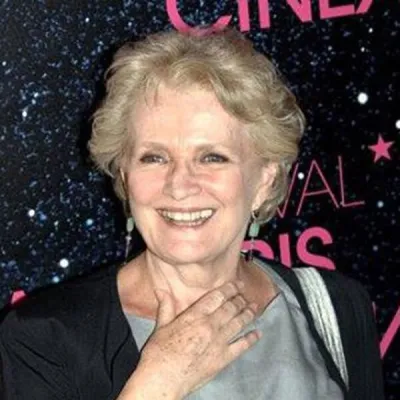
Marie-Christine Barrault
Human Design Chart
Biography
The Human Design of Marie-Christine Barrault: Manifesting Generator 4/6
Manifesting Generator 4/6 — Design at a Glance
Marie-Christine Barrault's design is characterized by a hybrid dynamic: the constant energy of a Generator paired with the lightning-fast implementation power of a Manifestor. She possessed sacral power, which did not serve for arbitrary initiation but waited for external impulses. Only in the moment of reaction could she unleash her speed and skip steps to achieve results quickly.
This configuration, however, carried specific risks. The inclination towards speed occasionally led to overlooking important intermediate steps, resulting in residues and frustration – the classic non-self theme of this type. Additionally, there was a tendency to run multiple projects simultaneously, driven by reactions to various impulses. Without constant verification of inner consent, this multitasking joy could quickly turn into exhaustion.
The path to deep satisfaction for Marie-Christine Barrault lay in strictly adhering to her strategy: only responding when the sacral resonance signaled a clear "yes." This state of "play mode," marked by variety and continuous confirmation through the Sacral Center, allowed her to sustainably utilize her creative power without overburdening herself or falling into frustration. Her energy worked most effectively when she remained in the flow of reaction and always included her inner authority.
Emotional Authority
Marie-Christine Barrault's design tends towards premature reactions when she feels pressured. Her internal authority lies in the defined Emotional Center. This means that her perception of the world is always colored by her current mood – a constant up and down of emotions shapes her experience. Something can seem exciting at one moment, only to appear negative the next. These emotional waves make immediate decisions unreliable, as they merely represent snapshots and not the deeper truth.
The mechanics of the Emotional Center therefore require time and patience as central strategies. Marie-Christine Barrault was most effective when she did not make important decisions in the heat of the moment but waited for the process of emotional condensation to take place. "Sleeping on" or delaying decisions was not a sign of weakness, but a necessary step towards gaining clarity and calmness. Only after intense feelings subsided and an emotional distance emerged did true insight set in. This rule applies regardless of other defined centers: Emotional authority takes precedence. Only through this conscious delay could she make long-term choices that truly aligned with her inner truth rather than becoming the victim of passing moods.
The 4/6 Profile — Opportunist / Role Model
Marie-Christine Barrault's design indicated a tendency towards experimental behavior in relationships, particularly before the age of 30. During this phase, Line 6 of her Profile 4/6 still acted like Line 3: She sought out diverse experiences through friendships and partnerships to find patterns that would help define her own identity. This early period was about discovering what worked and what didn't – a process of "surviving innocence," during which she learned to navigate social networks without losing touch with her inner self.
Over time, however, an internal conflict developed: The Heart (Line 4) longed for belonging and closeness to the community, while the Head (Line 6) yearned to step back and contemplate the meaning of life. This contradiction between the desire for connection and the urge for distance characterized her middle phase of life. It was a period of orientation in which she had to learn how to balance both impulses – without fully conforming or retreating.
Around age 50, then, a new quality emerged: Authenticity became possible. The previous phases of "martyrdom" or perfect behavior were questioned, and Marie-Christine Barrault could show her true nature – no longer as someone who conforms but as someone who, through their own experience, can take on the role of a wise mentor.
Split Definition — Defined & Open Centers
Marie-Christine Barrault was characterized by a massive, defined energy base: Her Sacral and Root Center provided a constant inner motor with steady pressure. Her G Center was also defined, giving her deep self-esteem and magnetic presence; she had a clear identity and direction. Communication occurred reliably through the defined Throat Center, while decisions were filtered emotionally through the defined Solar Plexus Center – she needed time for emotional clarity.
In contrast, Head, Ajna (Mind), Heart (Willpower) and Spleen (Intuition/Survival) were open. This meant: She did not have a constant mental focus or logical planning mode. The open Head Center tended to confusion due to environmental influences; the open Ajna Center made her receptive to foreign concepts without having to hold them as personal truth. The open Heart Center warned against making promises or proving worth through performance – a trap of non-self ego. The open Spleen Center required vigilance against absorbing fears or false well-being from the environment; spontaneous decisions here were risky.
The mechanics show a strong contrast between the stable, powerful base (Sacral/G/Throat/Root/Solar Plexus) and the open, receptive mentality. The focus was on trusting sacral energy – waiting until asked, then responding – and emotional authority: Waiting for the emotional wave to subside. The open Heart Center relieved her of the need to prove willpower. Marie-Christine Barrault's design demanded that she not initiate from the mind but react from the gut and heart (in terms of G), while the open mental centers served as mirrors of the environment, not command centers.
Channels for rhythm, leadership, presence, determination and emotional clarity.
Marie-Christine Barrault's design tended towards a constant, magnetic presence in life flow. She was someone who moved forward through firm habits and integration of extremes from her Sacral Center. The Rhythm Channel 5-15 connected the Gate of Fixed Rhythms with the Gate of Extremes. This created a universal life rhythm that neither succumbed to mental arrogance nor emotional waves. Her energetic magnetism drew others into this continuous energy flow, setting the course for her environment without actively leading. It was an impersonal love for humanity, stabilizing the life rhythm for herself and the collective through correct reactions and rituals.
Additionally, further configurations were at work: The Alpha Animal Channel 7-31 offered logical leadership based on trust and collective invitation. The Awakening Channel 10-20 promoted self-love and authentic presence in the here and now. The Discovery Channel 29-46 required persistence and letting go of expectations for deep insights. The Recognition Channel 30-41 propelled through root pressure and emotional longing for new experiences. Individual Gates like Gate 25 (Innocence, Mysticism), Gate 37 (Friendship, Organic Structure) as well as Gates 12, 16, 33 and 45 rounded out the profile with aspects of creativity, experimentation, reflection, and tribal energy. These elements collectively shaped her unique way of moving in the world and influencing her environment.
Collective Circuitry — Circuit Signature
Marie-Christine Barrault was characterized by a split definition, meaning that her internal processes did not act in isolation but had to be activated in resonance with the environment. Her design connected two different information processing types: The Understanding Circuit and the Finding Meaning Circuit.
The Understanding Circuit linked Throat, Identity, and Sacral Centers in her case. Here, the energy of the Alpha Animal (31-7) worked together with the Rhythm Channel (15-5). This shaped an attitude of 'emotionless ratio', aiming to improve things through logic, strategy, and structure, leading society towards a better future. The insight was rational and free from conditioning, focused on sharing clear, visual information.
Parallel to this existed the Finding Meaning Circuit as a separate entity. It included two unconnected parts: On one hand, the connection between Identity and Sacral Centers (through Discovery 46-29 and Recognition 30-41), on the other hand, Solar Plexus with Root Center. This area revolved around emotions, feelings, and experiences from the past. In contrast to the cool logic of the other circuit, this processing was wave-like – each emotional cycle had a beginning, middle, and end. The goal was to reflect on the meaning behind past events and share these felt insights with the collective to learn together from history.
Additionally, the Integration Channel 'Awakening' (20-10) worked, connecting Throat and Identity Centers. This served to secure individual survival by channeling power in the here and now based on intuitive knowledge and correct behavior. Marie-Christine Barrault had to learn to integrate these two worlds – strategic future orientation and emotional past reflection – often requiring external interaction to achieve clarity in these separate energetic streams.
Right Angle Cross of the Vessel of Love 1
Marie-Christine Barrault's design shows a tendency towards deep, often unconscious devotion. It is marked by the archetypal structure of the 'Right Cross of the Vessel of Love', which places less emphasis on active action and instead highlights the ability to contain and carry emotional or spiritual content. This configuration describes a receptive and carrying energy form where the individual becomes the space for these contents themselves. The dynamics lie in transformation through devotion: Marie-Christine Barrault was not primarily defined by projective acting, but rather by how she received and processed love energy. The 'Vessel' symbolizes here an inner space that is ready to be filled without having to react or shape immediately. It's about the quality of holding and carrying intense feelings or spiritual states. This structure often works below conscious perception and shapes a fundamental attitude of acceptance and being through. Marie-Christine Barrault's life dynamics were thus determined by this specific form of love energy, which unfolds its power in the silence of containment rather than in the noise of external actions.
Saturn Return · Uranus Opposition · Chiron Return · 2nd Saturn Return — Life Cycles
Marie-Christine Barrault's design shows a clear development line from structural establishment to independent authority. This path is marked by two planetary cycles that shape her professional transition: from building a solid foundation to emancipated positioning in the field.
The first Saturn Return cycle served as a foundation for her career. During this phase, years of preparatory work condensed into concrete results. In 1969, at age 25, Marie-Christine Barrault made her film debut in Éric Rohmer's 'My Night with Maud'. This event illustrates the Saturn dynamics: creating a solid, recognized foundation through disciplined effort and entering the professional field with clear definition.
Later, the Uranus Opposition cycle acted as a catalyst for emancipation and new beginnings. Here, the earlier structure dissolved in favor of an autonomous, independent stance. In 1983, at age 39, Marie-Christine Barrault took on the role of President of the Jury at the World Film Festival. This role reflects Uranus energy: breaking away from pure execution functions to an authoritative, curatorial position where she independently defined values and shaped the field rather than merely moving within it. The cycles thus show the path from established artist to independent entity.
Manifesting Generator · Emotional Authority — Synthesis
Marie-Christine Barrault seems guided by a deep inner rhythm that manifests through her ability to react rather than initiate. This sacral energy, coupled with a strong self-identity and need for authentic expression, points to someone who is most effective when they immerse themselves in the flow of life and heed their own inner compass. The connection between emotional depth and logical clarity suggests that decisions require time to unfold, while the presence of defined channels for communication and manifestation indicates she has a natural gift for expressing her inner truth into the world.
A central tension field lies between the need for deep emotional processing and the ability to communicate clearly and directly. Emotional authority requires time and reflection, while the defined Throat Center harbors a drive to express itself. This dynamic could lead to an internal interplay between weighing feelings and the desire for authentic expression, where the ability to reconcile both serves as a source of deeper satisfaction.
5 Defined Channels
Incarnation Cross - Right Angle Cross of the Vessel of Love 1
Solar Return
The Solar Return shows the moment when the sun returns to its exact birth position - your personal solar year.
Life Cycles
Discover the life cycles with a detailed triple view (birth chart, cycle chart, composite).
Human Design Profile
- Strategy
- To respond - wait for something to respond to
- Authority
- Emotional Authority
- Profile
- 4/6 - Opportunist / Role Model
- Definition
- Split Definition
- Incarnation Cross
- Right Angle Cross of the Vessel of Love 1
- Date of Birth
- 21.03.1944 22:10
- Place of Birth
- Paris, France
Frequently Asked Questions
What is Marie-Christine Barrault's Human Design type?
What Profile does Marie-Christine Barrault have in Human Design?
What Authority guides Marie-Christine Barrault?
What incarnation cross is assigned to Marie-Christine Barrault?
When was Marie-Christine Barrault born?
Discover your own Human Design
Are you also a Manifesting Generator? Find out in a personal reading how to unfold your multi-talents and direct your energy wisely.
More Personalities
Back to overviewSissy Spacek
Aldair

Alizée

Anémone
Angeli

Ann-Margret