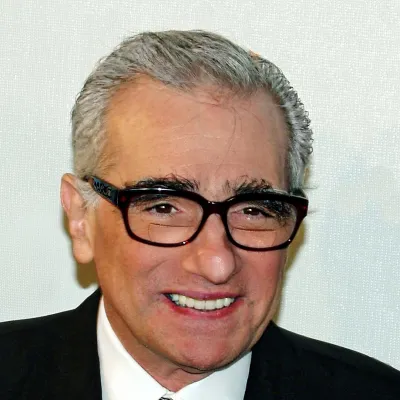
Martin Scorsese
Human Design Chart
Biography
Raised in the New York tenements, Scorsese was a sickly kid whose asthma frequently kept him indoors. He and his parents often escaped to the movies, and the young boy became fascinated with the silver screen. An altar boy at his neighborhood Catholic church, he entered the seminary to become a priest but dropped out after a year. He enrolled in the New York film school where he made prize-winning student shorts. Earning his master’s degree in 1968 at New York University, he went on to become an instructor in the university’s film department. Here he directed his first feature released in 1969: “Who’s That Knocking at My Door?” After moving to Hollywood where he worked on “Boxcar Bertha,” he assembled his memories of growing up in the hard-edged community of Little Italy in New York. “Mean Streets” in 1973 was the successful result. “Alice Doesn’t Live Here Anymore” in 1974 brought him acclaim as well, but it wasn’t until 1976 that he hit the big time with "Taxi Driver," starring Robert DeNiro, a fellow New Yorker.
His work is often controversial, and "The Last Temptation of Christ" provoked the most heated debate of all his films, incurring threats of boycotts from Christian groups. With films such as "Raging Bull," “Goodfellas” and a remake of “Cape Fear” to his name, violence is a major motif in his work.
Human Design Analysis: Martin Scorsese as Manifesting Generator 6/2
Manifesting Generator 6/2 — Design at a Glance
Martin Scorsese revealed himself as someone who possessed a hybrid energy structure: the constant power of a Generator paired with the lightning-fast effectiveness of a Manifestor. This design tended to draw things into his life by skipping steps and pursuing multiple projects simultaneously. The underlying mechanics of the manifesting generator allow for reacting to impulses and then immediately acting at high speed.
However, this quickness was a double-edged sword. If Martin Scorsese moved too fast or skipped important stages, it often led him backtracking to make up for lost ground – a potential source of frustration. Additionally, his design tended to respond simultaneously to many different impulses. Without strict adherence to his strategy, namely waiting until the Sacral Center gave a clear “yes,” this complexity could quickly turn into overload.
The solution lay in the “Play Mode.” Once he was sure that his inner authority and sacrum approved of an endeavor, he drew deep satisfaction from his work. In this state, parallel working was no obstacle but rather the source of his creative power. He needed variety and fun to optimally utilize his energy instead of focusing on a single thing. His design challenged him to regularly check whether a project still resonated to prevent frustration and constructively use his unique ability for quick implementation.
Sacral Authority
Martin Scorsese’s design tended to make decisions not through intellectual deliberation but through direct physical resonance. As a Generator, his strategy was identical with his inner authority: the Sacral Authority. This fundamentally simplified his decision-making process as he had to wait for an external trigger and then listen to his body's immediate reaction.
This “gut feeling” manifested in physical signals like grunting, humming or an instinctive “Mhm.” When this resonance occurred, a surge of energy followed: Martin Scorsese felt vital and energized with seemingly inexhaustible power at his disposal. In these moments, he immersed himself fully into his activities driven by enthusiasm and satisfaction without the need for external purpose.
A prerequisite for this clear guidance was an open Emotional Center ensuring that no emotional waves overlapped the sacral response. Additionally, his activated Spleen Center acted as a supporting authority. This connection enabled him particularly quick and spontaneous reactions as well as direct access to his instinctive perception. Martin Scorsese could thus reliably guide himself by his physical wellbeing, which significantly shaped his ability for rapid decision-making in the here and now.
The 6/2 Profile — Role Model / Hermit
Martin Scorsese revealed himself as someone whose early years were marked by intense experimentation. Until around age 30, he followed the pattern of Line 6/2: trial and error was the driving principle. He gathered many personal life experiences but withdrew after failures to rethink the situation. This phase was characterized by high selectivity; he engaged only where he felt supported.
After his 30th year, this dynamic fundamentally changed. The sixth line became active, which put Martin Scorsese into a state of deep reflection. He metaphorically retreated to look back on his past experiments with distance. This period served for healing and acquiring deeper self-knowledge. The mind recognized what leads to new order, often resulting in new knowledge that had a mutating effect.
From this phase of introspection emerged Martin Scorsese as a wise figure later on. Others sought his counsel to partake in his life wisdoms and learn the ability for deep self-reflection. His persistence now showed not as inner strength but as a radiant quality that became effective when he was correctly invited. Early caution transformed into grounded wisdom, helping others understand hidden connections and walk their paths with greater clarity.
Single Definition — Defined & Open Centers
Martin Scorsese revealed himself as someone whose design combines a constant, specific mental function with a deep inner direction. His defined Ajna Center ensures a continuous mental process; concepts and theories are always present, making him an external authority for others who condition the mental field in their aura. This intellectual stability works together with his defined G Center, which gives him a reliable sense of self-identity and a clear sense of his personal mission. He had the ability to show others new directions without being dependent on their approval, as his love for himself was firmly grounded.
At the same time, he possessed a defined Sacral Center, which provided an enormous source of vital energy. This power was available only when he reacted – that is, responded to initiatives from outside rather than taking the first step himself. His strategy involved waiting until his Sacral Center responded with a clear "yes" or "no" to a request in order to avoid frustration and exhaustion through false initiations.
In contrast, his design revealed several vulnerable areas. His open Head Center tended to interpret mental pressure from the environment as its own inspiration or confusion, which could draw him into a vortex of doubts if he did not trust his inner authority. The lack of consistent willpower in his open Heart Center made it susceptible to trying to prove itself through promises and competition, often ending in cycles of failure. Additionally, his open Solar Plexus absorbed the emotions of his environment, leading him to personalize foreign feelings and avoid emotional confrontations out of fear of rejection. His open Spleen Center carried a fundamental survival anxiety that prompted him to cling to things or people not good for him just to simulate a sense of security. Finally, his open Root Center amplified adrenalized stress from the environment, leading to a tendency to try to shed this foreign pressure through hyperactivity.
Channels for structuring, powerful manifestation and inner determination.
Martin Scorsese revealed himself as someone whose energy was marked by a strong drive for immediate implementation. This resulted from the Channel of Charisma 34-20, which channeled the physiological power of the Sacral Center (Gate 34) directly into the expressive power of the Throat Center (Gate 20). This connection created a charismatic presence where inner reactions almost instantly translated into actions, often making it difficult to sit still and creating an impressive sphere of influence. At the same time, Martin Scorsese possessed the ability to penetrate and reorder complex relationships. The Channel of Discovery 29-46 connected his persistent endurance (Gate 29) with a deep dedication to the process in the G Center (Gate 46). Here it was not about control but rather losing oneself completely in experiences and gaining long-term insights through patience. His mind also worked with innovative sharpness: The Channel of Structuring 43-23 allowed him to formulate spontaneous insights (Gate 43) so clearly and efficiently (Gate 23) that they changed the thinking of others. This mental originality, however, required the right moment to be accepted.
Additionally, individual Gates contributed to depth: Gate 1 promoted a unique, unbound creativity in the here and now, while Gate 62 was responsible for logical detail work and pattern recognition. Gate 30 brought confrontation with feelings and fate blows, and Gate 59 as well as Gate 16 underscored a genetic strategy of bonding or experimenting towards mastery. Gate 31 rounded this off by transferring leadership qualities.
Overall, Martin Scorsese worked as someone driven by sacral reactions, structuring innovative ideas, and losing himself in long discovery processes before charismatically bringing them into the world.
Individual Circuitry — Circuit Signature
Martin Scorsese's Human Design profile points towards a tendency for structured and individual expressive strength. As a Single Definition, he had a continuous energetic flow between the Ajna, Throat, and Sacral Centers as well as the Identity Center. This connection allowed him to translate internal impulses directly into external action.
The Knowledge Circuit worked through Channel 43-23, linking the Ajna with the Throat Center, enhancing his ability to clearly formulate his own thoughts and express his unique identity. Additionally, the Meaning Circuit operated through Channel 46-29, connecting Identity and Sacral Centers, supporting the discovery of meaning in past experiences driven by cyclical emotional waves. Furthermore, the Integration worked through the Charisma Channel (Gates 20–34), linking Throat and Sacral Centers, transforming reactive power from life in the here and now into visible presence. Together, these three circuits form a Profile that aims at clear communication, emotional reflection, and immediate impact—without external influences interrupting his inner flow.
Left Angle Cross of Dedication 2
Martin Scorsese's Human Design shows a tendency towards deep, often painful dedication to his true self. This configuration, known as the left cross of surrender 2, describes not a superficial passion but an existential process of letting go and transformation through suffering or intense experience. It involves being willing to engage in situations that challenge the ego in order to develop a more authentic form of self-discovery.
This mechanism does not work as a sudden impulse but rather as a slow, often arduous condensation of inner truth. Scorsese revealed himself through this imprinting as someone who could only truly come alive and be powerful when he was ready to let go of old identities or comfort zones. The path leads through the "death" of old patterns towards a new, deeper level of being. It is a process of purification through surrender, where pain or loss are not seen as an end but as a necessary step towards liberation.
The energy of this cross demands authenticity at the cost of security. Scorsese's chart indicates that true fulfillment could only be found beyond illusions and superficial attachments. Each encounter with the pain of losing served not to indulge in self-pity but as a catalyst for profound spiritual or creative renewal. The surrender here is the key to stepping out of darkness into new light – a path that can only be walked by those who are willing to give themselves fully, without any guarantee of an easy life.
Saturn Return · Uranus Opposition · Chiron Return · 2nd Saturn Return — Life Cycles
Martin Scorsese's Human Design profile suggests a tendency towards intense and often confrontational energy application, which became evident in the early stages of his career. In 1971, at the age of 29, he directed his first Hollywood film for Roger Corman, "Boxcar Bertha." For his system, this marked the first Saturn Return, a cycle where years of internal structuring and groundwork often coalesce into a tangible external result. This was not a sudden coincidence but rather the logical outcome of a developmental phase in which his potential had been shaped through discipline and real-world experience.
The Saturn Return acts like a litmus test: what previously existed only as an impulse or idea must now be cast into a sustainable form. In Scorsese's case, this manifested through the transition from private ambitions to professional, industrial recognition. The mechanics of the first Saturn Return demand anchoring; they compel one to test their abilities for practical efficacy. This process is rarely gentle and often requires breaking with previous patterns to establish a new, more stable identity in one’s career.
The choice of the film "Boxcar Bertha" underscores this dynamic, perhaps even rebellious energy that was now channeled within an established framework. It wasn't just about making a film but claiming a position and validating it through concrete achievement. This moment shaped his subsequent career as proof that inner drives can be made effective through external structuring.
Manifesting Generator · Sacral Authority — Synthesis
A central red thread runs through the design: the dynamics between initiation and reaction. The defined Sacral Center (Centers) provides a constant energy source, which should not be used for self-initiated action – instead, it is about reacting to external stimuli (Authority). This sacral foundation is expanded by manifesting qualities (Design View), enabling an accelerated implementation of impulses. The Profile as role model and natural talent indicates that experiences are collected and reflected upon (Profile Role) in order to later impart wisdom, with early experimentation being linked to withdrawal and self-discovery.
The design reveals a central paradox between the drive for rapid manifestation and the necessity to surrender to sacral reaction. The Channel of Charisma (Channels/Gates) points to a strong power that only truly comes into effect when channeled through the Generator aspect – an ongoing balance between personal initiative and following inner impulses. This tension is reflected in the Knowledge Circuit (Circuit), which emphasizes innovation and transformation but also requires emotional depth and authenticity.
3 Defined Channels
Incarnation Cross - Left Angle Cross of Dedication 2
Solar Return
The Solar Return shows the moment when the sun returns to its exact birth position - your personal solar year.
Life Cycles
Discover the life cycles with a detailed triple view (birth chart, cycle chart, composite).
Human Design Profile
- Strategy
- To respond - wait for something to respond to
- Authority
- Sacral Authority
- Profile
- 6/2 - Role Model / Hermit
- Definition
- Single Definition
- Incarnation Cross
- Left Angle Cross of Dedication 2
- Date of Birth
- 17.11.1942 00:24
- Place of Birth
- Flushing, NY, United States
Frequently Asked Questions
What is Martin Scorsese's Human Design type?
What Profile does Martin Scorsese have in Human Design?
What authority does Martin Scorsese possess?
What incarnation cross does Martin Scorsese have?
When was Martin Scorsese born?
Discover your own Human Design
Are you also a Manifesting Generator? Find out in a personal reading how to unfold your multi-talents and direct your energy wisely.
More Personalities
Back to overviewAldair

Alizée

Angeli

Arletty
Artus

Balthus