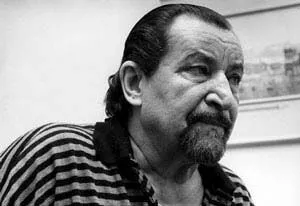
Maurice Béjart
Human Design Chart
Biography
Maurice was the son of the eminent philosopher Gaston Berger. He began dancing relatively late in life after he obtained a degree in applied psychology. In 1946 he created his first piece of choreography. He chose his own pseudonym, ‘Béjart,’ after an important family of actors. He toured with several ballets in Europe from 1947 to 1952. In 1954 he founded Les Ballets de l'Étoile and choreographed his masterwork, "Symphonie pour un homme seul." His other ballets include "Voilà l'homme," "Promethée," and "Sonate à trois."
After performances for Belgian television in 1959, he was commissioned to create a very successful ballet on Stravinsky's "Le sacre du printemps," which led to the formation of the Ballet of the XXth Century the following year. In 1960 he became director of ballet at Brussels' Théâtre Royal de la Monnaie. In 1961 Béjart launched his career as an opera director. His original works include a musical, "The Green Queen" in 1963, and ballets including "Bolero" in 1960, "Ninth Symphony" in 1964, "Firebird" in 1970, "Nijinsky, Clown of God" in 1971, and "Notre Faust" in 1975.
In 1987 the troupe moved to Lausanne, Switzerland and was renamed Béjart Ballet Lausanne. On 29 March 1994 Béjart was honored with admission into France's prestigious Académie Française, the first time in the 300 years of its existence that dance has been represented.
With his small stature, invariably dressed in black or dark clothes, dark eyebrows over pale blue eyes, trademark goatee, tireless work and demanding style he makes a strong impression. "On stage, the slightest secrets of the human soul are revealed.
Human Design Analysis: Maurice Béjart as Generator 1/4
Generator 1/4 — Design at a Glance
Maurice Béjart possessed immense sacral endurance, making him seem like a strong workhorse. His design suggested that his energy was released not through arbitrary initiation but solely by reacting to life impulses. As a Generator, he only efficiently generated power when his inner 'yes' signal - the confirmation from his gut - aligned with an external offer.
This mechanism meant that deep satisfaction and success were closely tied to his ability to follow this inner resonance. Initiating out of sheer will or suppressing his work drive against his urge led him into frustration and energy loss. Blocking his activity while still full of power was another stumbling block; equally harmful was doing things he had no desire for, which could lead to burnout over time.
His life task involved waiting for signals from the environment and responding with action. If Maurice Béjart followed this strategy of reacting, nothing could stop him. He was set in motion by life itself, not through his own planning. This principle secured him the necessary power to materialize his visions as long as he acted in harmony with his sacral nature rather than against it.
Sacral Authority
Maurice Béjart exhibited a fundamental stance based on physical resonance: he waited for a clear inner signal before acting. His design marked him as a Generator, whose strategy and inner authority were identical - the sacral authority. This instance did not react through rational planning but through direct physical signals like a surge of power or an 'inner voice', often audible as grunts or affirming hums.
This mechanism required patience: he had to wait for the external stimulus and then await his body's reaction. If this sacral response was positive, a state of inexhaustible vitality and enthusiasm ensued. In these moments, Maurice Béjart immersed himself in his activities driven by joy and satisfaction, free from any purposefulness. His energy was then almost limitless.
Additionally, his Spleen Center supported this decision-making process. Through its connection to the Sacral Center, it enabled him particularly quick and spontaneous reactions. He had an immediate access to his instinctive perception and physical well-being, which served as a reliable orientation. This configuration suggested that his most effective actions sprang from moments when his body clearly said 'yes' - a process of confirmation through energy rather than logical deliberation.
The 1/4 Profile — Investigator / Opportunist
Maurice Béjart was someone who sought deep knowledge, whose expression, however, heavily depended on a familiar community. His design highlighted a tension between the urge for intense exploration and emotional attachment to his network. As a 1/4 profile, he combined the desire for thorough analysis with the need to share insights only with like-minded individuals.
Line 1 drove him to intuitively grasp the core of conflicts or topics and recognize their life value. This often happened through direct, almost aggressive reactions to influence, to find the truth of the moment. Simultaneously, Line 4 acted as a brake: it caused deep fear at being exposed as unknowledgeable in front of his loved ones. This fear of rejection within his community inhibited his authority until a protected space existed.
Only in an environment with a deep trust base could Maurice Béjart fully unleash his potential. There, initial uncertainty transformed into expertise. Line 4 also required constant restructuring; short-term interruptions served to gain new depth and critically question long-term goals. Only when this emotional security was given could he use his profound understanding to influence others through his network sustainably and become an authority in his heart themes.
Triple Split Definition — Defined & Open Centers
Maurice Béjart's Human Design profile established a massive, constant presence. Six defined centers - Ajna, Throat, G, Sacral, Spleen, and Root - created a continuous foundation of thinking, expression, identity, energy, intuition, and stress management. His mind (defined Ajna Center) was always active; he conceptualized constantly and reliably expressed these thoughts through his defined Throat Center. This connection allowed him to directly translate mental content into communication without the message falling on deaf ears.
His identity (defined G Center) was set; he knew who he was and where he was going, which enabled him to show others new directions without losing himself. The driving force came from his defined Sacral Center: an immense vital energy source that only released through reaction to life. This sacral response determined whether energy would be available for a task or not. Supported by his intuitive Spleen definition, it gave him spontaneous momentary body awareness and a strong instinct for health, as well as his defined Root Center, which provided the necessary pressure to move forward in the world and process stress physically.
In contrast to this inner strength stood three open centers: Head, Heart, and Solar Plexus. His open Head Center made him vulnerable to mental confusion; he tended to feel the pressure to find answers to questions that were not his own, which could pull him into a vortex of doubt. His open Heart Center lacked consistent willpower; he was not designed to make promises or prove his worth through competition but tended to get stuck in spirals of self-doubt when trying to fulfill others' expectations. Additionally, his open Solar Plexus absorbed the emotions of the environment. He acted as a barometer for emotional climate, risking personalizing foreign moods and feelings, which made him emotionally vulnerable if he did not distance himself from these waves.
Channels for judgment, structure, discovery and transformation.
Maurice Béjart showed a fundamental attitude of permanent inner correction paired with an innovative mind that recognized more efficient ways. His design set an insatiable urge to question and perfect patterns while his insights often seemed visionary but ahead of their time.
Channel Judgment 58-18 connected the life energy of the Root Center with the selective perception of the Spleen. This channel drove the logical impulse to constantly demand 'better and more,' while Gate 18 simultaneously checked what was in balance or needed correction. It was the art of mastery through constant review: Only when asked if something wasn't right could he effectively bring his solutions; uninvited, this critical logic often appeared as an endless stream of data about errors that no one wanted to hear.
At the same time, Channel Conditioning 43-23 formed a unique perspective that increased efficiency through spontaneous breakthroughs. His insights felt light-years ahead but needed the right timing and invitation to be accepted by the collective. Without this resonance, his innovative knowledge was rejected or he himself perceived as an outsider; with the correct strategy, however, this channel enabled quantum leaps in how things were seen and done.
This mechanism created a tension between the urge to improve everything immediately and the need to gently introduce these visions. Additional gates like Gate 52 promoted necessary pauses for focusing on pattern correction while Gate 34 as a powerful energy source in the Sacral Center supported strong individuality, which needed guidance not to act randomly. Overall, this configuration shaped a path based on logical precision and mutative innovation, always dependent on others' willingness to accept these new perspectives.
Collective Circuitry — Circuit Signature
Maurice Béjart's design showed a triple definition, meaning three separate, parallel operating energy blocks. These were not directly connected but existed as independent fields alongside each other.
The Knowledge Circuit in him linked the Ajna Center with the Throat Center through Channel Conditioning (43-23). This created a pulsating, acoustic expression of his unique identity. He transformed new knowledge through this specific channel into the world driven by creative impulses and melancholic depth.
Parallel to this, the Understanding Circuit operated. Here, Channel Judgment (18-58) connected the Spleen Center with the Root Center. This flow focused on logical, rational insight and strategy for the future free from emotions. It was about sharing clear, conditioning-free insights to improve society.
A third independent block was the Meaning-Finding Circuit. Here, Channel Discovery (46-29) linked the Identity Center with the Sacral Center. This energy reflected past experiences in waves to gain emotional insight and share it with the collective.
Finally, the Ego Circuit showed Channel Transformation (32-54), which also connected Spleen and Root Centers - an energetic overlap with the Understanding Circuit but belonging to another stream. This area served cooperation and resource generation within the tribe. Since there was no direct connection to the Sacral Center, pauses for regenerating this supportive energy were necessary.
Right Angle Cross of Tension 4
Maurice Béjart's Human Design layout established a tendency towards structural tension that served as a framework for his actions. His Human Design chart featured the "right cross of tension 4." This configuration does not describe emotional unrest in the everyday sense, but rather a deeper dynamic structure. It acts like an inner compass aiming at alignment and balance, often through dealing with challenges or resistance.
The mechanics of this cross indicate that Maurice Béjart did not simply release his energy but channeled it within a tension field. This created an internal discipline that allowed him to navigate complex situations. The "tension" here is constructive: it keeps the focus sharp and prevents fragmentation. It was less a state of suffering than one of concentrated tension, similar to a taut bowstring storing potential energy.
For Maurice Béjart, this meant his work was shaped by this underlying dynamic. He operated within a framework that required conscious handling of pressure for stability. This structure helped him maintain clarity when external circumstances became unclear. The point was not to release the tension but to use it as a driving force for precise decisions and actions. His design supported him in remaining in the movement between tension and resolution, fostering characteristic consistency in his approach.
Saturn Return · Uranus Opposition · Chiron Return · 2nd Saturn Return — Life Cycles
Maurice Béjart's life journey was marked by two significant turning points that triggered fundamental realignments of his professional identity. This structure underscores how cyclical astrological phases can shift operational focal points.
In 1970, at the age of 43, he created the ballet "The Firebird." This occurred during the Uranus opposition, a period often characterized by profound breaks and a drive for radical renewal. For Béjart, this was not just a change but an expression of this energetic realignment, where old forms were replaced by innovative impulses.
Later, in 1987 at the age of 60, he moved his company's headquarters to Lausanne and renamed it Béjart Ballet Lausanne. This coincided with his second Saturn return. This cycle typically marks a phase of maturation and consolidation, where years of work condense into a stable, sustainable structure. The move was thus less a fleeting decision than the institutional anchoring of his life's work. Both events illustrate how external milestones reflect internal developmental phases: first the disruptive impulse towards change, followed by the creative solidification of what has been achieved in a new, enduring form.
Generator · Sacral Authority — Synthesis
Maurice Béjart's Human Design reveals a central red thread of profound, sacral-driven energy that ran through his life. As a Generator, he primarily responded to external impulses and found fulfillment in working on projects that activated his inner power (Sacral Center). This responsiveness, coupled with a defined G Center, indicates that he had a strong identity and direction, which manifested through sharing his deep knowledge and visions (Profile 1/4). The Channel of Judgment (58-18) underscored his ability to recognize patterns and correct things, while the Channel of Manifestation (43-23) helped him clearly express innovative ideas—both elements that were evident in his creative work.
A central paradox in his design lies in the interplay between defined mental clarity (Ajna Center) and an open emotional center. While his mind constantly developed concepts and provided a clear perspective, he was also vulnerable to the emotional environment and its fluctuations. This tension between rational thinking and absorbing emotions may have led to intense creative processes but also inner complexity as he continually tried to separate his own truth from the emotions of others (undefined Solar Plexus Center).
4 Defined Channels
Incarnation Cross - Right Angle Cross of Tension 4
Solar Return
The Solar Return shows the moment when the sun returns to its exact birth position - your personal solar year.
Life Cycles
Discover the life cycles with a detailed triple view (birth chart, cycle chart, composite).
Human Design Profile
- Type
- Generator
- Strategy
- To respond - wait for something to respond to
- Authority
- Sacral Authority
- Profile
- 1/4 - Investigator / Opportunist
- Definition
- Triple Split
- Incarnation Cross
- Right Angle Cross of Tension 4
- Date of Birth
- 01.01.1927 18:00
- Place of Birth
- Marseille, France
Frequently Asked Questions
What is Maurice Béjart's Human Design type?
What Profile did Maurice Béjart have in Human Design?
Which Authority guided Maurice Béjart?
What incarnation cross did Maurice Bejart have?
When was Maurice Béjart born?
Discover your own Human Design
Are you also a Generator? Find out in a personal reading how to use your sacral energy correctly and discover deep satisfaction.
More Personalities
Back to overviewAaliyah

Alexia

Alizée

Angèle

Anne-Marie

Arcángel