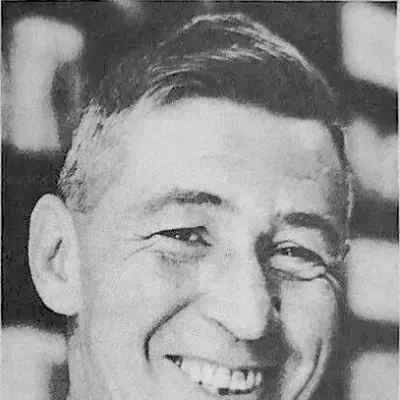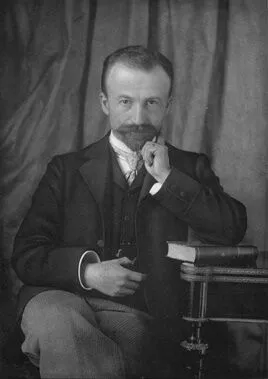
Maurice Blondel
Human Design Chart
Biography
Died on 4 June 1949, Aix-en-Provence, France.
The Human Design of Maurice Blondel: Projector 3/5
Projector 3/5 — Design at a Glance
Maurice Blondel's design inclined towards focused perception. He was someone who immediately identified systemic errors. His aura acted like a bright flashlight, directing light to places where others were in the dark or had issues not functioning properly. This intensity could be perceived as unpleasant by his surroundings when he addressed these weaknesses directly.
The mechanics of his Projector type explained this: A direct intervention often felt aggressive, like blinding someone with a bright light. More effective for him was to attract through his own harmony. People would then come to him on their own and seek advice. His strategy involved waiting for an honest, appreciative invitation rather than taking the initiative himself.
Since his Sacral Center was undefined, Maurice Blondel did not have constant life energy. He went through phases of high activity followed by necessary rest periods for regeneration. Ignoring this rhythm led to burnout. Living according to this design rewarded him with success. Deviations resulted in bitterness as an expression of his non-self. His path involved maintaining a focused perspective patiently until invited and managing his energy cycles respectfully.
Splenic Authority
Maurice Blondel showed decision-making based on subtle, immediate inner signals. His design carried the inner authority of the Spleen, meaning his defined Spleen Center functioned as a health and alarm system. This configuration gave him spontaneous survival intelligence: intuitive knowledge about whether a situation or environment was beneficial appeared in the moment. With his open Emotional and Sacral Centers, this specific authority could be effective.
The crucial mechanism lay in that this impulse only came once and was extremely fine. Maurice Blondel had to be highly attentive not to miss this first signal or drown it out with subsequent thoughts. This initial impulse served immediate protection of his health; listening enabled him to rigorously distance himself from harmful influences.
Since this clarity was only available in the current moment, long-term commitments proved counterproductive for his system. His design required flexibility and much space as plans could change short-term when inner intuition gave a new signal. Retreat often helped him hear this fine voice again. He did not live by rigid future plans but reacted to the immediate quality of the moment to secure his well-being. This structure created a lifestyle of adaptability rather than predictability.
The 3/5 Profile — Martyr / Heretic
Maurice Blondel's design inclined towards acquiring knowledge through personal experimentation and failure, not abstract theory. As someone with the Profile 3/5, the Explorer/Hero, he initially believed little and had to make his own experiences to present them later as attractive solutions for others. This configuration created a dynamic tension: Line 3 demanded adaptation to the environment and entering into commitments, often driven by ego projections or illusions, risking public errors. Simultaneously, Line 5 required withdrawal, privacy, and strict timing. Maurice Blondel had to learn to keep his reflections secret until they were fully mature; premature sharing otherwise led to confusion. The strength of his design lay in providing practical solutions precisely at the right crisis moment. His path involved recognizing the danger of hindrance through false adaptation and connecting awareness with the necessary assertiveness of the 'tribe'. He learned from his experiments to then be perceived as a competent hero – a role that flattered but could be painful after public failure. His life was marked by this interplay between the pressure to break through and the necessity to wait for the right timing before sharing his insights.
Single Definition — Defined & Open Centers
Maurice Blondel revealed himself as someone whose decision-making was deeply rooted in existential instinct. His defined Spleen Center served as personal authority; it required a trusting follow-through of the momentary, non-rationalizable bodily feeling for health and well-being. This vital intuition worked exclusively in the present in the 'now'. Maurice Blondel could not logically deduce these subtle warning signals or confirmations – they were simply there. A deep tuning into existence allowed him to make spontaneous judgments that were reliable as long as he did not give more weight to his mind than to bodily intelligence.
This intuitive process was reinforced by his defined Root Center. It provided a steady, adrenalized pressure to exist and move forward in the material world. This stress served neither panic nor correction but stabilization. It nourished survival consciousness and connected the existential clarity of the Spleen Center with the necessary energy to make a foothold in everyday life. Maurice Blondel was equipped to endure the pressures of life and transform them into constructive movement without losing his inner peace.
At the same time, his design revealed specific vulnerabilities. His open Head Center tended to get stuck in mental monologue when trying to find answers to questions that did not come from his authority. He was prone to doubt and confusion when he tried to solve intellectual puzzles instead of letting them go. Similarly, his open Ajna Center gathered concepts and opinions from the environment without having a firm personal truth. Maurice Blondel had to learn not to take every idea as part of his personal identity.
His open Throat Center also drew attention when he spoke, often unpredictably and without consistent control over expression. He tended to try to steer communication rather than wait for an invitation. His open G Center meant that he did not have a firm identity or direction; he reflected the energy of his environment and had to learn to be in the right place to receive proper guidance from others. The open Heart Center made him vulnerable to the pressure to prove himself, while the open Sacral Center led to taking on foreign energy and becoming exhausted if he did not listen to his own boundaries. Finally, his open Solar Plexus absorbed emotions of others, making him appear emotionally unstable when identifying these waves as his own.
Channels for the meaning-giving struggle of life.
Maurice Blondel showed a stubborn determination to walk his own path, even when the odds were against him. His design drove him to discover meaning and purpose in the struggles that met him on his unique journey. For Maurice Blondel, nothing was more satisfying than resisting expectations and taking risks to fight for something he deemed valuable. This attitude did not serve aggression but individualization: The struggle became a means to realize deeper meaning and inspire others through his example.
This dynamic resulted from the Life Struggle Channel 38-28, connecting the Root Center with the Spleen Center. Gate 38 provided the pressure to maintain personal integrity against external distractions and be authentically oneself. Simultaneously, Gate 28 intuitively assessed whether a conflict was appropriate and if fighting made sense. This connection created an adrenalized energy that enabled Maurice Blondel to question the status quo and see evolution as a necessary process. Inner stress arose for him only when he could not live out these struggles; movement helped him release this pressure and gain clarity.
Additionally, other energies influenced his development. Gate 44 promoted awareness and transformation through interaction without preconditions. Gate 33 required calmness for reflection and memory to avoid repetition. Gate 19 sought security in resources and community as well as spiritual connection. Gate 24 drove mental mutations by renewing knowledge in the rhythm of the pulse. On a personality level, Gate 58 supported perfection through experiments and pattern recognition while Gate 52 demanded focused silence for correcting patterns. Gate 57 offered intuitive clarity here and now. In his design, Gate 39 promoted mutations through provocative analysis, and Gate 53 enabled as a pioneer spirit the beginning of new development cycles and freedom for new experiences.
Individual Circuitry — Circuit Signature
Maurice Blondel's design laid a tendency towards pulsating energy anchored in the present moment. This configuration focused on acquiring and transforming new knowledge and expressing his unique identity. The mechanics of this Knowledge Circuit pushed toward the manifestation of individual creativity and innovation. This occurred through emotional waves from the Solar Plexus Center, finding expression through the Throat Center. Such a process led to change that also became effective for others, driven by the need to express deviations from the status quo.
Within this circuit in Maurice Blondel's case, specifically the Life Struggle Channel was active. This connected the Spleen Center with the Root Center. Since both centers lie within the same group, there existed a direct energetic flow here. The energy worked acoustically and pulsatingly. It supported strengthening his individuality through dealing with challenges and stressful situations. The connection between spleen and root enabled intuitive perceptions to be directly transformed into tangible reactions. This shaped how he not only collected new knowledge but actively integrated it into his life and actions. Emotional waves served as a pulse for these processes. Maurice Blondel thus emerged as someone who sharpened and transformed his own identity through dealing with the Life Struggle.
Right Angle Cross of the Four Ways 3
Maurice Blondel's design revealed a tendency towards a deep, often unspoken search for meaning behind things. He was someone who did not accept superficial answers but sought to understand the hidden connections and the true nature of his existence. This attitude was not just a preference but a structural feature of his Human-Design, marked by the right cross of the four pathways.
This specific design pattern describes a life task where one does not find their identity or place in the world through external validation but rather through an inner process of discovery. It involved integrating intuition and logic to uncover a truth beyond the visible. Maurice Blondel carried this configuration as a constant impulse to look behind the facade of everyday life and seek authentic, personal insight. This was a path of inner clarification where answers were not simply given but had to be won through continuous self-reflection and engagement with the world. This structure shaped his way of perceiving reality and orienting himself, always driven by the need for deeper, personal significance.
Saturn Return · Uranus Opposition · Chiron Return · 2nd Saturn Return — Life Cycles
The available data on Maurice Blondel do not allow a specific Human-Design characterization. The raw content lists exclusively astrological transits: the first and second Saturn return, the Uranus opposition, and the Chiron return. These events belong to classical astrology and describe planetary positions relative to the birthplace. They contain no information about Maurice Blondel's Human-Design. There is a lack of details regarding his type, strategy, authority, defined or undefined centers, as well as specific gates and channels. Without these mechanical foundations, it is impossible to make any statement about his energetic condition, life task according to Human-Design, or inner workings. The mentioned transits such as the Saturn return (around 29 years) or Chiron return (around 50 years) have no direct equivalent in Human-Design as defining mechanics for a person's design. Therefore, it is not possible to create a chapter describing Maurice Blondel's Human-Design. Any attempt to translate these astrological data into Human-Design terms or derive character traits from them would be an invention and would violate the requirement to adhere strictly to the provided facts. As there are no HD mechanics available, Maurice Blondel's design remains unanswered from this perspective.
Projector · Splenic Authority — Synthesis
Maurice Blondel lived a life marked by a profound search for authenticity and an inner compass (defined Spleen Center). His energy was directed towards identifying flaws in the system (Projector Design) and accumulating knowledge through practical experience (Profile Experimenter/Hero), to illuminate paths for others. This process was reinforced by a constant need for reflection and adaptation (Gate 44 Line 3), while he simultaneously absorbed and transformed the energy of others (open Solar Plexus Center). He acted as a catalyst for change, correcting patterns and pointing out new ways – yet this path also made him vulnerable to external influences.
Blondel seemed caught between the urge to defend his own principles (Channel 38-28) and a natural openness towards the emotions of others (open Solar Plexus). This led to a tension field between individual expression and the ability to empathize with others. He was a seeker constantly striving for meaning and direction – yet without firmly anchored inner values or a clear identity (undefined Heart and G Centers). This dynamic shaped his approach to life, revealing a deep longing for authenticity in a complex world.
1 Defined Channel
Incarnation Cross - Right Angle Cross of the Four Ways 3
Solar Return
The Solar Return shows the moment when the sun returns to its exact birth position - your personal solar year.
Life Cycles
Discover the life cycles with a detailed triple view (birth chart, cycle chart, composite).
Human Design Profile
- Type
- Projector
- Strategy
- Wait for the respectful invitation
- Authority
- Splenic Authority
- Profile
- 3/5 - Martyr / Heretic
- Definition
- Single Definition
- Incarnation Cross
- Right Angle Cross of the Four Ways 3
- Date of Birth
- 02.11.1861 10:30
- Place of Birth
- Dijon, France
Frequently Asked Questions
What Human Design type was Maurice Blondel?
What Profile did Maurice Blondel have in Human Design?
What Authority guided Maurice Blondel?
What incarnation cross determined Maurice Blondel's design?
When was Maurice Blondel born?
Discover your own Human Design
Are you also a Projector? Find out in a personal reading how to unfold your leadership qualities and recognize the right invitations.
More Personalities
Back to overviewSissy Spacek

Alain-Fournier

Anémone

Ann-Margret

Bourvil
Hergé