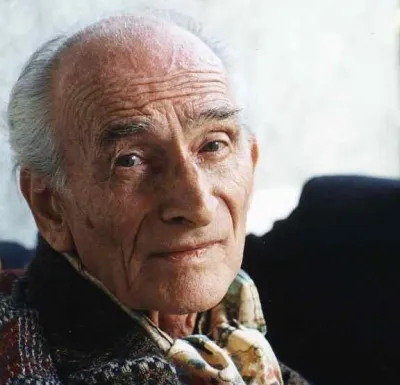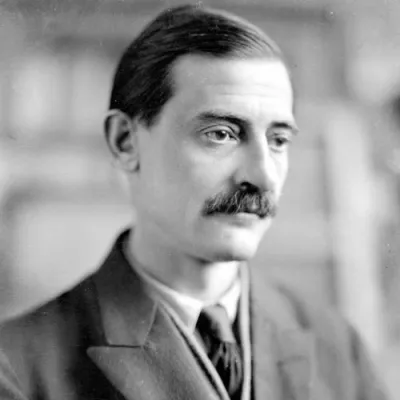
Maurice Utrillo
Human Design Chart
Biography
As the son of model-artist Suzanne Valadon, he began to paint at 19 on the advice of his mother, who gave him his first and only instruction. His father was an amateur artist named Boissy; he took his surname from Miguel Utrillo, a Spanish journalist and art critic who adopted him when he was eight. Throughout his youth, he was cared for by his maternal grandmother. At the College Rollin he was a poor student and after three years left school to work as a bookkeeper. His health was poor.
In 1902 he began to draw and paint, but without initial enthusiasm. As he moved his work outdoors, he began to care for the vistas of Paris. By 1908 he had developed his own distinct style and during the following six years, produced his most celebrated canvases, including his series of churches. By 1909 he was attracting the attention of collectors.
During WW I, Utrillo produced more than 1,000 pictures, moving toward a more linear, dry and precise, architectural style. He was rejected by the army in 1915 for medical reasons. A severe alcoholic from youth, his life began to alternate between periods of freedom and repeated stays in sanatoriums, most markedly between 1921 and 1924.
Official recognition came in 1928 when he was made a chevalier of the Legion of Honor. In 1953, a Utrillo painting sold for 2 million francs, reportedly the largest sum ever paid for one of his works at public sale.
On 18 April 1935, Utrillo married Mme. Lucie Pauwels, a former actress and widow of a banker. They bought a villa in the Paris suburbs two years later, where they resided. His wife managed his business affairs to make him a wealthy man.
Utrillo died on 5 November 1955.
Maurice Utrillo as a Manifesting Generator 1/3 in Human Design
Manifesting Generator 1/3 — Design at a Glance
Maurice Utrillo's design suggests a tendency towards hybrid work methods: As an Manifesting Generator, he had constant sacral energy that provided him with a steady foundation combined with the ability to skip steps when taking action. This allowed him to quickly bring things into his life and push multiple projects forward simultaneously. The mechanics describe this type as a mix of Generator and Manifestor; while he responded to internal impulses – the strategy of waiting for the "yes" from the sacral center –, due to his speed, he often acted faster than pure generators could.
However, this quickness carried risks: Utrillo tended to overlook important steps or get distracted by juggling multiple tasks at once. If he did not wait for confirmation from his inner authority, his creative enthusiasm quickly turned into frustration – the specific non-self theme of this type. However, when he followed the strategy and only acted on sustained excitement, he found deep satisfaction in creating. For him, the saying "Finish before starting anew" was counterproductive; instead, his strength flourished in a playful mode with constant variety. Thus, his design shaped a dynamic that could lead to true fulfillment only through disciplined responses to impulses and acceptance of parallel work streams.
Sacral Authority
Maurice Utrillo's design inclines him to make decisions not through intellectual analysis but by trusting immediate physical impulses. As a Generator, he possesses sacral authority, which simplifies his decision-making process: strategy and inner guidance merge here. This mechanism only works because his emotional center is open; therefore, emotional clarity was not immediately available to him but had to develop over time.
His responses to external stimuli manifest as gut feelings or bursts of energy – audible as grunts, hums, or a confirming "Mhm." When this sacral motor kicks in, he feels vital and alive. Then he possesses seemingly inexhaustible energy and tackles his work with great enthusiasm. His design supports him in going through life with joy and satisfaction, fully immersed in activities without the need for external purpose.
Additionally, his activated Spleen Center acts as a supportive authority. Through its direct connection to the Sacral Center, he can react particularly quickly and spontaneously. This immediate access to his physical well-being and instinctive perception allows him to reliably be guided by these deep inner signals rather than falling into deliberate hesitation.
The 1/3 Profile — Investigator / Martyr
Maurice Utrillo's design inclined towards experimental learning. As a person with Profile 1/3 – the Researcher and Experimenter – he was someone who did not just collect knowledge theoretically but also tested it through practical trial and error. This configuration combined the need for thorough preparation (Line 1) with the urge to negotiate and make mistakes (Line 3). When Utrillo made a decision or rendered judgment, it was based on double-checking: both theoretical analysis and practical experience.
His inner dynamics were shaped by specific energetic patterns. Gate 58 in Line 1 gave him a fundamental zest for life and the will to correct through mindfulness; without this awareness, frustration loomed as the cyclical nature of this energy demanded structure. Simultaneously, Gate 18 in Line 3 acted as a driving force for thorough cleaning and breaking old connections. This "fanatical zeal" focused on materiality and clearing disorder, with Neptune's influence suggesting that old forms were only resolved if the cost was deemed acceptable. Utrillo thus learned through corrective action in daily life: he tested patterns, cleaned up, and adapted to gain a verified truth from every situation. His judgment was therefore considered trustworthy, always backed by this rigorous practice.
Single Definition — Defined & Open Centers
Maurice Utrillo's design set a tendency towards constant mental activity and vital endurance. His defined Ajna Center ensured a continuous internal thought process, while his open Head Center made him susceptible to external inspiration or confusion; he tended to seek answers that did not come from within himself. This mental energy flowed into his defined Throat Center, enabling him to express his thoughts reliably.
As a Generator with a defined Sacral Center, Maurice Utrillo possessed an enormous source of life energy, which was only correctly available through reacting to external stimuli. Initiated actions often led to frustration as the sacral power would then be lacking. His defined Spleen Center gave him a reliable instinct for "now," protecting him from health or existential risks if he trusted this tangible knowledge. The constant pressure of his defined Root Center propelled him physically and adrenalinically forward.
At the same time, he lacked firm internal structures in other areas. His open G Center meant that Maurice Utrillo did not have a stable identity or direction on his own; he absorbed the energy of his environment and often sought places or relationships that gave him a sense of belonging. His open Heart Center left him without consistent willpower, leading to the pressure of proving his worth through promises or performance – a trap undermining his self-esteem. Additionally, his Solar Plexus was open, causing him to absorb and amplify foreign emotions rather than possessing stable feelings; he often avoided confrontations out of fear of emotional overload. This combination of strong internal energy and an open emotional and identity-receiving antenna significantly shaped his experience of the world.
Channels for change, logic, charisma, intuition and power.
Maurice Utrillo's Human Design shows a tendency towards sudden, deep transformation processes paired with a strong inclination for self-reinforcement and intuitive reaction. This configuration revealed someone who endured inner tensions until new patterns prevailed while simultaneously possessing the power to act in the moment and express their perception directly.
Channel of Mutation 60-3 connects the Root Center to the Sacral Center through Gate of Limitation (60) and Gate of Order (3). This potential for evolutionary change depended on the ability to accept limitation and move beyond the confusion of a new beginning. The powerful, pulsating energy of this channel permeated his way of living out his design, often accompanied by melancholy in the pauses between impulses. He had to learn to patiently wait for reactions from the Sacral rather than rationalizing away moods.
Parallel to this, Channel of Charisma 34-20 connects the Sacral Center through Gate of Power (34) with the Throat Center via Gate of Now (20). As a classic Manifesting Generator channel, this drive towards manifestation through sacral reaction was guided. The raw physiological energy from Gate 34 was directed to the thyroid system to act in the moment. This gave him the power to sustain activity over longer periods, provided he yielded to his inner guidance and let his consciousness follow actions rather than being driven by mental "shoulds."
Channel of Brainwave 57-20 connects the Spleen Center with the Throat Center through Gate of Intuitive Insight (57) and again Gate of Now (20). Here, intuitive insight from the Spleen received its clearest voice in the moment. This ability allowed him to encourage others to awaken their own inner survival intelligence by expressing spontaneous verbal outbursts of pure intuition that found the core of a matter faster than thoughtful analysis.
Channel of Power 34-57 connects the Spleen Center through Gate 57 with the Sacral Center and there to Gate 34. This archetype of an individualized human reinforced his intuitive capacity through sacral reaction for survival. The generative life force from the Sacral supported existential consciousness in the Spleen, keeping him perpetually alert to threats and allowing him to make decisions in fractions of seconds to safely navigate the moment.
Channel of Judgment 58-18 connects the Root Center with the Spleen Center through Gate of Vitality (58) and Gate of Correcting (18). This insatiable drive to correct and perfect patterns nourished the art of mastery. It urged questioning everything that was out of balance in search for satisfaction in a perfect pattern.
Channel of Acceptance 17-62 connects the Ajna Center with the Throat Center through Gate of Opinions (17) and Gate of Details (62). Logic here formed thought processes by mentally organizing information based on substantial details. Gate 17 visualized patterns while Gate 62 translated them into language, giving him the ability to effectively communicate detailed visual impressions logically structured.
Channel of Preservation 27-50 connects the Sacral Center with the Spleen Center through Gate of Care (27) and Gate of Values (50). The quality of all tribal activities was heightened by selfless interest in others while traditional values guarded order. This created levels of preservation to sustain and protect the tribe, automatically attracting the trust of others for support.
Individual Circuitry — Circuit Signature
Maurice Utrillo's design inclined towards an impulsive and innovative way of expression, paired with a deep instinctive care. His chart showed as one unit: A simple definition connected Sacral-, Root-, Spleen-, Throat- and Ajna Centers directly to each other. This created a continuous energetic flow without separate blocks.
The Knowledge Circuit here worked divided but powerful. Through the Channel "Flash of Inspiration" (20-57), it linked the Throat Center with the Spleen. This allowed for creative intuition and spontaneous ideas that were translated directly into words or actions. Parallel to this, energy flowed through the Channel "Mutation" (3-60) between Sacral and Root Centers. This connection drove him to change what existed and go new ways, supported by his life force and endurance.
In the Understanding Circuit, the Channel "Acceptance" (17-62) connected Ajna with the Throat Center. This promoted the ability to logically structure complex thoughts and communicate them clearly. The Channel "Judgment" (18-58) linked Spleen and Root Centers. Here an intuitive analytical capability worked that enabled quick decisions based on pattern recognition, supported by physical energy.
The Protector Circuit showed through the Channel "Conservation" (27-50), which connected Sacral and Spleen Centers. This gave him an instinctive care and a need to preserve his environment as well as his resources and nourish them.
Lastly, Integration worked as a continuous stream between Throat-, Sacral-, and Spleen Centers. The Channels "Charisma" (20-34) and "Power" (34-57) connected these centers directly. This created a strong individual presence in the here and now based on intuitive power that generated immediate resonance. Maurice Utrillo thus lived in a unity of intuition, expression, logical structure, and instinctive preservation.
Right Angle Cross of Service 4
Maurice Utrillo's Human Design profile indicated a tendency towards deep, often quiet dedication to the well-being of others. He was someone who did not seek fame through self-centered ambition but rather found his strength in supporting and serving those around him. This attitude stemmed from the configuration of the right service cross. In Human Design terms, this structure marks a specific orientation: energy is programmed to become effective through selflessness and care. It wasn't merely a moral obligation but an inner drive that led him towards the role of helper or carrier. Maurice Utrillo lived this dynamic by directing his attention outward. His design challenged him to step back so others could shine or thrive. This created a tension between his own need for recognition and the deep satisfaction derived from pure service. The mechanics of this cross meant true fulfillment only occurred when he fully immersed himself in serving others without losing his essence. It was a balancing act: strong enough to carry, yet soft enough not to dominate. Maurice Utrillo followed this inner compass that guided him to subtly apply his gifts to enrich or stabilize the lives of those around him.
Saturn Return · Uranus Opposition · Chiron Return · 2nd Saturn Return — Life Cycles
Maurice Utrillo's design indicated cyclical phases of consolidation that crystallized into concrete creative and life periods. The first Saturn return often marked a transition from experimental work to structured practice. In 1912, at age 29, he set up a shared studio in Rue Cortot 12 with two colleagues – reflecting an inner need for anchoring and collective alignment.
Later came a phase of increased dynamism and individual demarcation typical of the Uranus opposition. This mechanical tension often fostered innovative or provocative forms of expression. In 1922, Utrillo painted “Le Moulin de la Galette” with humorous figures and an explicit warning against forgeries – showcasing his characteristic mix of playful detachment and a clear need to define his integrity and authorship.
The Chiron return as a fulfillment cycle brought a deepening of personal life purpose. When strategy and authority were respected, this often led to the flourishing of one's own purpose. In 1935, at age 52, Utrillo married Lucie Pauwels – emphasizing inner maturity and the ability for committed partnership in this phase.
The second Saturn return solidified these achievements through public recognition. In 1942, he found institutional validation with exhibitions at the Albright Museum and Kunsthalle Basel, marking the culmination of a long journey to established status.
Manifesting Generator · Sacral Authority — Synthesis
Maurice Utrillo was a Manifesting Generator whose life was marked by a dynamic interplay between initiation and reaction. His sacral authority (paired with the defined Sacral Center) provided him with a constant energy source, yet his manifesting nature often led to quick action and skipping necessary steps. This pattern showed in his readiness to try new things (Profile 1/3), working out insights himself while also showing an impulsive approach – a tendency that repeatedly made him reassess or adapt what he had already started.
A central paradox in his design lay in the tension between the knowledge circuit and its associated creative impulses on one hand, and the necessity to engage with sacral reaction on the other. The pulsating energy of the circuit (Channel 3-60) created a strong desire for individuality and transformation, while sacral authority continually brought him back to the present moment and physical response. This led to a life alternating between innovative bursts and phases of reassessment and experimentation – evidenced by creative periods and changes in his work.
7 Defined Channels
Incarnation Cross - Right Angle Cross of Service 4
Solar Return
The Solar Return shows the moment when the sun returns to its exact birth position - your personal solar year.
Life Cycles
Discover the life cycles with a detailed triple view (birth chart, cycle chart, composite).
Human Design Profile
- Strategy
- To respond - wait for something to respond to
- Authority
- Sacral Authority
- Profile
- 1/3 - Investigator / Martyr
- Definition
- Single Definition
- Incarnation Cross
- Right Angle Cross of Service 4
- Date of Birth
- 26.12.1883 13:00
- Place of Birth
- Paris, France
Frequently Asked Questions
What was Maurice Utrillo's Human Design type?
What Profile did Maurice Utrillo have in Human Design?
Which Authority guided Maurice Utrillo in making decisions?
What incarnation cross characterized Maurice Utrillo?
When was Maurice Utrillo born?
Discover your own Human Design
Are you also a Manifesting Generator? Find out in a personal reading how to unfold your multi-talents and direct your energy wisely.
More Personalities
Back to overviewAldair

Alizée

Angeli

Arletty
Artus
Balthus