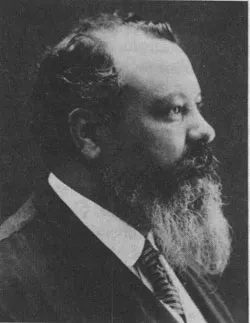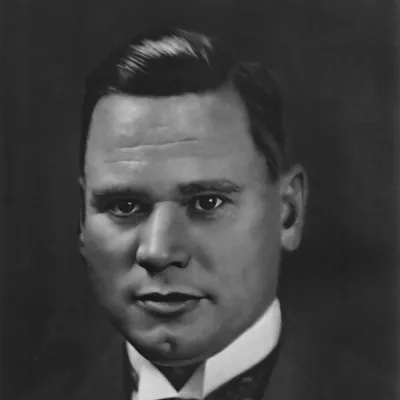
Max Brauer
Human Design Chart
Biography
Brauer died on 2 February 1973, aged 85, in Hamburg.
Max Brauer as a Manifestor 6/2 in Human Design
Manifestor 6/2 — Design at a Glance
Max Brauer revealed himself as a pioneer and visionary whose design was geared towards steering the world into a new future. Similar to an emperor in ancient Rome, he possessed the vision of a great whole but did not wage the necessary wars himself. Instead, he sent others out to conquer foreign lands for him. This role as a leader came with a specific pain point: He was often misunderstood and polarized his surroundings. Because his thinking frequently reached further than that of others, some loved and followed him because of his enormous visions while others hated or rejected him precisely for this reason. For the right followers to find him, it was crucial that he informed others about his plans in a timely and precise manner. This strategy of informing formed the core of his success. If Max Brauer followed this path and his inner authority, he was rewarded with a feeling of inner peace. However, if he lived against his design, he felt an enduring, deep anger within him. His character was thus shaped by the tension field between visionary leadership and the necessity of clear communication to minimize resistance and gain support.
Emotional Authority
Max Brauer showed a decision-making stance characterized by emotional wave movements. His inner authority was Emotional Authority, carried by the defined Emotional Center. In Human Design mechanics, this authority is considered primary: It always takes precedence over other defined centers regardless of further configurations in the chart. This meant for him that his perception was always colored by the current mood. He experienced a permanent up and down of feelings; what appeared as inspiring in one moment could seem negative in the next. These fluctuations were only snapshots, not an ultimate truth. Spontaneous decisions based on intense emotions often had a negative impact on his design because they relied on incomplete emotional information. Instead, his mechanics required patience and time. He needed to let decisions mature ideally through multiple sleep cycles. This process served to even out the strong feelings and gain emotional distance. Only when this clarity and calmness entered was the decision-making process for him complete. This strategy of delay was particularly important for long-term decisions that significantly influenced his life course. Through waiting, he gained the necessary depth and overview to recognize his true direction rather than being led by fleeting impulses.
The 6/2 Profile — Role Model / Hermit
Max Brauer revealed himself in his youth as an experimental spirit who learned through trial and error. Until around age 30, the energy of Line 2 dominated him: a constant desire for new experiences and change, coupled with a fear of stagnation. This phase was marked by ebbs and flows in his creative power; false actions could be brutally effective here, but they continually drove him to test boundaries and withdraw when errors occurred.
After the age of 30, his orientation fundamentally changed through the activation of Line 6. Max Brauer metaphorically retreated into a cave to look back at his earlier experiments with distance. This period served for intense reflection and healing. He identified inferior forces within his community and used his strong willpower to decisively resist unfair demands. His authority became like the sun in the fall – generous, but strict against unjust power claims.
From this phase of deep introspection emerged a wise person. Others sought his advice to partake in his life wisdom and learn the ability for self-reflection. Thus, his design described a clear path from an unsettled experimenter to a reflective role model who took leadership through distance and insight.
Single Definition — Defined & Open Centers
Max Brauer was characterized by a defined Heart Center, indicating strong willpower and self-determined control over his life and resources. This energy allowed him to keep promises and act responsibly while valuing recognition for his contributions. Simultaneously, his defined Solar Plexus and open Throat shaped how he presented himself: He had emotional depth that taught him not to make decisions impulsively but rather wait until clarity emerged in the emotional wave. Thus, his communication was not driven by mental haste but as an expression of these thought-out internal states and willful resolutions.
This stable inner structure contrasted with his open centers. His undefined Head Center made him susceptible to external mental pressure; he tended to engage with others' questions or seek inspiration to avoid confusion rather than trust his own mental impulses. Similarly, his undefined Ajna Center meant that concepts and theories did not come from a consistent internal source but were flexibly adopted from the environment – a state that kept him open to new ideas but also at risk of adopting foreign opinions as personal truth.
Especially defining was his undefined G Center: Max Brauer lacked a fixed identity or direction in life. Instead, he often sought security through borrowed identities in relationships or environments. He learned that his orientation depended on being in the right place; where he felt comfortable, a fitting role crystallized. His undefined Sacral Center lacked consistent generative energy, leading him to react to others' energy and protect himself from overexertion by borrowing vitality. Finally, his undefined Root Center absorbed external stress, teaching him to distinguish between self-imposed pressure and that of the environment to avoid cycles of hyperactivity and exhaustion.
Channels for community spirit and courageous emotional expression.
Max Brauer's design showed a person who combined an emotional drive for new experiences with a need for stable community. The Transience Channel (36-35) pushed him to defy logical caution and move things in the direction of new experience. Through the Crisis Gate (36), he often perceived unfamiliarity as inadequacy, leading him to create crises just to instigate movement. This served collective progress: through his restless search for emotional depth, his species matured. Simultaneously, the Community Channel (37-40) conveyed his understanding of tribal bonds. Here, he sought recognition (Gate 37) and was ready to work for others (Gate 40), but needed clear personal invitations to correctly integrate into an organization. His leadership drew from Gate 31, which represented the transmission of power – he led through energetic transfer to others. Mental processes were translated into vivid narratives via Gate 56, while Gate 45 in his Throat Center expressed willpower and tribal hierarchy. His inner structure was based on the rhythm of Gate 5, requiring firm habits for energy building. Through Gate 62, he valued logical details and pattern recognition to clearly name facts. Gate 49 sensitively responded to principles of transformation within the tribe, while Gate 8 promoted his individual contribution to group goals. Finally, Gate 20 anchored him in the present moment where authentic action integrated his uniqueness. This configuration shaped a person who used emotional waves to gain wisdom and share it as counsel, always mindful of the impermanence of all feelings.
Tribal Circuitry — Circuit Signature
Max Brauer's design inclined towards emotional reflection and cooperative action. His chart displayed a simple, connected energy flow between Throat, Solar Plexus, and Heart Centers. This structure linked the ability to express emotions directly with the power to support others.
The Meaning-Finding Circuit operated through the Transience Channel (Gates 35-36). It connected his Throat Center with his Solar Plexus. This allowed Max Brauer to process past experiences and emotions in wave-like patterns, sharing these insights verbally with others. The energy followed a natural rhythm of beginning, peak, and end, enabling him to learn from the past and communicate this knowledge.
Parallel to this, the Ego Circuit shaped his way of working together. Through the Community Channel (Gates 40-37), it connected his Heart Center with his Solar Plexus. This promoted a balance between giving and receiving as well as mutual support in social contexts. Since this circuit lacked a connection to the Sacral Center, there was no constant life force. Max Brauer therefore needed regular breaks to regenerate resources for cooperative work and avoid burnout. Both circuits worked together: emotional insights were formulated and shared within a framework of cooperation and reciprocal aid.
Left Angle Cross of Migration 2
Max Brauer's design carried the signature of the left cross of moving forward. This configuration shaped a fundamental life attitude: constant progress, even if the path was not clearly marked out. It was not about goal-oriented planning in the traditional sense but rather a process of letting go and trusting one's own rhythm.
In Human Design, this cross describes a specific energy movement. It encourages not clinging to past decisions or expectations but looking ahead. The focus was on understanding each step as a new beginning without dragging along the burden of old patterns. This required patience and the ability to endure uncertainties rather than immediately eliminating them through control.
For Max Brauer, this meant an inner discipline of moving forward. He often appeared in situations where others stood still or hesitated as someone who simply moved on to the next phase. Not out of recklessness but from a deep familiarity with the principle: movement creates clarity. Standing still led to rigidity. His chart indicated that his greatest lever lay in continuous, gentle progression – away from old ballast towards new possibilities that only revealed themselves through walking.
Saturn Return · Uranus Opposition · Chiron Return · 2nd Saturn Return — Life Cycles
Max Brauer's design showed a tendency towards structural anchoring and building solid systems. This inclination became visible during the first Saturn return, a cycle of maturation and consolidation: in 1916 he married Erna Pehmöller and moved into the city council of Altona. Here, private bonds and political responsibility crystallized into a stable foundation for life.
The Uranus opposition marked a phase of pressing need for change and innovation. In 1928, Brauer called for the founding of a technical university, reflecting the typical impulse of this aspect: expanding or replacing established structures with new, progressive concepts.
The Chiron return, a fulfillment cycle in which life's purpose should unfold, met Brauer with external resistance. In 1935, while in exile, his efforts to find work failed. This period was marked by confrontation with the limits of his possibilities, highlighting the challenge of this cycle under extreme conditions.
During the second Saturn return, a phase of mastery and assuming responsibility for the collective, Brauer took over the chairmanship of GLD in 1943. This aligned with his design potential to take on a leading role in an organized community after years of experience and testing, establishing structure.
Manifestor · Emotional Authority — Synthesis
Max Brauer lived a life marked by a deep inner drive towards transformation and the desire to initiate new things. As a Manifestor (Design) with emotional authority (Authority), he needed time for feelings to mature before making decisions – yet once made, it was about setting things in motion (Channel 36-35). The profile as role model and natural talent (Profile Role) suggests that after intense personal experience, he developed wisdom which he later passed on. This development was reinforced by the left cross of moving forward (Cross), pointing to a continuous confrontation with the past and its meaning – a process evident in cycles where events like his election into the city council or taking over the chairmanship of GLD (Cycles) were linked with phases of deep reflection and crisis experience.
A central paradox lay in the combination of the impetus for change through manifestation and the emotional wave running through him. Brauer was destined to set things in motion (Manifestor), yet his decisions had to be filtered through an inner process first (emotional authority). This led to a tension between quick action and the need for thorough maturation, which repeatedly showed itself in his life. The Meaning Making Circuit (Circuit) underscored this dynamic: processing the past served as a foundation for new initiatives – a constant cycle of experience, reflection, and striving for change.
2 Defined Channels
Incarnation Cross - Left Angle Cross of Migration 2
Solar Return
The Solar Return shows the moment when the sun returns to its exact birth position - your personal solar year.
Life Cycles
Discover the life cycles with a detailed triple view (birth chart, cycle chart, composite).
Human Design Profile
- Type
- Manifestor
- Strategy
- To inform others before acting
- Authority
- Emotional Authority
- Profile
- 6/2 - Role Model / Hermit
- Definition
- Single Definition
- Incarnation Cross
- Left Angle Cross of Migration 2
- Date of Birth
- 03.09.1887 15:00
- Place of Birth
- Hamburg, Germany
Frequently Asked Questions
What was Max Brauer's Human Design type?
What profile did Max Brauer have in Human Design?
What authority guided Max Brauer?
What incarnation cross did Max Brauer have?
When was Max Brauer born?
Discover your own Human Design
Are you also a Manifestor? Find out in a personal reading how to use your initiation power peacefully and dissolve resistance.
More Personalities
Back to overviewChristian-Jaque
Kesha

Laurent-Eynac
Lucebert
Masaccio
Papus