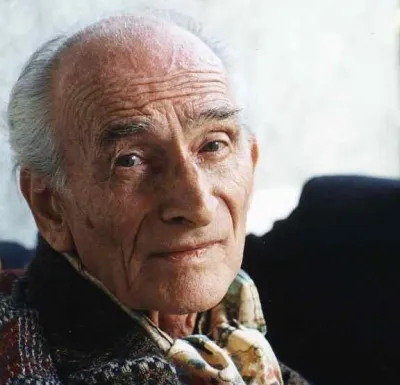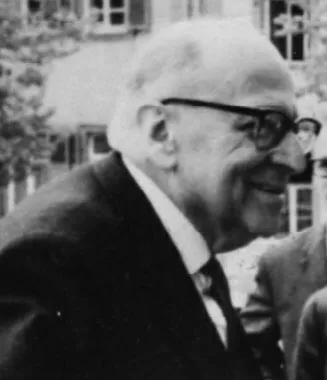
Max Horkheimer
Human Design Chart
Biography
Advancing a materialist theory of reason and society, Horkheimer analyzed the rise of instrumental reason, the erosion of the concept of truth, the decline of individual autonomy, the social-psychological roots of authoritarianism, and the reproduction of domination under modern capitalism. These concerns became fundamental to critical theory.
His most influential works include Eclipse of Reason (1947), Dialectic of Enlightenment (1947, with Theodor W. Adorno), and a series of foundational essays written in the 1930s for the Zeitschrift für Sozialforschung, later collected in Between Philosophy and Social Science and Critical Theory: Selected Essays. He also composed aphoristic reflections between the late 1920s and the 1960s, published posthumously as Dämmerung (Dawn and Decline). As director of the Institute, Horkheimer planned, supported, and made possible many other significant works.
Max Horkheimer — Manifesting Generator with Profile 2/4
Manifesting Generator 2/4 — Design at a Glance
Max Horkheimer revealed himself as someone with a hybrid energy configuration. As an Manifesting Generator, he possessed the constant power of the sacral center combined with the ability to skip steps through a connection to the throat center and quickly pull things into his life. This structure shaped his work style: He reacted to impulses but could, thanks to his speed, push multiple projects forward simultaneously without necessarily leading to frustration – provided he stayed in the "play mode" and sought variety.
The challenge lay in the risk of missing important steps due to this speed or becoming overwhelmed by multitasking. His design required him to always react to life and only act when his inner center signaled a clear "yes." Regular checks to ensure that current undertakings still aligned with his inner authority were crucial. If he followed this strategy, Max Horkheimer derived deep satisfaction from his work. The demand to focus on one thing at a time was contrary to his nature; rather, his creative power flourished through the parallel handling of various tasks as long as he did not lose the fun and play involved. Thus, he transformed potential frustration into productive dynamics.
Emotional Authority
Max Horkheimer demonstrated a decision-making process characterized by emotional wave movements. His design featured Emotional Authority, meaning that his defined Solar Plexus Center held his inner guidance. Regardless of other defined centers, this authority always took precedence. He experienced constant ups and downs in feelings; the world appeared to him colored by his current mood. In one moment he could be totally enthusiastic about something, only to see it negatively in the next.
His immediate feeling was merely a snapshot, an initial impression that did not necessarily represent his truth yet. Quick, spontaneous decisions made from emotion often had negative consequences for him. Instead, he needed time to let decisions mature. The longer he waited, the deeper and more comprehensive his understanding became. This required patience and repeatedly sleeping on things. He should take his time and ask himself multiple times. Over time, intense feelings subsided, he gained emotional distance, clarity emerged, and calmness set in. Only then had he gone through the process. This mechanism was particularly relevant for long-term decisions that could have a significant impact on his life course.
The 2/4 Profile — Hermit / Opportunist
Max Horkheimer revealed himself as someone who constantly oscillated between two seemingly contradictory needs: a deep desire for withdrawal and solitude alongside a strong yearning for community with chosen intimates. His design indicated a tendency to manage this tension through clear communication rather than resolving it. He needed periods of isolation to delve into his inner processes, gain clarity, and recover from the external world. This time of retreat was essential for him to process impressions from his social environment.
This dynamic stemmed from his configuration as a 2/4 Profile. Line 2 conveyed an internal longing for pragmatism and balance between extremes, achievable only through withdrawal and unfolding one's own flame. During this phase, he acted selectively and preparedly, using energy without waste. Once the need for solitude was satisfied, Line 4 took effect. It propelled him to reconnect with his favourite people to establish security through a solid foundation. Here practical intelligence and a certain opportunism were evident: He waited for the right moment to use power and resources meaningfully. Knowledge from his network he reflected upon in solitude, evaluated it, and developed brilliant ideas before bringing them back into the community again.
Single Definition — Defined & Open Centers
Max Horkheimer was someone whose mind was constantly in motion. His defined Ajna Center ensured a reliable, specific mental function; he continuously processed data and creativity without being easily influenced from the outside. This constant thinking flowed directly into his communication: The also defined Throat Center allowed him to clearly and consistently articulate what his mind conceptualized. Thus, his voice was the direct expression of his mental processes.
Alongside this intellectual clarity, Max Horkheimer had a firm inner identity. His defined G Center gave him a reliable sense of direction and self-love, enabling him to show others new paths without needing their approval. His energy source lay in the defined Sacral Center: As a generator, he possessed enormous vital force that was only correctly activated by reacting to external impulses. Initiating actions without prior invitation quickly led to frustration and exhaustion because the sacral energy was not available.
These stable inner structures contrasted with his open centers. His open Head Center made him vulnerable to mental pressure and doubt often stemming from others; he tended to get entangled in questions that were not his own, instead of trusting his inner authority. His open Heart Center led him to want to prove his worth through promises or performance, which could plunge him into spirals of self-doubt if he failed. Additionally, his open Spleen Center caused a fundamental survival fear and the tendency towards unhealthy dependence on people with defined spleens to simulate a sense of security. Finally, his open Root Center absorbed environmental stress, making him vulnerable to adrenalized pressure that he did not generate himself but merely reflected.
Channels for emotional depth, clarity, expression and determination.
Max Horkheimer lived his unique identity and carried it as a mutative example into the public eye. This attitude stemmed from Channel 1-8 of Inspiration, which connected the G Center with the Throat Center. Through Gate 1 of Self-expression and Gate 8 of Contributing, he did not just explain but demonstrated his individual direction. His design suggested that he drew attention to himself to inspire others to creatively express their own uniqueness – much like a pianist whose playing encourages listeners to play the piano.
At the same time, his way of communicating was marked by emotional waves. Channel 22-12 of Openness connected the Solar Plexus Center with the Throat Center. Here, Gate 22 of Openness and Gate 12 of Caution determined when he socially interacted. His impact depended on whether he was in the mood; only then could his voice emotionally touch or transform others. If pushed against his rhythm, restraint set in.
His thinking followed a process of assimilation and insight. Channel 23-43 of Structuring connected the Ajna Center with the Throat Center. Gate 43 of Insight received spontaneous breakthroughs that were processed through Gate 23 of Assimilation. This allowed him to clearly explain innovative perspectives, thereby reinforcing efficiency and evolutionary change, provided the timing was right.
Deep within his life force, Channel 29-46 of Discovery worked as a Juxta-channel between Sacral Center and G Center. Gate 29 of Saying Yes offered access to persistence while Gate 46 of Determination connected him with his higher direction. This promoted dedication to long-term experiences whose meaning only revealed itself at the end.
Additionally, prioritized gates contributed to his profile: Gate 30 recognized feelings and accepted limitation as fate; Gate 14 handled power with grace; Gate 47 sought collective meaning in the past; Gate 25 fostered mystical innocence; Gate 42 required closing processes for new commitments; Gate 35 sought growth through change; and Gate 16 experimented verbally at new skills.
Individual Circuitry — Circuit Signature
Max Horkheimer was someone whose inner identity was inseparably intertwined with the expression of new knowledge and reflection on past experiences. His design united these forces through a simple definition: The Ajna, Throat, Solar Plexus, and Identity Centers formed a continuous flow in the Knowledge Circuit, while the Sacral Center remained directly connected to Identity.
In the Knowledge Circuit, three channels were at work: Structuring (Gates 43–23), Inspiration (8–1), and Openness (12–22). They linked Ajna, Throat, Solar Plexus, and Identity Centers into a pulsating energy. This promoted the drive to express unique mental impulses through emotional resonance in words, thereby inspiring change. Parallel to this, the Meaning Circuit connected Identity with Sacral Center via Channel Discovery (Gates 46–29). Here, it was about cyclically processing feelings from the past to gain collectively learnable insights. Both circuits converged at the Identity Center: The creative transformative power of knowledge flowed directly into deeper emotional meaning-making. Max Horkheimer lived this connection – he used his intellectual sharpness not only for analysis but also to emotionally penetrate past experiences and share them as shared wisdom. His energy was neither purely rational nor merely emotional, but a synthesis of innovative idea and historical reflection always directed towards expression and sharing.
Right Angle Cross of Contagion 1
Max Horkheimer's design was marked by the "Infection Cross." This configuration created an intense, often unconscious dynamic between the emotional center and the logical mind. It caused inner feelings or moods to directly influence cognitive perception. As a result, Max Horkheimer was prone to interpreting his own emotional states as objective reality. What he felt subjectively often appeared to him as an unchangeable fact. This connection could lead to a strong polarity: either there was deep clarity and insight, or it resulted in a kind of mental "infection," where fears or doubts quickly spread through thinking and clouded judgment. The design therefore demanded great mindfulness to distinguish between personal well-being and objective analysis. Without this distinction, there was the risk that emotional waves would take over the logical center, leading decisions to be based on transient moods. This mechanism profoundly shaped his inner working style: it required constant reflection to ensure thoughts were not mere reflections of momentary feelings. The Infection Cross was thus not a static trait but a dynamic process that prompted Max Horkheimer to always question the source of his own convictions. It was a lifelong task to reconcile emotional intelligence with rational distance in order to act authentically and clearly.
Saturn Return · Uranus Opposition · Chiron Return · 2nd Saturn Return — Life Cycles
Max Horkheimer's Human Design showed a tendency towards structural analysis and institutional responsibility, which crystallized into clear phases. In 1937, at the age of 42, he published an essay on Critical Theory that was programmatic in nature. This coincided with his Uranus Opposition cycle, a period when internal tensions often seek external release and new, radical perspectives emerge. The publication was not accidental but rather an expression of this mechanically conditioned necessity to break through established patterns of thought.
In 1945, at the age of 50, he experienced his Chiron Return. This cycle marks the flowering of the incarnation cross: those who follow their strategy experience a deepening of their life purpose here. During this time, Horkheimer wrote a letter against vivisection to an American politician. This action reflected not a sudden emotional reaction but the mature expression of his deepest intention – protecting the weak through rational intervention. The Chiron Return thus confirmed the meaningfulness of his path.
In 1951, at the age of 56, his second Saturn Return concluded this developmental arc. As rector of the university, he took up a position of highest structural authority. The second Saturn Return integrates earlier experiences into stable forms; Horkheimer's design found its final institutional grounding here. His career was not a linear ascent but rather the result of specific cyclical urges: breaking with the old (Uranus), affirming the essential (Chiron), and building something lasting (Saturn). Each step followed the inner logic of his chart.
Manifesting Generator · Emotional Authority — Synthesis
He was a Manifesting Generator whose life was marked by an inner dynamism that constantly oscillated between the need for withdrawal and the desire for connection (Profile 2/4). His defined sacral energy (sacral center) provided constant drive, while his throat center connection allowed him to quickly develop and express ideas (Manifestor traits). This process was reinforced by a strong mental center that continuously developed concepts and exerted influence on his environment. The ability to transform knowledge and bring in new perspectives (Knowledge Channel) shaped his path and led to moments of creative inspiration (Channel 1-8).
A central paradox in his design lay in the tension between the impulse-driven action of a Manifesting Generator and his emotional authority. He could initiate things quickly but also tended to skip important steps. To balance this, he needed time for reflection (emotional authority) to mature decisions and gain clarity – particularly regarding the balance between individual withdrawal and social engagement. Recurring cycles, such as Uranus oppositions focusing on career moves, highlighted the need to adapt to changing circumstances.
4 Defined Channels
Incarnation Cross - Right Angle Cross of Contagion 1
Solar Return
The Solar Return shows the moment when the sun returns to its exact birth position - your personal solar year.
Life Cycles
Discover the life cycles with a detailed triple view (birth chart, cycle chart, composite).
Human Design Profile
- Strategy
- To respond - wait for something to respond to
- Authority
- Emotional Authority
- Profile
- 2/4 - Hermit / Opportunist
- Definition
- Single Definition
- Incarnation Cross
- Right Angle Cross of Contagion 1
- Date of Birth
- 14.02.1895 12:30
- Place of Birth
- Stuttgart, Germany
Frequently Asked Questions
What was Max Horkheimer's Human Design type?
Which profile did Max Horkheimer have?
What authority did Max Horkheimer have?
What incarnation cross was assigned to Max Horkheimer?
When was Max Horkheimer born?
Discover your own Human Design
Are you also a Manifesting Generator? Find out in a personal reading how to unfold your multi-talents and direct your energy wisely.
More Personalities
Back to overviewAldair

Alizée

Angeli

Arletty

Artus

Balthus