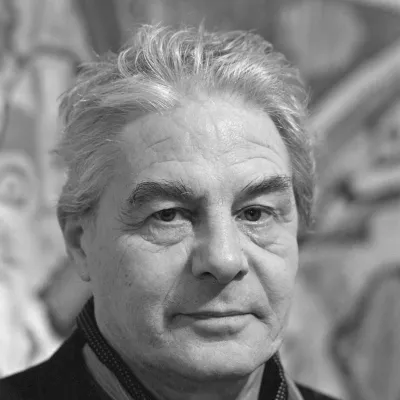
Michel Bussi
Human Design Chart
Biography
Michel Bussi — Manifestor with Profile 2/4
Manifestor 2/4 — Design at a Glance
Michel Bussi's Human Design laid the groundwork for him as a pioneer and visionary. He was destined to lead the world in a new direction, much like an emperor in ancient Rome. This archetype had the vision of a great empire but did not wage the necessary wars himself; instead, he sent his soldiers out to conquer foreign lands on his behalf.
This configuration came with a specific pain point: being misunderstood. Because his thinking often exceeded that of others, he inevitably polarized people. Some loved and followed him for his big dreams while others hated or rejected him precisely because of them. For the right followers to find him, it was crucial that he informed others timely and accurately about his visions. This formed the ideal strategy for his design.
By following Michel Bussi's strategy of informing as well as his inner authority, he was rewarded with a sense of internal peace. If he lived against this design, however, persistent deep anger would arise. His chart thus described not only a role as a leader but clearly defined the conditions for his emotional wellbeing: through clear communication of his intentions and acceptance of the resulting polarization, he could walk his path without falling into frustration.
Splenic Authority
Michel Bussi showed an immediate, instinctive orientation based on his inner signals serving as his primary compass for health and safety. This tendency stems from his authority in the Spleen Center, a mechanism that appears only in Projectors or Manifestors with open Emotional and Sacral Centers. The defined Spleen Center functioned here as a highly sensitive alarm system with pronounced survival intelligence. It provided spontaneous inner knowledge about whether a situation or environment was beneficial. The first impulse was the most reliable indicator of his physical wellbeing, helping him rigorously shield himself from harmful influences.
Since this Spleen impulse is very subtle and occurs only once in the moment, its use required high vigilance to avoid being overshadowed by external advice. Decisions had to be made immediately; a retreat for clarification could be helpful. Because what was right revealed itself only in the present, long-term plans were often prone to disruption and short-term changes common. This shaped a need for much freedom and flexibility as fixed commitments restricted his spontaneous adaptability. Michel Bussi used this mechanism to take good care of himself and accept only what confirmed his inner health at any given moment.
The 2/4 Profile — Hermit / Opportunist
Michel Bussi showed himself as someone who oscillated between the deep desire for withdrawal and the urge to connect. His design set a tendency towards absorbing knowledge from his environment to distill it in solitude. As a 2/4 Profile, he constantly fluctuated between Line 2 of the Hermit and Line 4 of the Community. This created an internal tension: He needed time alone to clarify things but also craved contact with his favorite people.
Line 2 projected newness onto him often without inner reflection, requiring spontaneous adaptation. Without valuing this projection as personal achievement, he avoided conflicts through vanity. Instead, he used 'Me-Time' to complete internal processes. Once this need was satisfied, he returned to his social sphere where Line 4 fostered mutual dependence and drew cooperation from himself. He expected his network to contribute to create a functioning dynamic.
This structure allowed him to reflect on the knowledge of his network during solitary times and develop brilliant ideas from it. Clear communication was crucial: He signaled externally when he sought company and when he wanted solitude. Only then could he utilize the energy of both lines – sensitivity towards others in groups and depth of solitude in withdrawal. This interaction shaped how he processed information and formed relationships.
Split Definition — Defined & Open Centers
Michel Bussi was characterized by a persistent inner mental pressure that drove him to ask questions and understand connections. This energy flowed through his defined Ajna Center into a defined Throat Center, allowing him to express his conceptual answers directly and reliably. His strength of expression was supported by a defined Heart Center: He had a clear willpower to keep promises and assert his authority in material life. Additionally, his defined Spleen Center provided spontaneous intuitive perception of the present moment, helping him make healthy decisions in the moment.
At the same time, his design featured several open centers that made him susceptible to external influences. His open G Center meant he did not carry a fixed identity but reflected it according to environment and relationship; he tended to question who he really was or which direction was correct rather than having an inner firmness. His open Sacral Center left him vulnerable to exhaustion as he absorbed foreign vital energy without generating his own, potentially overextending himself if he didn’t pause. The open Solar Plexus Center made him a mirror of others' emotional moods; he absorbed fears or moods from his surroundings rather than having stable emotions of his own and often avoided confrontation to not increase this emotional pressure. Finally, his open Root Center took on external stress, causing him to rush unnecessarily to escape the adrenalized pressure instead of waiting for the situation to naturally ease.
Channels for willpower, mental clarity and instinctive devotion.
Michel Bussi's design inclined towards entrepreneurial initiative and instinctive market analysis. He was someone who took material responsibility driven by a strong will to control resources while serving the tribe. This dynamic was shaped by the Money Line 21-45: Gate 21, the Hunter, sought control for his own calm phases, whereas Gate 45, the Gatherer, authoritatively decided on access to means ("I have or I don't"). This created an internal conflict between the need for autonomy and the duty of provision.
Parallel to this, the Devotion Line 26-44 connected his Heart with Spleen. Here ego strength (Gate 26) combined with instinctive alertness (Gate 44). This allowed Michel Bussi to intuitively recognize what the market or tribe needed – often before others did – and sell it convincingly. He acted as a promoter who generated resources through his sense of needs, where his efficiency depended on the balance between intense work and necessary rest.
Mentally, Michel Bussi presented himself through the Awareness Channel 61-24. Inspirational impulses from Gate 61 (Secrets) were transformed into rational answers in his Ajna Center by Gate 24 (Rationalizing). His thinking was not linear but mutative: It sought after Satori, sudden knowledge that breaks old patterns. He could not control his thoughts; insight came when it wanted to. This fostered an attitude of stillness and waiting for inner truth rather than actively seeking solutions.
Additionally, priority gates like 19 (Resources/Territory) and 35 (Change through Interaction) contributed to the expression, while gates like 63 (Doubt) and 40 (Freedom/Restoration) underlined the necessity of alternating between effort and regeneration.
Tribal Circuitry — Circuit Signature
Michel Bussi's design inclined towards impulsive creative flashes that were shown in a specific form of awareness. This stemmed from the Knowledge Circuit, but only as an isolated segment: The Channel 24-61 directly connected Head and Ajna Centers. This connection promoted innovative ideas and sudden insights in the mind without automatically translating into broader emotional or identity-forming expression – other channels of this circuit were missing.
Parallel to this, the Ego Circuit acted as an independent, separate force. Here Throat, Heart, and Spleen Centers formed a coherent flow. Channels 21-45 (Resource Accumulation) and 26-44 (Communication/Devotion) created dynamics of giving, taking, and material or social resource creation within a community. Since this group was not connected to the Ajna Head piece, two parallel energy fields existed: On one side, inner mental innovation (Head/Ajna), on the other side, outer cooperative resource generation and communication (Heart/Throat/Spleen). This divided definition meant that Michel Bussi experienced these areas as separate impulses – sometimes focused on the creative spark in his mind, sometimes on practical cooperation and resource care in social fields.
Right Angle Cross of the Four Ways 1
Michel Bussis Human-Design legt eine Neigung zu einer tiefgründigen und oft unbewussten Suche nach Sinn und Struktur hinter den scheinbar chaotischen Abläufen des Lebens fest. Diese Konfiguration, bekannt als das rechte Kreuz der vier Wege 1, beschreibt nicht ein aktives Streben nach Antworten durch logische Analyse, sondern eine passive Offenheit für Einsichten, die sich oft erst im Nachhinein oder in Momenten der Ruhe zeigen. Es geht hierbei um die Fähigkeit, den roten Faden zu erkennen, wenn man aufhört, gegen den Strom anzukämpfen.
Die Mechanik dieses Kreuzes arbeitet mit dem Prinzip der Hingabe an das Leben selbst, statt es kontrollieren zu wollen. Michel Bussi zeigte sich als jemand, dessen innere Autorität nicht durch äußere Bestätigung gestärkt wird, sondern durch die Erfahrung, dass alles seinen Platz hat – auch wenn dieser Platz zunächst unklar erscheint. Die vier Wege stehen für verschiedene Aspekte der menschlichen Existenz: den Weg des Geistes, des Körpers, der Emotionen und der Seele. Im rechten Kreuz sind diese Wege so verknüpft, dass sie eine ganzheitliche Sichtweise fördern, die über das rein Rationale hinausgeht.
Dieser Charakterzug bedeutet nicht, dass Michel Bussi passiv war, sondern dass seine effektivste Handlung aus einem Zustand des Vertrauens in den natürlichen Fluss der Dinge erwuchs. Wenn er sich dieser inneren Logik öffnete, konnte er Muster erkennen, die anderen verborgen blieben. Es ist eine Energie, die Geduld erfordert und belohnt, indem sie tiefe, transformative Einsichten ermöglicht, die das Leben bereichern und strukturieren, ohne es zu erzwingen.
Saturn Return · Uranus Opposition · Chiron Return · 2nd Saturn Return — Life Cycles
Michel Bussis Human-Design legt eine Neigung zu zyklischen, reifen Durchbrüchen fest, die sich in späten Karrierephasen verdichteten. Dies zeigte sich 2014, im Alter von 49 Jahren, als „Das Mädchen mit den blauen Augen“ auf Deutsch erschien. Dieser Zeitpunkt markiert den Chiron-Return, einen Erfüllungszyklus zwischen dem 49. und 51. Lebensjahr. In dieser Phase entfaltet sich das eigene Inkarnationskreuz zunehmend; sofern die Person gemäß ihrer Strategie und Autorität gelebt hat, wird Sinn und Zweck erfahrbar. Es handelt sich nicht um Heilung alter Wunden, sondern um eine Blütezeit, in der die Lebensaufgabe ihre volle Wirkung entfaltet.
Diese Dynamik setzte sich fort: 2020, mit 55 Jahren, erschienen „Nächte des Schweigens und Tage des Zorns“ auf Deutsch. Dies fällt in den zweiten Saturn-Return (ca. 58–60 Jahre, wobei die Vorläuferphase ab Mitte 50er relevant ist). Der zweite Saturn-Zyklus verdichtet jahrelange Arbeit zu tragfähigen Ergebnissen und stabilisiert die erreichte Position. Für Michel Bussi prägten diese beiden Zyklen eine klare Entwicklungslinie: Zunächst die Entfaltung des inneren Zwecks im Chiron-Return, gefolgt von der strukturellen Verankerung und Bestätigung dieser Arbeit durch den Saturn-Einfluss. Die Mechanik beschreibt hier keine zufälligen Erfolge, sondern das systematische Aufgehen in der eigenen Natur, wobei äußere Meilensteine die innere Reife spiegeln.
Manifestor · Splenic Authority — Synthesis
Ein zentraler roter Faden in diesem Design ist die dynamische Spannung zwischen innerer Führung und dem Bedürfnis nach Austausch. Als Manifestor mit Milz-Autorität agiert diese Person primär impulsgesteuert, vertraut dem spontanen Wissen ihres Körpers (Milz-Zentrum) und initiiert Prozesse (Manifestor-Typ). Gleichzeitig deutet das Profil als Naturtalent/Netzwerker auf ein Wechselspiel zwischen Rückzug in die innere Welt (Linie 2) und dem Wunsch nach Verbindung mit ausgewählten Menschen (Linie 4) hin – eine Suche nach einem sicheren Raum, um Klarheit zu gewinnen und diese dann im Austausch zu teilen. Der definierte Kopf-Ajna-Kanal verstärkt diesen inneren Druck, Fragen zu stellen und Inspiration zu finden, die wiederum den Drang zur Kommunikation nährt.
Das zentrale Paradox liegt in der Kombination aus dem impulsgesteuerten Handeln eines Manifestors und dem tiefen Bedürfnis nach Abgrenzung und Reflexion. Die Fähigkeit, als Initiator voranzugehen (Manifestor), wird durch das zyklische Aufkommen von Karriere-Ereignissen belegt, jedoch stets im Kontext der Notwendigkeit, sich wieder zurückzuziehen und die eigene innere Stimme zu hören (Linie 2). Diese Spannung zwischen dem Geben von Inspiration und dem Empfangen von Ruhe prägt ein Leben, in dem sowohl das Wirken in der Welt als auch die Selbstpflege essentiell sind.
3 Defined Channels
Incarnation Cross - Right Angle Cross of the Four Ways 1
Solar Return
The Solar Return shows the moment when the sun returns to its exact birth position - your personal solar year.
Life Cycles
Discover the life cycles with a detailed triple view (birth chart, cycle chart, composite).
Human Design Profile
- Type
- Manifestor
- Strategy
- To inform others before acting
- Authority
- Splenic Authority
- Profile
- 2/4 - Hermit / Opportunist
- Definition
- Split Definition
- Incarnation Cross
- Right Angle Cross of the Four Ways 1
- Date of Birth
- 29.04.1965 09:15
- Place of Birth
- Louviers, France
Frequently Asked Questions
What is Michel Bussi's Human Design type?
What profile does Michel Bussi have in Human Design?
What authority guides Michel Bussi?
What is Michel Bussi's incarnation cross?
When was Michel Bussi born?
Discover your own Human Design
Are you also a Manifestor? Find out in a personal reading how to use your initiation power peacefully and dissolve resistance.
More Personalities
Back to overviewAlain-Fournier

Angeli

Christian-Jaque

Juninho

Kesha

Lucebert