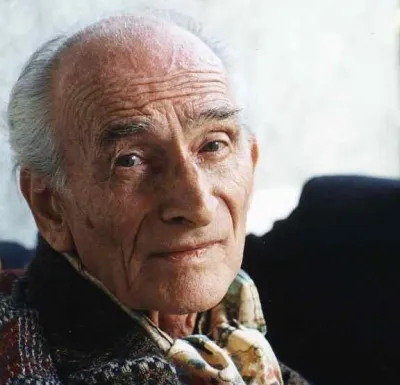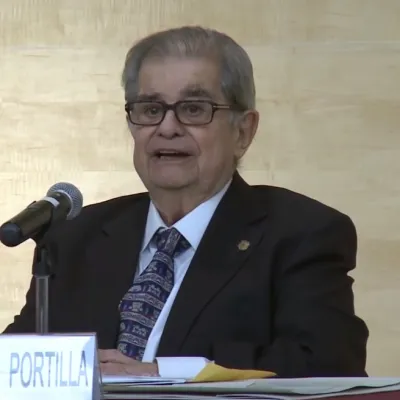
Miguel León-Portilla
Human Design Chart
Biography
León-Portilla spearheaded a movement to understand and re-evaluate Nahuatl literature and religion, not only from the pre-Columbian era, but also that of the present day, especially since Nahuatl is still spoken by 1.5 million people. His works in English on literature include Pre-Columbian Literatures of Mexico (1986), Fifteen Poets of the Aztec World (2000), and with Earl Shorris, In the Language of Kings: An Anthology of Mesoamerican Literature, Pre-Columbian to the Present (2002). He also compared the literature of the Nahuas with that of the Inca. Another area of research was on indigenous religion and spirituality.
León-Portilla died in Mexico City on 1 October 2019, aged 93.
What does Manifesting Generator 4/6 mean for Miguel León-Portilla?
Manifesting Generator 4/6 — Design at a Glance
Miguel León-Portilla's Human Design profile featured a hybrid energy tendency: He had the constant power of a Generator, yet also possessed the ability to skip steps and quickly draw things into his life. As an Manifestor-Generator, he demonstrated someone who had to react to impulses to avoid frustration, but unlike pure Generators, he had the speed to pursue multiple projects simultaneously.
This configuration meant that his creative energy lived in a "play mode" and thrived on variety. The advice to finish one thing before starting another did not suit his nature; instead, he drew deep satisfaction from working on various tasks in parallel, as long as his sacral center – his inner energy source – approved of each endeavor. Without this inner confirmation ("Yes! I love it!"), his enthusiasm for creation quickly turned to frustration, his Non-Self theme.
His mechanics required him to regularly check whether ongoing projects still had his approval. Only then could he use his speed without skipping important steps that would have to be laboriously retraced later. Thus, Miguel León-Portilla lived in a tension field between the necessity of reacting to life and the ability to achieve rapid, multifaceted results through this reaction, provided his inner authority was on board.
Emotional Authority
Miguel León-Portilla emerged as someone who did not make decisions based on the first impulse but rather took the time to wait until an inner clarity set in. His design featured Emotional Authority, meaning his defined Emotional Center was the decisive instance for his life – regardless of which other Centers were also defined. This authority was subject to a natural emotional wave, a permanent up and down of feelings. Miguel León-Portilla saw the world always colored by his current mood; what appeared as inspiring in one moment could seem negative in the next. Since this immediate feeling was only a snapshot and not necessarily the truth, spontaneous decisions based on emotion were often risky. Instead, his mechanism required patience. By taking the time to let decisions mature and re-evaluating them multiple times, he gained emotional distance. Over time, the intense feelings subsided, and calmness set in. This process was especially central for long-term, life-defining decisions. Miguel León-Portilla lived the necessity of taking his time and asking himself multiple times as an integral part of his inner guidance to ensure that his actions were based on deeper insight and not on passing mood.
The 4/6 Profile — Opportunist / Role Model
Miguel León-Portilla's Human Design suggests a tendency to intensely experiment with relationships and friendships in the first decades of life, before an internal conflict between the desire for community and the need for detached wisdom becomes apparent later on. As a person with Profile 4/6, Line 6 in his early thirty years still acted somewhat like Line 3, shaping this early phase of social exploration. Once Line 6 became active, he often experienced the contradiction between his heart's desire to belong to a community (Line 4) and his mental urge to withdraw to contemplate the meaning of life (Line 6). This conflict between heart and head characterized his entire life and could be confusing. In his later years, he was expected to meet the high standards of a wise role model, excelling particularly through cooperation with others. His large heart, typical of Line 4, remained cautious, wary of opening up to the wrong people and getting hurt. Line 6 also brought common sense; it recognized that power alone is not enough and sought authenticity without constant power displays.
Split Definition — Defined & Open Centers
Miguel León-Portilla was someone whose inner drive relied on consistent, reactive energy. His defined Sacral Center provided a vital energy source that felt like a constant hum. However, this energy was only available for tasks to which he responded correctly. Initiating actions without prior invitation often led to frustration and exhaustion, as the sacral power was then lacking. His design required patience: waiting for life to speak to him and then listening to his inner confirmation.
This reactive impulse was filtered through his defined Solar Plexus Center, which acted as an emotional authority. Miguel León-Portilla was not designed for immediate decision-making. Instead, he had to wait out the waves of his emotions to gain clarity. Impulsive reactions in emotional highs or lows led to chaos; true insight only emerged once the emotional wave had subsided. This depth allowed him to understand connections over time rather than grasping them in the moment.
His defined Ajna Center ensured a constant mental activity. He thought continuously, conceptualizing and processing data in a specific, trustworthy way. This mind served as an external authority for others, shaping the mental field in his environment and could, through pressure, make others think along with him. The connection between Ajna and his also defined Throat Center enabled him to clearly articulate his thoughts and concepts. His voice was the vehicle through which his mental structure entered the world.
At the same time, he was vulnerable to conditioning through open centers. His open Head Center made him susceptible to mental pressure and the questions of others. He tended to engage with problems that were not his own and sought inspiration to escape confusion. His open G Center meant he did not have a fixed identity but blended with his surroundings. He was dependent on the right environment to feel a sense of belonging and reflected the energies of the people around him. His open Heart Center made him vulnerable to the pressure to prove his worth, even though he did not have the consistent energy for competitive assertion. Finally, his open Spleen Center was marked by a fundamental survival fear that led him to cling to sources of security, even if they were unhealthy. Spontaneous decisions were risky for him, often based on conditioned fears.
Channels for curiosity, powerful impact and emotional depth.
Miguel León-Portilla worked through storytelling and the communication of ideas rather than relying on dry facts. This approach stemmed from the Channel of Curiosity 11-56, which connected his Ajna Center with his Throat Center. He constantly sought new perspectives to formulate as living parables that engaged the imagination of others and taught what it felt like to be human.
At the same time, he had a powerful, charismatic presence, shaped by the Channel of Charisma 34-20. This connection between the Sacral and Throat Centers gave him the ability to immediately convert inner energy into outer action. He often acted impulsively and with great intensity, driven by a desire to be present in the here and now, which also made him vulnerable to exhaustion if he did not listen to his inner resonance.
Emotionally, he moved in a pulsating wave between joy and melancholy, determined by the Channel of Emotional Release 39-55. This channel connected the Root with the Solar Plexus Center and influenced his moods and interactions with others significantly. He learned to accept this emotional depth to appear authentic and touch others with his passionate or contemplative presence.
Additionally, he carried the genetic strategy of Bonding (Gate 59) and the ability for logical pattern recognition and detail work (Gates 62, 52, 4). His design also promoted community structures (Gate 37), resource awareness (Gate 19), and the skilled handling of power (Gate 14). Through the acceptance of limitations (Gate 60) and a caring attitude (Gate 27) as well as the ability to have spontaneous insights (Gate 43) and open mutation (Gate 22), his profile was rounded off. Gate 29 emphasized the need to meet challenges with persistence, while Gate 36 showed how crises contributed to development as cyclical processes.
Individual Circuitry — Circuit Signature
Miguel León-Portilla's design presented two separate energetic focal points that did not appear as a continuous flow but as parallel, independent forces. On one side, the Meaning Circuit connected the Ajna Center with the Throat Center. This created a direct line between the analytical mind and expression. Miguel León-Portilla showed here a curiosity that allowed him to directly translate inner thoughts and logical structures into words. The energy of this connection served to reflect insights from past experiences and make them understandable for the collective. It was about sharing meaning that arose from the contemplation of past experiences.
Parallel to this, there existed a completely separate system consisting of the Knowledge Circuit and the Integration Circuit. Here, the Knowledge Circuit connected the Solar Plexus Center with the Root Center. This generated a pulsating, emotional wave aimed at releasing emotions and initiating change. Simultaneously, the Integration Circuit connected the Throat Center with the Sacral Center. This connection gave him a charisma based on the ability to draw power from reacting to life and express it in the here and now. Although both systems utilized the Throat Center, they were energetically not connected. Miguel León-Portilla thus moved between two worlds: on one hand, the clear, verbal communication of meaning and, on the other hand, the emotional, impulsive power that blazed new paths and acted in the moment. This separation meant that he could not always seamlessly unite these abilities but used them as distinct, coexisting potentials.
Right Angle Cross of the Sleeping Phoenix 1
Miguel León-Portilla carried the design of the right cross of the sleeping phoenix. This configuration set a specific inner dynamic aimed at a profound transformation, often associated with overcoming obstacles or coping with suffering to reach a higher level of awareness or a new beginning. The name 'sleeping phoenix' points to a potential that was not always visibly active but lay dormant, ready to act in decisive moments. It was an energy waiting to be awakened through experiences and challenges to then unleash a transformative power. This design did not describe an external action in the sense of visible deeds, but rather an inner attitude and life task connected with processing difficulties and the resulting renewal. The mechanics of this cross emphasized the importance of patience and trust in one's own process, even if this sometimes happened in the background. Miguel León-Portilla's chart showed this structure, signaling a fundamental tendency towards inner transformation and the ability to develop new perspectives or solutions from difficult situations, without this necessarily manifesting outwardly as a dramatic event. It was a quiet but powerful force of regeneration and new beginnings that shaped his inner experience.
Saturn Return · Uranus Opposition · Chiron Return · 2nd Saturn Return — Life Cycles
Miguel León-Portilla's life followed the rhythmic phases of planetary cycles marking stability, change, and inner maturation. The first Saturn return around the age of 28 served as the first major test of identity. Here, early impulses condensed into a viable structure; it was the time when he learned to take responsibility for what he had previously chosen intuitively. This cycle laid the groundwork for his later stability.
The Uranus opposition, typically between the ages of 40 and 42, brought a phase of necessary detachment. Miguel León-Portilla faced the challenge of breaking old bonds and structures to reorient himself. This pressure served not for destruction but for liberation from patterns that no longer served him, allowing for a deep renewal of his self-understanding.
The Chiron return, occurring between the ages of 49 and 51, marked the peak of his personal unfolding. In this fulfillment cycle, his life purpose became clearly experiential. If he had followed his strategy, he now felt the meaning of his path; it was a phase of bloom, in which his inner truth was completed in his outer life.
The second Saturn return around the age of 58 concluded this process. Miguel León-Portilla confronted the question of permanence and legacy again. This cycle demanded a final clarification of what was truly valuable, leading to a new, mature form of stability built on previous experiences.
Manifesting Generator · Emotional Authority — Synthesis
He lived a life marked by a constant interplay between inner perception and the urge to share this knowledge. The combination of defined sacral energy and the Manifesting Generator Authority (Manifesting Generator) pointed to a person who responded to impulses but could translate these into action with an unusual speed. This dynamic process was strengthened by a defined mental center (Ajna), signaling a consistent ability for concept formation and understanding complex connections. The curiosity (Curiosity Channel) drove him to continuously seek new insights and share these in the form of stories and interpretations—an expression of the Knowledge Circuit, which promotes transformation through the sharing of insights.
A central tension field lay in the connection between emotional authority and the Profile of the Networker/Role Model. The emotional wave required time for decision-making, while Line 6 in the profile conflicted with the desire for isolation and deep reflection with the need for connection and fulfilling expectations as a role model. This inner conflict between heart (Line 4) and head (Line 6) created a dynamic tension that prompted him to continuously reorient himself and question his perspectives.
3 Defined Channels
Incarnation Cross - Right Angle Cross of the Sleeping Phoenix 1
Solar Return
The Solar Return shows the moment when the sun returns to its exact birth position - your personal solar year.
Life Cycles
Discover the life cycles with a detailed triple view (birth chart, cycle chart, composite).
Human Design Profile
- Strategy
- To respond - wait for something to respond to
- Authority
- Emotional Authority
- Profile
- 4/6 - Opportunist / Role Model
- Definition
- Split Definition
- Incarnation Cross
- Right Angle Cross of the Sleeping Phoenix 1
- Date of Birth
- 22.02.1926 06:00
- Place of Birth
- Mexico City, Mexico
Frequently Asked Questions
What was Miguel León-Portilla's Human Design type?
What profile did Miguel León-Portilla have?
What authority did Miguel León-Portilla have?
What incarnation cross was Miguel León-Portilla assigned to?
When was Miguel León-Portilla born?
Discover your own Human Design
Are you also a Manifesting Generator? Find out in a personal reading how to unfold your multi-talents and direct your energy wisely.
More Personalities
Back to overviewAldair

Alizée

Angeli

Arletty

Artus

Balthus