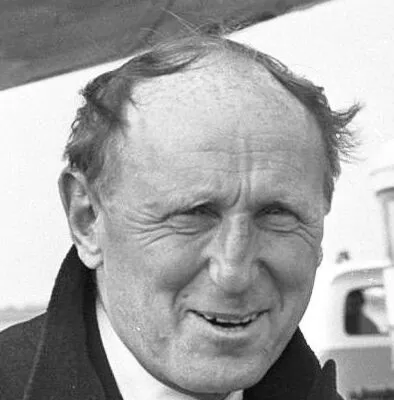
Photo: Wikimedia Commons
Nicolas Vanier
Human Design Chart
Biography
Nicolas Vanier — Projector with Profile 2/4
Projector 2/4 — Design at a Glance
Nicolas Vanier displayed a fundamental approach aimed at providing clarity to others in their blind spots. His design as a projector means that he does not have his own constant source of life energy but instead develops a very focused, intense aura. This acts like a bright flashlight, directed precisely at the areas where uncertainty or 'darkness' still exists in others. Nicolas Vanier could often immediately recognize where systems or relationships were not functioning optimally.
However, this ability carries a trap: If he addressed these flaws immediately, he risked being perceived as intrusive or critical, similar to someone shining a light directly into someone else's face. His most effective strategy was to not actively seek out these moments but to wait for an honest and appreciative invitation. By radiating harmony and competence himself, he attracted others who then actively sought his guidance.
Since his sacral center is undefined, Nicolas Vanier did not have a steady energy flow. He experienced phases of high productivity, followed by necessary rest periods to avoid burnout. The traditional work life, which demands constant availability, often stood in opposition to this natural rhythm. When he protected his time and only acted when invited, he was rewarded with success. Acting against this strategy threatened to bring a sense of bitterness as a warning signal of non-self.
Emotional Authority
Nicolas Vanier exhibited an inner authority based on a wave-like emotional dynamics. His design suggests that he always perceived the world through the lens of his current mood – filled with enthusiasm in one moment, marked by skepticism in the next. These fluctuations were not a weakness but a central characteristic of his emotional authority, carried by his defined solar plexus center.
In Human Design mechanics, this authority is always prioritized, regardless of other defined centers. Nicolas Vanier's perception was thus a snapshot that did not necessarily reflect his deeper truth. Spontaneous decisions stemming directly from an intense emotion carried the risk of proving false later. Instead, his system required patience and conscious hesitation.
The mechanics advised leaving decisions overnight. Only when the initial emotional wave subsided and clarity set in could Nicolas Vanier recognize the essence of a situation. This process of 'ripening' was crucial for long-term course corrections that influenced his life path. By waiting, he gained emotional distance, allowing calmness to take over. His design showed that true insight did not lie in the first impulse but in the calm after the emotional storm.
The 2/4 Profile — Hermit / Opportunist
Nicolas Vanier was characterized by a constant interplay between a deep need for withdrawal and the desire to connect with a carefully chosen community. His design indicated a tendency to periodically retreat into an inner 'cave' to create clarity before turning back to others. This dynamic arises from his Profile 2/4, which embodies the tension between the solitary Line 2 and the community-oriented Line 4.
Line 2 grants him a natural talent for intuitively finding the right direction without needing to consciously steer it. Crucial here is that he is correctly called upon rather than intervening himself; a defined ego supports this natural gift. Simultaneously, Line 4 acts as an emotional sponge structure. It attracts people who share their stories, which confronts Nicolas Vanier with their burdens and can lead to exhaustion. The Gate 13 in this line intensifies the emotional burden through the absorption of foreign energies.
Therefore, it is crucial for him to clearly communicate when he needs company and when he seeks solitude for reflection. Only when his need for alone time is fulfilled can he process the information gathered in the network and develop brilliant ideas from it. The emotional pendulum swing between exhaustion from foreign burdens and the necessary regeneration in isolation shapes his inner landscape significantly.
Split Definition — Defined & Open Centers
Nicolas Vanier showed a reliable inner structure: His defined G, Heart, and Solar Plexus Centers gave him a clear identity, willpower, and emotional depth. He had a firm sense of his own direction and could convince others without needing their approval. His willpower allowed him to keep promises and determine his own resources, while his emotional authority required him to make decisions only after crossing the emotional threshold. This combination created a precise way of acting based on inner security and temporal maturity.
At the same time, his design revealed specific vulnerabilities. His open Head Center tended to get caught in mental pressure and the search for inspiration, which could easily distract him from non-self questions. His open Ajna Center made him susceptible to foreign concepts and opinions, which he could interpret as his own truth, leading to confusion if he did not trust his inner authority.
His open Sacral Center was particularly sensitive to the energy of his environment. Nicolas Vanier could easily become exhausted when trying to keep up with the generative energy of others instead of listening to his own rhythms. He tended to overwork because he could not clearly distinguish the boundary between his own vitality and the 'borrowed' energy of others.
His open Spleen Center amplified fears of survival and health. He was prone to clinging to people or situations that gave a false sense of security, rather than acting spontaneously. His wisdom lay in observing these impulses without immediately following them and instead trusting the clarity of his defined centers. Thus, he could use his inner strength to navigate the uncertainties of his open centers without being determined by external conditioning.
Channels for reflection, emotional intensity and community.
Nicolas Vanier showed himself as someone who collected experiences to translate them later into a deeper truth. His design laid a tendency to patient reflection before sharing insights. This was marked by the Lost Son Channel 13-33, which connects the G Center with the Throat Center. Gate 13 gathered information and secrets, while Gate 33 required withdrawal to condense these. This configuration promoted the ability to act as a witness and preserve life stories rather than jumping to conclusions.
At the same time, an intense inner drive for new impressions propelled him. The Recognizing Channel 30-41 connected the Root Center with the Solar Plexus. Gate 41 generated restlessness and the vision of numerous possibilities, while Gate 30 emotionally charged this longing. Nicolas Vanier had to learn to trust this emotional wave rather than following the immediate impulse to gain clarity for his decisions.
In interpersonal relationships, he sought authentic connection. The Community Channel 37-40 linked Solar Plexus and Heart Centers. Gate 37 sought recognition in the whole, while Gate 40 brought the readiness to work and provide, yet also demanded pauses. This created a dynamic in which he built bridges between individuals based on mutual respect and the desire to be part of a larger structure.
Additionally, individual gates influenced him: Gate 2 enabled receptivity to new directions, Gate 7 projected leadership patterns, and Gate 1 fostered unique expression at the right time. Gate 19 connected him to resources and spirituality, Gate 20 promoted authenticity in the here and now, Gate 16 allowed experimental mastery, and Gate 21 sought control over material aspects in service to the community.
Collective Circuitry — Circuit Signature
Nicolas Vanier was marked by two separate energetic poles that did not flow directly into each other. On one side, the Meaning-Finding Circuit connected his Throat Center with the Identity Center as well as his Solar Plexus Center with the Root Center. This created a cyclical dynamic: emotions and experiences from the past were processed in waves to recognize their meaning and share these insights emotionally with others. It was about learning together from history.
Parallel to this, the Ego Circuit worked, which connected his Heart Center with the Solar Plexus. Here, cooperation was at the forefront, concretized through the 'Community' Channel. This area promoted a balance between giving and taking as well as mutual support within a group. Since there was no connection to the Sacral Center, this energy was timeless and required regular rest pauses to regenerate resources for the tribe.
These two circuits formed separate experience worlds for Nicolas Vanier: on the one hand, emotional reflection and communication of the past, on the other hand, traditional, exchange-based cooperation in the here and now. The Shared Definition meant that these forces coexisted but did not allow a continuous flow between all defined centers.
Right Angle Cross of the Sphinx 2
Nicolas Vaniers design points towards a deep, often unconscious connection to the collective wisdom and archetypal patterns of humanity. This tendency is not expressed as an active search for answers but rather as an inner resonance with what already exists – a reservoir of knowledge that goes beyond the individual.
In Human Design, this is described by the right cross of the Sphinx 2. It is a specific configuration that indicates the ability to sense the hidden connections and deeper layers of reality. Nicolas Vanier carried this energy not as a burden but as a quiet authority stemming from the connection to the whole. It is an energy of patience and depth that does not seek immediate confirmation but acts in trust of the inner truth.
This configuration shapes an attitude of inner security that remains independent of external circumstances. Nicolas Vanier was someone who was able to penetrate the complex dynamics of life without getting lost in chaos or confusion. The energy of the right cross of the Sphinx 2 supports a clear, though often unspoken, orientation towards the great questions of existence. It allows breaking through the surface and grasping the essence of things, leading to a calm yet powerful presence.
Saturn Return · Uranus Opposition · Chiron Return · 2nd Saturn Return — Life Cycles
Nicolas Vaniers design was characterized by a clear orientation towards concrete, often physical challenges and the gradual establishment of his own structure. This tendency was evident in his first Saturn return in 1990. At the age of 28, he crossed Siberia from south to north. This cycle typically marks the moment when inner discipline and years of preparation condense into a tangible, visible result – here concretized through an extreme physical achievement.
Ten years later, in 2000, the Uranus opposition came into effect. At 38 years old, Vanier founded the organization „Les Fauteuils Glissants“. This phase often brings an impulse to break free from old bonds and initiate new, independent projects. The founding of this organization reflects the desire to anchor personal ideas independently and structurally, driven by the need to define personal space.
The Chiron return around 2009, when he was 47 years old, led to the release of his second feature film „Loup“. This cycle is not a time of healing but of fulfillment. It signals that the individual potential, if lived according to one's own strategy, now unfolds in a form that makes sense and purpose tangible. The film „Loup“ stands here as evidence of this blooming phase, where long-term work takes its mature, visible form and confirms the personal life purpose.
Projector · Emotional Authority — Synthesis
A central red thread in this design is the ability to recognize patterns and what lies beneath the surface (Channel of the Lost Son, emotional authority). This perception is not simply expressed (defined Throat Center as an expression of energy from other centers), but undergoes a process of emotional maturation and reflection. The process of taking in information and withdrawing to process it shapes the way energy is formed and ultimately communicated. This happens in a cyclical rhythm that allows experiences to be fully integrated and deeper truths to be recognized – a process that encompasses both inner and outer worlds (Sensing Circuit).
The central paradox lies in the tension between the need for withdrawal and the ability to project and connect with others (Projector type, Profile Natural Talent/Networker). On one hand, there is a deep need for solitude to gain inner clarity and reflect on experiences. On the other hand, the defined throat and the ability to perceive the unspoken call to share these insights with others and make a connection. This tension is strengthened by the emotional authority, which requires time to process feelings before they can be carried into the world.
3 Defined Channels
Incarnation Cross - Right Angle Cross of the Sphinx 2
Solar Return
The Solar Return shows the moment when the sun returns to its exact birth position - your personal solar year.
Life Cycles
Discover the life cycles with a detailed triple view (birth chart, cycle chart, composite).
Human Design Profile
- Type
- Projector
- Strategy
- Wait for the respectful invitation
- Authority
- Emotional Authority
- Profile
- 2/4 - Hermit / Opportunist
- Definition
- Split Definition
- Incarnation Cross
- Right Angle Cross of the Sphinx 2
- Date of Birth
- 05.05.1962 14:10
- Place of Birth
- Dakar, SEN
Frequently Asked Questions
What is Nicolas Vanier's Human Design type?
What Profile does Nicolas Vanier have in Human Design?
What authority guides Nicolas Vanier's decisions?
Which incarnation cross is active for Nicolas Vanier?
When was Nicolas Vanier born?
Discover your own Human Design
Are you also a Projector? Find out in a personal reading how to unfold your leadership qualities and recognize the right invitations.
More Personalities
Back to overviewSissy Spacek
Alain-Fournier
Anémone
Angeli
Ann-Margret

Bourvil