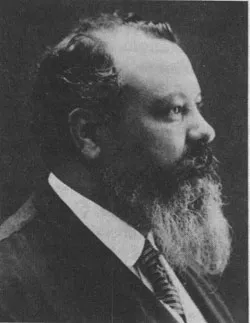
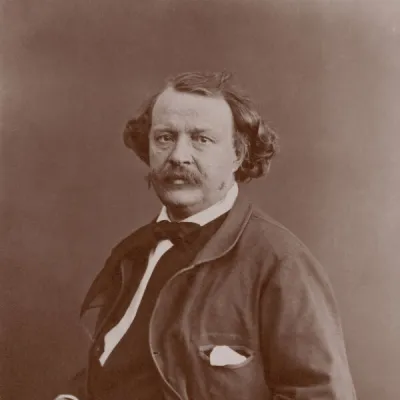
Photo: Wikimedia Commons
Nils Christie
Human Design Chart
Biography
He was a member of the Norwegian Academy of Science and Letters. In 2001 he was awarded Fritt Ord's Freedom of Expression Prize "for his original and independent contributions to the Norwegian and international social debate."
Christie died on 27 March 2015, aged 87.
Human Design Analysis: Nils Christie as Manifestor 5/1
Manifestor 5/1 — Design at a Glance
Nils Christie appeared as a pioneer who presented clear visions and inspired others to take action. His design as a Manifestor marked him as someone who did not fight battles himself but, like an emperor in ancient Rome, achieved his goals through others. This role often placed him in a polarizing position: His far-reaching thoughts were met with enthusiasm and consequential support from some, while others rejected or even hated them. This misunderstanding was a central pain point that arose from the nature of his great dreams.
To find the right followers, it was crucial for Nils Christie to inform others about his intentions early and precisely. This strategy of information was aimed at minimizing friction and clearing the path for his visions. When he followed this strategy and let himself be guided by his inner authority, his design rewarded him with a sense of inner peace. If he lived against this mechanism, he instead felt a persistent, deep anger. His life path thus showed a constant navigation between the necessity of communicating his visions and the challenge of dealing with the inevitable polarization that came with his role as a leader.
Emotional Authority
Nils Christie was someone who did not make decisions in the first moment but took time to observe his own emotional reaction. His design inclined him to avoid quick, impulsive judgments, recognizing that the first impression was often just a snapshot. This resulted from his emotional authority, carried by the defined Solar Plexus Center. In Human Design mechanics, this means that this center always takes precedence over all other defined centers, regardless of the rest of the configuration. Christie was subject to a wave motion of feelings that constantly colored his perception of the world. What was exciting in one moment could appear negative in the next. His feeling in the moment was therefore not yet his truth. To gain clarity, he had to practice patience and rethink decisions multiple times. Through waiting, intense emotions subsided, creating emotional distance. Only then did the necessary calmness set in, allowing for a well-founded, long-term orientation. This process of maturation was essential for him to avoid the negative effects of spontaneous actions and gain deeper insights.
The 5/1 Profile — Heretic / Investigator
Nils Christie was someone who engaged in deep, detailed research to offer these insights later to others for problem-solving. His Human Design Profile 5/1 combined the intense, often isolated knowledge accumulation of Line 1 with the later public application of this knowledge as an expert (Line 5). This created a dynamic tension: While he needed patterns and habits in the Line 1 phase to avoid frustration and focus on details, he attracted others in Line 5 who sought his solutions.
This configuration carried the risk of exhaustion if clear boundaries were lacking. Others sought answers from him, which could quickly overwhelm him, similar to a scientist who is drained after long conferences. His mental attitude and ability to seek and implement advice were strongly dependent on timing and his social position. Only when he was recognized as an authority could he effectively live his solutions. Without learning to say 'no', the balance between private research and public consultation could be lost. Christie therefore had to learn to protect his energy to maintain the beneficial synthesis of deep understanding and practical assistance.
Single Definition — Defined & Open Centers
Nils Christie revealed himself as someone whose expression and actions were marked by a clear, though limited, voice. His defined Throat Center ensured that he consistently translated information from his inner self into the world. This ability to communicate was closely linked to his defined willpower in the Heart Center, which gave him the energy to fulfill promises and take care of his own material reality. He had the capacity to pursue goals and assert himself, but he had to learn not to overwhelm others with this power, who did not possess the same energy.
At the same time, his decision-making was determined by a defined Solar Plexus Center, which gave him emotional authority. Truth did not reveal itself to him in the immediate moment but only after going through emotional waves. He tended to practice patience to gain clarity rather than acting impulsively. This emotional depth allowed him to view situations from various perspectives before taking a stance.
In contrast, his open Head Center revealed a vulnerability to mental pressure and the temptation to answer questions that were not his own. He could easily get entangled in the confusion of others if he did not trust his inner authority. His open Ajna Center made him susceptible to foreign concepts and opinions that he could take in but not claim as his own truth. The open G Center meant that he did not have a fixed, unchangeable identity but oriented himself through interaction with his environment and the right places. He relied on others to initiate him to find direction.
His open Sacral Center made him vulnerable to absorbing foreign vitality. He could easily become exhausted if he amplified the generative energy of his environment without setting his own boundaries. The open Spleen Center led him to feel uncertain when he was not near people who radiated a sense of security and well-being. Spontaneous decisions were risky for him, as they were often driven by fear or a desire for short-term comfort. Finally, his open Root Center absorbed stress and adrenalized pressure from the environment, which could make him overly active to escape this pressure rather than recognizing that this pressure did not come from himself.
Channels for ego-driven power and emotional transformation.
Nils Christie revealed himself as someone who combined material responsibility with a restless search for new experiences. His design tended to claim control over his own resources while simultaneously seeking emotional depth through experimenting with the new.
This dynamic was shaped by the Money Line 21-45. This channel connected the Heart Center with the Throat Center and expressed the will to survive on the material plane. Gate 21, the Hunter, sought control to protect his own heart, while Gate 45, the Gatherer, represented the authoritative voice of the tribe. For Nils Christie, this meant that he worked best when he was his own boss and could determine his natural rhythm. The challenge was to assert his will in a way that protected his own interests while serving others.
Parallel to this, the Transience Channel 35-36 was at work. It connected the Solar Plexus Center with the Throat Center and drove him to seek adventures. Gate 35, the Change Gate, constantly sought the new, while Gate 36, the Crisis Gate, perceived unfamiliarity as inadequacy and thus brought movement into things. This led Nils Christie to gain wisdom through emotional experiences that he could later pass on as advice. His advice to others was often to seize the moment, as he learned that feelings are transient.
Additionally, individual gates influenced his energy unit. Gate 55 at the Solar Plexus brought extreme mood swings and emotional awakening. Gate 59 in the Sacral Center pursued a genetic strategy of bonding, independent of personal preferences. Gate 9 allowed him to engage in detailed work and perfection through repeated experimentation, while Gate 16 encouraged him to the mutative process in the collective and the art of experimentation. Gate 26 in the Heart Center helped him sell innovations and convince the tribe but also required periods of rest.
Collective Circuitry — Circuit Signature
Nils Christie revealed himself through a design that combined emotional experiences from the past with the ability to articulate and share them. This configuration arose from the connection between the Throat and Solar Plexus Centers via the Transience Channel (35-36). This channel belongs to the Meaning Circuit, whose energy moves in waves and aims to give meaning to past events. For Nils Christie, this meant that emotional waves—with their natural highs and lows—directly flowed into his expressive abilities. He not only learned from the past but also made these insights accessible to the collective by formulating them verbally.
Parallel to this, Nils Christie had another, energetically separate structure: the connection between the Heart and Throat Centers via the Money Line Channel (45-21). This channel is part of the Ego Circuit and focuses on cooperation, the joint creation of resources, and material well-being. Unlike the emotional, cyclical nature of the first channel, this was a less energetic connection without direct access to the constant life force of the Sacral Center. This required Nils Christie to strategically take breaks to build the necessary energy for giving and taking in social or business contexts.
Although both channels utilized the Throat Center, they did not form a continuous energy path between Solar Plexus and Heart, as they belonged to different, unconnected groups. Instead, two parallel forces existed: on the one hand, emotional reflection and sharing of the past, on the other hand, pragmatic resource creation and cooperation. These separate strands shaped Nils Christie's experiential world as coexisting but not directly merging aspects of his personality.
Left Angle Cross of Spirit 1
Nils Christie displayed a fundamental orientation aimed at spiritual clarity and inner guidance. His design was marked by the left cross of Spirit 1, indicating a specific energetic alignment. This configuration points to a person whose life was strongly shaped by the search for higher understanding and connection to spiritual truths.
In Human Design, this cross describes an energy focused on bringing spiritual principles into the material world. It is not about abstract mysticism but the practical application of wisdom. Nils Christie lived with an inner compass guiding him towards themes of transcendence and consciousness. His nature was to not only keep these insights for himself but to shape them into something tangible for others.
This design requires a deep integrity towards one's truth. There is no room for hypocrisy or superficial adaptation. Instead, it shows a steadfastness in the belief in the hidden laws of the universe. Nils Christie followed this impulse, driving him to strike the bridge between the visible and the invisible. His presence was imbued with this clear, spiritual intention that profoundly shaped his actions and perception of the world.
Saturn Return · Uranus Opposition · Chiron Return · 2nd Saturn Return — Life Cycles
Nils Christie showed a development line where structural anchoring and sudden authority assumption were closely intertwined. His design indicated a tendency towards strategic turning points marked by planetary cycles.
In 1953, at the age of 25, Christie earned a Master's degree in Sociology. This fell during his first Saturn return. In Human Design mechanics, this cycle often marks the transition from an experimental phase to a stable life structure. For Christie, years of groundwork condensed into a concrete academic foundation that stabilized his further career.
A second crucial moment occurred in 1966 when he was 38 years old. That year, Christie received his first professorship in Criminology at a Norwegian university. This timing corresponded with the Uranus opposition. Mechanically, this configuration marks a sudden, often unexpected expansion of role and responsibility. It was not a gradual ascent but a leap into a position of high visibility and influence. The combination of the stabilizing Saturn effect before and the expansive Uranus impulse afterward shaped his career: first laying the foundation, then assuming the authority that this structure represented. This sequence shows how his design utilized external life events to translate inner potentials into concrete societal roles.
Manifestor · Emotional Authority — Synthesis
Nils Christie was a Manifestor whose life was marked by a deep drive for initiation and inner complexity. His profile as a Hero and Researcher (5/1) points to a natural aptitude for gathering knowledge and passing it on, always seeking solutions to complex problems. This ability to develop profound understanding was strengthened by emotional authority, compelling him to let decisions mature over time and navigate the associated emotional fluctuations. The definition of the communication and manifestation centers, combined with the channel of the lifeline, underscored his ability to express will and authority and take responsibility for the collective.
Christie's design revealed a central paradox: the connection of impulsive initiation power (Manifestor) with the necessity of emotional clarity (emotional authority). He was destined to initiate and propel things forward, yet his process required time and the experience of emotional waves. This led to a tension between the desire for quick implementation and the inner commitment to make decisions from a deep, felt understanding – a dynamic that was evident in key moments of his career, such as earning an academic degree and receiving a professorship.
2 Defined Channels
Incarnation Cross - Left Angle Cross of Spirit 1
Solar Return
The Solar Return shows the moment when the sun returns to its exact birth position - your personal solar year.
Life Cycles
Discover the life cycles with a detailed triple view (birth chart, cycle chart, composite).
Human Design Profile
- Type
- Manifestor
- Strategy
- To inform others before acting
- Authority
- Emotional Authority
- Profile
- 5/1 - Heretic / Investigator
- Definition
- Single Definition
- Incarnation Cross
- Left Angle Cross of Spirit 1
- Date of Birth
- 24.02.1928 06:45
- Place of Birth
- Oslo, Norway
Frequently Asked Questions
What was Nils Christie's Human Design type?
What Profile did Nils Christie have in Human Design?
What authority did Nils Christie have?
What incarnation cross did Nils Christie have?
When was Nils Christie born?
Discover your own Human Design
Are you also a Manifestor? Find out in a personal reading how to use your initiation power peacefully and dissolve resistance.
More Personalities
Back to overviewChristian-Jaque
Kesha

Lucebert
Masaccio
Nadar
Papus