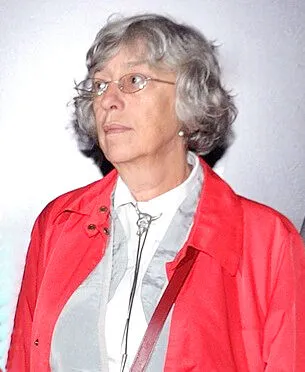
Photo: Wikimedia Commons
Ole Paus
Human Design Chart
Biography
Later in his career he was known for a softer and more lyrical style, and wrote some of Norway's best known songs, such as "Innerst i sjelen" and "Engler i sneen." Paus was noted for his consistent use of Norwegian and was eager for other Norwegian musicians to switch from English to Norwegian.
He often collaborated with Ketil Bjørnstad, notably on the "modern suite" Leve Patagonia; he later collaborated with Kirkelig Kulturverksted on several projects, and with his son, the classical composer Marcus Paus, notably on the children's opera The Witches, Requiem and several later works. One of his songs, "Mitt lille land", gained wide popularity after the 2011 Norway attacks and was described as "the new national anthem".
He was the son of General Ole Otto Paus and a member of the Paus family. Ole Paus died in Drammen on 12 December 2023 at the age of 76.
Ole Paus — Projector with Profile 2/4
Projector 2/4 — Design at a Glance
Ole Paus revealed himself as someone who immediately recognized flaws in systems. His Projector design gave him a dense, focused aura, which he directed like a bright flashlight onto areas where others were in the dark. He was there to shed light on the dark and illuminate the path.
However, this mechanism meant that directly addressing the shortcomings of others was often perceived as unpleasant, as if he were shining a light directly into their faces. Ole Paus lived by the strategy of waiting for a respectful and sincerely meant invitation. Instead of immediately correcting, he attracted others by shining harmoniously himself. People then automatically came to him to ask for his insider tips.
Since Projectors do not have a defined Sacral Center, Ole Paus lacked a constant, intrinsic source of life energy. He experienced phases of high energy and rapid productivity, but he needed mandatory rest periods to avoid burning out. The conventional school system and most jobs often did not take this need for regeneration into account.
If Ole Paus lived according to this design, he was rewarded with success. If he deviated from this alignment and ignored the need for invitations or rest, he would eventually feel the non-self theme of bitterness. His effectiveness therefore depended on whether he channeled his sharp observational skills through patience and the waiting period for recognition from others.
Emotional Authority
Ole Paus lived with an inner authority that led him to never make decisions in the heat of the moment. His design marked him as someone who trusted his emotional wave but knew its pitfalls: feelings constantly swung between enthusiasm and rejection, coloring the perception of the world. What seemed brilliant in one moment could appear completely inappropriate in the next. This emotional authority, carried by the defined Solar Plexus Center, always took precedence over all other defined centers in his chart. Ole Paus utilized this mechanism by taking his time. He let himself be adorned and slept on important questions multiple times until the initial emotional heat had subsided. Only then, when clarity and calmness had set in, did he act. This process of emotional maturation was essential for him to set long-term switches correctly and not be led astray by momentary, misleading impressions.
The 2/4 Profile — Hermit / Opportunist
Ole Paus showed himself through a Profile 2/4, which carried a constant tension between the need for withdrawal and the desire for community. As a Hermit (Line 2), he regularly withdrew to gain inner clarity and regenerate. This process was essential for him to collect energy. Once this inner balance was restored, he actively sought contact with his close circle (Line 4), the so-called network. For Ole Paus, it was therefore important to clearly communicate when he sought company and when he wanted to be undisturbed. Only in this way could he absorb knowledge from his surroundings, reflect on it in solitude, and develop new ideas from it.
This interplay was marked by specific Gate influences. The Line 2 from Gate 49 brought a selective attitude; Ole Paus carefully examined possibilities before making a decision and was prepared to make sacrifices or take revolutionary paths for his convictions. At the same time, Gate 73, Line 4, described a deep, almost transpersonal fixation on knowledge. Here lay a challenge: although he possessed deep understanding, the rigid way of conveying knowledge could hinder understanding by others. Improving his linguistic skills was therefore crucial to effectively convey his insights. Ole Paus used his withdrawal to sort out these complex connections before bringing them into his network.
Split Definition — Defined & Open Centers
Ole Paus revealed himself as someone whose inner compass needle was firmly set: His defined G Center gave him a clear, consistent identity and a deep sense of his own life direction. He knew who he was and radiated this self-assurance without needing to force others to follow him. This inner calm was, however, coupled with intense mental activity. His defined Ajna Center ensured that his mind was always in motion; he processed data and concepts in a specific, trustworthy way that protected him from external mental influence but also tended to make him rely primarily on his intellect to make decisions.
This mental clarity manifested in a defined Throat, which served as a reliable channel for his communication. What he thought could be spoken; his voice was the result of his conceptual processing. Yet behind this outer structure lay a complex emotional depth. His defined Solar Plexus functioned as an inner authority, meaning he needed patience to achieve emotional clarity. He lived in waves of feelings that he had to wait out before acting to prevent impulsive reactions.
At the same time, he was highly sensitive to the present moment through his defined Spleen Center. His intuition and instinct for health and well-being were immediate, spontaneous signals that he had to trust rather than rationalize. This existential focus was reinforced by his defined Root Center, which provided him with a steady, adrenalized pressure to move forward in the world and deal with stress in a specific, survival-oriented way.
In contrast, his design revealed vulnerabilities in other areas. His open Head Center made him susceptible to mental pressure and the questions of others, leading him to get entangled in problems that were not his own or to seek inspiration that was not truly his. His open Heart Center lacked consistent willpower; he was not designed to make promises or prove himself through competitive thinking but had to learn not to validate his worth through performance. Finally, his open Sacral Center was vulnerable to the energy of the environment. Without a constant generative life force, he tended to feel overloaded by the vitality of others, leading to exhaustion if he did not carefully attend to his own limits and need for rest.
Channels for synthesis, leadership, intuition and structured insight.
Ole Paus revealed himself as someone who combined logical leadership with intuitive mastery. His design inclined him toward collective influence based on trust and shared patterns.
This trait came from the Alpha Animal Channel 7-31, connecting the G Center with the Throat Center. Gate 7 provided the logical role of the manager, while Gate 31 represented the voice of the collective leader. This configuration required him to be invited by the majority to demonstrate his leadership skills. He did not seek absolute authority but rather a natural sphere of influence where he could understand trends and guide society.
Parallel to this, the Channel of the Wave 48-16, connecting the Spleen Center with the Throat Center, was at work. Here, Gate 48 combined the intuitive search for vital information with Gate 16, which promoted dexterity and a love of experimentation. Ole Paus perfected his skills through repeated trial and error, turning his technical mastery into a talent that flourished when rewarded with recognition and resources, supporting the process of perfection.
Another characteristic was the Channel of Structuring 43-23, connecting the Ajna Center with the Throat Center. Gate 43 received spontaneous insights, which were processed and expressed through Gate 23. This enabled him to clearly communicate innovative perspectives and promote efficiency, provided he waited for the right timing for his unique knowledge to be accepted.
Additionally, the Channel of Synthesis 19-49 between the Root and Solar Plexus Centers shaped his approach. Gate 19 pushed for belonging, while Gate 49 established principles that held the community together. Ole Paus sought a balance between feasibility and fairness, driven by the need to be needed and secure his position in the whole.
Individual Gates like Gate 4 (Formulation), Gate 55 (emotional awareness), and Gate 10 (Integration) supported these mechanisms by bringing logical processes, emotional depth, and genetically determined behaviors into play.
Collective Circuitry — Circuit Signature
Ole Paus revealed himself as someone who needed to structure complex connections and communicate them clearly. His design connected the Ajna with the Throat Center (Channel 43-23), enabling precise formulation of thoughts. Parallel to this, a separate but equally strong force was at work: the connection of Throat, Identity, and Spleen Centers (Channels 16-48 and 31-7). This created an intuitive, strategic logic that he could directly translate into words, free from emotional distortion. Since these two circuits were not connected, they existed as parallel, non-fusing forces. A third, isolated aspect connected the Solar Plexus with the Root Center (Channel 49-19). This generated a rhythmic, synthesis-oriented energy aimed at mutual support, yet without the constant life force of the Sacral Center. Ole Paus therefore needed rest phases to regenerate these resources. His split definition meant that these three areas – clear structuring, intuitive strategy, and rhythmic cooperation – coexisted side by side without forming a single, continuous flow. He lived with these distinct energetic focal points, each demanding its own dynamics and expression without interfering with or merging with one another.
Right Angle Cross of Explanation 1
Ole Paus revealed himself as someone who sought inner clarity and brought it to the outside world. His design was marked by the right cross of Explanation 1, a configuration aimed at uncovering truths. This structure promoted an approach focused on penetrating complex connections and making them understandable. It was not just about information, but the necessity to explain things to understand them better. Ole Paus lived this tendency by engaging with topics often hidden or misunderstood. His way of seeing the world was driven by the desire to bring light into darkness. The right cross of Explanation 1 means that the energy is geared towards grasping the essence of things and sharing this insight. For Ole Paus, this was a central drive: he wanted not only to know but also to convey what he understood. This mechanism created a natural authority in the way he presented his perspectives. He searched for the truth behind facades and brought it to the surface. His lifestyle reflected this inner compass that pushed him to create clarity where confusion reigned. It was a process of discovery and sharing that shaped his entire existence. Ole Paus used this ability to reach others and open up new perspectives.
Saturn Return · Uranus Opposition · Chiron Return · 2nd Saturn Return — Life Cycles
Ole Paus’ design was characterized by a clear structuring of life-affirming cycles marked by regular turning points. His first Saturn return, the moment when early life designs condensed into stable foundations, formed the first such anchor point. Following this was the Uranus opposition, a phase typically marked by a drive for change and liberation from outdated structures.
Especially influential was the Chiron return. In this fulfillment cycle, which usually occurs between the ages of 49 and 51, the individual’s incarnation cross unfolds. If Ole Paus had lived according to his strategy and authority, he increasingly experienced his life purpose during this time; it was not about healing old wounds but a blooming period when meaning and purpose became clear.
The culmination of this sequential development was the second Saturn return. This cycle traditionally marks the maturation and consolidation of what has been achieved in life. Ole Paus’ chart thus showed a classic progression of building, upheaval, fulfillment, and final stabilization, with each of these astrologically-human-design-specific points bringing a specific energetic quality to his life.
Projector · Emotional Authority — Synthesis
Ole Paus’ life was marked by a deep inner tension between the need for solitude and the desire for connection. His profile as a natural talent and networker (Line 2/4) points to a rhythm in which phases of withdrawal for internal clarification alternate with the need to exchange with selected people. This dynamic was reflected in his ability to recognize patterns (defined Ajna Center) and communicate these insights through the channel of the Alpha animal (Gate 7/31) – yet always after a phase of emotional maturation (Emotional Authority). He projected his perception onto others, recognized unseen aspects, and offered orientation, though his dense aura made direct communication challenging.
A central paradox in his design lay in the combination of the knowledge circuit and the emotional wave. While the circuit drove him to generate and express new insights, his emotional authority required time to filter and shape these insights into an authentic form. This led to an inner tension between the impulsive drive to share knowledge and the need to let decisions mature, which shaped his expression and gave him a unique depth.
4 Defined Channels
Incarnation Cross - Right Angle Cross of Explanation 1
Solar Return
The Solar Return shows the moment when the sun returns to its exact birth position - your personal solar year.
Life Cycles
Discover the life cycles with a detailed triple view (birth chart, cycle chart, composite).
Human Design Profile
- Type
- Projector
- Strategy
- Wait for the respectful invitation
- Authority
- Emotional Authority
- Profile
- 2/4 - Hermit / Opportunist
- Definition
- Split Definition
- Incarnation Cross
- Right Angle Cross of Explanation 1
- Date of Birth
- 09.02.1947 15:40
- Place of Birth
- Oslo, NOR
Frequently Asked Questions
What was Ole Paus' Human Design type?
What Profile did Ole Paus have in Human Design?
What Authority did Ole Paus have?
What incarnation cross did Ole Paus have?
When was Ole Paus born?
Discover your own Human Design
Are you also a Projector? Find out in a personal reading how to unfold your leadership qualities and recognize the right invitations.
More Personalities
Back to overviewSissy Spacek
Aaliyah

Alain-Fournier
Alexia

Alizée

Anémone