
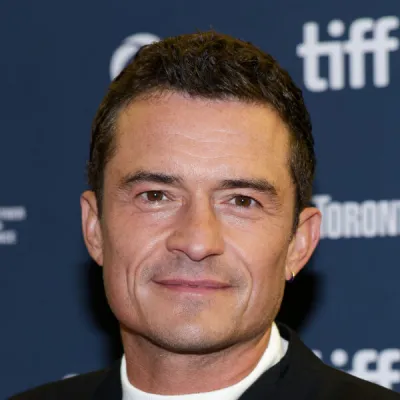
Orlando Bloom
Human Design Chart
Biography
Bloom appeared in Hollywood films such as the war film Black Hawk Down (2001), the Australian Western Ned Kelly (2003), the romantic comedy Elizabethtown (2005), and New York, I Love You (2007). In 2020, he gained acclaim for the Afghanistan War drama film The Outpost (2020). He also starred in the Amazon Prime Video series Carnival Row (2019–2023).
He made his professional stage debut in In Celebration at the Duke of York's Theatre in the West End in 2007 and starred in a Broadway adaptation of William Shakespeare's Romeo and Juliet in 2013. He returned to the theatre in a West End revival of Tracy Letts' Killer Joe in 2018. In 2009, Bloom was named a UNICEF Goodwill Ambassador. In 2015, he received the BAFTA Britannia Humanitarian Award.
What does Generator 3/5 mean for Orlando Bloom?
Generator 3/5 — Design at a Glance
Orlando Bloom's design points to a tendency towards high endurance that must be specifically channeled. As a Generator, he has plenty of sacral energy, comparable to a workhorse that is strong and enduring – provided it is used correctly. This configuration brought two central pitfalls: On one hand, there was the threat of frustration or burnout if Orlando Bloom did things he had no inner desire for and his energy would thus „disappear“. On the other hand, there was the danger of being held back from his heart project even though his inner self was still full of power.
The key mechanism for him was not taking initiative but reacting. His sacral energy became free mainly when he responded to impulses from the outside world. The motto was clear: Not initiate, but react. Orlando Bloom acted successfully by waiting for signals from life and then acting as soon as his inner self gave a clear „Yes! Let's get started!“.
Living in harmony with this strategy rewarded him with a feeling of deep satisfaction and fulfillment; no one could stop him. Ignoring this principle and trying instead to initiate things or work against his inner resistance led him sooner or later to persistent frustration and a lack of energy. His path to deep satisfaction thus lay in directing his immense strength through reactive action from the gut, rather than wasting it by compulsively pushing forward.
Sacral Authority
Orlando Bloom showed a decision-making stance that did not take place in the head but was deeply rooted in the body. As a Generator, he had only one inner instance available: sacral authority, which simplified his decision-making process: He reacted to external stimuli through a physical signal rather than cognitive analysis. This signal appeared as grunting, humming or a palpable surge of power in the gut – an authentic „Yes“ or „No“, which he learned to recognize.
The strategy consisted of waiting for the stimulus. Once the sacral motor kicked in, Orlando Bloom became vital and alive; virtually inexhaustible energy was at his disposal. He tackled tasks with great enthusiasm and immersed himself in them without any need for purposefulness. This joy in doing was his natural state.
Additionally, the Spleen Center acted as a supporting authority. Since it is activated and possibly directly connected to the Sacral Center, this allowed Orlando Bloom particularly quick and spontaneous reactions. He had immediate access to his physical well-being and instinctive perception. These instincts were reliable; he could safely guide himself by them, which strengthened his ability for rapid orientation in new situations.
The 3/5 Profile — Martyr / Heretic
Orlando Bloom showed himself as someone who learns knowledge not from books but from personal experience. His design points towards a tendency to initially doubt everything and try it out himself – the Line 3 of the experimenter. Only through these often painful errors and setbacks did practical understanding arise, which he then offered others as a solution – the role of helper in Line 5.
This configuration shapes him as a heroic adventurer or cool storyteller. The attractiveness of this figure arises precisely from the richness of his practical experiences. Others are drawn to him because they want to partake in his tested knowledge. This „hero status“ flatters his ego, but it harbors a hard flip side: Failure does not happen in secret but often in public. The public nature of his experiments makes failures particularly painful.
Furthermore, he learned through trial and error which relationships support him and which do not (Gate 61). At the same time, his design expected effortless adaptation to changing circumstances (Gate 32). The tension lay in that he had to remain flexible on one hand but was dependent on mutual dependence for the realization of his truth on the other. His path consisted in accepting this instability and forging resilience from his own failures – not through perfect planning, but through lived experience.
Single Definition — Defined & Open Centers
Orlando Bloom reveals himself through a defined Sacral Center as the carrier of a constant, vital energy source. His design suggests that he uses this power not through initiatives but by waiting for external impulses and then responding to them. An affirming, instinctive response activated his full capacity; lacking this resonance led to frustration and exhaustion from acting out of pure reason alone. This energy management was guided by his defined Spleen Center as personal authority. It gave him a momentary, physical intuition – an instinct in the now – that made decisions before the rational mind could intervene. This mechanism protected him from false commitments and fostered deep well-being so long as he trusted this subtle inner signal.
At the same time, his design revealed several open centers making him vulnerable to external conditioning. His open Head and Ajna Centers meant mental clarity and inspiration did not come consistently from within but were influenced by the environment. He tended to identify with questions or concepts of others, leading to confusion when he tried to resolve these mentally rather than trusting his intuition. Similarly, his open Throat Center lacked a firm inner identity or life direction; instead, it reflected the qualities and directions of people in his surroundings. This made him flexible but also vulnerable to "borrowed" identity if not in the right place.
Furthermore, his open Solar Plexus Center absorbed emotions from the environment and amplified them, leading to experiencing others' moods as his own. His open Heart Center lacked consistent willpower; he was not designed to make promises or prove himself through competition since this overtaxed his energy. Finally, his open Root Center absorbed stress and adrenaline from the environment, which could lead to feelings of being overwhelmed or restless if handled incorrectly, as he amplified others' pressure rather than generating it himself.
Channels for nurturing care and proven values.
Orlando Bloom revealed himself as someone whose aura automatically attracts trust and intuitively seeks support from others. This inclination was rooted in Channel of Preservation 27-50, which connects the Sacral Center with the Spleen Center. Through the Gate of Caring (27), there was a selfless concern for others, while the Gate of Values (50) guarded traditional laws and order structures of the "tribe." This configuration created a strong desire to nourish communities and protect the weak, yet only under one clear condition: responsibility was taken on when it was explicitly requested and his inner sacral response gave a clear yes. Without this confirmation, there was a risk of being overwhelmed by unasked-for expectations.
The mechanics of this "enlightened selflessness" emphasized that Orlando Bloom first had to care for his own health in order to sustainably serve others. Only when he was stable and healthy could he effectively maintain the tribe's infrastructure. This protective mechanism prevented altruistic impulses from turning into self-exploitation; instead, it promoted a conscious selection of commitments.
Additionally, other Gates shaped his inner world: Gate 61 sought inner truth and silence amidst mental noise, while Gate 62 analyzed details with patience and recognized logical patterns. Gate 32 secured the continuity and material success of the tribe, often through radical adjustments during instability. In the emotional realm, Gate 42 saw experience as a key to closure and new commitments, along with Gate 61's drive for individual knowledge mutation. On the personality level, Gate 3 promoted mutations to overcome confusion, while Gate 44 demanded vigilance in relationships. Gate 28 stood before the risk of here-and-now, Gate 14 handled power with grace, and Gate 5 set the basic rhythm for energy build-up. Finally, Gate 48 enabled the recognition of deeper connections, even though implementation often remained frustrating.
Tribal Circuitry — Circuit Signature
Orlando Bloom exhibited a primal protective and preservation function for family and genetics. His design combined instinctive spleen energy, emotional solar plexus wave, and sacral life force into a coherent power. This configuration emphasized the role as protector and provider in the familial context, driven by the channel of Preservation (27-50).
The Protector Circuit connected Orlando Bloom's Sacral Center with his Spleen Center. This created a direct energetic bridge between his life force and his instinct. The active Channel 27-50, the Preservation Channel, focused this energy on care and conservation. While the circuit generally also includes themes of pairing (Channel 6-59), for Orlando Bloom only the part related to family care was effective.
This connection shaped topics like defense, care, food, and preservation. The energies of "mother and father" did not act here as separate poles but as a cohesive task: securing the survival of one's own genetics. Orlando Bloom used his sacral endurance to translate spleen-driven instincts into concrete protective measures. It was less about romantic attraction than about ensuring practical prosperity and security for family members.
His simple definition with the group from Sacral and Spleen Centers meant that this power was clear and directly available, without being disturbed by other competing energies. Orlando Bloom thus acted as a reliable anchor, whose primary motivation lay in physical and genetic continuity.
Right Angle Cross of Maya 4
Orlando Bloom carried the archetypal imprint of the right Maya 4 Cross as his primary life force energy. This configuration was characterized by a specific destiny line that influenced his entire design. The right Maya 4 Cross did not function as an isolated feature but rather served as a fundamental power determining his inner orientation. It was a deeply rooted energetic structure that resonated in the background of his personality and shaped his life path. This energy was consistently present, forming the foundation upon which other aspects of his Human Design built. It conveyed a particular quality to his experiential world, characteristic of this Cross configuration. Orlando Bloom thus lived within a framework defined by this specific Maya energy. The effect of this cross showed as a constant presence, independent of external circumstances or temporary phases. It shaped his basic attitude and the way he interacted with life without necessarily manifesting in overt actions. The presence of this energy created an inner compass that subtly but profoundly guided his decisions and reactions.
Saturn Return · Uranus Opposition · Chiron Return — Life Cycles
Orlando Bloom's life journey is marked by two prominent astrological turning points, structuring phases of responsibility and personal freedom. These cyclical events served as decisive framework conditions for his development.
Firstly, the first Saturn return occurred, a period in which long-term efforts often crystallize into a new level of maturity and responsibility. For Orlando Bloom, this process manifested concretely in 2005 at age 28 with the receipt of the Jameson People's Choice Award for Kingdom of Heaven. This success marked a peak in his professional recognition and underscores typical Saturn dynamics: The result of years of work becomes visible and stabilizes his position in public.
Later, the Uranus opposition followed, a cycle often associated with a drive towards change, breaking free from old structures, and seeking individual freedom. Orlando Bloom experienced this phase in 2016 at age 39 when he began a relationship with Katy Perry. This event reflects the Uranus energy that often initiates unexpected turns in the private sphere and breaks established patterns. Both points illustrate how external events correspond to inner developmental cycles: The Saturn return brought professional affirmation, while the Uranus opposition heralded a new personal configuration.
Generator · Sacral Authority — Synthesis
Orlando Bloom's chart reveals a central thread of reaction and engagement fueled by his Generator definition (Sacral Center) and open G-Center. He is designed to react to impulses – not initiate them – and his energy unfolds through action (Sakrauthority). This responsiveness is amplified by the open G-Center, allowing him to absorb and adapt to environmental energies, making him malleable and enabling him to act in various contexts. Channel 27-50 emphasizes his ability to provide care and preserve values, while the Maya 4 Cross points towards a deep engagement with experiences and the completion of cycles – constant learning through action and reflection.
A central paradox in Orlando Bloom's design lies in the interplay between his defined Sacral Center (energy source) and open centers for emotions, identity, and roots. The Sacral Center supplies him with endurance and the ability to fully commit to a task, yet the openness of other centers makes him receptive to external influences and conditioning. He is thus simultaneously a powerful Generator who listens to his inner authority and someone constantly stimulated by his environment and lost in it – a tension between inner strength and outer vulnerability.
1 Defined Channel
Incarnation Cross - Right Angle Cross of Maya 4
Solar Return
The Solar Return shows the moment when the sun returns to its exact birth position - your personal solar year.
Life Cycles
Discover the life cycles with a detailed triple view (birth chart, cycle chart, composite).
Human Design Profile
- Type
- Generator
- Strategy
- To respond - wait for something to respond to
- Authority
- Sacral Authority
- Profile
- 3/5 - Martyr / Heretic
- Definition
- Single Definition
- Incarnation Cross
- Right Angle Cross of Maya 4
- Date of Birth
- 13.01.1977 09:15
- Place of Birth
- Canterbury, England, United Kingdom
Frequently Asked Questions
What is Orlando Bloom's Human Design type?
What Profile does Orlando Bloom have in Human Design?
What Authority does Orlando Bloom have?
What is Orlando Bloom's incarnation cross?
When was Orlando Bloom born?
Discover your own Human Design
Are you also a Generator? Find out in a personal reading how to use your sacral energy correctly and discover deep satisfaction.
More Personalities
Back to overviewSissy Spacek

Aaliyah

Alexia

Anémone

Angèle

Ann-Margret
