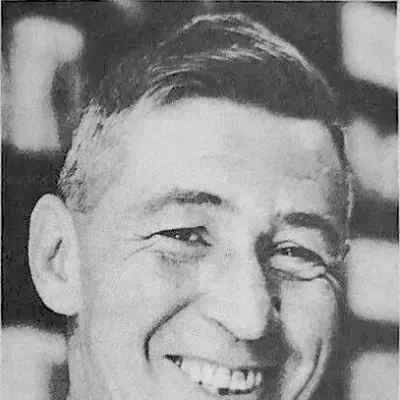
Paddy Ashdown
Human Design Chart
Biography
After serving as a Royal Marine and Special Boat Service officer and as an intelligence officer in the UK security services, Ashdown was elected Member of Parliament for Yeovil in 1983, before retiring in 2001.
Ashdown received national recognition for his services by appointment as Knight Grand Cross of the Order of St Michael and St George (GCMG) in the 2006 New Year Honours and Member of the Order of the Companions of Honour (CH) in the 2015 New Year Honours.
A polyglot, Ashdown had an interpretership qualification in Mandarin and was fluent in several other languages.
Ashdown married Jane Courtenay in 1962. The couple had a son and daughter. Ashdown was diagnosed with bladder cancer in October 2018. He died on 22 December 2018, aged 77.
The Human Design of Paddy Ashdown: Projector 3/6
Projector 3/6 — Design at a Glance
Paddy Ashdown's Projector design created an aura that behaved like a focused flashlight, allowing him to immediately identify system errors and weaknesses in his environment. However, this sharp perception required restraint; directly addressing these flaws would have provoked resistance from others, much like bright light blinding someone in the face. Instead, his energy was most effective through his own harmony and presence. This kind of 'shining' naturally drew people to him who then sought out his perspectives. The key strategy involved waiting for a respectful invitation before offering his knowledge or leadership.
Since Paddy Ashdown did not have a defined Sacral center, he lacked constant intrinsic life energy. His physiological rhythm followed cycles: phases of high activity and quick workability alternated with necessary rest periods. These recovery times were existentially important to prevent burnout. The conventional system often expects continuous performance, which frequently contradicted this natural need. Living in harmony with these rules – through restraint when correcting others and respecting his own energy balance – rewarded him with success. Deviations from this strategy led to the experience of his non-self theme: bitterness. His design thus showed that true leadership for him did not lie in constant activity, but rather in targeted, invited impact and the ability to withdraw when energy waned.
Emotional Authority
Paddy Ashdown's design tended towards not making decisions immediately but letting them rest first. His inner authority lay in his defined Emotional center, which followed a natural wave motion of feelings, an ongoing up-and-down cycle. The world appeared colored by current mood: he could be enthusiastic about something one moment and see the same thing negatively the next.
This emotional state was only a snapshot, not a final judgment. Quick, spontaneous decisions based on such emotions risked proving false as they reflected fleeting waves rather than deeper truth. His authority mechanism required patience and time to differentiate between transient mood and true clarity.
Paddy Ashdown used the process of multiple sleepovers for decisions to gain emotional distance. Through this delay, intense feelings gradually dissipated. Only then did calmness set in, allowing him to recognize the situation more comprehensively. This path through emotional ups and downs led to necessary clarity for long-term steps that significantly influenced his life course.
The 3/6 Profile — Martyr / Role Model
Paddy Ashdown's design featured a bipolar life structure. In the first phase of life, up until around age 30, Profile Line 3 of Profile 3/6 dominated him through an intense trial-and-error process. Adaptability and playful impartiality secured resources and managed attachments. Mistakes were not seen as failures but as necessary steps towards developing practical wisdom.
After the Saturn return, Profile Line 6 activated, leading to a withdrawal for reflection and offering strategic oversight over previously gathered experiences. The experimental energy of Line 3 now received wise guidance from Line 6, emphasizing joy in the process itself and trust in details. This configuration contained both the eight-year-old and eighty-year-old self.
This structure often created an inner feeling of being torn between a desire for play and a drive to think deeply, despite external control. In later years, around age 50 onwards, Paddy Ashdown developed charm and wisdom through integrating both lines. This enabled him to act as a role model and teacher who inspired others with his life experience. The process of learning from both perspectives became the central feature of his development.
Triple Split Definition — Defined & Open Centers
Paddy Ashdown revealed himself as a person with a massive internal structure in willpower, thinking, and expression. His design was characterized by defined centers for Heart (Ego/Will), Head/Ajna (mental pressure/conception) and Throat (communication). This endowed him with a consistent ability to shape ideas and make them effective through speech or action. His willpower was constantly available, allowing him to fulfill promises and self-determinedly control resources. At the same time, he was subject to permanent mental pressure for inspiration and questioning, which he could not manifest immediately but had to wait until the right environment responded.
His emotional Solar Plexus was defined, meaning that he did not make decisions in the moment but waited for the emotional wave to gain clarity. This created a deep, temporally unfolding intelligence for relationships and situations. His Spleen Center (Intuition/Survival) and Root Center (Stress management) were also defined, giving him a strong existential awareness in the „now“ as well as a firm handling of physical pressure.
In contrast, his G Center (Identity/Direction) and Sacral Center (generative energy) were open. Paddy Ashdown did not have a fixed internal identity or direction; these were reflected situatively by his environment. He tended to locate himself in relationships or places to find out who he was – a process of initiation through others rather than self-generated generation. Similarly, he did not have continuous life energy. His Sacral Center was open, meaning that energy was available in spurts and reactively, not as a constant flow. He had to learn to wait for external impulses and rest instead of driving himself to exhaustion with „borrowed“ energy from others. This openness made him vulnerable to conditioning regarding his role and endurance but also required a stance of waiting for correct initiations from outside to effectively use his defined strengths.
Channels for community, judgment, structuring and awareness.
Paddy Ashdown's design tended to find his place in the whole through fair agreements and mutual support. The Community Channel 37-40 drove this dynamic: Gate 37 sought recognition and an honor seat in the group, while Gate 40 demanded the need for breaks and rewards. This led to a careful selection of bonds; loyalty was not established by hierarchy but by the impulse „I do it for you“.
Parallel to this, the Judgement Channel 58-18 worked: It connected the life energy of Gate 58 with the corrective intuition of Gate 18. This generated an insatiable urge to question and perfect patterns. Ashdown showed himself as someone who used logic to achieve the best for the collective, but only when asked. Without invitation, this critical data stream could be perceived as constant searching for errors; with invitation it became a valuable correction.
In the mental realm, the Awareness Channel 61-24 and the Structuring Channel 43-23 shaped his thinking. Gate 61 brought spontaneous inspiration that was processed by the rationalizing Gate 24. This resulted in sudden insights (Satori) that could not be planned. The Structuring Channel 43-23 allowed him to clearly and efficiently express these unique perspectives. However, he had to wait until the timing was right; only then were his innovative solutions accepted by the environment instead of dismissed as offbeat.
Individual Gates rounded out this picture: Gate 9 in the Sacral Center promoted detail work and focus through repetition. Gate 16 enabled mastery through experimental learning. In the emotional realm, Gate 36 caused cyclical crisis experiences that prepared the ground for new developments while Gate 30 demanded recognition of feelings and acceptance of fate. Gate 17 in his design stood for logical teaching and service to the future, Gate 44 for awareness in relationships. Gate 6 regulated emotional waves as a biological limit, and Gate 31 concerned the transmission of leadership.
Individual Circuitry — Circuit Signature
Paddy Ashdown's design showed a separation between individual knowledge transfer and collective resource organization. As someone with triple definition, he did not live in one continuous energetic flow but navigated between three separate energy fields.
One field connected Head-, Ajna- and Throat Center in the Knowledge Circuit. Here, Channels 24-61 (Awareness) and 23-43 (Structuring) were active. This configuration promoted the ability to structure new insights and express them through the Throat Center. It was about the unique path: mutations and creative flashes of insight were brought into understandable forms to initiate transformation. The energy was pulsing and acoustically driven by the need to articulate one's individuality.
A second, completely separate field consisted of Spleen- and Root Center in the Understanding Circuit. Channel 18-58 (Judgement) connected these two centers. This created a focused, visual energy for strategic improvement of structures. Since the Solar Plexus Center was missing here, it involved pure, emotionless logic and future-oriented sharing of rational insights, free from conditioned patterns.
The third field connected Heart- and Solar Plexus Center in the Ego Circuit. Channel 37-40 (Community) dominated here, especially since the Sun stood in Gate 37. This drove the theme of giving and taking: „Today I give you, tomorrow you give me“. It was about mutual support within the tribe and distribution of resources. Since there was no connection to the Sacral Center, rest breaks were necessary to regenerate these energies.
Paddy Ashdown's identity emerged from the interaction of these isolated areas: The unique, pulsing knowledge transfer (Knowledge) met the traditional, timeless structure of communal aid (Ego), while strategic judgement ability (Understanding) acted as a third independent pole.
Right Angle Cross of Planning 1
Paddy Ashdown's Human Design profile featured the right cross of Manifestation 1. This configuration was noted in raw content without specific descriptions of Gate combinations or energetic expression forms. There were no details about characteristic patterns that would allow for a deeper classification. The absence of these mechanical specifics meant that this aspect of his design stood as mere notation, devoid of substantive content. Paddy Ashdown lived with this indeterminate structure on his chart, whose effects could not be described through given facts. The mechanics remained abstract and without concrete translation into human behavior or life events. There were no indications of how this planning would integrate into his daily routine or decisions. The right cross of Manifestation 1 was thus an empty vessel in the design, defining no specific tendencies or challenges. Paddy Ashdown was not marked by this element as the underlying dynamics remained undefined. The analysis was limited to the mere existence of this structure without further interpretation. There were no evidences for a particular manifestation or a specific influence on his life. His design contained this information as an isolated point that did not connect with other aspects. Paddy Ashdown's experience with this part of his design therefore remained unspoken and undocumented.
Saturn Return · Uranus Opposition · Chiron Return · 2nd Saturn Return — Life Cycles
Paddy Ashdown's life followed a clear cyclical structure marked by three significant planetary returns. These cycles defined phases of breakthrough to political power, consolidation in leadership, and finally withdrawal from official responsibility. In 1983 at the age of 42, he was elected as Member of Parliament for Yeovil. This marked his Uranus Return, a moment of sudden change and liberation that often paves new paths and breaks old structures. It was the beginning of his active political career on a national level. Five years later in 1988 at age 47, he was appointed Chairman of the Liberal Democrats. This coincided with his Chiron Return, a fulfillment cycle where one's incarnation cross unfolds and meaning becomes tangible. Here, the bloom of his political identity and leadership role was evident. The last significant event occurred in 1999 when he stepped down from the position of chairman at age 58. This coincided with his second Saturn Return, a phase of maturity, differentiation, and detachment from earlier commitments. This cycle signaled the end of an era and the necessary step back from direct responsibility to make space for new life stages. The three events thus formed a coherent development line: from impulsive entry through central realization to conscious distancing.
Projector · Emotional Authority — Synthesis
Paddy Ashdown was a Projector whose life was marked by a profound drive towards clarity and pattern recognition. The combination of defined Head, Ajna, and Throat Centers points to consistent mental activity aimed at processing information and expressing it in formulations (Channel 43-23). This correlated with an emotional Center that compelled him to wait for emotional clarity before making decisions. His Profile as a Tester/Role Model (3/6) suggests he devoted himself to experimentation in early life phases and later took on the role of a wise observer – a process reinforced by his defined Root Center, which provided him with the energy to correct and perfect things (Channel 9-36).
Central to his design was however a paradox: Paddy Ashdown possessed a strong ability for analysis and recognizing errors, coupled with a defined Throat Center that urged him to express these insights. Simultaneously, his emotional authority required patience and waiting for emotional clarity before acting. This tension between the urge to communicate and the necessity of waiting created a dynamic field in which he could act as an inspirer while also attending to others' needs – a balance essential for Projectors to succeed and avoid bitterness.
4 Defined Channels
Incarnation Cross - Right Angle Cross of Planning 1
Solar Return
The Solar Return shows the moment when the sun returns to its exact birth position - your personal solar year.
Life Cycles
Discover the life cycles with a detailed triple view (birth chart, cycle chart, composite).
Human Design Profile
- Type
- Projector
- Strategy
- Wait for the respectful invitation
- Authority
- Emotional Authority
- Profile
- 3/6 - Martyr / Role Model
- Definition
- Triple Split
- Incarnation Cross
- Right Angle Cross of Planning 1
- Date of Birth
- 27.02.1941 16:30
- Place of Birth
- New Delhi, India
Frequently Asked Questions
What was Paddy Ashdown's Human Design type?
Which Profile did Paddy Ashdown have in his Human Design?
Which Authority guided Paddy Ashdown's decisions?
What incarnation cross was assigned to Paddy Ashdown?
When was Paddy Ashdown born?
Discover your own Human Design
Are you also a Projector? Find out in a personal reading how to unfold your leadership qualities and recognize the right invitations.
More Personalities
Back to overviewSissy Spacek

Alain-Fournier

Anémone

Ann-Margret

Bourvil
Hergé