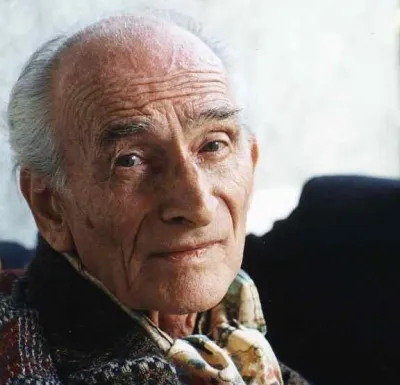
Patti Boulaye
Human Design Chart
Biography
Patti Boulaye — Projector with Profile 6/2
Projector 6/2 — Design at a Glance
Patti Boulaye's design inclined towards focused perception. As a Projector, she had an aura that shone like a bright flashlight, revealing systemic errors in her environment immediately. However, this ability to recognize the 'dark' within others was only effective when not used confrontationally; direct confrontation would often trigger resistance from those around her. Instead, her mechanism worked most effectively through her own harmony. When Patti Boulaye herself became a shining example of balance and clarity, people were naturally drawn to her for guidance without her having to impose it.
Central to this process was waiting for an honest invitation. Without such respectful acknowledgment, she risked falling into the bitter experience of non-self-fulfillment. Additionally, her undefined Sacral Center shaped her energy dynamics: She did not have a constant intrinsic life force but worked in phases of high intensity that had to be balanced by rest periods to prevent burnout. Her design promised success as a reward for following this invitation and rhythmic energy management strategy rather than adapting to the constant demands of traditional work models.
Splenic Authority
Patti Boulaye exhibited a decision-making structure based on immediate, physical intuition. Her design suggested that she did not act through reflective analysis or emotional deliberation but through a precise, momentary impulse. This mechanism is steered by the inner authority in the Spleen, a defined center functioning as a health and alarm system. A prerequisite for this is that both the Emotional Center and the Sacral Center are open – a configuration specific to Projectors or Manifestors.
The Spleen provides Patti Boulaye with spontaneous survival intelligence: She knew in the moment whether a situation, environment, or person was beneficial to her health. This initial impulse was correct and served immediately to protect her physical well-being. However, this signal is very subtle and only occurs once; its use requires high vigilance as it can easily be drowned out by external influences. As a result, there was a need for strict boundaries against harmful factors.
Long-term commitments were in opposition to this mechanism, as knowledge of the right course always became available only in the present moment. Plans could change quickly, necessitating flexibility and space. Patti Boulaye relied on not being overly committed to maintain the spontaneity of her decisions. A retreat for decision-making could help to perceive the subtle impulse more clearly before it faded.
The 6/2 Profile — Role Model / Hermit
Patti Boulaye's design indicated a two-phase development tendency. In the first decades of life, Patti Boulaye learned through trial and error, with withdrawal after mistakes being the driving principle. This reflects the natural talent side (Line 2), which initially experiments.
After the age of thirty, Line 6 activated. Patti Boulaye likely retreated into an inner 'cave' to reflect on earlier experiences from a distance. This phase served intensive reflection and healing. From this isolation emerged deep self-awareness.
The mechanism describes a transition from impulsive action to reflective wisdom. Later in life, Patti Boulaye was perceived as a wise person whose insights others sought. Line 6 enabled her to derive a new direction of life from earlier experiments and share this introspection further. Others could partake in the gained life wisdom. The focus was not on constant availability but on the quality of insights provided after intensive inner work. Patti Boulaye showed herself as someone who, through the process of withdrawal and reflection, fully fulfilled her role as a model.
Split Definition — Defined & Open Centers
Patti Boulaye showed herself to be marked by constant cognitive activity and persistent mental pressure. Her design featured defined Head and Ajna Centers, meaning she always asked questions, formed concepts, and was driven to understand connections. This process ran independently of external circumstances; her mind was always "on." At the same time, her defined Spleen Center offered spontaneous intuition in the present moment, allowing her to make trustworthy judgments about health and well-being without having to rationalize them. Additionally, her defined Root Center provided a set stress pressure that drove her forward and towards survival.
In contrast, her Throat, G, Heart, Sacral, and Solar Plexus Centers were open. These centers reacted situationally to the environment rather than acting from their own stable source. Patti Boulaye tended to reflect or be conditioned by others regarding identity and direction (open G Center) instead of following a firm inner line. Without her own constant willpower (open Heart Center), she could easily fall into the cycle of wanting to prove her worth through promises she couldn't keep. Her energy level was unstable (open Sacral Center), leading her to take in energy from the environment and overextend herself rather than relying on her own generative power. She perceived emotions as a barometer of her surroundings (more open Solar Plexus) instead of producing them herself, and spoke spontaneously when circumstances allowed (open Throat), rather than having guaranteed expression ability. The challenge lay in accepting the mental pressure from the defined centers without slipping into the conditioning traps of the open areas.
Channels for mental clarity and ambitious transformation.
Patti Boulaye's design is characterized by a rare combination of spontaneous mental clarity and instinctive ambition. She was someone who did not laboriously acquire knowledge but received it in moments of "satori" – sudden enlightenment that arises when the auditory mind processes inspiration. This mechanism is carried by Channel 61-24, where the inspiration of Gate 61 connects with the rationalizing aspect of Gate 24. Patti Boulaye did not need to control her thinking; knowledge came when it was ready, often supported by silence or music that alleviated mental pressure. Her mind sought inner truth that revealed itself independent of logical patterns.
Parallel to this, a strong driving force emerged: the urge for social transformation and advancement. Channel 54-32 linked the ambition of Gate 54 with the continuity of Gate 32 in the Spleen Center. This generated an instinctive desire to rise through talent recognition and tribal support. Patti Boulaye was motivated to be seen and improve her position, driven by a fear of failure and a desire for stability. She worked hard to prove her worth and sought validation from her environment to achieve her ambitions.
Additionally, Gates played a role: Gate 13 promoted reflection on time and continuity, while Gate 7 projected the need for leadership and hierarchy. Gate 44 brought awareness into relationships, and Gate 58 created experimental pressure towards perfection. Gate 28 stood for risk-taking decisions in the here-and-now, Gate 53 for the beginning of new cycles, and Gate 4 for formulating logical patterns for future security. These configurations underscored her ability to both receive transformative insights and gain social recognition through persistent effort.
Individual Circuitry — Circuit Signature
Patti Boulaye's Human Design shows a tendency towards pulsating, acoustic creativity. She is someone who does not statically preserve flashes of inspiration but rather brings them alive and emotionally into the world – often with a "drumroll" effect that demands innovation through deviation from the known.
This attitude roots in the Knowledge Circuit, whose core for her is Channel 24-61 (Awareness). This channel connects the Head Center to the Ajna Center. Since these two centers lie within the same group, there arises here a direct energetic flow: impulses from the head are condensed into creative ideas in the Ajna and push to transform new knowledge through the expression of one's unique identity. The associated melancholy does not paralyze but acts as a driving force for this deep transformation.
Parallel to this exists a separate energetic structure: Patti Boulaye's Ego Circuit connected her Spleen Center with her Root Center (Channel 32-54, Transformation). Since this is a separate group – not directly linked to Head/Ajna –, this power acted independently of the creative awareness. It provided inner security and the courage for personal transformation without interfering in the creative process. Both systems ran alongside each other: on one hand, the innovative, loud creativity of the Knowledge Circuit; on the other hand, the quiet, transformative strength of the Spleen-Root connection.
Left Angle Cross of Incarnation 1
Patti Boulaye's design shows a tendency towards a fundamental, often unconscious orientation toward preservation and protection of the existing order. She appeared as someone whose inner compass was directed towards stability and continuity, less so for radical innovations or consciously breaking old structures.
This attitude stems from her classification in the left cross of incarnation 1. In Human Design mechanics, this cross represents the phase of gathering, preserving, and nurturing resources—whether material, emotional, or energetic. It is an energy designed to secure a foundation and preserve existing values from decay. Unlike the right cross of this incarnation, which deals more with distribution and passing on, here the focus lies on internal consolidation.
For Patti Boulaye, this means that her natural strategy involved first understanding what already exists and has value before initiating actions that could change this fabric. Her energy works stabilizing; she serves as an anchor point in uncertain times. This is not a passive stance but an active form of responsibility for the legacy and foundations surrounding her. She bears the burden of preservation, often leading to intense engagement when something threatened needs to be saved or protected. Her presence thus radiates a calm, steady aura that gives others security because she herself is deeply rooted in her own values.
Saturn Return · Uranus Opposition · Chiron Return · 2nd Saturn Return — Life Cycles
Patti Boulaye's Human Design profile established a clear rhythm of stability, rebellion, and maturation. Her life structure was defined by four classic major cycles: the Saturn Returns and the Uranus Oppositions. These marked structural turning points where internal conditions were challenged and reshaped.
The first Saturn Return around age 29 served as a phase of consolidation. Here, years of groundwork crystallized into a solid result, challenging Patti Boulaye to pour her previous development into a stable framework. It was not just about surviving but laying the foundation for the next life stage.
The Uranus Opposition in middle age brought a necessary rebellion against established patterns. This cycle challenged internal structures by breaking rigid stances and enabling new freedoms. In this phase, Patti Boulaye confronted the urge to break free from old bonds to become more authentic.
The Chiron Return between ages 49 and 51 ushered in the fulfillment phase. If she followed her strategy, here the incarnation cross unfolded increasingly; meaning and purpose became experiential. It was not a healing of past wounds in a mythological sense but a blooming period of personal destiny.
The second Saturn Return around age 58 completed this arc. It solidified the gained insights into a new, mature stability. Patti Boulaye's design thus shows an ongoing process: building up, breaking down, finding meaning, and final anchoring. Each cycle shaped her development as an integral part of her human experience.
Projector · Splenic Authority — Synthesis
Patti Boulaye's Human Design reveals a central thread of recognition and transformation. As a Projector with defined Head and Ajna Centers, paired with a Spleen Authority, she has the ability to recognize hidden patterns (Gate 61) and make these understandable through rational analysis (Gate 24) for others. This process is strengthened by the connection between Root and Spleen centers (Channel 54-32), enabling an instinctive perception of potentials for change, particularly in the context of tribal needs. She is destined to bring light into darkness through her presence and inspire others subtly without direct intervention – a glow that invites.
A central paradox lies in the tension between her open Solar Plexus Center and defined Head/Ajna Centers. While her mind constantly seeks clarity and analyzes patterns, she is emotionally open and absorbs the energies of others. This leads to a special sensitivity to the environment but also carries the risk of losing herself in the emotions of others or making decisions based on their feelings. The challenge lies in maintaining her own inner truth while simultaneously perceiving the emotional landscape around her – a dance between clarity and feeling.
2 Defined Channels
Incarnation Cross - Left Angle Cross of Incarnation 1
Solar Return
The Solar Return shows the moment when the sun returns to its exact birth position - your personal solar year.
Life Cycles
Discover the life cycles with a detailed triple view (birth chart, cycle chart, composite).
Human Design Profile
- Type
- Projector
- Strategy
- Wait for the respectful invitation
- Authority
- Splenic Authority
- Profile
- 6/2 - Role Model / Hermit
- Definition
- Split Definition
- Incarnation Cross
- Left Angle Cross of Incarnation 1
- Date of Birth
- 03.05.1954 14:30
- Place of Birth
- Asaba, Nigeria
Frequently Asked Questions
What is Patti Boulaye's Human Design type?
What profile does Patti Boulaye have in Human Design?
What authority governs Patti Boulaye?
What incarnation cross does Patti Boulaye have?
When was Patti Boulaye born?
Discover your own Human Design
Are you also a Projector? Find out in a personal reading how to unfold your leadership qualities and recognize the right invitations.
More Personalities
Back to overviewSissy Spacek
Alain-Fournier

Anémone

Ann-Margret

Baekhyun

Balthus