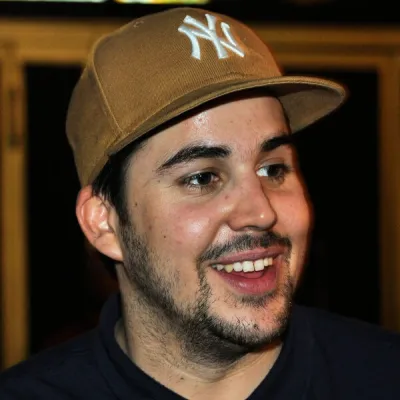
Paul-Henri Nargeolet
Human Design Chart
Biography
Nargeolet was born in the French department of Haute-Savoie. He lived in Casablanca, Morocco, for 13 years before relocating to Paris to complete his studies at age 16.
Nargeolet began his career in the French Navy, where he served as an officer specialising in mine clearance, diving, and deep underwater intervention from 1964 to 1986.
In 1986, he joined the French Research Institute for the Exploitation of the Sea. With IFREMER, Nargeolet piloted dives to the Titanic wreck site in 1987, 1993, 1994, and 1996. His 1987 expedition was the first to collect artefacts from the wreckage.
Beginning in 1994, Nargeolet was director of Michigan State University's Center for Maritime & Underwater Resource Management (CMURM).
From 1996 to 2003, Nargeolet worked with Aqua+, a subsidiary of Canal+, whose objective is to produce underwater films. During his time with the company he directed the underwater missions of two submarines.
As an expert on the Titanic , Nargeolet participated as a creator of two documentaries, Titanic: The Legend Lives On (1994) and Deep Inside the Titanic (1999). In 2022, he published the book Dans les profondeurs du Titanic (In the Depths of the Titanic), which recounts his expeditions.
He was married to U.S. television reporter Michele Marsh until her death in 2017.
Paul-Henri Nargeolet — Manifesting Generator with Profile 6/2
Manifesting Generator 6/2 — Design at a Glance
Paul-Henri Nargeolet revealed himself as someone who quickly brought things to life and often skipped steps in the process. His design as a Manifesting Generator constantly combined sacral energy with the ability for rapid initiation. This hybrid type had motor centers directly connected to his Throat Center, giving him an unique speed.
However, this quickness carried risks: He tended to overlook important stages, which later required backtracking. Additionally, he started multiple projects simultaneously, driven by various impulses. When his inner authority or sacral approval was missing, this creative enthusiasm quickly turned into frustration – his specific Non-Self theme.
Success came for him when he reacted to life and only acted after his Sacral Center signaled a clear "yes". Regularly checking the projects for internal agreement was crucial. In such a "play mode," characterized by variety and fun, Paul-Henri Nargeolet drew deep satisfaction from his work. The requirement to finish one thing before starting another went against his nature; instead, he thrived in simultaneously handling various tasks as long as they brought him joy and did not deplete his energy.
Emotional Authority
Paul-Henri Nargeolet exhibited a basic attitude where spontaneous impulses were seen as misleading. His design indicated that decisions required time and emotional clarity. This tendency stemmed from his emotional authority rooted in the defined Solar Plexus Center. This center was subject to constant wave-like movements of feelings, meaning his perception of the world was always colored by his current mood. What appeared inspiring at one moment could seem negative the next. His immediate feeling was thus only a snapshot, not necessarily the deeper truth. Quick decisions made from emotion could therefore have negative consequences.
The mechanics of his inner authority required patience. The more time he took to let a decision mature, the deeper he could see. This involved consciously sleeping on decisions to distinguish between transient mood and true clarity. As intense feelings subsided, he gained emotional distance. Only then did calmness set in and he was through with the process. This need to take his time and ask himself multiple times shaped his approach to long-term life decisions that had a significant impact on his life path.
The 6/2 Profile — Role Model / Hermit
Paul-Henri Nargeolets Human-Design shows a clear developmental line: from experimental action in his youth to reflective wisdom in old age. Before turning thirty, he primarily operated on the principle of trial and error. During this phase, he actively gathered his own life experiences, often retreating temporarily when faced with setbacks.
Around age thirty, this dynamic fundamentally changed. The mechanics of his configuration now promoted a period of detachment and intense self-reflection. He metaphorically withdrew into a "cave" to calmly review the experiences he had previously collected. This process served both healing and deepened self-awareness, supported by his ability to maintain inner peace and adhere to established rhythms.
Eventually, he emerged as a wise role model. Coming out of his introspective phase, he helped others recognize their own life purpose. His drive shifted from individual experience gathering to collective support. He did more than just impart knowledge; he enabled others to develop the capacity for deep self-observation and to value their unique place within the context of the collective.
Split Definition — Defined & Open Centers
Paul-Henri Nargeolet had a massive, defined energy base from the Sacral, Heart, and G Centers, combined with a strong ability to express himself through the Throat Center. This shaped him as a person of high substance who carried their truth and willpower directly into the world. His defined throat functioned as a reliable anchor point for communication; he did not speak from fleeting thoughts but transmuted information from his motor centers into clear action. With Heart and G Centers defined, he acted out of a strong sense of identity, direction, and willpower – an "I" that knew what it wanted and was ready to use resources accordingly.
At the same time, his Solar Plexus Center was defined, which determined his inner authority. Decisions did not fall impulsively but allowed for the necessary process of emotional waves. He had to take the time to let feelings run their course until emotional clarity emerged; only then would he make correct judgments. This tension between the immediate availability of energy (Sacral/Heart) and the necessary waiting for emotional confirmation formed the core of his dynamics.
In contrast, Head, Ajna, Spleen, and Root Centers remained open. These open centers made him receptive to external inspiration, mental concepts, and environmental stress, which did not count as his own truth. He tended to be influenced by confusion or pressure from others – for example, trying to solve other people's problems or falling into hyperactivity under stress – if he neglected his inner authority. The challenge was filtering this reflection of the environment and not falling into conditioned reactions like spontaneous fear responses (open Spleen) or absorbing adrenaline pressure (open Root). His strength lay in trusting his defined structure: providing energy when asked, using willpower with care, and making decisions only after experiencing emotional waves.
Channels for emotional depth, community, rhythm and change.
Paul-Henri Nargeolets Design established a fundamental frequency of a fixed biological rhythm and emotionally situational articulation. This configuration created a mechanical tension between the body's natural timing control and the need for strategic alliances as well as experience-driven dynamics.
The Rhythm Channel 5-15 connected his Sacral Center with the G Center. Gate 5 held fast to established habits, while Gate 15 integrated the diversity of society into the flow of life. This channel served as a cornerstone for biological processes, unaffected by intellectual arrogance or emotional waves. It gave him a unique sense of timing determined by his inner rhythm. When he followed this flow, everything seemed effortless; deviating from it could disrupt others' timing and cause chaos. His magnetic influence drew others into this continuous energy flow and thus set the course of his environment.
Simultaneously, the Openness Channel 22-12 and the Transience Channel 36-35 shaped his interpersonal interactions. The Openness Channel 22-12 connected Solar Plexus with Throat: Gate 22 displayed mood-driven openness, while Gate 12 regulated this through caution. His articulation depended on the ebb and flow of his emotional wave; he was most effective when waiting for his mood to align rather than acting impulsively. The Transience Channel 36-35 drove him towards seeking new experiences. Gate 35 manifested a desire for change ("I've been there"), while Gate 36 perceived unfamiliarity as crisis, forcing movement. This created an insatiable longing to explore the depth of feeling and gain wisdom through experience, often at the cost of stable bonds.
On a personal level, the Community Channel 37-40 complemented this dynamic. It connected Solar Plexus with Heart Center: Gate 37 sought recognition as part of a whole, while Gate 40 performed work for loved ones but needed reward and breaks. This required carefully balanced agreements since spontaneous deals were not sustainable. He built bridges between individuals to live in a community where everyone had an honorable place.
Additional Gates like Gate 49 (Sacrifice/Principles) and Gate 10 (Integration/Complexity) underscored the necessity of adhering to principles and employing genetically programmed behaviors at the right time. Gate 26 allowed him to accept innovations within a conservative tribe, while Gate 14 found skilled handling of power and direction. Gate 31 transferred leadership qualities to others, and Gate 62 ensured logical pattern recognition and patience. Gate 33 prompted reflection and withdrawal to process experiences.
Collective Circuitry — Circuit Signature
Paul-Henri Nargeolet moved between individual transformation and collective resource creation. His design did not show a continuous channel connection across the circuits but rather situational energy distribution with divided definition.
In the Knowledge Circuit, he connected Throat and Solar Plexus Centers (Channel 12-22). This allowed for the expression of unique identity through emotional waves, carrying new insights impulsively into the world. Parallel to this, the Understanding Circuit worked through the Rhythm Channel (15-5) between Identity and Sacral Centers. Here it was about focused, rational future planning and strategic improvement, separate from the emotional impulses of the Knowledge Circuit.
The Meaning Circuit also used Throat and Solar Plexus Centers (Channel 35-36). This served to reflect on past experiences and cyclically share felt insights to learn from history. In contrast, the Ego Circuit connected Heart and Solar Plexus Centers (Channel 40-37). Here it was about cooperation, mutual support, and balance of giving and taking within a community, without direct connection to the constant life force of the Sacral.
These separate groups – on one hand Identity and Sacral, on the other Throat, Solar Plexus, and Heart – existed as parallel forces. Paul-Henri Nargeolet navigated between self-invention through emotional innovation and rational strategy as well as collective resource building through social giving and taking.
Left Angle Cross of Migration 1
Paul-Henri Nargeolet was characterized by an inner dynamism that aimed less at quick victories than at the ability to continue developing even under pressure without giving up. His design indicated a tendency towards endurance and persistent progress, even when circumstances were difficult. This attitude stemmed from the influence of the left Moving Forward Cross 1, a configuration that did not see value solely in the final result but rather in the process of enduring itself.
For him, constancy was the key to development. It was about advancing step by step and working through obstacles instead of waiting for immediate solutions. This pattern shaped his life task: the deep motivation lay in proving endurance and standing firm in long-term processes. The mechanics of this cross emphasized that true strength lies in persistence when others might have given up. Paul-Henri Nargeolet lived this quality of patience and continuous advancement, which significantly influenced his actions and decisions. It was an inner discipline that urged him to continue even when the path was rocky or success seemed far off.
Saturn Return · Uranus Opposition · Chiron Return · 2nd Saturn Return — Life Cycles
Paul-Henri Nargeolets design included structural turning points that decisively shaped his career. In 1986, at age 40, he joined the French research institute IFREMER. This coincided with the Uranus opposition, an astrological cycle often marking sudden changes and a break from established structures. For his design, this moment marked a transition from old to new, innovative paths in marine research.
Another key experience occurred in 1994. At age 48, he became director of the Center for Maritime & Underwater Resource Management (CMURM) at Michigan State University. This happened during his Chiron Return cycle. In Human Design mechanics, this period signifies a phase of bloom and fulfillment. Here, one's incarnation cross increasingly unfolds in life if lived according to strategy and authority. Meaning and purpose become experiential. It is not about healing old wounds but about the realization of the deepest life purpose. Nargeolets appointment as director was thus no coincidence but an expression of this inner maturity and alignment. Both events show how astrological cycles shaped concrete career milestones in his life: first, a groundbreaking entry through the Uranus opposition, later confirmation of his life's work during the Chiron Return. His design utilized these time windows to solidify and expand his role in the underwater world.
Manifesting Generator · Emotional Authority — Synthesis
Paul-Henri Nargeolet lived a life marked by a deep connection to the rhythmic energy of the Sacral Center and the urge to transform this knowledge. The defined Throat (connecting Sacral with G Center) allowed him to communicate from this inner source and initiate actions – an expression of his authentic identity rooted in the circuit of knowledge. This combination of sacral reaction and transformative voice formed the red thread of his work, always driven by a pulsing, present impulse towards exploration and dissemination of newly gained understanding. The experience around 1986 during the Uranus opposition and in 1994 during the Chiron Return pointed to phases of intense change and healing that accompanied his professional development, enabling him to gather and share wisdom.
A central paradox lay in how Nargeolet acted as a Manifesting Generator: while he possessed the ability to quickly advance things, his emotional authority required careful maturation of decisions. This led to a tension between the impulse for quick reaction (Sacral Center) and the necessity to experience emotions fully (emotional center), creating a process of weighing and reflection – an interplay between initiation and contemplation. The 6/2 Profile line further emphasized this, suggesting a phase of intense experience followed by distance and wisdom-seeking.
4 Defined Channels
Incarnation Cross - Left Angle Cross of Migration 1
Solar Return
The Solar Return shows the moment when the sun returns to its exact birth position - your personal solar year.
Life Cycles
Discover the life cycles with a detailed triple view (birth chart, cycle chart, composite).
Human Design Profile
- Strategy
- To respond - wait for something to respond to
- Authority
- Emotional Authority
- Profile
- 6/2 - Role Model / Hermit
- Definition
- Split Definition
- Incarnation Cross
- Left Angle Cross of Migration 1
- Date of Birth
- 02.03.1946 06:30
- Place of Birth
- Chamonix Mont Blanc, France
Frequently Asked Questions
What was Paul-Henri Nargeolet's Human Design type?
What profile did Paul-Henri Nargeolet have in Human Design?
What authority did Paul-Henri Nargeolet have?
What incarnation cross did Paul-Henri Nargeolet have?
When was Paul-Henri Nargeolet born?
Discover your own Human Design
Are you also a Manifesting Generator? Find out in a personal reading how to unfold your multi-talents and direct your energy wisely.
More Personalities
Back to overviewAlain-Fournier

Aldair
Alizée

Angeli

Arletty
Artus