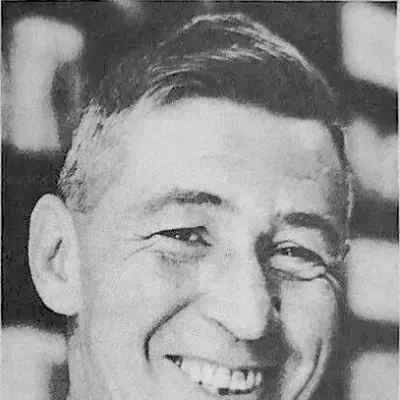
Paul Langevin
Human Design Chart
Biography
He was a doctoral student of Pierre Curie and later a lover of Marie Curie. He is also known for his two US patents with Constantin Chilowsky in 1916 and 1917 involving ultrasonic submarine detection.
In 1898, he married Emma Jeanne Desfosses, and together they had four children, Jean, André, Madeleine and Hélène. In 1933, he had a son with physicist Eliane Montel (1898-1992), Paul-Gilbert Langevin, who became a renowned musicologist. Paul Langevin died in Paris on 19 December 1946 at age 74, two years after living to see the Liberation of Paris.
Paul Langevin as a Projector 2/4 in Human Design
Projector 2/4 — Design at a Glance
Paul Langevin had an illuminating aura that exposed system flaws immediately like a bright flashlight. His design suggested he intuitively recognized where connections were not functioning or in the dark for others. This ability to quickly identify errors was, however, coupled with a social challenge: Directly addressing these issues was often perceived as unpleasant by his environment, similar to shining a harsh light directly into someone's face.
Instead, his effective strategy lay in passive illumination. By setting an example of harmony himself, Paul Langevin attracted others who would then actively seek out his insights. This dynamic underscored the necessity of waiting for an honest and respectful invitation before sharing his knowledge. This protected him from the non-self theme of bitterness that arises when projectors correct without being asked or feel unseen.
Furthermore, due to his undefined Sacral Center, Paul Langevin lacked a constant intrinsic energy source. His design showed phases of high energy followed by necessary rest periods to avoid burnout. Living in harmony with this rhythm and the strategy of waiting for invitations rewarded him with success, while ignoring these mechanisms led to exhaustion.
Emotional Authority
Paul Langevin displayed a decisive foundational stance: He needed time to recognize his inner truth. His inner authority lay in his defined Solar Plexus Center, making him an emotional authority. This position always took precedence over all other defined centers of his design, regardless of further configurations.
This center was subject to constant waves of emotion. The world appeared colored by his current mood; at one moment he could be enthusiastic about something, the next view it negatively. However, this feeling was only a snapshot, not an ultimate truth. Quick, spontaneous decisions from such an emotional state risked negative consequences as the first impression had yet to mature.
For Paul Langevin, patience was absolutely necessary. He needed to let decisions ripen, often through multiple considerations. This process required enduring uncertainty and hesitating with quick responses. Only when intense feelings subsided and emotional distance emerged did clarity and calm set in. Then his inner process was complete. This mechanism worked particularly strongly for long-term decisions with significant influence on his life path. Only through this waiting period could he ensure that his choice wasn't dictated by a passing mood wave but aligned with his deeper, stable truth.
The 2/4 Profile — Hermit / Opportunist
Paul Langevin constantly moved between two poles: the deep need for withdrawal and the strong urge to connect with his closest circle. This Profile 2/4 created an inner tension that made clear communication his life task. He had to signal clearly when he sought company and when he wanted solitude. This transparency was essential to maintaining his safe environment.
During times of isolation, Paul Langevin delved into himself. Line 2 promoted this phase of internal processing where he found calm and clarity. Saturn's influence here called for caution and the protection of personal security while Mars' energy stirred a desire for recognition. In this 'cave', he reflected on the knowledge he had acquired through his network.
Line 4 emphasized persistence in dealing with his social environment. Through this connection, Paul Langevin gathered information and experiences. Once the need for solitude was satisfied, he returned to his favorite people. There, he not only shared his knowledge but developed brilliant ideas from synthesizing network experience and individual reflection. Thus, the constant oscillation between withdrawal and connection shaped how he processed and made use of insights.
Split Definition — Defined & Open Centers
Paul Langevin revealed himself through an extremely dense inner structure. Five defined centers – Ajna, Throat, Solar Plexus, Spleen and Root – created an autonomous character with persistent mental clarity and emotional depth. His mind (Ajna) was always active; he processed data continuously and formed concepts in a trustworthy, specific way. This mental logic flowed directly into his voice (Throat), so that he articulated what his mind conceptualized. However, his decisions did not mature solely in the Head Center but rather passed through the emotional wave of his Solar Plexus Center. As an inner authority, this required patience: He waited until his feelings clarified before acting. Simultaneously, he navigated the "now" through his defined Spleen Center, which provided spontaneous intuitive judgments for survival. The constant pressure of his Root Center propelled these complex processes into the material world.
This strong inner constitution stood in contrast to his four open centers: Head, G, Heart and Sacral. They were not weaknesses but mirrors. His open Head Center was free from mental noise; he tended not to get lost in endless questions but remained an unattached observer. The open G Center meant a flexible identity: He adapted situationally without seeking a fixed direction, allowing himself to be guided by the right place. In his open Heart Center, he did not need to prove will or keep promises to demonstrate his worth; he was free from the pressure of ego validation. Finally, his open Sacral Center absorbed energy in bursts without needing to generate it itself. He worked in waves and needed rest phases since he was not designed for constant vital endurance. The challenge lay in integrating this stable inner authority with the adaptability of the open centers without being overwhelmed by the energy of his environment.
Channels for emotional waves, curious exploration and life's meaning.
Paul Langevin revealed himself as a storyteller who transformed ideas into parabolic stories to teach or entertain others. This inclination resulted from the Channel of Curiosity 19-56, which connected the Ajna Center with the Throat Center. Through Gate 11 (Ideas) and Gate 56 (Inspiration), he constantly sought new perspectives not to find definitive truths but to keep alive the fascination of discovery. His stories served to make abstract information tangible and stimulate the imagination of his listeners.
At the same time, Paul Langevin possessed a stubborn determination to follow his own path, even against resistance. The Channel of Life Struggle 14-28 connected the Root Center with the Spleen Center. Here, Gate 38 (Fighter) drove the pressure to maintain individual integrity while Gate 28 (Player) recognized which struggles were worth engaging in and when commitment paid off. This channel gave him the ability to find meaning in life's difficulties and to release inner stress through physical movement, which was crucial for his clarity.
Furthermore, Paul Langevin acted emotionally provocative and moody to challenge the minds of others. The Channel of Emotion Release 15-39 connected the Root Center with the Solar Plexus Center. Gate 39 (Provocation) used the pulsating emotional wave of Gate 55 (Mind) to live authentically and encourage others to question their own feelings and perceptions. His mood swings were not a weakness but a mutative force that allowed him to evoke deeper emotional resonances in his surroundings through his presence.
Individual Circuitry — Circuit Signature
Paul Langevin was marked by two separate, parallel energetic streams. One stream connected the Spleen, Root, and Solar Plexus Centers in the Knowledge Circuit. This connection fostered a pulsing energy of the present moment. It propelled individual identity forward, supported by the Life Struggle (Channel 28-38) and the Release of Emotions (Channel 55-39). Here it was about mutations – deviations from the known – and creative impulses that enabled new insights. This energy was rooted in sound and the present.
The second stream connected Ajna and Throat Centers in the Meaning Circuit. Carried by curiosity (Channel 11-56), this area processed past experiences cyclically and emotionally. Unlike the pulsing innovative power of the first stream, this energy followed a wave-like movement with a beginning, middle, and end. It served to find meaning in the past and share these lessons visually and emotionally with the collective.
In Paul Langevin, these two forces existed side by side without being directly connected. This created a tension field between innovative, individual transformation in the present and reflective, collective sense-making from the past. The split definition meant that he always navigated between these different energetic qualities: once impulsively and creatively, then again cyclically and thoughtfully.
Right Angle Cross of the Unexpected 4
Paul Langevin's design was marked by the right cross of the Unexpected. This configuration established a fundamental attitude that was prepared for spontaneous turns and unforeseeable developments. Instead of rigid planning, it emphasized the ability to flexibly respond to sudden changes.
The right cross functions as a structuring principle for the unexpected. It describes a dynamics where external circumstances often abruptly change, and internal reactions are adjusted accordingly. Those who carry this configuration experience their lives not as a linear path but as a series of surprises that require immediate adaptation. The energy lies in accepting the unforeseen not as an interruption but as a driving force.
For Paul Langevin, this meant that his path was defined by such moments. The mechanics of this cross are evident in how decisions were made: often impulsively, driven by current circumstances rather than long-term strategies. It was a way of life that presupposed openness to the new. Stability did not arise from predictability but through the competence to handle the unexpected. This structure profoundly shaped his actions and reactions.
Saturn Return · Uranus Opposition · Chiron Return · 2nd Saturn Return — Life Cycles
Paul Langevin's design was characterized by a clear structuring of his life phases, where inner maturation and outer institutional anchoring were closely intertwined. His first Saturn return around age 30 marked the transition from preparation to established practice. This was concretely seen in 1902 with his doctorate at the Sorbonne, a milestone that solidified his academic foundation and granted him authority to bring his insights into the world.
His second Saturn return around age 58 deepened this structuring towards leadership and responsibility for others. In this cycle, it was no longer just about his own path but about shaping a framework that preserves and disseminates knowledge. Paul Langevin took up the position as Director of ESPCI in 1926, which precisely fulfilled this function: he became the custodian of an institution that structured and stabilized education.
These two cycles underscore how his Human Design pattern aimed to take on ever greater responsibility through temporal maturation. The first return established him as an expert, while the second anchored him as a leader. Both steps were not coincidences but natural expressions of a configuration prioritizing stability, continuity, and building robust structures. Through these phases, his influence developed from individual performance to institutional imprinting.
Projector · Emotional Authority — Synthesis
Paul Langevin was a Projector whose life was marked by a deep ability to recognize patterns and respond to the specific needs of others (defined Ajna Center). He lived this gift through exposing flaws in existing systems (Gate 11) and sharing his insights with others – often coupled with an insatiable curiosity (Channel of Curiosity), which constantly drove him towards new perspectives. His emotional authority required time for decisions to mature, yet the need for inner clarity alternated with a desire for exchange and connection within his community (Profile 2/4).
This oscillation between withdrawal and social engagement revealed a central paradox: the tension between the focusing, projecting nature of a Projector and the demands of an emotional wave. He sought both distance to organize thoughts and recognize patterns as well as closeness to share knowledge and inspire others. The documented career steps (doctorate, director position) showed how he utilized these inner cycles – phases of intense concentration followed periods of active shaping and influence on his environment.
3 Defined Channels
Incarnation Cross - Right Angle Cross of the Unexpected 4
Solar Return
The Solar Return shows the moment when the sun returns to its exact birth position - your personal solar year.
Life Cycles
Discover the life cycles with a detailed triple view (birth chart, cycle chart, composite).
Human Design Profile
- Type
- Projector
- Strategy
- Wait for the respectful invitation
- Authority
- Emotional Authority
- Profile
- 2/4 - Hermit / Opportunist
- Definition
- Split Definition
- Incarnation Cross
- Right Angle Cross of the Unexpected 4
- Date of Birth
- 23.01.1872 21:00
- Place of Birth
- Paris, France
Frequently Asked Questions
What is Paul Langevin's Human Design type?
What Profile did Paul Langevin have in his Human Design?
Which authority determined Paul Langelin's decisions?
Which incarnation cross characterized Paul Langelin's life path?
When was Paul Langevin born?
Discover your own Human Design
Are you also a Projector? Find out in a personal reading how to unfold your leadership qualities and recognize the right invitations.
More Personalities
Back to overviewSissy Spacek

Alain-Fournier

Anémone

Ann-Margret

Bourvil
Hergé