
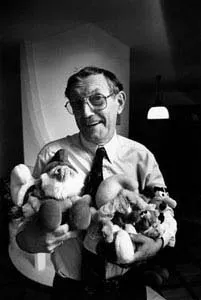
Peyo
Human Design Chart
Biography
On Christmas Eve 1992, Peyo died of a heart attack in Brussels at age 64. Since his death, Peyo's children have continued to promote his work under the brand "Peyo".
What does Generator 6/2 mean for Peyo?
Generator 6/2 — Design at a Glance
Peyo possessed remarkable endurance and an abundance of sacral energy that made him a powerful creator. However, his design clearly indicated: he was not an Initiator but a Reactor. His strength did not lie in independently starting projects but rather in the ability to respond with full force to impulses from his environment.
As a Generator, he lived by the principle of 'reacting'. When his Sacral Center – the inner energy center – gave a clear 'yes', it was time for action. This gut reaction led to deep satisfaction and a sense of fulfillment. Deviating from this strategy, such as initiating things he had no interest in or being hindered from pursuing his heart project, caused his energy to stagnate.
Such deviations from the natural rhythm brought frustration and energy depletion, even leading to burnout. His design required him not to force but to wait until life pushed him forward. Only then could he effectively utilize his immense strength without exhausting himself. Blocking his heart project was just as detrimental as compulsive happiness with unwanted tasks. His path to fulfillment always lay in harmoniously responding to external signals, not in constant internal pushing.
Sacral Authority
Peyo did not base his decisions on cognitive analysis but rather on an inner, physical resonance. As a Generator, he possessed sacral authority, a decision-making instance exclusive to this type and aligned with the strategy of inner guidance. This greatly simplified his process: he reacted directly to external stimuli with vital energy.
His inner voice manifested as a physical signal – a grunt, hum or affirming 'mm-hm'. This gut feeling was a reliable indicator of enthusiasm and vitality. When his sacral motor kicked in, he felt energized and alive; an almost inexhaustible energy became available to him. He tackled tasks with great zeal, driven by joy and satisfaction, free from any sense of obligation.
Additionally, his activated Spleen Center acted as a supportive instance. Perhaps directly connected to the Sacral Center, this allowed Peyo particularly quick and spontaneous reactions. He had an immediate access to his physical well-being and instinctive perception. This combination enabled him to reliably guide himself by these deep, bodily impulses rather than falling into excessive contemplation. His design called on him to use this spontaneous body response as the primary source for his actions.
The 6/2 Profile — Role Model / Hermit
Peyo's life path followed the characteristic pattern of Profile 6/2. In the first three decades, the energy of Line 3 dominated, urging him towards extensive experimentation and active experience gathering. This phase was marked by trial and error; mistakes served not as failure but as necessary lessons for his personal evolution. Only after turning thirty did the energy of Line 6 kick in. Peyo then often withdrew – metaphorically into a 'cave' – to reflect on his earlier actions with distance. This withdrawal served intense reflection and self-awareness, distilling deep wisdom from accumulated experiences. Line 6 grants the ability for self-defense through humility and recognition of one's weaknesses to overcome them. Simultaneously, Line 2 of the profile projected a strong discernment capability. Peyo had to learn to recognize the highest value in every situation and navigate the polarity between serving and ruling. His external projection invited others to follow him once he emerged from his reflective phase. As a mature role model, he then offered not just advice but a lived example of profound introspection and clarity gained through years of testing and inner work. His authority was less about instruction than the radiant certainty of what had been won through long-term examination and internal labor.
Single Definition — Defined & Open Centers
Peyo revealed himself as someone with a fixed, reliable self-identity and a clear sense of direction in life. His defined G Center gave him the inner security to feel loved without having to be dependent on others; he knew his place and could help others understand their evolution. This stable identity formed the foundation upon which his immense motoric vitality rested. Through his defined Sacral Center, Peyo had a constant energy engine that was only activated by appropriate responses to external invitations. The strategy of 'wait and react' was essential for him: Only when he waited until life posed a question to his Sacral Center could he unleash his full power with spontaneous yes or no answers. Initiating actions without such invitations led to frustration and exhaustion, as the sacral energy then became unavailable.
In contrast, Head, Ajna, Throat, Heart, Solar Plexus, Spleen, and Root Centers were open. These open centers made Peyo vulnerable to conditioning from his environment. His open Head Center tended to get caught in mental pressure and doubts that weren't his own; he could easily be distracted from seeking inspiration rather than trusting his inner authority. The open Ajna Center meant that his conceptual thinking was flexible but did not provide a constant source of personal truth – he had to learn not to identify ideas as absolute certainties. His open Throat Center drew attention when he waited; active efforts to seek recognition led instead to stress and unpredictable expression. The open Heart Center drove him to prove his worth through promises or competition, often ending in cycles of disappointment because he lacked the constant willpower for it. Emotionally, he was a barometer for his environment due to his open Solar Plexus Center; he absorbed and amplified foreign feelings, making him vulnerable to emotional waves that he could misinterpret as his own. His open Spleen Center carried a fundamental survival fear that made him cling to things not good for him just to simulate a sense of security. Finally, his open Root Center absorbed external stress and adrenaline, making him prone to endless cycles of avoidance or hyperactivity. Peyo's path involved using these open fields as mirrors of the world without identifying with them, instead trusting in the constant truth of his G and Sacral Centers.
Channels for rituals, fixed routines and extreme expressions.
Peyo's design inclined towards a deep biological rhythm that carried him through life independent of reason or emotion. He was someone whose timing was dictated from within and who magnetically drew others into his own flow. This quality stemmed from Channel 5-15, connecting the Sacral Center with the G Center. Gate 5 established firm habits and rituals while Gate 15 integrated the diversity and extremes of society into this life rhythm. Together they generated a universal magnetism that was impersonal yet projected love for humanity as a whole. Peyo became a conductor of an energy flow that propelled groups forward. When he followed his natural routines, everything seemed effortless; otherwise, his timing could appear chaotic.
Alongside this central channel, other gates shaped his orientation. Gate 10 in the G Center emphasized genetically fixed behavior and integration through personal convictions. It was a dominant Profile gate of love ensuring survival through correct timing. In the realm of authority and correction, Gate 18 discriminated between life-critical and trivial corrections while supporting human rights without taking conflicts personally. Gate 17 added logical teaching and future organization where doubt was seen as a healthy process and serving rather than ruling stood out.
In the Sacral Center, additional energies complemented this rhythm. Gate 9 enabled detailed work and perfection through repeated pattern correction without strong logical support. Gate 3 brought mutation and change to create new orders for survival from confusion. Gate 27 ensured genetic care and altruistic warmth for tribal self-preservation. Finally, Gate 29 stood for saying yes to life energy where persistence yielded rewards while false yes responses could cause difficulties. This configuration described a person who acted through firm rhythms and detailed adaptability in their environment.
Collective Circuitry — Circuit Signature
Peyo revealed himself as someone who made rational insights accessible through clear structure and visual formats. His design connected the Identity Center with the Sacral Center via the Rhythm Channel (Gates 15–5). This connection shaped his way of sharing: cyclically, naturally, and formatted. It was about not just thinking future visions but communicating them through a recurring, structural presence.
This channel is part of the Understanding Circuit focusing on logic, strategy, and societal improvement. Central to this circuit is sharing rational insights free from conditioning and emotions – an 'emotionless ratio' as the Solar Plexus Center isn't involved here. For Peyo, this energy worked specifically through the Rhythm Channel translating abstract logic into tangible, visual, and structural form.
Given Peyo's simple definition, Identity and Sacral Centers formed a single direct energetic group. There were no separate parallel systems within this connection; instead, rhythm energy flowed seamlessly between his source of endurance (Sacral) and essence core (Identity). This allowed him to present complex strategic content in ways that were intuitively understandable. His strength lay in conveying future-oriented concepts through a consistent, rhythmic recurring structure others could absorb without being distracted by emotional overload or conditioned patterns.
Left Angle Cross of Prevention 1
Peyo's Design showed a tendency towards strategic foresight. He was someone who recognized potential problems early to avoid mistakes and ensure stability. This attitude stemmed from the influence of his left Prevention 1 cross in his chart. This configuration emphasized the ability to identify risks beforehand. Peyo used this knowledge to initiate preventive measures. His focus was on creating security through proactive action rather than reacting to crises. The left Prevention 1 cross grants a specific kind of thinking: it's less about spontaneous improvisation and more about systematically weighing potential hazards. Peyo lived this mechanism by building structures or making decisions that minimized future instabilities. His energy was directed towards securing the foundation before larger actions took place. This wasn't a passive waiting stance, but an active process of risk analysis. Through early recognition of weaknesses, he gained room for action and prevented unnecessary conflicts or setbacks. Prevention thus became the central instrument of his strategy. Peyo intuitively understood that small corrections beforehand could prevent greater damage later on. His design therefore promoted a culture of preparation and conscious protection against avoidable dangers.
Saturn Return · Uranus Opposition · Chiron Return · 2nd Saturn Return — Life Cycles
The raw content does not contain specific Human-Design facts, cyclic mechanisms, or documented events for Peyo. Without concrete chart data such as type, authority, profiles, or defined centers, it is impossible to characterize him based on Human Design principles. There are no details available that would allow statements about stability, consistency, or energetic imprints. Therefore, a chapter text cannot be created adhering strictly to the rules: no invention of facts, no general explanations of mechanics without chart reference, and no biographical assumptions. The requested analysis is omitted due to missing necessary input data.
Generator · Sacral Authority — Synthesis
Peyo lived deeply rooted in his sacral center, a generator whose energy was released through reactions to external impulses. This natural responsiveness shaped his life—he wasn't meant to initiate but rather engage with life's offerings and work persistently on them (Sacral, Channel 24). His defined G Center gave him a firm identity and direction, which he did not impose prematurely on others but used as a silent compass for his own path (G Center). This inner guidance was complemented by the open Head, Ajna, Root, and Heart Centers—centers that made him receptive to external influences without giving him a fixed internal conviction in these areas. He was an observer who recognized patterns (Gate 10) and relied on his sacral authority to decide when to be active.
Peyo moved within a central paradox: On one hand, he was oriented towards continuous activity through his defined Sacral Motor, an indefatigable worker finding fulfillment in his work. On the other hand, his open centers made him vulnerable to stress and emotions from his environment (Root, Heart), forcing him to constantly weigh when to engage and when to withdraw—a constant dance between energy flow and self-protection. This tension between the need for activity and the necessity of protecting himself from external influences defined his life path.
1 Defined Channel
Incarnation Cross - Left Angle Cross of Prevention 1
Solar Return
The Solar Return shows the moment when the sun returns to its exact birth position - your personal solar year.
Life Cycles
Discover the life cycles with a detailed triple view (birth chart, cycle chart, composite).
Human Design Profile
- Type
- Generator
- Strategy
- To respond - wait for something to respond to
- Authority
- Sacral Authority
- Profile
- 6/2 - Role Model / Hermit
- Definition
- Single Definition
- Incarnation Cross
- Left Angle Cross of Prevention 1
- Date of Birth
- 25.06.1928 09:00
- Place of Birth
- Brussels, BEL
Frequently Asked Questions
What was Peyo's Human Design type?
What Profile did Peyo have in Human Design?
What Authority did Peyo have?
What incarnation cross did Peyo have?
When was Peyo born?
Discover your own Human Design
Are you also a Generator? Find out in a personal reading how to use your sacral energy correctly and discover deep satisfaction.
More Personalities
Back to overviewAaliyah

Alain-Fournier

Alexia

Angèle

Angeli

Anne-Marie
