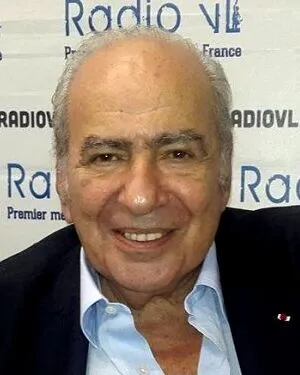
Pierre Bénichou
Human Design Chart
Biography
His father, André Bénichou, was a philosophy professor who opened a private school after he was dismissed from his job for being Jewish in 1941, in the midst of World War II. One of his father's pupils was famous author Albert Camus. His paternal uncle, Paul Bénichou, was a historian. His paternal grandparents were practising Jews. He moved to Paris, France, in 1949.
Bénichou was married to Alix Dufaure; she died in 2012. Actor Vincent Lindon is his stepson by his widow's first marriage. He also had a son, Antoine.
He became a Commander of the Legion of Honour on 25 March 2016. Pierre Bénichou died on 31 March 2020 at age 82 in Paris.
The Human Design of Pierre Bénichou: Manifesting Generator 5/2
Manifesting Generator 5/2 — Design at a Glance
Pierre Bénichou revealed himself as a person with a hybrid nature that combined the speed of a Manifestor with the constant energy of a Generator. His design tended to skip steps and push multiple projects forward simultaneously, allowing him to quickly draw things into his life but also carrying risks: he had a tendency to overlook important stages or become overwhelmed by simultaneous impulses.
As a Manifesting Generator, Pierre Bénichou possessed a defined Sacral Center, giving him a steady energy source. His strategy did not lie in initiating actions but rather in responding to external impulses. The challenge was to wait for inner confirmation despite the high speed. Only when his Sacral Center responded with a clear 'yes' could he avoid frustration. Without this resonance, his creative drive quickly turned into exhaustion, especially if he tried to do everything at once without necessary internal approval.
However, when Pierre Bénichou reacted to life and regularly checked whether his authority still approved the path, he reached a state of deeper satisfaction. In this mode, parallel work was not an obstacle but a source of creativity. He fell into a playful state that gave him the necessary variety and joy in creation. His design challenged him to not direct speed against himself but to make it fruitful through patient waiting for inner signals. Thus, he transformed potential frustration into lasting satisfaction and used his energy efficiently for his life.
Emotional Authority
Pierre Bénichou showed a decision-making stance that required time and emotional distance. His design carried Emotional Authority, meaning his defined Emotional Center determined his inner truth - independent of other defined centers in his chart. This configuration subjected him to a wave motion of feelings: moods permanently swung between enthusiasm and rejection, coloring perception of the world through current affect.
A spontaneous decision sprang from only a momentary snapshot, not his deepest truth. Impulsive reactions were misleading; they reflected passing waves, not stable insight. To gain clarity, Pierre Bénichou had to exercise patience and consciously delay decisions. The process of 'sleeping on it' was essential: Only when emotional waves subsided and a distance from the initial reaction emerged did calmness arise. Then his true inner voice became audible. This mechanism particularly applied to long-term pivotal decisions with significant impact in life's course. Quick action out of affect could have led to negative consequences; instead, delaying and repeatedly checking one's feelings over days was key to accurate, authentic decisions. The tension between immediate reaction and later clarity shaped his strategic approach to important life questions.
The 5/2 Profile — Heretic / Hermit
Pierre Bénichou's design created an inner tension between a deep desire for admired assistance and the simultaneous urgent need for isolated self-development. As a carrier of Profile Hero/Natural Talent (5/2), he initially appeared reserved; his gifts were not immediately visible but hidden in the 'cave' of the second line. This phase served internal steeling and building calmness through strict self-control. The mechanics describe here the life path from concealed preparation to public unfolding: Premature waiting for recognition would have led to bitterness, as Heroism does not function in the mode of the 'lone wolf'. Instead, it required an active step outward despite a natural need for boundaries and peace. Once Pierre Bénichou took this hurdle, his natural authority and presence became visible to others. They then appreciated his clearly formulated insights and the natural dedication emanating from line 5. Success lay in finding a rhythm: sufficient alone time for holding onto inner peace and habits (line 2), paired with service to the whole through visible dedication (line 5). This interplay between retreating to conserve energy and appearing on the 'Hero's Podium' shaped his way of interacting with the world. The challenge always lay in not setting expectations too high for himself and finding the courage to present himself rather than passively waiting for discovery.
Split Definition — Defined & Open Centers
Pierre Bénichou revealed himself through a design characterized by inner stability and clear direction. His defined G Center gave him a firm identity and an instinctive sense of his life path; he knew intuitively where he belonged without having to control it. This inner security was linked to his defined Heart Center, which provided constant willpower. He could make promises and keep them, strengthening his self-esteem as long as he only committed to what he could deliver.
The energy source of this system was his defined Sacral Center. As a motor, it required reaction rather than initiation: Pierre Bénichou found satisfaction by waiting for what life offered him and then responding with full vitality. However, this did not happen impulsively but filtered through his emotional authority in the Solar Plexus Center. He had to wait for the wave of his feelings until clarity emerged before acting or speaking. His defined Throat Center served as a valve for these processed inner states; it allowed for constant, honest communication that arose from his identity and emotional depth rather than mental noise.
At the same time, Pierre Bénichou was vulnerable to external influences through several open centers. His open Head Center absorbed mental inspiration and pressure from outside; he tended to engage with questions that were not his own when he did not stand on his authority. The open Ajna Center made him receptive to foreign concepts and opinions, which could lead to conditioning these as his own truth. His open Spleen Center sought the well-being of others to quell his own existential anxiety rather than relying on spontaneous intuition. Finally, his open Root Center absorbed stress and adrenaline from the environment, putting pressure on him when he tried to get rid of this foreign impulse through excessive activity. His challenge was not to see these open spaces as deficits but as mirrors for the environment while orienting himself by his inner structure.
Channels for powerful presence within community.
Pierre Bénichou revealed himself as someone who acted through authentic presence in the here and now. His design connected the G Center with the Throat Center via the Awakening Channel 10-20. This connection created a constant presence of "I am", supported by self-love and trust. He did not live according to external expectations but from an inner clarity that inspired others without forcing them.
This attitude was reinforced by the Exploration Channel 34-10 energetically. Here, sacral power flowed into self-behavior. Pierre Bénichou reacted to circumstances rather than striving; this reaction strengthened his individual conviction profile. He followed his own principles, which helped him avoid resistance and live his uniqueness.
The connection between this inner strength and expression occurred through the Charisma Channel 34-20. This channel directly connected the Sacral Center with the Throat Center. It was a dynamic energy that enabled activity as long as it was guided by sacral reaction. Pierre Bénichou could thus effectively apply his life force without slipping into obsession or chaotic action. His work was based on doing only what truly fulfilled him.
Additionally, further energies influenced his design. Gate 5 at the cross emphasized the fundamental rhythm and importance of habits for energy building. Gate 35 promoted change through interaction and experience. On a personality level, Gates 55 with its emotional fluctuations as well as Gate 42, which regulated closure and new commitments, played roles. In the design, Gate 9 with its detail work and Gate 16 with its experimental spirit contributed to format establishment. Gate 14 steered skillful handling of power, while Gate 25 promoted spiritual innocence. Gate 13 ensured continuity through memory, and Gate 56 enabled abstract, pictorial storytelling.
Individual Circuitry — Circuit Signature
Pierre Bénichou revealed himself through a split definition that formed two parallel, not directly connected energetic systems. The first system linked the Throat, Sacral, and Identity Centers; here the Centering Circuit (Channel 10-34) as well as Integration Channels (20-10, 20-34) were active. This created inner firmness: The connection of Sacral center with identity promoted brave individuality and self-affirmation, while the Throat connection made these convictions articulable. The second, separate system included Heart and Solar Plexus Centers, connected by the Ego Circuit (Channel 37-40). Here, the solar presence in Gate 37 dominated the principle of giving and taking – "today I give, tomorrow you take". This configuration emphasized mutual support and community building as a central expression. Since there was no connection to the Sacral Center, this area required rest pauses for resource regeneration. Both systems existed side by side: One strengthened individual identity through direct energy flows between body, self-image, and voice; the other regulated social dynamics through the tension relationship of emotional intuition (Solar Plexus) and willpower (Heart). This separation prevented a merging of energies but allowed them to work as distinct forces – on one hand, powerful self-assertion within, on the other hand, cooperative orientation outward.
Left Angle Cross of Migration 1
Pierre Bénichou's Human Design profile bore the imprint of the left Moving Cross. This established a deeper, fateful foundational stance: The constant necessity to let go of old structures and continuously reorient oneself. It was not about isolated actions but rather a fundamental pattern that permeated his life.
The mechanics of this cross described a dynamic of continuous transformation. Pierre Bénichou lived in a process of letting go of the past to make space for new possibilities. Challenges were interpreted not as obstacles, but as occasions for progress. This configuration significantly shaped his inner attitude; it demanded a readiness for constant change and leaving known paths behind.
The 'Moving' was not a one-time decision, but an enduring rhythm. It required the ability to not cling to the past, but rather continuously realign oneself. This energy worked in the background as a driving force for his personal development and the way he shaped his life. It created an inner logic of movement where the old always had to give way to the new.
Saturn Return · Uranus Opposition · Chiron Return · 2nd Saturn Return — Life Cycles
In 1966, at the age of 28, Pierre Bénichou took over the position as editor-in-chief of the magazine *Le Nouvel Observateur*. This assumption of a public leadership role marked the beginning of his first Saturn Return phase. During this period of life stands the first major test of maturity: Inner authority and responsibility for one's own life are anchored in concrete, structural conditions.
The first Saturn Return functions as a catalyst that condenses years of groundwork into tangible results. For Pierre Bénichou, this was evident in his inner orientation now finding an external form. The role of editor-in-chief was not only a professional step but the material manifestation of his life's task. Through this position, his inner voice became visible and effective within a public structure.
This phase laid the foundation for further development of his design. It connected personal integrity with social responsibility. The magazine's structure provided a framework in which his specific way of thinking and acting could unfold. It was a moment of anchoring when the individual found its place in the collective and became stable.
Manifesting Generator · Emotional Authority — Synthesis
Pierre Bénichou lived a life marked by the dynamic interplay between initiation and reaction. His design as an Manifesting Generator with defined Throat and Sacral Center points to a person who both had the ability to set things in motion, as well as felt the need to respond to external impulses. The anchoring in the G-Center and emotional authority strengthened this inner compass by giving him a clear identity and deep awareness of his feelings - both crucial for finding one's direction and acting authentically. The numerous channels connecting the Sacral Center with other centers showed a person whose energy manifested in various ways, focusing on creating connections and implementing personal convictions.
A central paradox in Pierre Bénichou's design lies in the interplay between his ability for quick manifestation and the need for emotional clarity. As a Manifesting Generator, he had the drive to set things in motion, yet emotional authority required him to wait, feel, and only act when the wave subsided. This tension field between impulsivity and deliberation shaped his decisions and revealed a personality driven by both inner strength and the search for emotional balance.
4 Defined Channels
Incarnation Cross - Left Angle Cross of Migration 1
Solar Return
The Solar Return shows the moment when the sun returns to its exact birth position - your personal solar year.
Life Cycles
Discover the life cycles with a detailed triple view (birth chart, cycle chart, composite).
Human Design Profile
- Strategy
- To respond - wait for something to respond to
- Authority
- Emotional Authority
- Profile
- 5/2 - Heretic / Hermit
- Definition
- Split Definition
- Incarnation Cross
- Left Angle Cross of Migration 1
- Date of Birth
- 01.03.1938 16:00
- Place of Birth
- Oran, Algeria
Frequently Asked Questions
What was Pierre Bénichou's Human Design type?
What profile did Pierre Bénichou have?
Which authority guided Pierre Bénichou?
What incarnation cross did Pierre Bénichou have?
When was Pierre Bénichou born?
Discover your own Human Design
Are you also a Manifesting Generator? Find out in a personal reading how to unfold your multi-talents and direct your energy wisely.
More Personalities
Back to overviewAlain-Fournier

Aldair

Alizée

Angeli

Arletty
Artus