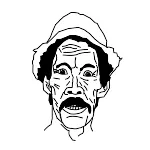
Ramón Valdés
Human Design Chart
Biography
He was raised in a humble and large family that moved to Ciudad Juárez when he was aged two. Valdés made his acting debut at cinema in the movie Tender Pumpkins (1949), appearing along with his brother, Germán Valdés, already an actor better known as "Tin-Tan", and who introduced Ramón into the acting world. Under extra or supporting roles, he continued making appearances in films during the Golden Age of Mexican cinema. Ramón and Germán had two other brothers, also actors, Manuel Valdés, better known as Manuel "El Loco" Valdés, and Antonio Valdés, better known as "El Ratón Valdés".
In 1968, Valdés met Roberto Gómez Bolaños, better known as "Chespirito", with whom he began working on programs such as Los supergenios de la mesa cuadrada, Chespirito and El Chapulín Colorado. It was on Bolaños's sitcom El Chavo del Ocho that he gained international fame for his portrayal of Don Ramón. He left El Chavo del Ocho in 1979 but returned in 1981 for his final year on the project.
Valdés married three times and had ten children. He died on 9 August 1988 of stomach cancer at age 63 in Mexico City.
Human Design Analysis: Ramón Valdés as Projector 5/1
Projector 5/1 — Design at a Glance
Ramón Valdés revealed himself as someone who could instantly identify flaws in other systems. His Human Design type is Projektor (Projector), characterized by a dense, focusing aura that acts like a bright flashlight illuminating areas of others that are still dark or not functioning properly. Ramón Valdés saw immediately what was wrong.
However, when he pointed out these issues abruptly, he often encountered resistance. His direct approach to problems was perceived as uncomfortable, much like being blinded by a harsh light. A more effective strategy for him involved maintaining his own harmony. By setting an example of balance, others were drawn to him and would then ask freely about his insights. His best course of action was to wait for an honest invitation from others before taking on a leadership role.
Since Ramón Valdés lacks a defined Sacral Center as a Projektor, he does not have constant intrinsic life energy. Instead, he experiences phases of high activity and rapid productivity followed by necessary rest periods for regeneration. Without these breaks, there is a risk of burnout. When living according to this design and receiving the appropriate recognition, he was rewarded with success. Ignoring his nature and acting without invitation or recovery eventually led to bitterness, his non-self theme.
Emotional Authority
Ramón Valdés experienced emotional waves that significantly influenced his experiences and reactions. His inner authority resides in his defined Solar Plexus Center, meaning he follows a strategy of waiting: decisions are not made based on immediate impulses but require time for maturation.
Emotional authority is characterized by constant ups and downs of feelings. Ramón Valdés saw the world colored by his current mood; what excited him at one moment could appear negative in another. This immediate emotional reaction was only a snapshot, not a final judgment. Quick, spontaneous decisions made in this heat often proved disadvantageous as they missed the deeper truth of the situation.
His mechanism required patience and conscious delay. Ramón Valdés used time to let a decision mature, often by sleeping on it multiple times. As time passed, intense feelings subsided, emotional distance grew stronger. Only then did clarity and calm set in. This process was crucial for long-term direction in his life as it allowed him to look beyond the initial impression and see his true reality free from the distortion of temporary moods.
The 5/1 Profile — Heretic / Investigator
Ramón Valdés emerged as someone who gathered deep knowledge to offer solutions to others' problems. His design carries the Profile of Hero and Explorer (5/1). Line 5 gave him a magnetic presence; people actively sought out his answers, while line 1 pushed him towards intense learning and inner depth. This dynamic created a tension: his gifts were in demand, but without clear boundaries, constant external requests threatened to lead to exhaustion.
His character was also shaped by specific energetic patterns. Gate 40 on the fifth line emphasized a certain stubbornness of ego as well as others' hopes and expectations for him. The key lay in warding off negative forces and recognizing the need for rest periods to avoid burnout. Simultaneously, Gate 35 on the first line acted as a development line of humility. Here it was about not taking rejection personally but seeing it as part of creative progress. Ramón Valdés learned through experience to feel changes and store rejections as reflections rather than letting them block him. His path involved living life as an art form, growing wiser through these experiences. Balancing withdrawal into research for himself and providing solutions for others was central. By learning to say no, he could protect his energy and use his unique abilities optimally without being overwhelmed by the demands of his environment.
Single Definition — Defined & Open Centers
Ramón Valdés revealed himself as someone who used his own willpower and resources in a self-determined manner. His defined Heart Center gave him permanent access to this energy, allowing him to reliably keep promises and clearly recognize his own worth. He enjoyed working but preferred the role of being his own boss, enabling him to determine his inner rhythm between effort and rest himself. This structure strengthened his self-esteem through action that matched his words and challenged him to only take on commitments he could fulfill.
Parallel to this, a defined Solar Plexus Center guided him as an internal authority. His decisions were not based on momentary feelings but on emotional clarity that emerged after experiencing the full wave of emotions. He learned to patiently wait until the emotional wave had reached its peak and trough before acting. This process protected him from impulsive reactions and strategically used his emotional allure by giving others time to warm up to his warmth.
At the same time, Ramón Valdés was exposed to several open centers that made him vulnerable to external conditioning. His open Head Center tended to take mental pressure and questions from others as its own problems, causing confusion if he did not trust his authority. The open Ajna Center made his conceptual thinking flexible but unstable; he risked identifying with foreign opinions or concepts rather than observing them neutrally. Additionally, his open Throat Center attracted attention without him actively seeking it; trying to force recognition through speaking or acting often led to stress and unexpected statements. His open G Center meant a lack of stable identity; he sought direction and love through external initiation instead of providing it himself. A wrong environment could quickly lead him astray as a result. Finally, his open Sacral Center absorbed foreign vital energy, leading to exhaustion if he did not set boundaries or react to borrowed energy. His open Spleen Center made him sensitive to the well-being of others but tended to cling to unhealthy situations to maintain a false sense of security. The open Root Center allowed him to take on external stress, which could end in an endless cycle of overactivity and burnout if he tried to rid himself of this foreign pressure through his own actions.
Channels for communal freedom.
Ramón Valdés was someone who sought the establishment of stable communities and fair agreements. His design was marked by Channel 37-40, connecting the Solar Plexus Center with the Heart Center. This configuration linked the emotional depth of Gate of Friendship (37) with the willpower and need for provision in Gate of Solitude (40). For Ramón Valdés, this meant that he did not act spontaneously but waited for a personal invitation to become part of a group. He understood the value of a good deal carefully thought out and formulated to be beneficial for both sides. The energy of this channel promoted an environment without strict hierarchy, where everyone freely contributed their share and felt loyal to the community.
Additionally, other gates influenced his experience. Gate 35 brought the theme of change through interaction and seeking meaning in new experiences. Gate 5 emphasized the importance of one's life rhythm, stable habits, and building energy through routine. Gate 6 represented elemental friction and emotional waves in the context of further development. Gate 49 promoted sensitive responses to principles within the family or clan as well as redistribution of resources. Gate 30 stood for recognizing feelings, longing, and accepting limitations as fate. Finally, Gate 22 enabled openness and mutation in social environments through calm listening and individual processes without intrusion. This combination shaped Ramón Valdés' approach to forming relationships and communities with emotional depth, willpower, and respectful distance.
Tribal Circuitry — Circuit Signature
Ramón Valdés stood out for his clear orientation towards mutual support and balance between giving and receiving. His design promoted an understanding of cooperation where resources were created together - not as individual solo acts but within a functioning system of reciprocity: “Today I give to you, tomorrow you give to me.” This dynamic stemmed from his simple definition, which directly connected the Heart Center (Identity) with the Solar Plexus Center (Emotions).
This connection formed the Community Channel (37-40), part of the Ego Circuit. Although this circuit is named after the individual ego, it belonged to the clan circuits and primarily concerned cooperation within the collective. Since Ramón Valdés had no connection to the Sacral Center, he lacked the constant, automatic life force of that center. Instead, he needed sufficient rest periods to regenerate energy for his social interactions and communal creation. His emotional nature followed wave-like patterns, meaning decisions and judgments often required time to become clear. The connection between identity and emotions shaped his actions: He did not act solely out of rational duty but from a deep, emotionally processed need for connection and fair participation in the community's well-being.
Left Angle Cross of Migration 2
Ramón Valdés had the left Moving Forward Cross in Human Design. This configuration suggested a basic attitude that did not aim for quick advancement or direct confrontation, but rather strategic restraint and waiting for opportune moments. His design encouraged a tendency to distance oneself from situations or consciously delay them when pressure was high or circumstances seemed unfavorable. It was not passive inaction but a specific way of dealing with life events: by distancing and delaying, space was created to defuse problems or shift them to a later, better timing. This mechanism acted as a protective mechanism against overextension and allowed energy conservation by waiting rather than reacting immediately until the situation clarified itself or became less threatening on its own. For Ramón Valdés, this meant that his path was often marked by pauses, retreats, and conscious non-action in critical phases. It was about waiting for the right moment instead of fighting against the current. This Moving Forward strategy aimed to avoid conflicts and protect one's resources by distancing oneself both temporally and emotionally from stressful demands until a safer course of action became visible.
Saturn Return · Uranus Opposition · Chiron Return · 2nd Saturn Return — Life Cycles
Ramón Valdés showed himself as someone whose professional path was marked by clear cycles of maturation. His design suggested a structure where inner development and external recognition came together in specific life phases. This was evident in 1949: at the age of 25, he debuted as an actor with a small role in the film „Calabacitas tiernas“. This marked his first Saturn Return, a phase when years of groundwork often condensed into tangible results. For his design, this was a typical moment of anchoring, laying the foundation for his later career.
Later, another significant dynamic of his design unfolded: the unfolding of personal purpose. In 1971, at the age of 47, Ramón Valdés gained international fame through his portrayal of Don Ramón in the sitcom „El Chavo del Ocho“. This event fell within the period of his Chiron Return (approximately 49-51 years old). In Human Design mechanics, this is a fulfillment cycle where one's incarnation cross unfolds and meaning becomes tangible – provided that the person has lived according to their strategy. For Ramón Valdés, this cycle became a blooming time when his life mission fully unfolded and he found his place in cultural consciousness. His path illustrated how these mechanical cycles structured concrete milestones of his creative work.
Projector · Emotional Authority — Synthesis
Ramón Valdés spent much of his life recognizing patterns and errors in the system (Gate 11), combined with a profound ability to accumulate knowledge and make it accessible for others (5/1 Profile). This combination of analytical insight and the drive to share knowledge shaped his approach to challenges and how he positioned himself in relationships. He was a projector who recognized the potential of others but always had to be mindful of clear boundaries to avoid being drained by the needs of others – a balance that became even more complex through the emotional wave (emotional authority).
A central paradox in his design lay in the interplay between the need for recognition and the tendency towards solitude (Channel 37-40). On one hand, he sought connection with the community to contribute his skills and share resources; on the other hand, his nature required phases of isolation to recharge energy and gain clarity. This tension was evident in cycles of his life where moments of success (1971) and public recognition were preceded by periods that allowed him to deepen knowledge and take on new projects (1949).
1 Defined Channel
Incarnation Cross - Left Angle Cross of Migration 2
Solar Return
The Solar Return shows the moment when the sun returns to its exact birth position - your personal solar year.
Life Cycles
Discover the life cycles with a detailed triple view (birth chart, cycle chart, composite).
Human Design Profile
- Type
- Projector
- Strategy
- Wait for the respectful invitation
- Authority
- Emotional Authority
- Profile
- 5/1 - Heretic / Investigator
- Definition
- Single Definition
- Incarnation Cross
- Left Angle Cross of Migration 2
- Date of Birth
- 02.09.1924 02:10
- Place of Birth
- Mexico City, MEX
Frequently Asked Questions
What was Ramón Valdés' Human Design type?
What profile did Ramón Valdés have in Human Design?
What authority did Ramón Valdés have?
What incarnation cross did Ramón Valdés have?
When was Ramón Valdés born?
Discover your own Human Design
Are you also a Projector? Find out in a personal reading how to unfold your leadership qualities and recognize the right invitations.
More Personalities
Back to overviewSissy Spacek

Alain-Fournier

Anémone

Ann-Margret

Arletty
Arno