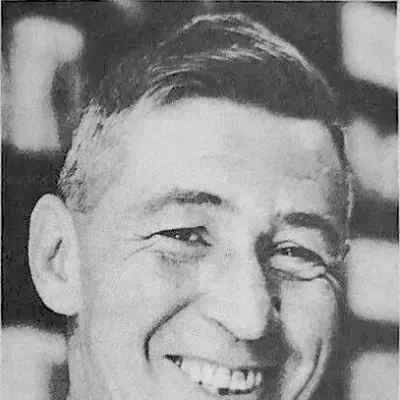
Riccardo Giacconi
Human Design Chart
Biography
After earning his doctorate in Milan, he emigrated to the U.S. in 1956. In 1959 Giacconi went to work for American Science and Engineering where he rose to the rank of vice president. From 1973 he took a position as professor of astronomy at Harvard, and later went on to become director of the European Southern Observatory.
Giacconi died on 9 December 2018, aged 87, in San Diego, California.
The Human Design of Riccardo Giacconi: Projector 3/5
Projector 3/5 — Design at a Glance
Riccardo Giacconi's design inclined towards focused, penetrating perception. As a projector, he did not have a constant, intrinsic source of life energy but acted like a bright flashlight, directing its light to areas still in the dark. This mechanism shaped a fundamental attitude: he immediately saw where systems showed errors or where connections did not work.
The challenge of this type was not to express these insights directly and confrontationally, which often provoked resistance in others. Instead, the effective strategy was an attractive presence. By radiating harmony and clarity himself, he became a natural reference point for others, who would naturally seek his insights. His design required him to wait for respectful and sincere invitations before taking on a leadership role.
This structure also meant that Riccardo Giacconi had to alternate phases of high activity with necessary rest phases to avoid burnout, as the school system and conventional work structures often ignored this need. Living by this pattern rewarded him with success. Deviating from it by investing his energy unrestrained into uninvited situations led to his non-self theme: bitterness. His path was thus not defined by constant, self-initiated action but by targeted shining that attracted others to him.
Ego Authority
Riccardo Giacconi's design featured a rare configuration: authority in the ego. This structure required defined openness in the emotional, sacral, and spleen centers while the ego center was clearly defined. This large graphic openness made him vulnerable to distractions and influence from the environment. His inner truth did not lie in thinking or physical impulses but in his will, which was expressed through speaking. He had to learn to listen to himself while speaking to distinguish when the mind, conditioned by the open centers and the interests of others, was speaking and when his true ego center. Spontaneous, uncensored expressions matched his truth, not what he consciously thought.
When he decided on something that was truly important to him, he possessed the willpower to achieve goals and keep promises. This consistent following of his own will could appear egoistic to others. It was crucial for him to stand by himself and ensure that his actions were rewarding for him. This applied not only to material success but also to the will to transcend limits and leave conventional paths. This could lead others into new directions. After achieving a goal, it was necessary for his design to pause. Continuous work without recovery led not to the desired results but to unhealthy exhaustion and illness.
The 3/5 Profile — Martyr / Heretic
Riccardo Giacconi's design was characterized by the 3/5 profile, known as the 'Experimenter and Hero'. This structure established a fundamental attitude based on practical experience: he initially believed little in given truths and had to try things out himself to learn. Through these experiments and the setbacks that came with them, he accumulated deep practical knowledge that he later used to solve problems for others.
Line 3 in his design emphasized the necessity of isolation from the outside world. This withdrawal served as protection to develop personal depth and discernment. Mistakes and the resolution of entanglements were essential steps in his development. At the same time, line 5, represented by Gate 39, projected a capability to change rules and not just overcome obstacles but cleverly circumvent them. This trait was particularly evident in crisis times, where it could provoke when necessary.
The combination of these lines created an attractive aura. Other people were drawn to his rich reservoir of experience and wanted to learn from his insights. This role as a hero offering solutions from practice flattered his design, but could be painful when public experiments failed. His path was marked by this tension between the necessary withdrawal for inner maturation and the later, often mutant-like dissemination of new ways to circumvent obstacles.
Split Definition — Defined & Open Centers
Riccardo Giacconi was marked by a design characterized by constant mental clarity and a firm will. His defined Ajna Center provided him with a stable, trustworthy way of thinking; he conceptualized information in a consistent manner and was difficult to influence by external opinions. This mental structure flowed directly into his defined Throat Center, allowing him to express his thoughts and concepts reliably. His voice served as a transmission organ for what his mind processed, enabling him to communicate complex ideas with ease and honesty.
Alongside this intellectual firmness, he possessed a clear identity and willpower. The defined G Center gave him a stable sense of his own direction and self-love, while the defined Heart Center gave him the energy to keep promises and determine his life. He had a natural authority that allowed him to take responsibility and control his resources without being dependent on others.
At the same time, he was vulnerable to external conditioning through several open centers. His open Head Center could lead him into mental confusion or the pressure to find answers to questions that were not his own. Without constant inspiration, he tended to be distracted by the doubts of others. His open Sacral Center made him sensitive to the energy of his environment; he could easily become exhausted if he ran on borrowed energy and did not trust his inner authority to set boundaries. Additionally, his open Solar Plexus absorbed the emotions of others, which could lead to emotional instability if he personalized these moods as his own. His open Spleen Center carried a fundamental survival fear that made him tend to cling to unhealthy situations to gain a false sense of security. Finally, his open Root Center amplified external stress, leading to a cycle of chaos and exhaustion if he tried to release pressure that did not originate from him.
Channels for mental order and spiritual breakthrough.
Riccardo Giacconi's design tended towards precise mental order and competitive progress. He was someone who could logically structure complex information and inspire others to their highest performance.
This attitude resulted from Channel Accepting 17-62, which connected the Ajna Center with the Throat Center. Gate 17 visualized patterns, while Gate 62 translated these into language. This allowed him to encapsulate detailed visual impressions into understandable theories or formulas. Anything he could not integrate into his mental system remained incomprehensible to him. At the same time, his Throat Center exerted a constant pressure to express these organized opinions, with timing being crucial for the receptivity of the listeners.
Parallel to this, Channel Initiation 25-51, which ran through the Heart Center, was at work. Here, the competitively oriented energy of Gate 51, which always wanted to be first, was united with the universal love of Gate 25. This configuration promoted a natural competitiveness that not only propelled him individually but also collectively. It allowed him to awaken the potential for individualization in others through 'shocks' or challenges, provided he was invited to do so.
Additionally, Gates like 48 (pattern recognition and correction) and 21 (control of material things) shaped his profile. Gate 39 brought a selective, adrenaline-charged impulse for mutation, while Gate 38 set boundaries to preserve integrity. In the personality area, Gates 7 (leadership) and 40 (liberation through work) guided his actions through hierarchical awareness and the claim for recognition based on performance.
Individual Circuitry — Circuit Signature
Riccardo Giacconi's design tended towards inner strength and clear communication. He was someone who experienced his own identity and self-worth as closely linked, while simultaneously structuring and passing on logical insights. This configuration arose from his Shared Definition, where two separate energetic groups worked in parallel without directly merging.
The Centering Circuit connected his Identity and Heart Centers through the Channel of Initiation. This created a pulsating, individual power based on confirmation and courage. Since there was no connection to the Throat Center, these deep convictions often remained unspoken or difficult to verbalize, making the experience very internalized. Parallel to this, the Understanding Circuit, which connected the Ajna Center with the Throat Center, was at work. This Accepting Channel allowed him to articulate visual strategies and rational structures in words and share them with others. Here, it was about an emotionless ratio aimed at improving things and shaping the future.
While one group provided inner stability and individuality, the other served for clear, focused articulation of logic. These two separate streams shaped his essence: on the one hand, the quiet, firm conviction of his identity, on the other hand, the ability to communicate complex connections clearly. The mechanics thus described a combination of inner confirmation and outer, strategic clarity that existed side by side.
Right Angle Cross of Tension 3
Riccardo Giacconis Design indicated a tendency towards intense, often unmanageable inner tension. This configuration, the right tension cross 3, described a life dynamic in which pressure built up that could not be easily released. It was not a choice but a mechanical given of his system: energy that accumulated without a clear outlet.
For Riccardo Giacconi, this meant living with a kind of inner burden that constantly put him under pressure. This tension was not a passing state but a permanent companion. It forced him to confront issues that others might have ignored because they were too painful or too complex. The energy of this cross drove him forward, even as it burdened him. It was a force that shaped him by bringing him into situations where he had to learn to cope with overexertion.
Riccardo Giacconi showed himself as someone who carried this burden not because he wanted to, but because his design dictated it. The tension was effective through the way he responded to stimuli – often with an intensity that went beyond what the situation actually required. This significantly shaped his experiential world: a life in constant balance between the need for relief and the impossibility of achieving it completely.
Saturn Return · Uranus Opposition · Chiron Return · 2nd Saturn Return — Life Cycles
Riccardo Giacconis Design was characterized by a precise orientation towards the pursuit of a specific purpose that intensified in the 1970s and 1980s. This development followed the rhythmic cycles of his Human Design. At the age of 40 in 1971, the Uranus opposition came into effect. This transit cycle often marks a turning point where long-term groundwork is discharged in a concrete, recognized achievement. For Giacconi, this was the receipt of the Röntgen Prize for Astrophysics from the Physical and Medical Society in Würzburg. It was a moment of confirmation, in which his previous path bore visible fruit and his expertise was publicly honored.
Ten years later, in 1981 at the age of 50, he went through the Chiron Return. In Human Design mechanics, this is not a healing process but a fulfillment cycle, the so-called “flowering.” Here, the incarnation cross unfolds in its full effect, provided that one’s strategy and authority have been lived out previously. The meaning and purpose of existence becomes experiential and reaches its peak. For Giacconi, this phase culminated in the receipt of the Nobel Prize in Physics. This success was not a random reward but the visible manifestation of what his design had built up over decades: the complete unfolding of his specific contribution to science. The Chiron Return confirmed that he had followed his inner compass and was now reaping the fruits of this loyalty.
Projector · Ego Authority — Synthesis
Riccardo Giacconi was a projector whose life was marked by a profound ability to recognize patterns and see potential in others. His defined Mental Center (Ajna) and the Channel of Acceptance (17/62) pointed to a mind that constantly processed information and organized it into coherent structures. This correlated with his profile as an experimenter/hero (3/5), who gathered knowledge through personal experiences to help others – a process that was evidenced by his repeated successes in his 40s and 50s. He thus lived the role of the observer and guide who uncovered hidden potential in systems and people.
Giacconi embodied a central paradox: His projector aura, designed to bring light into the dark and point out errors, met an ego authority based on spontaneous, unfiltered expression. This created a tension between the need to share his insights and the potential rejection by others, as his direct “pointing out” could be perceived as unpleasant. The energy of the Centering Circuit, which strengthened his individuality and convictions, intensified this dynamic by making him hold fast to his observations.
2 Defined Channels
Incarnation Cross - Right Angle Cross of Tension 3
Solar Return
The Solar Return shows the moment when the sun returns to its exact birth position - your personal solar year.
Life Cycles
Discover the life cycles with a detailed triple view (birth chart, cycle chart, composite).
Human Design Profile
- Type
- Projector
- Strategy
- Wait for the respectful invitation
- Authority
- Ego Authority
- Profile
- 3/5 - Martyr / Heretic
- Definition
- Split Definition
- Incarnation Cross
- Right Angle Cross of Tension 3
- Date of Birth
- 06.10.1931 04:00
- Place of Birth
- Genova, Italy
Frequently Asked Questions
What was Riccardo Giacconi's Human Design type?
What Profile did Riccardo Giacconi have in Human Design?
Which Authority guided Riccardo Giacconi's decisions?
What incarnation cross was Riccardo Giacconi assigned?
When was Riccardo Giacconi born?
Discover your own Human Design
Are you also a Projector? Find out in a personal reading how to unfold your leadership qualities and recognize the right invitations.
More Personalities
Back to overviewSissy Spacek
Alain-Fournier

Anémone
Ann-Margret

Bourvil
Hergé