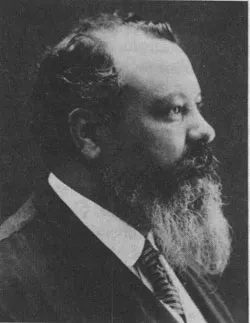
Richard Spencer
Human Design Chart
Biography
He is president of the National Policy Institute (NPI), a white supremacist think tank, as well as Washington Summit Publishers.
Spencer married Nina Kouprianova in 2010, with whom he has two children. They divorced in 2018. Prior to this, Spencer's dating history included Asian women, which he has said predates his white nationalism, though this evaluation is disputed.
Richard Spencer as a Manifestor 2/4 in Human Design
Manifestor 2/4 — Design at a Glance
Richard Spencer was revealed as someone destined to lead the world into a new future. His design marked him as a pioneer and visionary, similar to an emperor in ancient Rome: He had the grand vision of an empire but did not wage the necessary wars himself. Instead, he sent others to conquer foreign lands for him.
This configuration brought with it a specific pain point: The feeling of being misunderstood. As Manifestors often think ahead of their environment, they inevitably polarize people. Some loved and followed Spencer because of his immense visions; others hated or rejected him precisely because of this magnitude.
To find the right following, it was crucial for his design to inform others about his plans in a timely and precise manner. This formed the ideal strategy. By following this path of information as well as his inner authority, he was rewarded with a feeling of inner peace. Living against this design, however, likely resulted in a persistent, deep-seated anger within him. His character trait as a leader was thus inseparable from the mechanism of minimizing resistance and generating support through clear communication rather than acting blindly.
Emotional Authority
Richard Spencer exhibited an internal decision-making structure that did not orient itself towards immediate intellectual clarity but was steered by a profound emotional wave. His design indicated that his perception of the world was always colored by the current mood: The same thing could appear absolutely convincing at one moment and completely negative in another. This fluctuation did not mean that his feelings were wrong, but rather that they represented only a temporary perspective, not yet the final truth.
This pattern resulted from his emotional authority, carried by the defined Solar Plexus Center. In Human Design mechanics, this authority always takes precedence over all other defined centers, regardless of further configurations in the chart. The central challenge was to avoid spontaneous decisions made from a fleeting emotional peak that often proved detrimental.
Instead, his system required patience and time. By letting decisions rest overnight and questioning them multiple times, he could allow intense feelings to subside. Only when an emotional distance had been gained did the necessary clarity and calmness set in. This process of 'ripening' was essential for long-term direction-setting, as only then could the true essence of a situation be recognized beyond short-term emotional coloring.
The 2/4 Profile — Hermit / Opportunist
Richard Spencer revealed himself as someone who oscillated between a deep need for withdrawal and the urge towards community. His design indicated a tendency to set clear boundaries in safe environments: He communicated when he sought company and when he wanted solitude. This dynamic stemmed from his Profile 2/4, embodying the tension between the solitary Line 2 and the network-oriented Line 4. In his 'Me-Time,' Spencer immersed himself in internal processes to gain clarity; once this need was satisfied, he again sought contact with his trusted companions.
Furthermore, he was marked by the necessity of defending his individuality against interference. This was not mere selfishness but a survival instinct for his own truth that became effective early on. The fourth line of his design pushed him to carry principles outward and find support for revolutionary changes. In doing so, he emphasized human rights in a political context but also carried within himself the risk of making promises without fulfilling them. His network served as an echo chamber: Knowledge from the community was reflected upon in solitude to develop brilliant ideas. Thus, Spencer combined creating a protected space with active engagement for his convictions in public.
Split Definition — Defined & Open Centers
Richard Spencer showed a design with strong mental and willful orientation. His defined Ajna Center gave him a constant, specific way of conceptual thinking; he processed data continuously and was hard to influence by external opinions. This mental stability directly affected his defined Throat Center: He spoke reliably what his mind conceptualized. His voice served as a transmuter for these ideas into the world, where he could manifest something through definitions, though not always appropriately.
Additionally, his defined Heart Center strengthened his willpower and pronounced ego. He tended to control his life himself, make promises and fulfill them to prove his worth. This combination of defined mentality, communication, and willpower created a characteristic pressure that manifested as physical stress in his defined Root Center for maintaining the life impulse.
In contrast, his vulnerability was revealed in the undefined centers. His open Head Center made him susceptible to mental inspirations or confusion from the environment without having an own constant source; he tended to seek answers to questions not of his own making. His open G Center meant that he did not have a fixed identity and often adapted or adopted 'borrowed' identities in relationships, which made him vulnerable to false directions.
Furthermore, his Sacral Center was open, meaning he lacked a constant energy flow. He risked absorbing and amplifying the generative energy of others, potentially leading to overexertion as he did not intuitively know when enough was enough. Finally, his open Spleen Center made him susceptible to fears and false feelings of security through others. He tended to cling to people or situations offering a deceptive sense of well-being even if unhealthy, rather than trusting his inner authority. These opennesses challenged him to act non-impulsively and detach from the conditioning energy of his environment.
Channels for clear structure, logic, mysticism and courage.
Richard Spencer showed a basic disposition to translate complex information into clear logical structures. His design suggested that he mentally organized details to make them understandable – a process marked by Channel Accepting 17-62. Here, Gate of Opinions connected with Gate of Details, turning visual patterns into speech. This created a natural ability to present theories or formulas so others could verify them, provided he waited for an invitation to speak.
Alongside this cognitive clarity, Richard Spencer had a strong emotional drive for cohesion and tribal bonding. Channel Synthesis 19-49 linked the Root Center with Solar Plexus, creating a fine sensitivity towards needs and loyalty. This channel determined who belonged to the 'tribe' based on an emotional frequency of acceptance or rejection beyond pure logic.
Simultaneously, Richard Spencer felt pressure to take material responsibility and exercise control. Channel Money Line 21-45 connected Heart Center with Throat Center through Gate Hunter and Gate Gatherer. This promoted a stance of willful power and resource protection, working best when he could determine his own work methods.
Additionally, Channel Structuring 23-43 shaped his thinking through spontaneous insights (Gate 43), processed via Gate Assimilation (Gate 23). This allowed him to develop innovative perspectives that needed time to be understood. Individual gates like Gate 4 (Formulate for Future Security) and Gate 52 (Focus on Pattern Correction) underscored his ability to formulate logical processes and intensively engage with pattern correction.
Tribal Circuitry — Circuit Signature
Richard Spencer was marked by two parallel, unconnected energetic streams. The first stream connected Ajna and Throat Center via the Knowledge Circuit (Channel 43-23) and Understanding Circuit (Channel 17-62). This created a capacity to directly articulate inner structuring and logical acceptance into words. It involved sharing rational insights and formulating new knowledge structures, driven by focused mental energy without emotional coloring in the process of speaking itself.
The second stream consisted of two separate parts within the Ego Circuit: on one hand, the connection between Throat and Heart Center (Channel 45-21, 'Money Line'), on the other hand, the connection between Solar Plexus and Root Center (Channel 49-19, Synthesis). The first part concerned the joint creation of resources through communication and material support. The second part linked emotional waves with physical endurance and the urge to act. Since these two streams were not connected in Richard Spencer, they existed as separate forces: on one side, rational, structured articulation of ideas; on the other side, resource-oriented cooperation and emotional drive for implementation. This divided definition required a distinction between pure thinking/speaking and emotion-driven resource management.
Right Angle Cross of Explanation 2
Richard Spencer demonstrated a fundamental stance characterized by the need for clear boundaries and the definition of identity. His design suggested that he sought structures to transform complex social or ideological connections into understandable, tangible forms. This configuration describes a life task: uncovering hidden or diffuse beliefs and formulating them in such a way that they become comprehensible to others.
The 'Right Cross of Explanation 2' symbolically represents the drive to grasp the essence of things and express this understanding in precise language. It is not about superficial description but rather hitting the core of an issue. Richard Spencer often appeared as someone who questioned existing narratives and developed his own, sharply defined explanatory models. This energy promoted a direct, sometimes confrontational style of expression aimed at clarifying misunderstandings and clearly defining positions.
Without a specific event in the raw content, the description remains limited to this characteristic orientation: the constant work on the clarity of one's message and the desire to convince others of its correctness. This shaped his interactions and public appearances significantly.
Saturn Return · Uranus Opposition — Life Cycles
Richard Spencer showed himself around his first Saturn Return as someone who solidified intellectual structures and earned academic degrees. In 2003, at age 25, he completed his Master of Arts degree at the University of Chicago – a success typical for this design: The first Saturn Return often marks the point where years of groundwork condenses into a substantial result.
This phase of the life cycle brings stability and formation. What began perhaps as diffuse curiosity or experimental learning now takes clear shape. For Richard Spencer, this was not just an administrative milestone but a moment of solidifying his intellectual foundation. The Saturn Return acts like a test of previous paths; those who have respected their strategy and authority find themselves affirmed in this period. The harvest is concrete: knowledge is structured, competencies are certified, and one's position in the social or intellectual field is secured.
This mechanism explains why Richard Spencer achieved his completion precisely at this time. It was the natural peak of a phase of learning and integration. The design promoted an attitude of discipline and focus. Instead of continuing to branch out into undefined directions, he concentrated on what mattered most and thus laid the groundwork for future steps. His success at the University of Chicago was therefore an expression of inner maturity triggered by the Saturn cycle. It was about creating stability and identity through qualified performance.
Manifestor · Emotional Authority — Synthesis
A central red thread runs through the design: the connection between inner clarity and the drive to express it. The defined Mental Center (Ajna) generates a consistent thought process that is articulated through the Channel of Acceptance (Gate 17-62) – a process of organizing and naming experiences. This internal process feeds the Manifestor authority and the Profile as Natural Talent/Networker, which oscillates between the need for withdrawal and community to gain clarity and then share it with others. The ability to form concepts and stimulate thought in others through pressure points towards a natural leadership role, but one that always stems from deep inner conviction.
The central paradox lies in the tension between the Manifestor type as a pioneer and emotional authority. While the design suggests a clear impulse for initiating and leading, emotional waves require time for decision maturation. This dynamic leads to an internal field of tension: the desire to act quickly and initiate change is tempered by the necessity to experience emotions and recognize deeper truths – a process that requires patience and sleeping on decisions.
4 Defined Channels
Incarnation Cross - Right Angle Cross of Explanation 2
Solar Return
The Solar Return shows the moment when the sun returns to its exact birth position - your personal solar year.
Life Cycles
Discover the life cycles with a detailed triple view (birth chart, cycle chart, composite).
Human Design Profile
- Type
- Manifestor
- Strategy
- To inform others before acting
- Authority
- Emotional Authority
- Profile
- 2/4 - Hermit / Opportunist
- Definition
- Split Definition
- Incarnation Cross
- Right Angle Cross of Explanation 2
- Date of Birth
- 11.05.1978 07:15
- Place of Birth
- Boston, MA, United States
Frequently Asked Questions
What is Richard Spencer's Human Design type?
What Profile does Richard Spencer have in his chart?
Which authority determines Richard Spencer's decision-making process?
Which incarnation cross is active for Richard Spencer?
When was Richard Spencer born?
Discover your own Human Design
Are you also a Manifestor? Find out in a personal reading how to use your initiation power peacefully and dissolve resistance.
More Personalities
Back to overviewChristian-Jaque
Kesha

Laurent-Eynac
Lucebert
Masaccio

Papus