
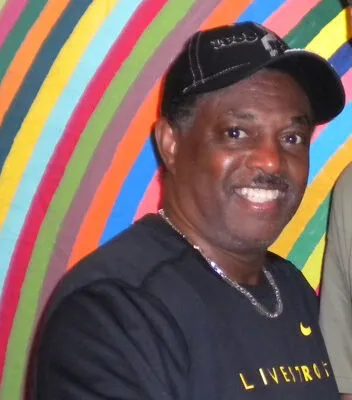
Robert Bell
Human Design Chart
Biography
By 1968 he and his group were an R&B attraction. They had several name changes before settling on Kool & the Gang. They made a recording deal in 1969 and wrote their own material for a funk instrumental. Their popularity grew for albums that were not only R&B but for jazz and funk. They made their first European tour in 1975 and in February 1981, put out their biggest hit single, "Celebration."
The Human Design of Robert Bell: Generator 1/3
Generator 1/3 — Design at a Glance
Robert Bells design points to a tendency towards high endurance and persistent strength that was not unleashed through his own initiative but only as a reaction to external impulses. As a Generator, he had plenty of sacral energy, comparable to a strong workhorse that could only fully call upon its power when put to the right task. His path to effectiveness did not lie in actively pushing plans forward but rather in waiting for an inner signal.
Only once his sacral center responded with a clear 'yes' - the feeling of wanting to start - could he effectively use and translate this energy into action. Reacting from the gut was key to deep satisfaction and fulfillment. Conversely, ignoring this principle, such as by constantly initiating or working without internal desire, inevitably led to frustration and energy loss. The greatest danger lay in squandering his strength on tasks that did not bring him joy, which could quickly lead to burnout. Similarly problematic was being held back from his heart project when there was still plenty of power left. Robert Bells design clearly showed: His strength unfolded only in harmony with this reactive stance, not through the forced imposition of his own agenda.
Sacral Authority
Robert Bell proved himself as someone who did not make decisions in his head but waited for an immediate physical signal. His design established sacral authority as the primary instance - a structure possible only for the Generator type and whose strategy is inseparable from this inner guidance. This fundamentally simplified his decision-making process: he had to react, not think.
The mechanics described this as responding to external stimuli through specific physical signals. Robert Bell possessed a 'gut feeling' that manifested in bursts of energy or audible sounds like grunts, hums, or an affirming 'mm-hm'. As long as his emotional center was open, he could clearly perceive this sacral resonance. When this inner motor kicked in, there was a palpable vitality; he felt alive and had seemingly inexhaustible energy. This power allowed him to perform tasks with great enthusiasm - entirely without the need for external purposefulness. He was born to immerse himself in his actions.
Additionally, his active spleen center acted as a supportive instance. This gave him the ability to react quickly and instinctively and an immediate access to his physical well-being. Robert Bell could therefore reliably guide himself from this combined perception: sacral confirmation for sustained energy and spleen-supported speed for spontaneous judgments on what was good or harmful.
The 1/3 Profile — Investigator / Martyr
Robert Bells design points towards a dual approach: he was both a theoretical researcher and a practical experimenter. His Profile 1/3, the so-called 'Researcher/Experimenter', defines this dynamic through the tension between the need for deep knowledge (Line 1) and the urge to try things out (Line 3). For Robert Bell, learning was not a static state but an ongoing process of trial and error.
Line 1 brings with it the necessity to understand and plan things first; here, fear of ignorance or feeling like one doesn't know enough can block implementation. At the same time, however, Line 3 demands practical action and learns through mistakes. Robert Bells design shows that his judgments had a special authenticity: if he deemed something good, it had passed both the theoretical scrutiny of Line 1 and the practical validation of Line 3. This combination of intuition and experiential knowledge created a unique clarity arising from processing confusion. His path was marked by constant back-and-forth between planning and action, with the authenticity of his conclusions resting on them being self-worked out and tested in reality.
Split Definition — Defined & Open Centers
Robert Bells Human Design defines a massive, constant energy foundation: Defined G-, Heart-, Sacral, and Root Centers create reliable identity, strong will, continuous vitality engine as well as persistent existential pressure. This stands in stark contrast to his open Head, Ajna, Throat, Solar Plexus, and Spleen Centers.
The defined structure gave him a firm inner direction and the ability to keep promises. His Sacral Motor generated daily energy that had to be correctly applied through reactions to requests ("Yes"/"No"). However, his open Head and Ajna Center did not mean constant mental clarity; he was susceptible to external inspiration or confusion rather than having his own consistent concepts. Instead of mentally processing pressure, his mind served as a mirror for the thoughts of others.
Similarly, it worked emotionally and communicatively. His open Solar Plexus Center absorbed environmental feelings, leading him to identify with foreign moods instead of offering emotional stability. He took on emotions to gauge the climate rather than experiencing them personally. The open Throat Center prevented spontaneous, controlled communication; he only spoke when invited, as otherwise unpredictable words would fall out. Spontaneous decisions from his open Spleen Center were risky, often driven by conditioned fear or false sense of security.
The mechanics showed: Robert Bell had to use his defined authority (Sacral Reaction) to avoid falling into the pitfalls of his open centers – mental confusion, emotional over-identification, or spontaneous misfires. His strength lay in using these open areas as information channels for the environment while relying on his inner energy and direction.
Channels for focus, pioneering spirit and universal love.
Robert Bells Human Design sets a tendency towards precise, calm analysis characterized by a constant pressure to remain silent and focused on detailed work. This attitude is carried by Channel of Concentration 52-9, a format energy that drives logic and perfectionism. It connects the Gate of Non-action (52) with the Gate of Focusing (9), thereby keeping distractions at bay to correct or confirm patterns step-by-step. This energy keeps Robert Bell in place, similar to holding a yoga pose, until his Sacral Center reacts and focuses on valuable details.
At the same time, he showed natural competitiveness and an impulse towards individualization through "shock". This is determined by Channel of Initiation 51-25, linking Gate of Shock (51) with Gate of Self Spirit (25). This configuration brings a drive to be first or win to unlock potential for individualization. It's a transformative force that enables Robert Bell to initiate himself and others – if invited – through challenges into deeper consciousness.
The tension between the silent, logical focus (52-9) and the active, competitive impulse towards initiation (51-25) shapes his mechanics constantly. Neither of these energies is sun-defined; they work as enduring presences in his design. While Channel 52-9 holds energy for thorough investigation and promotes perfectionism, Channel 51-25 ensures that Robert Bell expands his unique consciousness through competition and personal breakthroughs while reinforcing the collective. Both channels are powerful forces that connect logic with mystical transformation.
Individual Circuitry — Circuit Signature
Robert Bells Human Design sets a tendency towards individual confirmation and inner centering paired with a strategic, emotionless ratio. The Centering Circuit connected Identity and Heart Centers (Channel 25-51) in him. This connection strengthened self-esteem and solidified personal identity into a bold, individualistic stance: "I am who I am." As there was no connection to the Throat Center, these deep convictions often remained unspoken or hard to verbalize. The energy worked pulsing and focused on his own individuality rather than outwardly. Parallel to this, the Understanding Circuit shaped his thought process. Through Channel 9-52 (Concentration), Sacral and Root Centers were directly connected. This allowed a logical, structured analysis free from emotional influence by the Solar Plexus Center, which was not part of this circuit. This configuration promoted a clear focus on the future and the will to improve society through rational insights. Both circuits existed as separate pieces within his Split Definition; they formed no continuous energy chain but rather parallel lying forces: on one side the solidified inner identity, on the other the cool strategic planning ability.
Right Angle Cross of Penetration 3
Robert Bells design points to a tendency towards a profound, often unconscious search for essence and truth behind things. His energetic alignment aims at penetrating illusions to make room for an authentic existence. This attitude stems from the configuration of the right penetration cross 3. In Human Design mechanics, this pattern describes a specific life task: It's not about superficial adaptation but rather recognizing the underlying structures and motives of situations. Robert Bell was driven by this impulse to distinguish appearance from reality. The mechanics of this cross support him in not just intellectually grasping complex truths but integrating them energetically. For him, authenticity is not a conscious act of willfulness but the natural result when illusions that shape daily life are seen through. His energy works on bringing transparency into opaque dynamics. This characterizes his presence as an effort to see things as they truly are, not how they may appear. This penetration power serves clarification and enables him to create clarity in his own system by focusing on what is essential and minimizing distractions from superficial impressions.
Saturn Return · Uranus Opposition · Chiron Return · 2nd Saturn Return — Life Cycles
Robert Bells design points towards a structural anchoring tendency once the phase of youth has passed. The first Saturn return marks this mechanism as a transition from experimental identity search to adult responsibility and consolidation. During this time, earlier dreams are tested for their feasibility; fundamental decisions are made or confirmed, leading to a sustainable life foundation.
In 1975, at age 25, Robert Bell's first European tour took place. This event served as concrete evidence of the described dynamics: The tour was not only a career technical step but also the moment when years of groundwork and inner clarity condensed outwardly. It showed how his design tends to transform abstract ambitions into tangible public structures during this life phase. The experience of the tour confirmed his professional identity and solidified his place in the world, exactly as mechanics of the first Saturn return predict for this configuration: a phase of confirmation and transition into stable responsibility.
Generator · Sacral Authority — Synthesis
Robert Bells life seems marked by a deep-rooted drive towards authentic self-determined action. The combination of sacral authority and the profile of the researcher points to someone who draws energy through reaction while relentlessly experimenting to validate knowledge through personal experience. Defined G Center and Heart Center strengthen this tendency towards self-definition and self-determined action, while open Head and Spleen Center signal a constant adaptability to new information and sensitive perception of the environment. This constellation points to someone who not only does but learns by trying – and then invests energy in things that truly resonate with him.
A central paradox lies in the interplay between inner authority and openness to adaptation. While the Sacral Center demands a clear reaction to impulses, open centers stand for receptivity and openness to external influences. This creates tension between the need for inner guidance and the ability to flexibly adapt to changing circumstances. This dynamic could lead to a life marked by deep engagement once an authentic impulse is recognized but also a constant search for direction due to the multitude of potential stimuli in the outer world.
2 Defined Channels
Incarnation Cross - Right Angle Cross of Penetration 3
Solar Return
The Solar Return shows the moment when the sun returns to its exact birth position - your personal solar year.
Life Cycles
Discover the life cycles with a detailed triple view (birth chart, cycle chart, composite).
Human Design Profile
- Type
- Generator
- Strategy
- To respond - wait for something to respond to
- Authority
- Sacral Authority
- Profile
- 1/3 - Investigator / Martyr
- Definition
- Split Definition
- Incarnation Cross
- Right Angle Cross of Penetration 3
- Date of Birth
- 08.10.1950 20:25
- Place of Birth
- Youngstown, OH, United States
Frequently Asked Questions
What is Robert Bell's Human Design type?
What Profile does Robert Bell have in Human Design?
Which Authority guides Robert Bell?
What is Robert Bell's incarnation cross?
When was Robert Bell born?
Discover your own Human Design
Are you also a Generator? Find out in a personal reading how to use your sacral energy correctly and discover deep satisfaction.
More Personalities
Back to overviewAaliyah

Alexia

Alizée

Angèle

Anne-Marie

Arcángel
