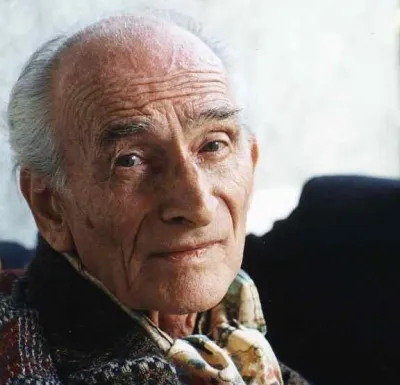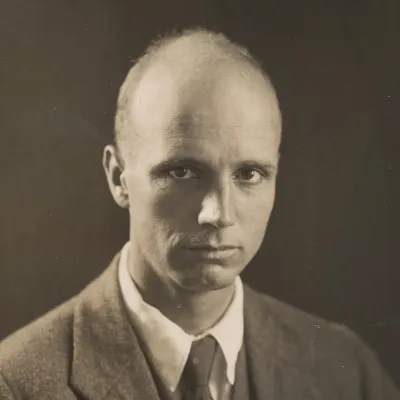
Rockwell Kent
Human Design Chart
Biography
Kent was the son of Rockwell Kent, a mining engineer and lawyer, and homemaker Sara Holgate. Kent's talent showed early and he studied art at New York's Columbia University, where he studied with Kenneth Hayes, Robert Henri and William Chase. Making his debut at The Exhibition of Independent Artists in 1910, he did not become well known until the publication of his first book, "Wilderness, a Journal of Quiet Adventure in Alaska" in 1920. Inseparable from his art is his writing. "I have always written...I have always had ideas for pictures and ideas to be expressed in words. I'm exactly as much a writer as a painter, not because I do either particularly well, but because I think in terms of art and in terms of literature. " A globetrotter, Kent lived in Maine, New Hampshire, Alaska, Newfoundland, the South of France, Ireland, Greenland and Tierra Del Fuego, painting exotic landscapes along the way. His second book, "Voyaging Southward From The Straits of Magellan," 1925, chronicled his foray at the lower tip of South America, followed by "Salomina" in 1935, a tale of his Inuit housekeeper during his three year sojourn in Greenland.
Rockwell Kent — Manifesting Generator with Profile 2/4
Manifesting Generator 2/4 — Design at a Glance
Rockwell Kent showed himself to be someone who could quickly draw things into his life. As an Manifesting Generator, he had constant sacral energy, similar to other Generators, but also possessed Manifestor qualities through an active connection of Motor Centers to the Throat Center. This hybrid configuration allowed him to skip steps when acting and push projects forward with unusual speed.
However, this quickness entailed specific risks: Sometimes his actions were too rapid, essential stages were skipped, leading him later to return and make up for missing steps. Such backlogs could quickly lead to frustration, the typical non-self experience of this type. Additionally, he tended to pursue multiple things simultaneously by reacting to various impulses and starting projects in parallel.
To keep his creative power effective, it was crucial not to initiate himself but to react to external life impulses. Only when his sacral center responded with a clear "yes" and his inner authority agreed should he proceed. Regular checks were necessary to see if ongoing paths were still felt as satisfying. With this correct application, Rockwell Kent drew deep satisfaction from his actions. The requirement to finish one thing before starting the next stood against his nature; instead, he found his energy in variety and a playful mode of creation.
Emotional Authority
Rockwell Kent lived with an inner authority rooted in the Emotional Center. This center was defined and thus served as his primary decision-making authority, independent of other configurations in his design. His internal guidance followed a wave pattern: feelings oscillated between intense enthusiasm and deep rejection. What seemed absolutely right at one moment could appear completely different in the next. However, this emotional coloring did not mean that the initial impulse was the truth. Quick, spontaneous decisions made from a fleeting mood often proved problematic as they only reflected a snapshot.
The mechanics of his emotional authority required patience and delay. Instead of acting immediately, it was necessary to let decisions mature. Rockwell Kent had to take time to navigate through emotional turbulence. Only when intense feelings subsided and an emotional distance was gained did clarity emerge. This process of "sleeping on important questions" was essential for not basing long-term life decisions on passing moods. The emotional wave served as a filter: what remained after the initial reaction had faded proved to be his deeper, true nature.
The 2/4 Profile — Hermit / Opportunist
Rockwell Kent revealed himself as someone who oscillated between a deep desire for withdrawal and the wish to connect with a close group. His design indicated a tendency to live these two poles not as contradictions but as necessary sequences: first isolation for inner clarification, then community life for exchange.
This pattern matched his Profile 2/4, the "Natural Talent / Networker." Line 2 demanded solitude to go inward and gain clarity; it created a kind of cave that protected from external influences. Only after this internal process was complete did the need of Line 4 become active: contact with trusted people, the "circle of favorites." For Kent, it was therefore essential to clearly communicate these phases – when he withdrew and when he sought company. Only in this way could he manage the tensions between his extreme rhythm (Line 2) and his social anchoring (Line 4). During times of withdrawal, he reflected on what he had learned, while the community phase allowed him to share and further develop these insights. This dynamic shaped his life as a constant alternation between introspective work and social engagement, with both aspects equally necessary for his development.
Split Definition — Defined & Open Centers
Rockwell Kent had a consistent inner direction and identity coupled with a powerful reactive energy source. His defined G Center gave him a secure sense of self and a clear purpose for his life's mission, without being dependent on others. This internal strength was in harmony with his defined Sacral Center, which provided him with immense vital force. As a Generator, he was designed to respond to questions or invitations from the world to release energy and find satisfaction rather than taking initiative.
His communication and manifestation were characterized by a defined Throat Center that served as a pivot point for messages. He spoke and acted reliably from his inner sources, allowing him to express his truth with clarity. Additionally, he had a set way of dealing with stress (defined Root Center), which propelled him forward in the material world. His emotional authority lay in his defined Solar Plexus Center; he needed to wait out the waves of his feelings until emotional clarity emerged before taking decisive steps.
In contrast, Rockwell Kent was open to external influences in mental and will-related areas. His open Head Center meant that he did not have a consistent source of personal inspiration but was vulnerable to the pressure of finding answers to questions that were not his own. He tended to identify with others' doubts or confusion rather than solving them as his own problems. The open Ajna Center allowed him a flexible mind that absorbed concepts and ideas from the environment without holding onto them as personal truth.
His open Heart Center lacked consistent willpower; he was not designed to make promises or prove his worth through competition. Instead, he learned to perceive the vibrations of others' egos and protect himself from the pressure to accomplish something. The open Spleen Center made him sensitive to health and well-being in his environment. He was vulnerable to holding onto things that gave him a false sense of security or making spontaneous decisions to suppress fears about survival. His wisdom lay in recognizing these conditioned impulses and not reacting to them.
Channels for powerful breakthrough, authentic action and emotional depth.
Rockwell Kent's design inclined towards radical individuality paired with a powerful, often melancholic presence. He sought his own direction through inner resonance and touched or challenged others simply by being present.
This attitude stemmed from the Beat Channel 14-2, connecting the Sacral Center to the G Center. Gate 14 provided material competence to drive mutations, while Gate 2 as a driver directed movement through space and time. This tantric channel endowed him with the ability to set innovative directions by trusting his inner reaction – even without prior knowledge of the outcome.
Parallel to this, the Exploration Channel 34-10 worked. It linked the generative power of the Sacral Center (Gate 34) with behavior in the G Center (Gate 10). This reinforced him in following his own convictions and loving himself independently of collective expectations. By authentically responding, he demonstrated to others the benefits of self-acceptance.
The Charisma Channel 34-20 connected this sacral power (Gate 34) directly with expression in the Throat Center (Gate 20). As a classic Manifestor-Generator channel, it enabled him to quickly put driven inner activity into the world. His energy was designed to act in the moment, often making him appear self-absorbed but also radiating an inspiring vitality.
Emotionally, the Feelings Release Channel 39-55 marked his innermost core. It linked provocation (Gate 39) with mind (Gate 55), creating a pulsing wave between joy and melancholy. This moodiness was not a weakness but a mutative instrument driving him to explore deep emotional truths and touch or challenge others' minds through authenticity.
Individual Circuitry — Circuit Signature
Rockwell Kent's inner compass consisted of two separate, parallel operating energy fields. On one hand, his design connected the Identity Center with the Sacral Center as well as the Solar Plexus Center with the Root Center; these groups did not exchange energy directly.
In the Knowledge Circuit, two isolated segments worked: The connection between identity and sacrum (Beat Channel) generated a pulsing rhythm of individual expressiveness, while linking solar plexus and root (Feelings Release Channel) connected emotional waves to fundamental life force. This promoted melancholic creativity and the urge to forge one's own path, yet without these aspects merging directly.
The Centering Circuit reinforced this structure through the Exploration Channel between identity and sacrum. It gave him solid convictions and courage for individuality but lacked a direct connection to the Throat Center, so firm principles were often hard to articulate in words.
Finally, the Integration Circuit integrated power from the present moment: The Awakening and Charisma Channels connected Throat, Sacral, and Identity Centers into one coherent flow. Here synthesis occurred – intuitive knowledge and proper behavior culminated in acoustic expression forms in the now-moment. This configuration underscored his highest individuality: He acted from a centered source even when other parts of his design worked as separate, coexisting energies.
Right Angle Cross of the Vessel of Love 2
Rockwell Kent had the right cross of the Love Vessel in his design. This specific configuration established a fundamental disposition characterized by deep, often quiet dedication to interpersonal bonds. In Human Design, this cross marks a particular quality of emotional connection: it's not about superficial attraction or fleeting passion but rather the need to live and give love as a healing and sustaining force.
For Kent, this meant that his relationships were always marked by a certain seriousness and depth. He sought no fleeting contacts but connections that stood the test of time and in which he could fully open up. The 'Love Vessel' symbolizes here the space he created for others – a protected place of acceptance and understanding. This energy did not radiate loudly or obtrusively, but rather a quiet reliability that bound people to him.
His way of loving was closely tied to his inner stability. Where others might seek constant affirmation, Kent found his security in the depth of the connection itself. This shaped his entire relationship life: he gave himself fully, yet did not expect theatrical gestures in return, but rather a quiet equal loyalty. This configuration showed up as a constant factor in his life, helping him find grounding even in difficult times and offering this grounding to others.
Saturn Return · Uranus Opposition · Chiron Return · 2nd Saturn Return — Life Cycles
Rockwell Kent's design laid out a tendency towards cyclical structuring that divided his life into clear phases of consolidation and renewal. This rhythmic sequence was not an arbitrary occurrence but followed an inner logic of building up and letting go.
First, the initial Saturn Return marked the period when years of groundwork often condensed into a solid result. For his design, this signified the transition from an experimental phase to established identity. Shortly after, the Uranus Opposition became active, a configuration that carried internal tensions outward and forced or enabled radical changes in life circumstances. This pressure served to dismantle outdated structures to make room for new forms of expression.
At its core stood the Chiron Return, a fulfillment cycle in his late forties through early fifties. Here, one's incarnation cross increasingly unfolded in life; if lived according to strategy and authority, meaning and purpose became experiential. It was a time of self-realization bloom, not a healing phase for old wounds. Finally, the second Saturn Return closed this sequence by bringing previously gained insights into a stable, long-term form. Rockwell Kent thus moved through a clearly defined rhythm of building up, breaking down, fulfillment, and final stabilization.
Manifesting Generator · Emotional Authority — Synthesis
Rockwell Kent lived a life marked by a deep interplay between inner maturity and the drive for creative expression. The combination of manifesting generator energy and emotional authority points to a person who reacts quickly to opportunities (Sacral Center) but always needs an intense phase of emotional perception to validate decisions. This interplay of quick reaction and emotional maturation process formed the core of his action approach, creating a dynamic between initiation and careful deliberation. The connection of the Sacral Center through the Beat channel (Gate 14/2) strengthened the ability to set energy in motion and explore new paths – always driven by an inner compass for direction and identity.
A central paradox lay in the tension between the need for isolation and community. The profile as a natural talent and networker revealed an internal conflict: the necessity of withdrawing to gain clarity (Line 2) versus the desire for connection and exchange with others (Line 4). This ambivalence was reflected in the Knowledge Switch, which emphasized creativity and individuality but also required emotional depth to communicate authentically. Kent thus navigated constantly between the wish for inner autonomy and the longing for human closeness.
5 Defined Channels
Incarnation Cross - Right Angle Cross of the Vessel of Love 2
Solar Return
The Solar Return shows the moment when the sun returns to its exact birth position - your personal solar year.
Life Cycles
Discover the life cycles with a detailed triple view (birth chart, cycle chart, composite).
Human Design Profile
- Strategy
- To respond - wait for something to respond to
- Authority
- Emotional Authority
- Profile
- 2/4 - Hermit / Opportunist
- Definition
- Split Definition
- Incarnation Cross
- Right Angle Cross of the Vessel of Love 2
- Date of Birth
- 21.06.1882 04:00
- Place of Birth
- Tarrytown Heights, NY, United States
Frequently Asked Questions
What was Rockwell Kent's Human Design type?
What profile did Rockwell Kent have in Human Design?
What authority did Rockwell Kent have?
What incarnation cross did Rockwell Kent have?
When was Rockwell Kent born?
Discover your own Human Design
Are you also a Manifesting Generator? Find out in a personal reading how to unfold your multi-talents and direct your energy wisely.
More Personalities
Back to overviewAldair

Alizée

Angeli

Arletty

Artus
Balthus