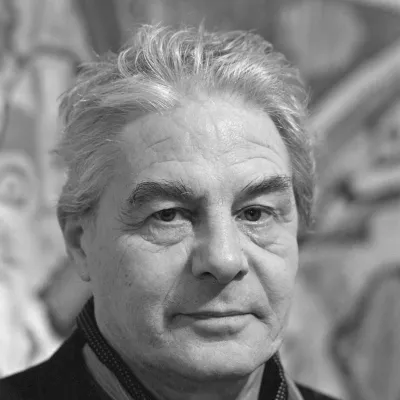
Roger Martin Du Gard
Human Design Chart
Biography
He married Helene Foucault in 1906. Martin Du Gard died on 22 August 1958, Belleme, France.
Roger Martin Du Gard as a Manifestor 5/1 in Human Design
Manifestor 5/1 — Design at a Glance
Roger Martin Du Gard was someone who actively propelled the world forward and showed new paths. His design marked him as a pioneer with a clear vision for the future. Similar to an emperor in ancient Rome, who did not fight himself but sent his soldiers to conquer lands, Roger Martin Du Gard used others to implement his plans. He often thought beyond his environment, leading to polarization: Some people followed him enthusiastically due to his great dreams, while others rejected or even hated him for the same reason. This split factor was a central aspect of his character. To find the right followers and avoid misunderstandings, it was crucial for him to communicate his intentions and visions early and precisely. This strategy of informing before acting was key to his success. When he followed this guideline, his design rewarded him with a deep sense of inner peace. If he lived against this nature, however, he felt persistent, deep anger inside. His life was thus characterized by the tension between the necessity to spread his vision and the environment's reaction to it.
Splenic Authority
Roger Martin Du Gard relied on fine, spontaneous inner knowledge for orientation. His internal authority lay in the Spleen Center, an area that controls survival instincts and physical intuition. For this specific authority to be effective, both his Emotional and Sacral Centers were open; a configuration only Projectors or Manifestors exhibit.
This design gave him a pronounced ability to immediately assess situations and people. His first impulse served not only decision-making but also directly his well-being and health. He was able to rigorously distance himself from harmful influences, as his body acted as a reliable indicator of whether an environment or society was suitable for him.
However, this Spleen voice was a very subtle impulse that appeared only in the moment and could easily be drowned out by external influences. This required high vigilance and readiness to temporarily withdraw to hear this inner compass clearly. Since he always knew what was right for him only at the moment, his plans often changed short-term. Long-term commitments seemed contradictory to his design; instead, he needed a lot of freedom and flexibility to react spontaneously to changing internal signals.
The 5/1 Profile — Heretic / Investigator
Roger Martin Du Gard used deep knowledge to help others solve problems. His design featured the 5/1 Profile configuration, which described a magnetic presence: Others actively sought out his insights. This dynamic often led to him being overwhelmed with requests, similar to an expert exhausted after long consultations and still faced with questions.
This pattern resulted from the interplay of two lines. Line 5 acted as a projection line: Others projected onto him the ability to heal or solve their problems. This contrasted with his inner need for withdrawal and recovery typical for this line. Simultaneously, Line 1 drove him to nurture his love for life through experimenting and mindfulness. Without clear boundaries, frustration loomed as external demand overburdened his inner self.
The challenge lay in finding balance between research for himself and service to others. Only by setting limits could he prevent conditioning from making him dependent. Instead, self-awareness enabled him to act from his essence and optimally use his gifts without losing his zest for life.
Split Definition — Defined & Open Centers
Roger Martin Du Gard's Human Design profile indicated a tendency towards clear, self-determined communication stemming from a stable inner identity and direct body awareness. His defined G Center provided him with a reliable sense of direction and love, while the also defined Heart Center supplied willpower and the desire to control resources. This energy flowed through his defined Throat Center, enabling him to express his truth with honesty and clarity – not as impulsive speech but as targeted manifestation of his intentions. The defined Spleen Center supported this by providing spontaneous intuition; he tended to act in the 'now', guided by a deep instinct for health and well-being without needing to rationalize decisions.
At the same time, his design was marked by several open centers that made him susceptible to external influences. His open Head Center meant he did not have constant access to inspiration; instead, he tended to absorb mental pressure or questions from others and get caught in a whirlwind of doubts if he didn't trust his inner authority. The open Ajna Center amplified this mental flexibility but often led him to interpret other people's opinions or concepts as his own truth, which could lead to confusion if he identified with them.
His open Sacral Center showed fluctuation in available energy; he was not designed for continuous work but tended to absorb the vital energy of his environment and amplify it, leading to exhaustion when this was ignored. Additionally, his open Solar Plexus absorbed emotions from the surroundings, putting him at risk of experiencing foreign moods or conflicts as his own emotional states, thus distracting him from clear decisions. Finally, his open Root Center made him vulnerable to external stress; he could take on the adrenalized pressure of his environment, driving him into cycles of overactivity followed by exhaustion if he did not recognize and release this foreign pressure.
Channels for intuitive elegance and powerful self-assertion.
Roger Martin Du Gard exhibited a deeply rooted ability to intuitively perfect his own survival. This attitude stemmed from Channel 57-10, the Perfect Form channel connecting Spleen and G Center. He possessed the rare clarity to act spontaneously and appropriately, guided by acute sensitivity to the quality of his environment – less through words than tones and atmosphere. This allowed him to go through life unburdened existentially and let go of unfounded future anxieties. His behavior was an act of self-love that invited others to recognize the value of authentic being.
At the same time, he carried within himself the tension between control and service to the collective. Channel 21-45, the Money Line channel connecting Heart with Throat Center, pushed him to take on material responsibility. Here, the need for authority ('I have or I don't') clashed with the necessity of serving others to give his heart peace. He sought independence to follow his natural rhythm but found delegating tasks difficult because he needed control to avoid stress.
These mechanical foundations were colored by further energies: Gate 25 brought mystical innocence and centeredness, while Gate 46 urged him towards full commitment in the here and now, tending to the body as a temple. In the background, the pattern recognition of Gate 58 and the quiet concentration on correction through Gate 52 helped him identify incorrect processes. His receptivity to evolutionary directions (Gate 2) along with his desire for liberation and acknowledgment (Gate 40) rounded out a profile that swung between individual mutation and collective meaning-making (Gate 13). Also, the ability to spread innovations within the tribe (Gate 26), as well as the drive towards contribution and identity formation (Gate 8) and poetic restraint (Gate 12) flowed into his way of engaging with the world.
Individual Circuitry — Circuit Signature
Roger Martin Du Gard's Human Design profile indicated a tendency towards strategic resource management paired with deep inner intuition. As a person with split definition, his energy consisted of two separate, not directly connected blocks. The first block linked Throat and Heart Centers through the Ego Circuit. Here, Channel 21-45, the 'Money Line', was active. This mechanism promoted the ability to accumulate material resources and distribute them within the tribe via communication. It was about mutual support and a balanced relationship of giving and taking without the constant drive of Sacral Center – which necessitated rest periods for regeneration.
Parallel to this existed the second block: Identity and Spleen Centers, connected through the Integration Circuit. The active Channel 10-57, 'Perfect Form', linked intuitive knowledge with proper behavior. This allowed Roger Martin Du Gard to draw strength from reacting to life and make it effective in the here and now. This configuration described a life task of seeking material security through cooperation within the collective while simultaneously ensuring highest individuality and inner perception for his survival. The two systems ran alongside each other: once outwardly focused on resources and exchange, once inwardly on intuition and self-validation.
Left Angle Cross of Healing 1
Roger Martin Du Gard's Human Design profile indicated a specific spiritual orientation marked by the presence of the left cross of healing. This configuration suggested an inner tendency towards transformation and understanding suffering not as passive victimhood but as an active process of cleansing and renewal. For his system, this meant that experiences appearing on the surface as pain or crisis often dissolved deeper patterns and led to a new, more mature level of being.
The left cross of healing connects various energetic centers working together to overcome emotional and psychological blockages through awareness and experience. It was not about quick fixes but rather a cyclical process where old structures were resolved to make way for more authentic expressions. In this context, Roger Martin Du Gard emerged as someone who navigated personal challenges to gain insights that extended beyond the individual. This mechanism shaped his lifestyle in such a way that he did not isolate difficulties but understood them as part of a larger developmental path contributing to inner healing and growth.
Saturn Return · Uranus Opposition · Chiron Return · 2nd Saturn Return — Life Cycles
Roger Martin Du Gard received the Nobel Prize for Literature at age 56 in 1937. For his Human Design, this marked the second Saturn Return, a cycle often seen as a phase of maturity and validation. At this age, years of effort coalesced into a substantial achievement that gained widespread recognition. The second Saturn Return symbolizes the completion of a long-term development line; it shows how internal structures after decades of work take external form. Roger Martin Du Gard's Human Design indicated a tendency to establish himself through persistent creation and eventually experience public acclaim. This success was no accident but rather the logical consequence of a life based on depth and endurance. The mechanics of the Saturn Return here underscore the importance of patience: What appeared in the first return as a test or initial consolidation became, in the second return, visible validation of one's values and achievements. Roger Martin Du Gard lived this phase not as sudden good fortune but as the culmination of a long process of self-realization through his work. The Nobel Prize served here as an external mirror for inner maturity that had developed over many years.
Manifestor · Splenic Authority — Synthesis
Roger Martin Du Gard was a Manifestor whose life was marked by a profound drive towards initiation and an internal compass (Authority in the Spleen). He acted as a pioneer, whose visions often extended beyond others' horizons, making him both sought after and misunderstood. This ability to chart new paths was reinforced by Line 5 in his Profile – a magnetic attraction for seekers of knowledge and problem solvers. Simultaneously, Line 1 demanded a deep learning process that enabled him to share this knowledge but could also lead to potential overextension.
A central paradox lay in the connection between individual self-protection and service to the tribe (Ego Circuit). The Channel of Perfect Form points to a strong intuition about one's own well-being guiding behavior for self-preservation. At the same time, the left cross of healing 1 focuses on supporting others – a tension field between the need for boundaries and the desire to share resources and cooperate. This dynamic shaped his work and lifestyle.
2 Defined Channels
Incarnation Cross - Left Angle Cross of Healing 1
Solar Return
The Solar Return shows the moment when the sun returns to its exact birth position - your personal solar year.
Life Cycles
Discover the life cycles with a detailed triple view (birth chart, cycle chart, composite).
Human Design Profile
- Type
- Manifestor
- Strategy
- To inform others before acting
- Authority
- Splenic Authority
- Profile
- 5/1 - Heretic / Investigator
- Definition
- Split Definition
- Incarnation Cross
- Left Angle Cross of Healing 1
- Date of Birth
- 23.03.1881 03:00
- Place of Birth
- Neuilly sur Seine, France
Frequently Asked Questions
What was Roger Martin Du Gard's Human Design type?
What profile did Roger Martin Du Gard have?
What authority did Roger Martin Du Gard have?
Which incarnation cross was active for Roger Martin du Gard?
When was Roger Martin Du Gard born?
Discover your own Human Design
Are you also a Manifestor? Find out in a personal reading how to use your initiation power peacefully and dissolve resistance.
More Personalities
Back to overviewAlain-Fournier
Angeli

Christian-Jaque
Juninho

Kesha

Lucebert