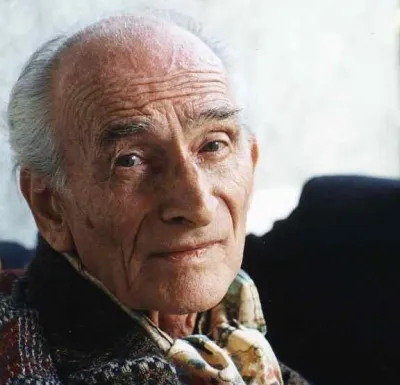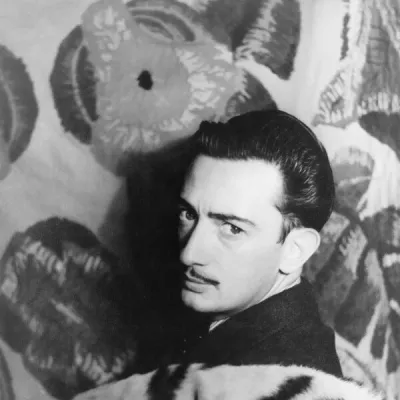
Salvador Dali
Human Design Chart
Biography
Born in Figueres in Catalonia, Dalí received his formal education in fine arts in Madrid. Influenced by Impressionism and the Renaissance masters from a young age, he became increasingly attracted to Cubism and avant-garde movements. He moved closer to Surrealism in the late 1920s and joined the Surrealist group in 1929, soon becoming one of its leading exponents. His best-known work, The Persistence of Memory, was completed in August 1931. Dalí lived in France throughout the Spanish Civil War (1936 to 1939) before leaving for the United States in 1940 where he achieved commercial success. He returned to Spain in 1948 where he announced his return to the Catholic faith and developed his "nuclear mysticism" style, based on his interest in classicism, mysticism, and recent scientific developments.
Dalí's artistic repertoire included painting, sculpture, film, graphic arts, animation, fashion, and photography, at times in collaboration with other artists. He also wrote fiction, poetry, autobiography, essays, and criticism. Major themes in his work include dreams, the subconscious, sexuality, religion, science and his closest personal relationships.
Salvador Dali — Projector with Profile 2/4
Projector 2/4 — Design at a Glance
Salvador Dalí's design showed a tendency towards a dense, focusing aura that acted like a bright flashlight. He was someone who immediately recognized system errors in his environment - bringing light to the dark where others were still in the dark. This ability to identify faults in the system instantly shaped his interactions fundamentally.
The mechanics of the Projector describe this dynamic exactly: His aura shone directly on weaknesses in others. If he had pointed out these flaws immediately, it would often have been perceived as aggressive, like a bright light beam into someone's face. The more effective strategy was to shine through his own harmony. When Salvador Dalí himself showed a harmonious radiance, people were automatically drawn to him and sought his insights. His attractive effect worked best when he waited for a respectful invitation rather than directly criticizing or intervening.
Since his Sacral Center was undefined, Salvador Dalí did not have a constant intrinsic energy source. Instead, he experienced phases of high activity followed by an urgent need for rest periods to avoid burnout. The traditional work model often did not take this rhythmic need into account. Living according to this design - through patience with invitations and respectful pauses - rewarded him with success. Deviations from this strategy led to the experience of his non-self theme: Bitterness.
Emotional Authority
Salvador Dalí's inner authority was emotional, carried by his defined Emotional Center. This meant that his decision-making did not rely on logical analysis or immediate intuition but followed a rhythmic wave of feelings. His perception of the world was always colored by his current mood; what appeared inspiring in one moment could be seen negatively in the next. These fluctuations were not instability in a negative sense, but a mechanical process: The feeling in the moment merely provided an initial snapshot, not the final truth.
Spontaneous decisions made from such emotional excitement carried the risk of being wrong. The mechanics of his authority required patience and conscious abstention from immediate action. Salvador Dalí had to take time for decisions to 'ripen.' This process of multiple sleeps allowed the initial intense feelings to subside. Only with this temporal distance did he gain the necessary emotional detachment. In this state of calmness and clarity, his true inner response was revealed. This strategy was particularly crucial for long-term, life-defining decisions as it ensured that the choice was based on deep insight rather than transient excitement.
The 2/4 Profile — Hermit / Opportunist
Salvador Dalí's design showed a tendency to oscillate between deep withdrawal and active network engagement. He appeared as someone who strictly defended his individuality against interference - an expression of the second profile line, which secured the survival of his identity through clear boundaries. This line projected inner certainty outward, often leading to conflicts when others did not respect this autonomy. At the same time, the fourth profile line drove him to bring revolutionary principles into his community and find support for his visions.
This configuration created a constant tension: The need for solitude clashed with the urge for connection. For Salvador Dalí, it was therefore essential to establish a safe environment where he could transparently communicate when he sought company and when he needed quiet time. During his alone time, he reflected on impressions from his network to evaluate them and develop brilliant ideas. Once this internal clarity was achieved, he re-emerged to share his insights with his favorite people. This interplay between 'cave' and community shaped his work: Line 2 provided the necessary distance to preserve individuality, while line 4 ensured that his revolutionary impulses did not remain within but were carried outward.
Triple Split Definition — Defined & Open Centers
Salvador Dali had a constant foundation of six defined centers that provided him with steady mental function, reliable communication, and a stable identity. His defined Ajna Center kept his mind active, generating concepts in specific ways, while his defined Throat Center translated these thoughts into clear expressions. This combination shaped someone who always knew what they thought and could articulate it. His defined G Center gave him a stable self-image and a clear sense of direction independent of external expectations. Additionally, his defined Heart Center provided available willpower and ego strength to keep promises and use resources autonomously. His emotional depth came from the defined Solar Plexus Center; he had an inner authority that required patience as truth only revealed itself at the end of the emotional wave. Furthermore, he possessed a defined Root Center, which allowed him to handle stress and pressure in a specific way to move forward.
In contrast, his three open centers were Head, Sacral, and Spleen. His open Head Center made him receptive to external inspirations and mental pressure waves without generating them consistently himself. He tended to be influenced by the confusion or questions of others rather than identifying them as his own. His open Sacral Center meant that his vital energy was not constant; he absorbed the energy of his environment and could become exhausted if he neglected boundaries. He had to learn when enough was enough, as he lacked an internal constancy for generative power. Finally, his open Spleen Center revealed a vulnerability to intuitive fears and a need for security through others. He tended to cling to people with defined Spleens to feel well-being but risked unhealthy dependencies in the process. This openness required vigilance against spontaneous decisions stemming from fear or false intuition rather than his stable inner authority.
Channels for intuitive insight, spiritual guidance and mystical synthesis.
Salvador Dali's design inclined towards a mutative, metaphorical style of expression. His essence was primarily shaped by the Personality-Sun in Gate 23, which activated the Channel of Structuring 23-43. This channel connects the Ajna Center with the Throat Center and enabled him to receive inspired knowledge from his mind as spontaneous insights (Gate 43) and process them through the Gate of Assimilation (Gate 23). The challenge was letting go of control and planning; his mind needed time to assimilate knowledge at its own pace before it could be clearly articulated. With proper timing, his innovative thinking was recognized as genius, but with poor timing, it was dismissed as alien.
Secondarily, the Channel of Synthesis 19-49 and the Channel of Initiation 51-25 influenced him. The Channel of Synthesis 19-49 connected the Root Center to the Solar Plexus through the Gates of Claims (Gate 19) and Principles (Gate 49). This created an emotional frequency that defined tribal belonging through loyalty and resource protection. Salvador Dali was sensitive to his position in the whole; he sought balance between feasibility and fairness within his social bonds.
The Channel of Initiation 51-25 connected the Heart Center via the Gate of Shock (Gate 51) and the Gate of Self Spirit (Gate 25). This configuration promoted natural competitiveness aimed at surpassing boundaries and experiencing individual breakthroughs. It was about the art of initiation, where he encouraged others through his unique spirit to individuate themselves. This process was mystical and could not be controlled; it required authenticity to survive transcendent encounters and mutate the collective.
Individual Circuitry — Circuit Signature
Salvador Dali was marked by three separate, parallel energetic streams. The Knowledge Circuit dominated his design as it contained the Sun and made up about 70% of his energy. It connected the Ajna with the Throat Center through the Channel 'Structuring'. This promoted a unique path of transformation and creative expression through pulsing, acoustic energies. His unique identity sought new forms of knowledge that were emotionally filtered and linguistically formulated.
Parallel to this was the Centering Circuit. It linked the Identity with the Heart Center via the Channel 'Initiation', giving Salvador Dali inner stability, courage, and strong individual convictions. However, as this stream did not lead to the Throat Center, he often found it difficult to carry or articulate these deeply rooted stances outwardly. This was a very individualistic power that supported self-esteem but appeared isolated.
The third stream was the Ego Circuit, which connected the Solar Plexus and Root Centers through the Channel 'Synthesis'. This promoted cooperation and resource management in tribal contexts. As there was no connection to the Sacral Center, constant life force was lacking; Salvador Dali therefore needed regular rest periods to regenerate energy for giving and taking. These three circuits did not form a unified whole but existed as separate, parallel forces in his chart.
Right Angle Cross of Explanation 2
Salvador Dalí's Human Design included the structure of the right cross of Manifestation 2. This configuration shaped his inner orientation and way of interacting with his environment. In Human Design, this cross describes a specific energetic composition that does not define detailed character traits or behavioral patterns in raw content. The mechanical data provided no concrete descriptions for his actions or personality. Instead, this configuration marked a neutral aspect of his chart that was sufficient without further specifying features. Salvador Dalí carried this structure within him without it being further elaborated by additional attributes such as specific channels or centers in the given raw content. This meant that this part of his design did not provide explicit instructions for his behavior but existed as a fundamental architectural component. The absence of detailed descriptions in the raw content indicated that the focus during analysis was on other areas of his Human Design. Salvador Dalí lived with this unspoken structure, which was part of his overall configuration but did not take an independent narrative role in the given facts. His design was complex, yet this specific cross remained open and uncharacterized by further descriptions.
Saturn Return · Uranus Opposition · Chiron Return · 2nd Saturn Return — Life Cycles
Salvador Dalí's development proceeded through clearly structured phases influenced by astrological cycles. His first Saturn Return marked his transition to artistic maturity and institutional anchoring. In 1931, at the age of 27, he completed “The Persistence of Memory.” This work condensed years of preparatory work into a solid result, typical for the consolidation phase of the first Saturn Return.
A sudden disruption occurred during his Uranus Opposition. In 1945, at age 41, Dalí was shocked by the atomic bombing of Hiroshima. He processed this global crisis in his works, illustrating the disruptive power of this cycle: external upheavals force existential reorientation and integration of new realities.
His Chiron Return around the age of 50 functioned as a fulfillment cycle where personal meaning increasingly unfolded. In 1954, Dalí published “Dali's Mustache.” This publication marked the bloom of his individual expression and public visibility of his life purpose, not as healing old wounds but as confirmation of his unique position.
His second Saturn Return brought further institutional anchoring. In 1961, at age 57, Dalí received a commission from the mayor of Figueres to establish a museum in the destroyed city theater. This step firmly anchored his life's work in public structure and concluded the phase of individual mastery through permanent legitimization. The cycles structured his path from personal creative power to historical rooting.
Projector · Emotional Authority — Synthesis
He was a projector whose ability to recognize patterns and flaws in others (defined Ajna Center) had a profound impact on his environment. However, this perspective always focused on what already existed - he did not see what could be but rather what *was*. The connection of emotional authority with the profile as a natural talent/networker suggests that while he deeply experienced and matured his insights, he ultimately sought validation through relationships and exchange with others. The Synthesis Channel (Gate 19-49) underscored this drive for belonging and the necessity to defend principles, which manifested in an ongoing search for the authentic expression of his identity.
A central paradox lay in the tension between his need for isolation (Line 2 in profile) to deepen internal processes and simultaneous desire for recognition and connection through his network (Line 4). This duality reflected in cycles: phases of success (1931) alternated with crises (1945), where career steps (1954, 1961) often rested on profound emotional processing. He projected his perception onto others while simultaneously seeking validation - a dance between recognizing flaws and the need to be accepted in communities.
3 Defined Channels
Incarnation Cross - Right Angle Cross of Explanation 2
Solar Return
The Solar Return shows the moment when the sun returns to its exact birth position - your personal solar year.
Life Cycles
Discover the life cycles with a detailed triple view (birth chart, cycle chart, composite).
Human Design Profile
- Type
- Projector
- Strategy
- Wait for the respectful invitation
- Authority
- Emotional Authority
- Profile
- 2/4 - Hermit / Opportunist
- Definition
- Triple Split
- Incarnation Cross
- Right Angle Cross of Explanation 2
- Date of Birth
- 11.05.1904 08:45
- Place of Birth
- Figueras, España
Frequently Asked Questions
What was Salvador Dali's Human Design type?
What profile did Salvador Dali have in Human Design?
Which authority guided Salvador Dali's decisions?
What incarnation cross determined the life of Salvador Dali?
When was Salvador Dali born?
Discover your own Human Design
Are you also a Projector? Find out in a personal reading how to unfold your leadership qualities and recognize the right invitations.
More Personalities
Back to overviewSissy Spacek

Alain-Fournier

Anémone

Ann-Margret

Baekhyun

Balthus