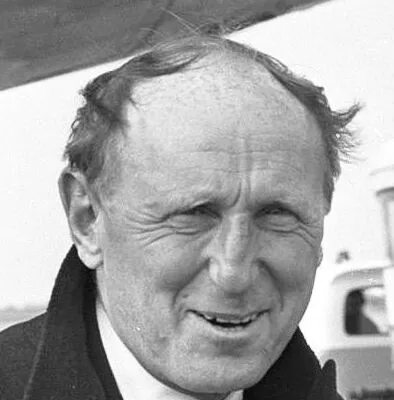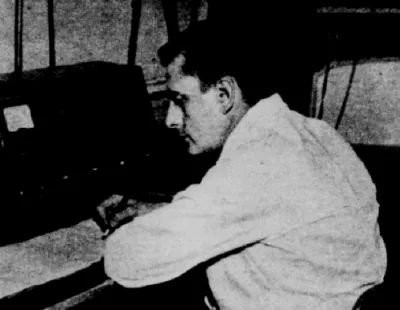
Stanley Krippner
Human Design Chart
Biography
Krippner attended Northwestern University where he received his Ph.D. in Educational Psychology. An early pioneer in the DreamWorks movement, he directed the Dream Laboratory at Maimonides Medical Center in New York, and later was the director of the Child Study Center at Kent State University. In 1972, he joined the faculty of the Saybrook Institute in San Francisco. His academic interests are diverse, and he is a member of various organizations such as the American Psychological Society and the Society for Scientific Study of Religion. Krippner leads personal mythology workshops and dream groups.
Stanley Krippner — Projector with Profile 3/5
Projector 3/5 — Design at a Glance
Stanley Krippner's design inclined towards focused perception. As a projector, his aura acted like an intense beam of light that immediately revealed weaknesses in systems or others. This direct confrontation with flaws could be perceived as unpleasant, similar to being blinded by a bright spotlight. The optimal strategy was not active correction but attracting through personal harmony and waiting for honest invitations. Only then did his ability to guide others become effectively accepted.
With an undefined sacral center, he lacked a constant intrinsic energy source. Instead, he experienced phases of high productivity followed by mandatory rest periods for regeneration. A continuous work rhythm quickly led to exhaustion. Living according to this pattern – waiting for the invitation and respecting his energy cycles – rewarded him with success. Ignoring these mechanics eventually resulted in the non-self theme of bitterness. His design thus demanded patience and selectivity rather than constant availability.
Splenic Authority
Stanley Krippner's design inclined towards immediate, intuitive orientation. His inner authority lay in the spleen center, an area that functions as a health and alarm system. For this specific configuration, both the emotional and sacral centers were open; this restricts carrying spleen authority exclusively to projectors or manifestors.
This structure endowed him with pronounced survival intelligence. It manifested as spontaneous inner knowledge about whether a situation, environment, or society was right for him. His instinct and physical well-being served as reliable indicators. Decisions had to be made in the immediate moment; the first impulse was correct and directly served his health and ability to rigorously shield against harmful influences.
However, this spleen impulse is very subtle and occurs only once in the present moment, posing a risk of being drowned out by other voices. This required high vigilance. Sometimes a brief retreat helped to hear the clear impulse. Since Stanley Krippner knew what was fitting only at the moment, plans could change suddenly. Long-term commitments were difficult; his design needed much space and flexibility to accommodate this spontaneous nature.
The 3/5 Profile — Martyr / Heretic
Stanley Krippner's design was characterized by fundamental skepticism towards given truths. He learned not through acceptance but through direct experimentation – a process that integrated errors and failure as indispensable teachers. This attitude stems from Line 3 of Profile 3/5: It demands isolation from the collective mainstream to develop personal depth and discernment. Only after this phase of experimental appropriation could he use his acquired knowledge to solve others' problems – the role of Line 5, the hero or rescuer.
This profile created a strong attraction in his environment. Others sought his proximity to learn from his practical experiences. Yet, this expectation carried risks: failing in public was painful for him since Line 5 is often projected before the ability to provoke change actually takes hold. However, Line 5 enabled him not only to overcome obstacles but creatively navigate around them – especially during crises where conventional paths failed. Through this combination of experimental distance (Line 3) and heroic problem-solving (Line 5), a person emerged who became trustworthy through personal experience and inspired others to find their own paths. His value lay in the authenticity of what he had learned, not theoretical authority.
Split Definition — Defined & Open Centers
Stanley Krippner's design created a persistent mental pressure to question and understand connections. This configuration between the Head Center and Ajna Center fostered a trustworthy, specific way of thinking that lacked direct energy for implementation. Instead, his mind served as an inspiration source for others while he himself went through the process of clarification. His defined Throat Center allowed him to reliably express these conceptual contents, coupled with the defined Spleen Center, which provided spontaneous, intuitive judgment in the moment. This combination marked him as someone who linked theoretical concepts with existential intuition.
Simultaneously, his design revealed significant vulnerabilities due to conditioning influences. The open G Center lacked a firm identity; Stanley Krippner tended to reflect himself in relationships and environments rather than asserting his own direction. He had to learn to wait for external initiation to find the correct alignment instead of actively seeking meaning. His open Heart Center made him susceptible to pressure to prove his worth through performance or promises – a trap he needed to avoid by not taking on commitments that did not come from his inner authority.
Additionally, his open Sacral Center was sensitive to the generative energy of others. He could easily become exhausted if he took over other people's work or ignored boundaries since he lacked a steady flow of energy. The open Solar Plexus Center amplified the emotions of his surroundings; he risked interpreting foreign moods as his own and destabilizing himself emotionally as a result. Finally, his open Root Center absorbed external stress, leading him to combat pressure through hyperactivity rather than recognizing that this stress did not belong to him. His challenge was to see these open fields not as deficits but as spaces for wisdom about identity, will, and energy.
Channels for doubt, intuition and mental abstraction.
Stanley Krippner's design featured a mind that used skepticism and experimental depth as tools of insight. This attitude primarily stemmed from the Logic Channel 63-4, connecting Head Center with Ajna Center. This channel constantly filtered patterns for their consistency; doubt was not an obstacle but essential for fact-checking. An idea was only considered logical if it functioned practically and could be verified, thus excluding unfounded belief.
Simultaneously, the Wavelength Channel 48-16, connecting Spleen Center with Throat Center, played a role. It combined the intuitive depth of Gate 48 with the skillful refinement of Gate 16. This created a mechanism where inner intelligence was transformed through repeated trial and practice into communicated talent. Mastery required long-term engagement to turn raw skill into precise ability that could be useful to others.
The mental background was formed by the Abstraction Channel 64-47, also between Head Center and Ajna Center. It generated an active mind that filtered experiences through a kaleidoscope of possible images to find underlying stories or perspectives. This process could be confusing but led to the unveiling of unique connections when patience was applied, which could then be shared.
Additionally, prioritized Gates contributed to structure: Gate 21 directed material aspects and required respect in service to community. Gate 39 brought analytical provocation for change while Gate 38 set boundaries and defended individual integrity. In the Personality field, Gate 57 promoted intuitive clarity in the here and now, and Gate 33 facilitated reflection on past experiences. Gate 62 in his design supported this through patient detail work and building logical frameworks for pattern recognition.
Collective Circuitry — Circuit Signature
Stanley Krippner's design inclined towards analytical clarity paired with a deep, wave-like emotional reflection. His chart showed two separate yet parallel existing energetic streams: rational future shaping and emotional past processing.
The Understanding Circuit connected his Head Center to Ajna Center as well as Throat Center to Spleen Center. This created a direct line from impulsive inspiration through strategic focus to logical formulation and intuitive perception. It was about improving society through rational, conditioning-free insights – an 'emotionless ratio' looking towards the future.
Simultaneously, the Meaning Circuit also connected his Head Center with Ajna Center. Here, however, cool logic did not take precedence but rather the cyclical nature of emotions and experiences from the past. This energy sought meaning behind what had happened to learn collectively from it.
Although both circuits utilized the Head and Ajna Centers, they did not form a single cohesive experience. Instead, two distinct forces existed: one logically-strategically moving forward and another emotionally-wavily reflecting in the past. This divided definition meant that Stanley Krippner always had to navigate between these two poles – rational planning for tomorrow and felt understanding of yesterday – without being able to merge them energetically.
Right Angle Cross of Tension 3
Stanley Krippner's Human Design configuration suggests a tendency towards deep, often unconscious tension arising from the conflict between inner truth and external expectations. This configuration, the right cross of tension 3, describes a life dynamic where one's intuition or inner knowledge constantly collides with the demands of the environment. It is not an open struggle but rather a quiet, persistent friction that binds energy yet can also serve as a driving force.
The mechanics of this cross show that Stanley Krippner was always caught between the desire for authenticity and the pressure to conform. This tension is not a flaw in the system but a characteristic feature leading to some inner dissonance while sharpening his ability to endure contradictions. The energy often remains trapped inside, manifesting as nervousness or intense internal processing rather than flowing outward.
For Stanley Krippner, this meant that his life path was marked by the necessity of integrating this internal discord. The challenge lay in not fighting against the resistance but using it as a source for deeper understanding. This configuration demands patience and self-acceptance since resolving the conflict can only be achieved through inner clarification rather than mere external action. The tension remains a constant companion, yet also determines the depth of his perception.
Saturn Return · Uranus Opposition · Chiron Return · 2nd Saturn Return — Life Cycles
Stanley Krippner's Human Design suggests a tendency towards structural anchoring followed by sudden expansive turning points. This dynamic was evident in 1961 when he earned his doctorate at age 29. This first Saturn return marks the time when years of groundwork condenses into a solid result; his doctoral degree here is concrete proof of this inner maturity and stability.
A decade later, another force came into play: the Uranus opposition. In 1972, at age 40, Krippner joined the faculty of Saybrook Institute. This cycle often brings unexpected changes or new freedoms that break through previous boundaries. The shift to teaching at a specialized institution illustrates this mechanism: after consolidation (Saturn), there follows an expansion of horizons and a new role in the field (Uranus).
The sequence of these events underscores the rhythmic nature of his design. First, the foundation was laid, then space opened up for new influences and responsibilities. It wasn't random steps but rather the natural unfolding of two different planetary energies: one that creates structure and another that directs or expands this structure in new directions. Krippner's career demonstrates how these archetypal forces can concretely manifest – through completing a qualification and entering a new institutional environment.
Projector · Splenic Authority — Synthesis
Stanley Krippner's Human Design reveals a profound thread of mediation and pattern recognition. As a Projector with defined logic (Channel 63-4), he has the ability to identify errors in complex systems and explain them to others – casting light into darkness, as is typical for his type. This recognition of inconsistencies is reinforced by the Explorer/Hero Profile (3/5): He must collect experiences himself to gain knowledge and then pass it on. The Spleen Authority underscores the importance of spontaneous, instinctive assessments in deciding whom he dedicates his energy to and where his contribution will be most effective.
Central to Krippner's chart is a paradox between the urge to understand and the inherent tension of the right cross. Defined Head and Ajna Centers generate constant mental pressure to question and analyze patterns (Logic Channel), while Line 3 in the Profile drives him to try everything himself before offering solutions. This leads to an internal dynamic where the need for clarity and proof collides with a desire for direct experience – a continuous cycle of doubt, experimentation, and ultimate realization that manifests in career shifts (as seen in documented career events).
3 Defined Channels
Incarnation Cross - Right Angle Cross of Tension 3
Solar Return
The Solar Return shows the moment when the sun returns to its exact birth position - your personal solar year.
Life Cycles
Discover the life cycles with a detailed triple view (birth chart, cycle chart, composite).
Human Design Profile
- Type
- Projector
- Strategy
- Wait for the respectful invitation
- Authority
- Splenic Authority
- Profile
- 3/5 - Martyr / Heretic
- Definition
- Split Definition
- Incarnation Cross
- Right Angle Cross of Tension 3
- Date of Birth
- 04.10.1932 19:00
- Place of Birth
- Edgerton, WI, United States
Frequently Asked Questions
What is Stanley Krippner's Human Design type?
What Profile does Stanley Krippner have?
What authority does Stanley Krippner possess?
Which incarnation cross is active for Stanley Krippner?
When was Stanley Krippner born?
Discover your own Human Design
Are you also a Projector? Find out in a personal reading how to unfold your leadership qualities and recognize the right invitations.
More Personalities
Back to overviewSissy Spacek

Alain-Fournier

Anémone

Angeli

Ann-Margret

Bourvil