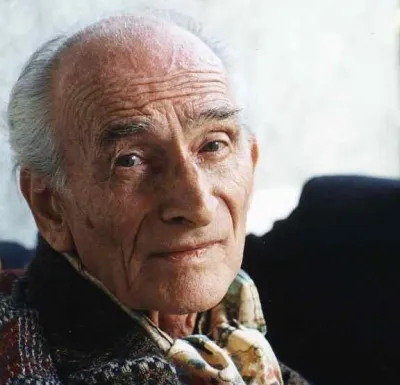
Stephen Breyer
Human Design Chart
Biography
Financial disclosure forms show that he owns several million dollars in stocks and bonds and the Supreme Court annual salary of $164,000, yet he wears frayed suits, quite indifferent to style. With a scholarly manner, he has impressed and charmed scores of people scattered through the upper reaches of American law and politics. President Clinton found him the best possible candidate in spite of the fact that "the chemistry between them had been bad when they first met."
Breyer was raised in a modest, two-story home in an upper-middle-class neighborhood, the older of two boys who both became lawyers. Education came easily, along with Jewish religious school. His mom insisted that he also go out for sports and go to camp as well in order to have a well-rounded life. He attended Stanford University with post-grad work at Oxford, where he picked up a fascination with economics. He studied law at Harvard, where he also edited a law review. In the spring of 1984 Breyer received word that Goldberg had selected him as a clerk for the high court term beginning in October.
In 1967, he met his future wife, Joanna Hare, an Englishwoman and the daughter of Lord John Blakenham, leader of Britain's Conservative Party. She was then working as an assistant in the Washington office of London's Sunday Times and later became a psychologist.
Stephen Breyer — Manifesting Generator with Profile 4/6
Manifesting Generator 4/6 — Design at a Glance
Stephen Breyer's design features a hybrid energy tendency: the speed of a Manifestor combined with the enduring power of a Generator. This shows as an ability to skip steps and parallelize projects. However, this configuration carries specific risks: without inner consent, rapid action or multitasking can quickly turn into frustration – the so-called Non-Self theme for this type.
The underlying mechanics of the Manifesting Generator therefore require a clear strategy: responding rather than initiating. Stephen Breyer had constant sacral energy that only became effective when he responded to external impulses and did not start independently. Crucial was confirmation from the Sacral Center; only a clear "yes" signaled that a path was right. Projects started without this inner resonance or important steps skipped in haste led to dissatisfaction.
Deep satisfaction for Stephen Breyer, however, came in "play mode". Here, variety was no obstacle but necessary. As long as his inner authority consented and the Sacral Center consistently confirmed, he could handle multiple things at once without burning out. His creative power remained intact when not forced to fixate on a single thing, but rather maintain a dynamic, playful stance. This balance between quick implementation and sacral confirmation shaped his effective work style.
Sacral Authority
Stephen Breyer's decision-making process did not rely on mental analysis but rather on an inner, physical resonance. His sacral authority guided this process: He waited for external stimuli and then listened to his "gut feeling" or a noticeable surge of energy as confirmation. This physical reaction – often audible as grunting, humming, or a affirming "mm-hm" – signaled vitality and inexhaustible energy. Once this motor kicked in, he dove into his activities with great enthusiasm, driven by joy rather than duty.
This mechanism is specific to the Generator type, where strategy and inner authority are identical, simplifying decision-making. A prerequisite for this process is an open Emotional Center, ensuring that this immediate physical response is not distorted by fleeting emotional waves. Additionally, his activated Spleen Center supported this reaction: It gave him quick, instinctive perception and direct access to his bodily well-being. This enabled Stephen Breyer to respond particularly spontaneously and reliably to stimuli, guided by a deep intuitive certainty rather than calculated reasoning.
The 4/6 Profile — Opportunist / Role Model
Stephen Breyer's Human Design profile is characterized by a clear developmental line: in his first decades of life, he exhibited a strong urge to experiment, particularly in social contexts. This early behavior aligned with the dynamics of Profile 4/6, where Line 6 initially acts like Line 3. During this phase, he actively sought connections and tested various roles within relationships and friendships, driven by a natural desire for interaction and discovery.
Over time, as the energy of Line 6 fully unfolded, an internal conflict emerged: his deep heart's need for belonging (Line 4) clashed with the head-driven desire for distance and meaningful reflection (Line 6). This contrast between the urge to be part of a community and the impulse to withdraw to ponder the greater meaning shaped his inner landscape.
In his later years, he was expected to take on the role of a wise mentor. His task involved synthesizing individual knowledge and clearly communicating it to create collective value. However, his heart remained cautious; it only partially opened to avoid being hurt by false connections. The ability to blend complex information and convey it clearly became the central feature of his later phase, as he learned to balance the necessity of connection with the protection of his own integrity.
Split Definition — Defined & Open Centers
Stephen Breyer's design shows a tendency towards constant mental pressure and precise concept formation, complemented by a reliable voice to articulate these thoughts. The definition between Head Center and Ajna Center created a permanent drive to ask questions and understand connections, while the defined G Center provided a firm identity and direction. Supported by the willpower of Heart Center and the immense reactive life energy of Sacral Center, he had the strength to bring these mental concepts into the world – provided that he responded to external impulses rather than initiating them.
This mechanism means: Inspiration initially only forms questions; without the energy of the engines, direct action from the head leads to frustration. Instead, the defined Throat serves as a pivot point to clearly express thoughts or emotional states. However, the open centers shaped another dimension: The open Solar Plexus Center absorbed emotions from the environment and amplified them, leading to switching between joy and depression or feeling emotionally overwhelmed if one did not let go of foreign waves. The open Spleen Center was vulnerable to conditioned fears about survival security and could lead to unhealthy dependencies to simulate a sense of well-being. Additionally, the open Root Center absorbed external stress, creating pressure to be constantly active to escape this adrenalized state – a cycle that led to exhaustion without awareness.
Channels for rhythm, power, structure and mental abstraction.
Stephen Breyer's design shows a tendency towards innovative structuring based on trust in generative answers and material resources for new directions. This configuration is shown through four distinct energy flows. The channel of Beat 14-2 connects the Sacral with the G Center, where Gate 14 provides the power competence to drive mutation, and Gate 2 serves as the driver of movement. This allowed him to take new directions based on trust in his own reaction and encourage others to do so.
Parallel to this, the channel of Line 21-45 between Heart and Throat Center was active. Here, the Hunter's will (Gate 21) met the authoritative voice of the Gatherer (Gate 45). This connection demanded material mastery through expression of will, with the tension field between control and service to the community as well as the need for independence being central. Success depended on maintaining one's own rhythm and taking responsibility for resources.
The communicative side was shaped by the channel of Structuring 23-43, which connected Ajna with Throat. Gate 43 received spontaneous insights that were assimilated and expressed through Gate 23. This allowed him to efficiently communicate innovative perspectives provided the right timing was awaited and mental control loosened. Without this alignment, unique ideas often remained misunderstood or rejected.
Finally, the channel of Abstraction 64-47 between Head and Ajna Center ensured narrative sense-making. Gate 64 brought confusion through exploring all possibilities until Gate 47 enabled understanding. This experiential mind sought after symbols and stories that could only be shared after patience and sudden clarity.
Additionally, gates like Gate 4 (Formulating), Gate 9 (Detail Work), and Gate 56 (Narrating) contributed to the ability to organize complex patterns into understandable narratives while Gate 7 emphasized leadership potential and Gate 8 highlighted contribution to the group.
Individual Circuitry — Circuit Signature
Stephen Breyer's design shows a tendency towards structured identity formation, flanked by cyclical emotional reflection and resource-oriented cooperation. These separate energetic blocks worked in parallel, not as one continuous flow.
The Knowledge Circuit formed two isolated segments. One area connected Ajna Center with Throat Center; this allowed the clear expression of individual thoughts and new identities. The second segment linked Identity Center with Sacral Center, translating creative impulses from the subconscious into tangible innovations. Both parts contributed to transformation without directly communicating with each other.
The Meaning Circuit connected Head Center with Ajna Center. This was about emotional processing of past events. This configuration promoted reflecting on experiences to draw meaning and emotionally clarify insights before sharing them.
The Ego Circuit linked Throat Center with Heart Center. This concerned cooperation and building material resources through mutual support. Since there was no connection to Sacral Center, this area relied on pauses to regenerate energy rather than continuous production.
In summary, Stephen Breyer's profile featured individual expressive strength and innovative power (Knowledge), complemented by emotional sense-making (Meaning) and cooperative resource-building (Ego). The shared definition required recognizing these as separate, coexisting forces.
Right Angle Cross of Explanation 3
Stephen Breyer's design shows a structural tendency towards clarification and systematic analysis. His inner framework, the right cross of explanation, acts as a consistent driving force to break down complex issues into understandable, logical sequences. This mechanism describes not just an interest in knowledge but a deep necessity to articulate connections so precisely that they become comprehensible and applicable for others.
In Human Design, this cross functions as an architectural plan for how information is processed and conveyed. It involves the decryption of uncertainties through clear definitions and rational structures. For Stephen Breyer, this meant a natural inclination towards eliminating ambiguities by creating orientation through precise formulations. The energy of this pattern urges to make the hidden or complex tangible by breaking it down into logical units.
This process is less driven by emotion than by the search for inner and outer consistency. It's an attitude aimed at preventing misunderstandings through exact language and mental order. Thus, the structure of his design supports a lifestyle in which explaining and defining are not just tools but the central path to aligning with the world and one's own insights.
Saturn Return · Uranus Opposition · Chiron Return · 2nd Saturn Return — Life Cycles
Stephen Breyer's design is characterized by a clear structuring of his professional career, where recurring planetary cycles serve as markers for significant career milestones. This configuration shows how inner maturation processes and external life circumstances are synchronized to fulfill specific roles.
The first Saturn return, a cycle of consolidation and taking responsibility, occurred in 1964. At the age of 26, Stephen Breyer served as a law clerk at the Supreme Court of the United States for Justice Arthur Goldberg. This was not a random entry but a typical moment when years of groundwork condensed into a solid professional foundation.
The Uranus opposition, often associated with sudden changes or new perspectives, took place in 1980. At age 42, Stephen Breyer became a judge on the United States Court of Appeals for the First Circuit. This step marked a turning point where his authority was established in a new, higher context.
The second Saturn return, symbolizing confirmation and stabilization of life's mission, occurred in 1994. At age 56, Stephen Breyer was nominated to succeed Harry A. Blackmun as an Associate Justice on the Supreme Court of the United States. This cycle confirmed his position at the highest legal podium and demonstrated the culmination of a long-term development path prepared by earlier cycles.
Manifesting Generator · Sacral Authority — Synthesis
A central red thread runs through the design: the dynamic connection between initiation and reaction. As a Manifesting Generator (MG), this chart has an innate ability to quickly initiate and accelerate things – an impulse that is strengthened by defined sacral energy (sacral authority). At the same time, however, the design calls for mindfulness not to act prematurely but to heed the inner drive. This combination of rapid implementation power and need for internal confirmation shapes a lifestyle characterized by experimentation (Profile 4/6) and the search for authentic direction (Channel 14-2) – an ongoing balance between the desire to move something forward and the need to act in harmony with one's own energy.
The central paradox lies in the tension between individual knowledge and communal role. The defined Mental Center generates a constant drive towards understanding and inspiration (Head Center), while the profile as Networker/Role Model emphasizes connection and cooperation with others. This chart seems destined both to generate and share profound knowledge (Knowledge Circuit) and to play a supporting role in social structures – an interplay between the pursuit of uniqueness and the obligation to a community.
4 Defined Channels
Incarnation Cross - Right Angle Cross of Explanation 3
Solar Return
The Solar Return shows the moment when the sun returns to its exact birth position - your personal solar year.
Life Cycles
Discover the life cycles with a detailed triple view (birth chart, cycle chart, composite).
Human Design Profile
- Strategy
- To respond - wait for something to respond to
- Authority
- Sacral Authority
- Profile
- 4/6 - Opportunist / Role Model
- Definition
- Split Definition
- Incarnation Cross
- Right Angle Cross of Explanation 3
- Date of Birth
- 15.08.1938 07:40
- Place of Birth
- San Francisco, CA, United States
Frequently Asked Questions
What is Stephen Breyer's Human Design type?
What Profile does Stephen Breyer have?
What authority does Stephen Breyer possess?
What is Stephen Breyer's incarnation cross?
When was Stephen Breyer born?
Discover your own Human Design
Are you also a Manifesting Generator? Find out in a personal reading how to unfold your multi-talents and direct your energy wisely.
More Personalities
Back to overviewAldair

Alizée

Angeli

Arletty

Artus

Balthus