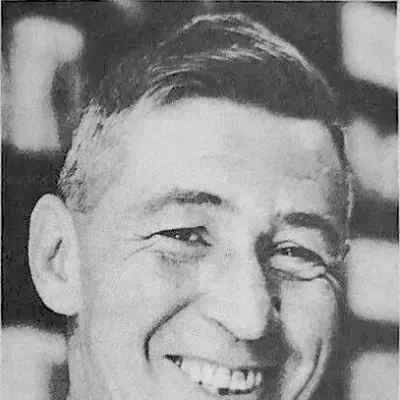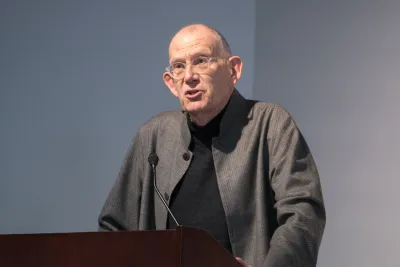
T. M. Scanlon
Human Design Chart
Biography
He was the Alford Professor of Natural Religion, Moral Philosophy, and Civil Polity in Harvard University's Department of Philosophy until his retirement at the end of the 2015–2016 academic year.
T. M. Scanlon — Projector with Profile 4/6
Projector 4/6 — Design at a Glance
T. M. Scanlon was characterized by a dense, focusing aura that immediately engaged his surroundings. As a projector, he had the ability to instantly recognize systemic errors and weaknesses in others, comparable to a bright flashlight shining into dark corners. However, this precise perception, when used directly and uninvited, could provoke resistance or discomfort in others, as if shining a light directly into their eyes.
The most effective expression for T. M. Scanlon was not in active correction but in shining through his own harmony. By living functional patterns himself, he became attractive to others, who would come to him of their own accord for advice. His strategy lay in waiting for a sincere, appreciative invitation. Only after this acknowledgment could he exercise his leadership role without friction.
Since his sacral center was undefined, T. M. Scanlon lacked a constant, intrinsic energy source. Instead, he went through phases of high productivity followed by necessary rest periods for regeneration. This rhythmic pattern contrasted with the demands of conventional work structures, which often expect consistent performance. Living by this design, he was rewarded with success. Ignoring the need for invitation and rest eventually led to bitterness as an expression of his non-self.
Splenic Authority
T. M. Scanlon's design inclined him towards spontaneous, intuitive decision-making that directly aimed at physical well-being and inner security. This fundamental stance stems from authority in the spleen, a mechanism that appears only in projectors or manifestors with open emotional and sacral centers. The spleen center functions here as a fine alarm system and health monitor. It provides a clear signal in the present moment about whether a situation, environment, or person is beneficial or harmful. This initial impulse is crucial; it serves to protect one's health and allows for rigorous boundary-setting against negative influences.
However, this inner compass is very subtle and only appears once in the now-word, requiring high vigilance for its use. It can easily be overshadowed by external opinions or excessive thinking. T. M. Scanlon was thus someone who did not make decisions through long planning but in the moment of occurrence. Plans were often short-lived in this design, as the inner perception could change with the situation. This created a need for maximum flexibility and freedom to avoid getting entangled in long-term commitments that could contradict spontaneous intuition. A temporary retreat helped to separate the fine spleen voice from other influences and make the right, health-promoting choice.
The 4/6 Profile — Opportunist / Role Model
T. M. Scanlon was someone who, in the first three decades of his life, maintained an experimental, contact-seeking attitude before a deep inner tension developed between the desire for community and the need for distant wisdom. This Profile 4/6, known as a 'Networker/Role Model', shaped a life span revolving around the conflict between heart and head.
In his youth, the sixth line still appeared like a third: T. M. Scanlon actively sought connections, extensively tested relationships and friendships. This aligned with the nature of Line 4, characterized by self-discipline and concentration, but remaining socially active. He had to constantly weigh who to open up to in order to avoid injury.
With the return of Saturn, after the age of 30, the dynamics fundamentally changed. Line 6 became active and brought the desire to contemplate the meaning of life and take on a position of leadership or role model. This often created a contradiction: on one hand, a deep desire to belong, on the other, the urge to withdraw and observe from a distance.
The challenge was to integrate this conflict. T. M. Scanlon faced the task of transforming the experiences gathered in youth into a wise, guiding role. Line 6 represents the end of the learning process, a completed succession, which only becomes effective when it is asked for – similar to a Bodhisattva who only speaks when spoken to. Life revolved around bringing these two poles – the social heart and the reflective head – into harmony and serving as an example for others without losing one's own integrity.
Split Definition — Defined & Open Centers
T. M. Scanlon's design indicated a tendency towards constant mental activity and precise communication. With defined Ajna and Throat Centers, he had a reliable ability to form concepts and articulate them directly in words. His mind was always 'on,' which fostered a stubborn yet clear expression. Complemented by the defined Spleen Center, which stands for spontaneous intuition and body awareness, as well as the defined Root Center, which provides a constant pressure for forward movement, a pattern of mental clarity, existential perception, and sustained drive was evident.
These defined poles contrasted with several open centers that made T. M. Scanlon susceptible to external influences. The open Head Center meant that he was not constantly inspired but could take on mental pressure from outside, which could lead to confusion when trying to answer questions that were not his own. The open G Center implied a lack of a fixed identity; he tended to blend with his environment and often sought a right place or relationship to feel secure rather than having a stable inner direction.
The open Heart Center made him sensitive to the need to prove his worth. He could spiral into promises and disappointments when trying to demonstrate willpower that he did not constantly possess. The open Sacral Center led to a lack of a constant energy source, instead amplifying the life force of others, which could lead to exhaustion if he ignored boundaries. Finally, the open Solar Plexus Center absorbed the emotions of the environment, leading him to personalize foreign moods and avoid confrontation to dampen emotional waves. These open centers required a constant distinction between his essence and the energies he absorbed.
Channels for inquisitive curiosity and logical judgment.
T. M. Scanlon was someone who combined the search for new perspectives with the precise correction of existing patterns. This dual movement shaped his essence: on one hand, an insatiable desire to discover the unexpected, on the other, a sharp sense of what is functional in the collective and what is not.
The Channel of Curiosity 11-56 linked the Ajna Center with the Throat Center. Through the Gate of Ideas (11) and the Gate of Inspiration (56), a specific kind of storytelling emerged. It was not about dry facts but about the magical connection of ideas into parables that could teach or entertain others. T. M. Scanlon used this energy to transform abstract information into stories that stimulated imagination. Gate 56 drove less the finding than the pure searching, open to stimuli for their own sake, to formulate insights for others.
At the same time, the Channel of Judgment 58-18, which linked the Root Center with the Spleen Center, was at work. Gate of Vitality (58) provided the energy and drive for 'better and more,' while Gate of Correction (18) acted as a gatekeeper. It checked patterns to see if they were healthy and feasible. This channel nourished the art of mastery and the striving for perfection by comparing what was correct within him with past experiences. T. M. Scanlon thus had the ability not only to generate new ideas but also to critically assess which of them enriched life in the collective and which needed correction.
Additionally, Gates like 52, which required a self-imposed pause for concentration and pattern correction, as well as Gate 17, which focused on logical teaching and the maintenance of human rights, were at work. Gate 24 steered the individual process of mental mutation and renewal, while Gate 23 promoted the translation of inner sounds into language and the recognition of difference. Gate 57 offered intuitive clarity in the here and now, and Gate 8 contributed to individual identity and the contribution to group goals. This constellation created a profile that swung between expansive curiosity and disciplined judgment, always aiming to both expand and refine knowledge.
Collective Circuitry — Circuit Signature
T. M. Scanlon was marked by two separate, parallel operating energetic poles that did not communicate directly with each other. One pole connected the Spleen with the Root Center. Here, the Channel of Judgment was at work, enabling a focused, visual perception of the future. This energy aimed to recognize logical structures and share rational knowledge free from emotional coloring. It was an 'emotionless ratio' aimed at improving things and leading society towards a better future.
The second, independent pole connected the Ajna with the Throat Center. Through the Channel of Curiosity, cyclical energy flowed here, dealing with the past. In contrast to the cool logic of the first pole, this was about emotions, feelings, and reflecting on past events. This energy runs wave-like – with a beginning, middle, and end – and aims to find the meaning behind events to learn collectively from them.
As T. M. Scanlon has a split definition, these two systems existed as separate energy fields. The future-oriented, strategic clarity of the Spleen-Root connection did not directly exchange with the emotional, backward-looking reflection of Ajna and Throat. Both aspects shaped his personality but remained energetically isolated, leading to an experience where rational future visions and emotional past processing ran alongside each other without merging into a single, continuous strategy.
Right Angle Cross of Service 2
T. M. Scanlon's design carried the signature of the right cross of service. This configuration was characterized by a deep, often silent dedication to the well-being of others, coupled with a desire to work behind the scenes without seeking the spotlight. It was not about being a loud leader, but rather someone who found their strength in supporting structures and paving the way for others without claiming recognition for themselves.
In Human Design, this cross describes a specific energy defined by service and support. The person feels most fulfilled when they are useful and contribute to others achieving their goals. It's about a kind of integrity that lies in action, not in words. The energy is steady and reliable, often invisible to outsiders but essential for the functioning of the community or projects in which T. M. Scanlon was involved.
This orientation means that the greatest satisfaction comes from a sense of belonging and giving. It's an energy that requires patience and places the interests of the collective above individual ambitions. T. M. Scanlon thus acted as a stabilizing force, enabling others to reach their full potential through their presence and support, without drawing attention to themselves.
Saturn Return · Uranus Opposition · Chiron Return · 2nd Saturn Return — Life Cycles
T. M. Scanlon's design shows a clear structuring through cyclic condensation of competence and recognition. His path is marked by moments where long-term work leads to institutional validation. In 1968, at 28 years old, he completed his first Saturn return with a Ph.D. under Burton Dreben on proof theory. This cycle often marks the transition from a learning phase to independent, solid expertise. Years of groundwork condensed here into a solid foundation.
In 1977, at 37 years old, the Uranus opposition occurred. This point often brings a sudden shift or elevation in position. Scanlon was appointed a professor at Princeton. It was a moment of structural opening, anchoring his professional authority in a new framework.
The Chiron return, a fulfillment cycle of one's life purpose, fell in 1988 during his 48th year. In this phase, as the incarnation cross unfolds, he received the Alford Professorship at Harvard University. This was not just a career step but a tangible realization of his inner purpose through the highest academic recognition.
The second Saturn return in 1997, at 57 years old, crowned this development. His induction into the British Academy signaled the final integration of his work into the global discourse. Scanlon's chart describes a path where inner clarity is gradually translated into external, institutional validation, driven by the discipline of Saturn cycles and the affirmation of Chiron returns.
Projector · Splenic Authority — Synthesis
A central red thread in this design is the orientation towards recognizing and communicating patterns and improvement potentials. The projection of energy (Projector type) paired with the defined mental center and the channel of curiosity (Gate 11/56) points to a natural ability to recognize connections and convey them in the form of concepts and stories. Line 4 in the profile strengthens this aspect by implying a deep connection to the community and the desire to contribute through sharing insights. Decisions made from the inner authority of the Spleen center seem always oriented towards well-being and the delineation of harmful influences.
The design reveals a central paradox between the need for recognition and the ability for independent evaluation. The Profile 4/6 suggests a development from experimental search (Line 4) to a role model (Line 6), hinting at an internal conflict between the desire for belonging and the pursuit of individual wisdom. At the same time, the right cross of service 2 points to a natural tendency to serve others, while the ability to recognize errors in the system (Projector) requires a certain distance and critical perspective. The repeated professional successes (Saturn return, Uranus opposition, Chiron return) seem to lie within this tension field.
2 Defined Channels
Incarnation Cross - Right Angle Cross of Service 2
Solar Return
The Solar Return shows the moment when the sun returns to its exact birth position - your personal solar year.
Life Cycles
Discover the life cycles with a detailed triple view (birth chart, cycle chart, composite).
Human Design Profile
- Type
- Projector
- Strategy
- Wait for the respectful invitation
- Authority
- Splenic Authority
- Profile
- 4/6 - Opportunist / Role Model
- Definition
- Split Definition
- Incarnation Cross
- Right Angle Cross of Service 2
- Date of Birth
- 28.06.1940 10:30
- Place of Birth
- Indianapolis, IN, United States
Frequently Asked Questions
What is T. M. Scanlon's Human Design type?
What Profile is assigned to T. M. Scanlon?
What Authority determines T. M. Scanlon's decisions?
What incarnation cross does T. M. Scanlon have?
When was T. M. Scanlon born?
Discover your own Human Design
Are you also a Projector? Find out in a personal reading how to unfold your leadership qualities and recognize the right invitations.
More Personalities
Back to overviewSissy Spacek

Alain-Fournier

Anémone

Ann-Margret

Bourvil

Hergé