
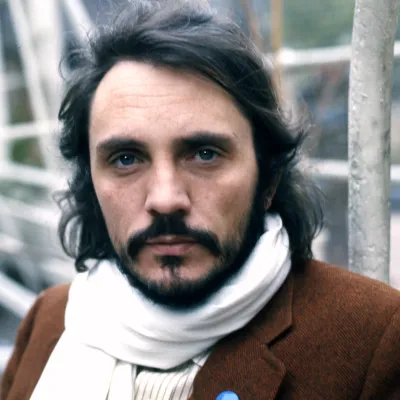
Terence Stamp
Human Design Chart
Biography
The son of a cockney tugboat master, he began his theatrical career on stage. In 1969, at the height of his success, bored by fame and unhappy, he aborted a love affair with model Jean Shrimpton and went on a five-year pilgrimage to India. He returned to England at times to do a film.
He made a film debut in Billy Budd (1962), which earned him an Academy Award nomination for Best Supporting Actor and a BAFTA nomination for Best Newcomer. In the late '70s, he moved into character roles, and made his debut as a director in 1991 with Stranger in the House.
He published three volumes of his memoirs including Stamp Album (written in tribute to his late mother), a novel entitled The Night, and a cookbook co-written with Elizabeth Buxton to provide alternative recipes for those who are wheat- and lactose-intolerant.
On 31 December 2002 in London, aged 64, he married his girlfriend of the last five years. They met in 1997 when he was 59 and she was 18. The couple divorced on the grounds of his "unreasonable behaviour" in April 2008.
Terence Stamp died on 17 August 2025 at the age of 87.
Human Design Analysis: Terence Stamp as Generator 3/5
Generator 3/5 — Design at a Glance
Terence Stamp had as a Generator an immense, sacral endurance. His design set him up for the role of a powerful workhorse: strong and dependable as long as he found energy for his tasks. This strength was however conditional upon a specific strategy. Terence Stamp should not initiate but rather react. His energy became effective when he responded to signals from his environment and his sacral center gave a clear "yes".
If he lived by this principle, acting from the gut, his design rewarded him with deep satisfaction and a sense of fulfillment. Conversely, ignoring this principle led to two major pitfalls. If Terence Stamp continually did things that he had no desire for, he wasted his intrinsic creative power and tended towards exhaustion. Equally frustrating was being held back from his heart project when he still wanted to keep working full of energy.
The greatest danger for Terence Stamp lay in constantly initiating himself instead of reacting. This resulted sooner or later in persistent frustration and a noticeable lack of energy. His success therefore did not depend on constant action, but rather on whether he recognized the right impulses and responded to them with full endurance. Only then could nothing stop him; otherwise his immense power would stall.
Sacral Authority
Terence Stamp revealed himself as a Generator whose decision-making was marked by sacral authority. This inner leadership is unique to this type and simplified his process since strategy and authority are identical here: he responded to external stimuli rather than initiating actions. His authority featured the defined Sacral Center, which manifested not in the Head but as a physical response—a "gut feeling" or an energy surge expressed through sounds like grunts or affirming "Mhm." When his sacral motor engaged with something, he felt vibrant and alive. He then had inexhaustible energy and tackled his work with great enthusiasm. His design saw him born to go through life with joy, fully immersed in activities without needing to plan a specific purpose ahead of time.
Additionally, his activated Spleen Center acted as supporting authority. Since it was directly connected to the Sacral Center, Terence Stamp could react particularly quickly and spontaneously. He had immediate access to his physical well-being and instinctive perception. This connection allowed him to reliably guide himself from these deep, bodily impulses, emphasizing his ability for quick decision-making pleasure. The combination of fundamental sacral energy and spleen-supported intuition created a system based on direct, authentic resonance with the environment.
The 3/5 Profile — Martyr / Heretic
Terence Stamp revealed through his 3/5 Profile as someone who did not acquire knowledge from dogma but rather through his own, often risky experimentation. As an experimenter (Line 3), he initially believed in nothing predetermined; he had to make experiences and fail himself to learn from them. This practical wisdom served him later as a hero (Line 5), offering solutions for others. His design created a strong magnetic pull: Others projected onto him the role of savior or cool storyteller, wanting to use his treasure trove of life experience. Yet this projection was a double-edged sword. While it brought him recognition, it became painful when he failed in front of an audience. Line 3 taught him adaptation through trial and error; Line 5 demanded that he create order out of his own confusion. Stamp lived in the tension between the need for self-sufficiency and the pressure to serve as a role model for others. His courage to stand by his convictions often conflicted with the expectations of those around him. Failure was not an end for him, but rather a necessary part of the learning process to gain the wisdom he later passed on.
Single Definition — Defined & Open Centers
Terence Stamp possessed a fixed, reliable self-identity and a clear sense of direction in life. His defined G-Center gave him the ability to love himself and show others new paths or perspectives without being dependent on their confirmation. This inner security formed the foundation of his existence.
As a Generator, he had an enormous source of vital energy in his defined Sacral Center. His design required him not to initiate but to wait for questions or invitations to respond correctly and use this power sustainably. Only through affirming responses could he utilize his energy effectively for satisfaction; mental decisions that ignored this signal led to frustration and exhaustion. The defined Root Center provided a constant pressure to move forward in the world and master existential challenges.
At the same time, his design revealed specific vulnerabilities. His open Head Center had no consistent way of processing mental information; he tended to be distracted by doubts or questions from others instead of trusting his inner authority. The open Ajna Center meant that concepts and opinions were not taken as personal truth but flexibly accepted – a trap was showing himself mentally more secure than he actually was.
His open Throat Center naturally attracted attention when he waited; the attempt to actively seek recognition or relieve pressure by speaking led to stress and unpredictable results. The open Heart Center contained no consistent willpower; he was not designed to make promises or prove his worth through competition. Instead, he learned that he did not need to be put to the test.
The open Solar Plexus Center absorbed and amplified the emotions of the environment. He had to learn not to personalize these feelings but use them informatively to avoid emotional decisions. Finally, his Spleen Center was open, bringing a fundamental fear of survival or well-being with it. Spontaneous decisions were risky; he developed wisdom in not misusing his intuition as authority for actions but using it as a sensor for health and discomfort while protecting against conditioning fears.
Channels for powerful resource management and evolutionary change.
Terence Stamp showed himself to be someone who carried innovative impulses and pointed out new directions for others through his mere presence. This quality came from the Channel of Beat 14-2, a connection between Sacral and G-Center. Gate 14 brought competence in handling power and material resources to drive mutation, while Gate 2 acted as a driver directing movement through space and time. Together they created a powerful resource for creative life force that reinforced a change of direction. Stamp had access to essential keys to transform mutative impulses into material reality by trusting that life made decisions through him.
Parallel to this, the Channel of Mutation 3-60 between Root and Sacral Center worked. This unpredictable flow connected Gate 60, the fulcrum point of evolutionary possibilities and acceptance of limitation, with Gate 3, which created order out of confusion. This configuration generated a pulsing on/off energy often perceived as melancholy when the inner pulse stood still. Stamp had to learn not to argue this mechanical moodiness but patiently wait for the next shift, as mutation suddenly entered like music in the gaps between notes.
Additionally, individual gates shaped his essence: Gate 50 as a conservative protective reflex nurtured awareness of values and traditions. Gate 56 allowed abstraction of mental processes through figurative storytelling and stimulation. Gate 54 connected the drive for worldly success with mystical insight, where a partner or buddy supported this development. These elements collectively formed his unique expression.
Individual Circuitry — Circuit Signature
Terence Stamp showed himself to be someone who expressed his unique individuality through pulsating, acoustic energy. His design was simply defined, meaning a clear, coherent energetic structure: The Identity, Sacral and Root Centers formed one unbroken flow. This connection linked his self-understanding directly with his life force and the impulse to act.
The Knowledge Circuit significantly shaped this expression. Through the Channel of Mutation (Gates 3-60), he had the ability to deviate from the norm and create new things – a driving force for innovation. Parallel to this, the Channel of The Beat (Gates 2-14) provided rhythmic, sudden impulses. Together these channels enabled Terence Stamp not only to think his own identity but also bring it into the world through concrete, often surprising actions. Energy flowed from Root over Sacral Center to Identity, meaning that his actions were always carried by a deep physical conviction. He lived his unique path by gaining new knowledge and transforming this through his authentic presence. His creativity was not an abstract idea but a physical pulse driving him to initiate change and clearly distinguish himself from existing patterns.
Right Angle Cross of Laws 2
Terence Stamps Human-Design profile indicated a tendency towards inner discipline and the pursuit of order. He was someone who sought structure not to exercise control but to find clarity in his own essence. This attitude stemmed from the right cross of Laws 2. In Human Design mechanics, this configuration represents the ability to establish internal principles that stabilize one's life. It wasn't about teaching others or imposing rules, but developing a personal ethic by which he could orient himself. Terence Stamp used this energy to define his own boundaries and values. The right cross of Laws 2 acts like an inner compass that helps reduce chaos and ground actions on a foundation of self-respect. For him, this often meant withdrawing to think deeply before making decisions only when they aligned with his deepest understanding of what was right. This mechanism fostered a calm yet firm presence. He did not live loudly or obtrusively but radiated a quiet authority based on his own integrity. The search for the 'Right' was no intellectual game for him, but an existential necessity to remain in harmony with himself. Thus, these inner laws shaped his approach to the world: thoughtful, deliberate, and always mindful of authenticity.
Saturn Return · Uranus Opposition · Chiron Return · 2nd Saturn Return — Life Cycles
Terence Stamp defined his professional identity through radical transformations. His design indicated a tendency to break established role models and reform them anew. In 1978, at age 40, he took on the role of General Zod in 'Superman'. This event coincided with a Uranus opposition – an astronomical transit signal for sudden change and liberation from old structures. For his chart, this was no coincidence but an expression of his inner dynamics to break free from conventional expectations and find new, often provocative forms of self-expression.
This attitude deepened during the second Saturn return. In 1994, at age 56, he played a transsexual drag artist in 'Priscilla – Queen of the Desert'. The second Saturn return typically marks a phase of maturation and final embracing of one's essence. For Terence Stamp, this meant not withdrawal but deeper exploration of identity and gender. His career thus followed no linear path of confirmation but a cycle of constant renegotiation of his public persona. The mechanics of his design promoted this readiness for self-dissolution and rebirth into new roles. He used the energy of these transits not to stabilize in the status quo, but as catalysts for artistic experiments that questioned societal norms. His biography precisely reflects how astrological cycles worked through him: visible, often surprising turning points in his artistic career.
Generator · Sacral Authority — Synthesis
Terence Stamp lived a life marked by a deep drive towards authentic expression and exploring new paths. As a Generator with sacral authority (and open emotional center), he found his energy in reacting to external stimuli and working on tasks that truly inspired him. The profile as an experimenter/hero and rescuer (3/5) reinforced this impulse: He had to gather experiences himself before sharing knowledge and inspiring others – a pattern evident in career shifts. His defined G-Center gave him clear direction and the ability to guide others, while the Beat channel (14/2) propelled him to advance innovations and initiate changes.
A central paradox lay in the combination of his generative energy and the Knowledge Circuit. Stamp drew strength from the present moment and physical reaction (Sacral Center), yet his inner compass always led him to discover new things and transform them. This resulted in a creative melancholy – an ongoing oscillation between the pulse of life and the desire for unique expression. The Uranus opposition at age 40, as well as the Saturn return at age 56, demonstrate that he repeatedly lived this tension by taking on roles that broke conventions and opened new perspectives.
2 Defined Channels
Incarnation Cross - Right Angle Cross of Laws 2
Solar Return
The Solar Return shows the moment when the sun returns to its exact birth position - your personal solar year.
Life Cycles
Discover the life cycles with a detailed triple view (birth chart, cycle chart, composite).
Human Design Profile
- Type
- Generator
- Strategy
- To respond - wait for something to respond to
- Authority
- Sacral Authority
- Profile
- 3/5 - Martyr / Heretic
- Definition
- Single Definition
- Incarnation Cross
- Right Angle Cross of Laws 2
- Date of Birth
- 22.07.1938 11:58
- Place of Birth
- Stepney, UK
Frequently Asked Questions
What was Terence Stamp's Human Design type?
What profile did Terence Stamp have?
Which authority guided Terence Stamp?
What incarnation cross did Terence Stamp have?
When was Terence Stamp born?
Discover your own Human Design
Are you also a Generator? Find out in a personal reading how to use your sacral energy correctly and discover deep satisfaction.
More Personalities
Back to overviewSissy Spacek

Aaliyah

Alexia

Anémone

Angèle

Ann-Margret
