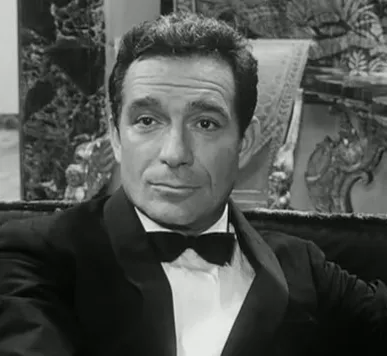
Ugo Tognazzi
Human Design Chart
Biography
Married, he had four kids.
He died of a cerebral hemorrhage on 27 October 1990, late at night, Rome.
What does Projector 4/1 mean for Ugo Tognazzi?
Projector 4/1 — Design at a Glance
Ugo Tognazzi appeared as someone who could penetrate the structure of his environment with sharp insight. His Human Design as a Projector endowed him with a dense, focused aura, comparable to a bright flashlight that directed itself precisely towards weaknesses in other people's systems. He immediately saw what was wrong or 'in the dark' with his counterpart. This ability to identify errors in the system was his core characteristic.
However, this sharpness required a certain approach. When Ugo Tognazzi addressed these flaws directly, he often encountered resistance because his light shone like an intense spotlight into another's face and was perceived as unpleasant. The more effective strategy for him involved developing a harmonious radiance himself. By simply shining pleasantly, he attracted others automatically. People came to him of their own accord to ask for his insider tips rather than needing to be lectured.
Central to his well-being was waiting for an honest, appreciative invitation. Without this external confirmation, he risked wearing down his energy. Since Projectors do not have a defined Sacral Center, Ugo Tognazzi lacked the constant intrinsic life force of a Generator. Instead, he experienced phases of high activity followed by necessary rest periods for regeneration. Ignoring these needs and living without following his invitation strategy led to his non-self theme: bitterness. However, when he lived in harmony with his design, he was rewarded with success.
Splenic Authority
Ugo Tognazzi demonstrated a decision-making stance based on a subtle, physical alarm system. His inner authority lay in the Spleen Center, indicating that he possessed an acute survival intelligence. This intuition served as an immediate indicator of whether a situation, environment, or society was healthy and right for him. As his health and warning system, Ugo Tognazzi had to make decisions in the immediate moment. The first spontaneous impulse was considered the correct answer, helping him rigorously distance himself from harmful influences and ensure his own well-being.
This spleen voice was a very fine impulse that appeared only once at the moment and could easily be ignored or drowned out by other external factors, requiring high vigilance. Sometimes it helped him to briefly withdraw to hear this inner signal clearly. Since knowledge of what was right always became available in the present moment, his plans often changed short-term. Long-term commitments were difficult for his design; instead, he needed much space and flexibility. He lived by the principle of spontaneity to avoid rigid structures that contradicted his natural adaptability. This mechanism fundamentally shaped his approach to obligations and social contacts.
The 4/1 Profile — Opportunist / Investigator
Ugo Tognazzi revealed himself as someone with a deeply rooted, barely deviating essence. As a 4/1-Networker/Researcher, he had a profile marking the transition from 'I' to 'You', whose inherent nature was so firmly anchored that it was hard to divert him from his individual path. This often appeared externally as stubbornness or an inability to accept criticism; those who offered well-meaning impulses for change were quickly excluded from his protected heart, as he neither could nor wanted to change his essence.
This attitude resulted from Line 4 (Gate 25), which thematizes the survival of innocence in a fixed perspective and describes spiritual warriors preserving their integrity. At the same time, Line 1 (Gate 58) shaped his zest for life and desire to experiment. Yet without mindfulness, this energy could lead to frustration as love for correction was necessary for a secure future. Thus, Tognazzi lived in tension between a firm protective stance and the cyclical need for experience and adaptation. When he recognized himself and his theme, he became a stable rock teaching others; otherwise, he suffered from lack of self-confidence due to the harsh test of his path.
Single Definition — Defined & Open Centers
Ugo Tognazzi had a reliable self-identity and a clear sense of direction in life. His defined G Center gave him the ability to love himself and show others new paths or perspectives without being dependent on their confirmation. This inner security allowed him to comfort people with existential questions by helping them understand the course of human evolution. At the same time, his defined Spleen Center showed a deep connection to physical presence; he acted spontaneously and intuitively, trusted his taste for what was healthy, and radiated natural well-being. His defined Root Center provided constant pressure to move forward and thrive materially, turning this stress into existential vigilance that secured his survival.
In contrast, Ugo Tognazzi was receptive to external influences through several open centers. His open Head Center made him vulnerable to mental confusion and doubt; he tended to engage with questions that were not his own rather than waiting for inner clarity. The open Ajna Center meant that his conceptual thinking was flexible but also carried the risk of interpreting foreign opinions as personal truth or pretending false security out of fear of appearing foolish. His open Throat Center made him sensitive to the pressure to attract attention, leading him to speak in order to be noticed rather than trusting the natural invitation to talk.
His open Heart Center hindered him from consistently applying willpower; he had to learn not to prove his worth through promises or competitive pressure, as this ended in a spiral of self-doubt. His open Sacral Center made him vulnerable to exhaustion because he absorbed and amplified others' energy without having consistent personal boundaries; he needed to learn to rest before becoming tired. Finally, his open Solar Plexus absorbed the emotions of his environment, leading him to experience foreign moods as his own instability and avoiding confrontation out of fear of rejection rather than seeing it as an opportunity for transformation.
Channels for intuitive elegance and discerning judgment.
Ugo Tognazzi was someone whose actions were marked by a profound intuitive spontaneity. His design leaned towards perfecting behavior in the here and now, not through intellectual planning but through immediate perception. This attitude stemmed from Channel Perfect Form 57-10, which connected Spleen with G Center. Through Gate 57, he had acute sensitivity to the quality of his environment – often more for tonalities than words – allowing him to respond spontaneously and appropriately. This created behavior rooted in self-loving dignity that helped him glide through life existentially unburdened. His creativity differed distinctly from reflective thinking; it was a process of survival in the present moment, touching others with his example.
Parallel to this, there was a strong logical force for pattern correction within Ugo Tognazzi. The Channel Judgment 58-18 connected Root Center with Spleen and drove him to identify and correct inadequacies. Gate 58 provided insatiable energy for 'better and more,' while Gate 18 acted as a sentry checking what was healthy or correct. This mechanism served the mastery of patterns; it sought solutions applicable in the collective to restore peace and contentment. His ability to recognize errors was not merely a deficiency but a tool for perfecting life's environment.
Additionally, other gates shaped his orientation: Gate 25 promoted mystical innocence and centeredness, while Gate 46 emphasized devotion to the physical process and love of the body as temple. Gate 52 required concentrated pauses for pattern correction, which could lead to stress without clear goals. Gate 41 propelled him evolutionarily from experience to experience, connected with the source of feeling. In the background, Gate 48 worked with deep but frustrating pattern recognition, while Gate 50 acted as a conservative reflex protecting values and traditions. Finally, Gate 7 projected leadership patterns and hierarchies tested through experiments.
Individual Circuitry — Circuit Signature
Ugo Tognazzi was someone who combined logical clarity with intuitive security. His design featured a simple definition, meaning all his defined energies – the G Center, Spleen, and Root Center – worked in one continuous flow. This unity created coherent inner structure without internal conflict between separate energy areas.
A central element was the Understanding Circuit, specifically the Channel Judgment between Spleen and Root Center. This gave him the ability to think strategically and structure information visually and logically, free from emotional influence by Solar Plexus Center. He sought the essence to clearly recognize and convey it.
Parallel to this, the Integration Circuit worked through the Channel Perfect Form between Identity and Spleen Centers. Here, it was about drawing strength from reacting to life and guiding with intuitive knowledge as well as correct behavior. This allowed him to strengthen himself in the present moment and express his highest individuality.
Although both circuits involve the Spleen, they are not isolated into separate groups within his simple definition but flow together with the G Center. The connection of strategic mind (Spleen-Root) and intuitive action capability (Identity-Spleen) shaped how he analyzed situations and responded to them. He conveyed insights based on a mix of rational structure and inner knowledge, helping him understand complex connections and integrate them into his life.
Juxtaposition Cross of Innocence
Ugo Tognazzi's design carried the signature of the Innocence Cross. This configuration marked him with a deep, often unconscious drive towards integrity and a certain naivety in dealing with the world. It was not childlike innocence but rather a conscious or intuitive stance that reduced complexity to its essence.
In Human Design, this cross describes a specific energetic alignment. The individual seeks clarity and truth, often by seeing things as they are without distorting them through preconceived notions. This 'innocence' refers to the ability not to be swayed by others' manipulations or cynicism. It acts as a protective mechanism that shields the core of the person from overstimulation.
Ugo Tognazzi was someone who, through this structure, radiated a calming and clear presence in chaotic situations. He tended to address problems directly without dramatizing them or making them unnecessarily complex. His energy was geared towards living authentically and touching others with this genuineness. It mattered less to him about strategic maneuvering than it did to act in harmony with his own truth. This stance allowed him to build a trustworthy foundation in relationships and projects, as his intentions remained transparent. The Innocence Cross challenged him to maintain this clarity even when the environment tended to twist or obscure things. His strength lay in being simple and direct.
Saturn Return · Uranus Opposition · Chiron Return · 2nd Saturn Return — Life Cycles
Ugo Tognazzi's design showed a tendency towards enduring structural anchoring. His life energy did not manifest as spontaneous explosions but rather as patient, densifying foundations that gained weight and stability over time. This configuration describes a process where inner values and outer realities must be gradually aligned to create a viable foundation.
In 1981, at the age of 59, he won the award for best actor at the Cannes Film Festival for his role in La Cage aux Folles. For his design, this marked the second Saturn return, a cycle often associated with the culmination of long-term disciplined work. At this point, years of groundwork coalesced into visible and recognized results. The success did not come as a sudden stroke of luck but rather as a logical consequence of an attitude that prioritized structure and stability. His design showed that true authority and recognition in his case arose from the ability to consistently assert himself over long periods, laying down solid ground. This moment confirmed the mechanics of his character: through endurance and fortifying his position, he reached a peak based on deeply rooted inner stability.
Projector · Splenic Authority — Synthesis
Ugo Tognazzi lived deeply rooted in his innate identity (defined G Center), an essence that rarely deviated from his individual path (4/1 Profile). This constancy was coupled with a pronounced ability to recognize flaws in the system (Projector Type) and develop intuitive insights – a quality amplified by the channel of Perfect Form (Gate 57/10). He projected his energy onto his environment, offered guidance, and recognized unconscious patterns in others, always guided by an instinctive understanding of what was best for him (Spleen Authority). This shaped a lifestyle geared towards securing his survival and catalyzing evolutionary changes.
A central paradox in his design lay in the interplay between the deep self-assurance of his G Center and his projection ability, which inclined him to highlight imbalances in others. While he had a firm inner direction (G Center), his authority required sensitive navigation in social contexts to offer insights without provoking resistance. This oscillation between the need for authenticity and the necessity to consider others' reactions created tension that manifested in his life – evidenced by his success (Saturn return in 1981), which rested on a successful portrayal of difference.
2 Defined Channels
Incarnation Cross - Juxtaposition Cross of Innocence
Solar Return
The Solar Return shows the moment when the sun returns to its exact birth position - your personal solar year.
Life Cycles
Discover the life cycles with a detailed triple view (birth chart, cycle chart, composite).
Human Design Profile
- Type
- Projector
- Strategy
- Wait for the respectful invitation
- Authority
- Splenic Authority
- Profile
- 4/1 - Opportunist / Investigator
- Definition
- Single Definition
- Incarnation Cross
- Juxtaposition Cross of Innocence
- Date of Birth
- 23.03.1922 09:00
- Place of Birth
- Cremona, Italy
Frequently Asked Questions
What was Ugo Tognazzi's Human Design type?
What profile did Ugo Tognazzi have?
What authority did Ugo Tognazzi possess?
What incarnation cross did Ugo Tognazzi have?
When was Ugo Tognazzi born?
Discover your own Human Design
Are you also a Projector? Find out in a personal reading how to unfold your leadership qualities and recognize the right invitations.
More Personalities
Back to overviewSissy Spacek

Alain-Fournier

Anémone

Ann-Margret

Arletty
Arno