
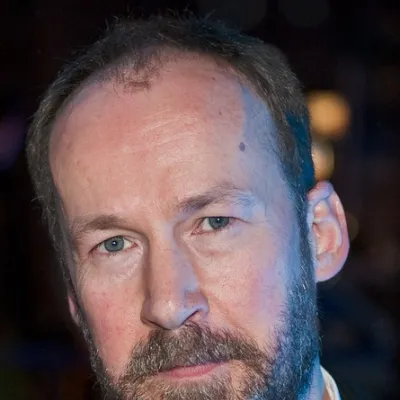
Ulrich Noethen
Human Design Chart
Biography
What does Generator 1/3 mean for Ulrich Noethen?
Generator 1/3 — Design at a Glance
Ulrich Noethen's design indicated a tendency towards great endurance and inner strength. As a Generator, he had plenty of sacral energy that helped him pursue tasks with persistence – similar to a workhorse that is strong as long as it burns for its job. This configuration manifests in the ability to make things tangible in life, not through self-willed initiative but by reacting to external impulses.
The mechanics of his design emphasized the necessity of waiting for signals from life and then acting accordingly. When his inner self gave a clear 'yes', he could respond with full power. Living in harmony with this reactive strategy led to deep satisfaction and a sense of fulfillment. Conversely, if he did things that he had no desire to do or was hindered at his heart's project, frustration or energy loss threatened. His strength lay in making gut decisions and then consistently reacting to them rather than fighting against the current.
Sacral Authority
Ulrich Noethen's design indicated a tendency towards intuitive, body-based decision-making. As a Generator, he had sacral authority – the only inner leadership power that aligns with the strategy of waiting for the right moment. This configuration simplified his process: instead of planning or analyzing, he reacted to external stimuli with an immediate physical response.
His 'gut feeling' did not manifest as a thought but rather as a physical signal – a grunt, a hum, or an impulsive 'mmh'. Such sounds marked the moment when his sacral motor kicked in. Feeling this surge of energy brought vitality and inexhaustible power; he approached his tasks with great enthusiasm without needing external motivation; joy in doing sufficed.
Additionally, his activated Spleen Center acted as a supportive instance. Through its connection to the Sacral Center, it enabled quick, spontaneous reactions and reliable access to instinctive perception. Ulrich Noethen could rely on this direct physical intuition to make decisions that brought him well-being and vitality. This mechanism shaped him as someone who moved through life by listening to his inner signals and investing energy where his body responded positively.
The 1/3 Profile — Investigator / Martyr
Ulrich Noethen's design indicated a tendency towards a dual approach: he combined theoretical knowledge with practical experience. As a 1/3 profile – Researcher and Experimenter – his life task was learning through trial and error. Line 1 drove him to acquire fundamentals, while line 3 promoted the need to test these through personal experience.
This interplay meant that his judgment was grounded on both levels: he tested things theoretically as well as practically 'on heart and kidneys'. His design indicated that he only felt secure once he had personally experienced the consequences of a decision. Timing played a role; sometimes, the planning energy of line 1 took over too strongly, leading to hesitation before the experimental line 3 came into play. Yet precisely this phase of testing was crucial for his development. Mistakes were not failures but necessary steps towards self-correction. His design showed that he developed a deep commitment to his own insights through these processes and learned when withdrawal or inaction was wiser than rash action.
Triple Split Definition — Defined & Open Centers
Ulrich Noethen's design indicated a tendency towards constant mental pressure paired with deep physical intuition. The definition between Head Center and Ajna Center created an ongoing internal drive to question and understand connections – not as rational decision-making, but as a source of inspiration for others. This process was often accompanied by confusion, as ideas were not yet understood; the challenge lay in enduring this pressure rather than hastily converting it into action.
At the same time, he possessed defined centers for vital energy (Sacral), self-identity (G Center) and existential perception (Spleen). This endowed him with a reliable inner authority: the ability to react to what releases energy and feel secure in his own direction. His defined Root Center provided the necessary pressure to advance in material life and process stress specifically.
In contrast, the undefined centers revealed his vulnerabilities. The open Throat Center tended to suffer under the pressure of needing to force attention through speaking rather than waiting for invitations to express itself. The open Heart Center lacked consistent willpower; here there was a risk of wanting to prove oneself through promises and thereby falling into a cycle of self-doubt if expectations were not met. Additionally, the open Solar Plexus Center absorbed the emotions of the environment, leading to interpreting foreign moods as personal instability or avoiding confrontations out of fear of rejection. The wisdom lay in not personalizing these open areas but using them as mirrors for the surroundings while relying on his defined inner structure.
Channels for logic, endurance and mental patterns.
Ulrich Noethen's design indicated a tendency towards precise analysis and perfect patterns. Channel 58-18, connecting Root with Spleen Center, was driven by Gate of Vitality (58) and Gate of Correcting (18). This created an insatiable urge to prove logic and continuously question patterns to correct them. It acted as a sentry judging whether the perceived reality disturbed collective cheerfulness. Simultaneously, there was profound persistence through Channel of Discovery 29-46 between Sacral and G Center. Here, Gate of Saying Yes (29) connected with Gate of Self-Determination (46). Ulrich Noethen had to let go of expectations to lose himself in experiences; only by saying yes correctly could he persist until the significance of his discoveries became clear.
Mentally, Channel of Abstraction 64-47 between Head and Ajna Center was at work. Gate of Confusion (64) drove Gate of Understanding (47), filtering every experience through a kaleidoscope of mental images to find an inspiring story, even if this initially caused confusion.
Additionally, prioritized gates shaped his profile: Gate 14 facilitated skilled power application and direction finding, while Gate 8 promoted individual contribution to the group. In G Center, complex Gate 10 supported genetically programmed behavior at the right time. Gate 7 projected leadership patterns and hierarchies. In Sacral Center, Gate 59 steered genetic pairing strategy without personal preferences, while Gate 28 weighed risks in the here and now. Gate 30 recognized feelings and accepted limitation as fate. Gate 4 formulated formulas for future security, Gate 17 organized for the future through logical teaching, and Gate 9 perfected details by repetition. Gate 25 brought mystical innocence, and Gate 43 communicated spontaneous insights despite fear of rejection.
Collective Circuitry — Circuit Signature
Ulrich Noethen's design presented itself as a configuration of three separate, parallel functioning power fields. This triple definition meant that his energy focuses did not overlap but acted as independent modules.
A part of this pattern lay in the Understanding Circuit. Here Channel of Judgment connected Spleen Center with Root Center. This connection created a direct line between intuitive perception and survival energy, manifesting in a focused, strategic stance. It was an 'emotionless ratio' aimed at improving things through logic and analyzing without conditioning.
A second completely independent field formed the pair of Head and Ajna Centers within the Meaning Circuit. Here Channel of Abstraction flowed from spontaneous impulse (Head) to mental formulation (Ajna). This generated a cyclical, wave-like movement dealing with themes of the past and reflecting on events.
The third isolated element consisted of the connection between Identity and Sacral Center, also in the Meaning Circuit. Channel of Discovery linked here personal self-image with constant life energy. This energy was geared towards sharing felt insights and emotional experiences from the past to learn collectively.
As these three groups – Spleen/Root, Head/Ajna, and Identity/Sacral – were not energetically connected, they acted as separate streams. Ulrich Noethen thus exhibited through the simultaneous presence of these different but non-integrated forces: strategic analysis, cyclical emotional reflection, and sharing identity experiences existed alongside each other without forming a common flow.
Right Angle Cross of Contagion 4
Ulrich Noethen's design indicates a tendency towards a deep, often unconscious connection to collective suffering. The infection cross on the right describes not an active search for pain but a specific energetic receptivity to the heaviness and trauma of other people. Ulrich Noethen showed himself as someone who did not just observe this burden but felt and carried it within his own system.
This configuration means that through identifying with the suffering of others, he gained a kind of authority or depth. It is a mechanism of "sympathetic feeling" that goes beyond simple compassion; it is bearing the collective wounds as part of one's identity. Ulrich Noethen was not just empathizing but being shaped and defined by this suffering. His presence was marked by this heaviness, which gave him a certain seriousness and authenticity because he did not shy away from the dark side of human existence.
It was a passive intake of pain that became effective in his aura. Ulrich Noethen reflected the unease of his contemporaries by absorbing it and thereby making it visible. This created a bridge to others who were also under burden, as they saw in him someone who recognized and shared their hidden distress. His energy thus served as a mirror for collective trauma that he validated and carried simply through his presence.
Saturn Return · Uranus Opposition · Chiron Return · 2nd Saturn Return — Life Cycles
Ulrich Noethes Design points towards structured milestones that link inner maturity with external validation. In 1986, at the age of 27, he completed his acting studies in Stuttgart – a classic first Saturn Return, where years of groundwork often culminate in a solid result and lay the foundation for future responsibility.
This phase of stabilization later led to a period of transformation. In 1997, at 38 years old, he experienced a breakthrough as part of the Comedian Harmonists in Joseph Vilsmaier's work. This coincided with the Uranus Opposition cycle, a time when established structures often need to break down to allow for new expression; here it showed his ability to disrupt set patterns and establish a new public identity.
The deepest unfolding occurred during his Chiron Return around 2007. At 48 years old, he portrayed Heinrich Himmler in "My Führer." This cycle marks not the healing of old wounds but the blossoming of one's incarnation purpose: if one has followed their strategy, the meaning becomes tangible. Noethes portrayal of complex, dark figures was no coincidence but a concrete manifestation of his design – the ability to fully embody foreign roles while expressing his own essence. Here, the mechanics do not show suffering but fulfillment: life becomes the stage where the essence is made visible.
Generator · Sacral Authority — Synthesis
A central red thread runs through the chart: a deep, sacral energy (Generator type), which is inseparably linked to the urge to learn by trying and verifying (Profile Researcher/Experimentor). This energy is reinforced by a defined Head Center that constantly seeks understanding and provides inspiration – an unceasing process of questioning and comprehending. The Channel of Judgment (58/18) underscores this, emphasizing the logical drive for correcting and perfecting patterns, which manifests in the ability to thoroughly examine things and make well-founded judgments. Recurring events at Saturn Return (Career), Uranus Opposition (Success), and Chiron Return (Career) indicate that this process of learning and testing is repeatedly validated in concrete life phases, leading to lasting success.
The design harbors a paradox between the need for continuous exploration and the inherent logic driving this exploration. The sacral energy wants to become active (Sacral Authority), while the defined Head Center requires constant mental stimulation – a tension field between immediate experience and intellectual analysis. The Researcher/Experimentor may hesitate to move into implementation until sufficient knowledge is present, yet Line 3 urges precisely that: learning through trial and error. This tension generates dynamic power leading both to profound understanding and creative innovation.
3 Defined Channels
Incarnation Cross - Right Angle Cross of Contagion 4
Solar Return
The Solar Return shows the moment when the sun returns to its exact birth position - your personal solar year.
Life Cycles
Discover the life cycles with a detailed triple view (birth chart, cycle chart, composite).
Human Design Profile
- Type
- Generator
- Strategy
- To respond - wait for something to respond to
- Authority
- Sacral Authority
- Profile
- 1/3 - Investigator / Martyr
- Definition
- Triple Split
- Incarnation Cross
- Right Angle Cross of Contagion 4
- Date of Birth
- 18.11.1959 04:00
- Place of Birth
- München, GER
Frequently Asked Questions
What is Ulrich Noethen's Human Design type?
What Profile does Ulrich Noethen have in Human Design?
What Authority guides Ulrich Noethen?
What is Ulrich Noethen's incarnation cross?
When was Ulrich Noethen born?
Discover your own Human Design
Are you also a Generator? Find out in a personal reading how to use your sacral energy correctly and discover deep satisfaction.
More Personalities
Back to overviewSissy Spacek

Aaliyah

Alexia

Anémone

Angèle

Ann-Margret
