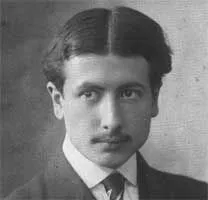
Photo: Wikimedia Commons
Vladimir Volkoff
Human Design Chart
Biography
The fall of the Berlin Wall opened Volkoff's work to all kinds of disinformation and manipulation campaigns, not just those of communist regimes. In the 2000s he returned to his Slavic roots, publishing several texts on Russian history and orthodoxy, and publicly declared his support for Vladimir Putin's policies.
Vladimir Volkoff — Generator with Profile 2/5
Generator 2/5 — Design at a Glance
Vladimir Volkoff's design inclines towards great endurance, comparable to a workhorse that provides strength when it has energy for its task. As a Generator, he had a lot of sacral energy, which, however, was released not through self-initiative but through reacting to impulses from life. The strategy was to wait for signals and then act only when the sacral center gave a clear "yes." When he acted in harmony with this mechanism, a deep sense of satisfaction and fulfillment was evident.
Two stumbling blocks shaped his dynamics. The first occurred when he did things that did not interest him; this led to the waste of energy and a tendency towards burnout, even with high creative potential. The second danger was being prevented from working on his heart project, even though he still wanted to continue working full of power. If he constantly initiated himself instead of reacting, he would eventually encounter persistent frustration and a lack of energy. Unlike the Manifestor type, who acts directly, Volkoff's influence materialized through reactive actions. When he used his energy in harmony with his design, no one could stop him. His path was defined by the principle of reacting from the gut, rather than initiating. This ensured him the necessary strength to make things effective in life without exhausting himself.
Sacral Authority
Vladimir Volkoff was a Generator whose decision-making was characterized by sacral authority. This inner guidance did not manifest as an intellectual deliberation but as an immediate physical reaction to external stimuli. His strategy was to react before acting, which simplified his process. The prerequisite for this was an open Emotional Center, meaning he did not rely on fluctuating emotions but on the stable energy of his Sacral Center.
This authority manifested as an "inner voice" or palpable surges of energy. Volkoff learned to pay attention to these physical signals, which expressed themselves as grunts, hums, or simple vocalizations like "Mhm" or "Hmm." When his sacral motor engaged with a topic, he felt vital and alive. He then had an inexhaustible supply of energy and tackled his tasks with great enthusiasm. His design suggested that he was born to go through life with joy and satisfaction. He immersed himself in his activities without needing a rigid sense of purpose. The work itself was the reward. Through this configuration, he could reliably guide himself with his inner energy, allowing him to lose himself completely in his interests and experience a profound sense of satisfaction.
The 2/5 Profile — Hermit / Heretic
Vladimir Volkoff revealed himself through his Profile 2/5 as someone navigating between the deep need for withdrawal and the external expectation to function as a savior. The design indicated a tendency to refine himself in isolation, while the environment sought him out as an authority figure in crisis situations. Line 2, the Hermit Line, described a process of natural talent working behind the scenes and only responding to the right call. Creativity and creative power emerged here not through constant effort, but through waiting for a clear invitation that respected the individual process. Outside interference was felt to be dangerous; the beauty of action lay in the eye of the beholder, not in the compulsion for constant visibility.
At the same time, Line 5, the Hero and Illusions Line, projected the image of a general who should exercise absolute authority in times of greatest threat. The collective looked to him for solutions to acute problems and expected quick help. Thus, Volkoff faced the task of strategically using his "alone time" to clearly define what he wanted to stand up for and what not. Only in this way could he avoid getting lost in the role of the scapegoat if the high expectations were not met. His path lay in waiting for the call and then acting with the necessary authority without forgetting his own essence. This dynamic shaped his work as someone who only truly became effective when he acted from a place of calm, rather than getting lost in the constant demands of everyday life.
Split Definition — Defined & Open Centers
Vladimir Volkoff's design was characterized by intense, persistent mental activity. The definition between the Head Center and Ajna Center created a constant internal pressure to question and understand connections. This state was not a choice but a mechanical given that predisposed him to inspire or pressure others with his thought processes, as he lacked his own energy to directly implement these ideas. Instead, he had to practice patience until the right moments arrived for conveying these concepts.
At the same time, Volkoff had a reliable inner direction through his defined G Center. This gave him a stable self-identity and the feeling of being lovable without being dependent on others. His task was to follow this direction without forcing others to follow him, which would otherwise have led to deep feelings of loss.
The strength of his actions came from his defined Sacral Center. As a Generator, he had immense vital energy, but it could only be correctly activated through reactions to external stimuli. Initiatives from the mind inevitably led to resistance and exhaustion; only by waiting for the right invitation could he use his energy sustainably and satisfyingly. Additionally, his defined Root Center provided a constant physical pressure that propelled him forward and helped him cope with existential stress.
In contrast, his vulnerabilities were revealed in the undefined centers. His open Throat Center made him susceptible to the pressure to gain attention by speaking or acting, rather than waiting for invitations. His open Heart Center led him to seek to prove his worth through promises and competition, which resulted in a cycle of self-doubt whenever he failed. His open Solar Plexus Center absorbed the emotions of his surroundings, leading him to personalize foreign moods and avoid conflict. Finally, his open Spleen Center was marked by a deep survival fear, causing him to cling to uncertain situations to feel a false sense of security rather than trusting spontaneous impulses.
Channels for resources, focus and mental images.
Vladimir Volkoff's design inclined towards innovative, mutative energy, characterized by focused attention and mental abstraction. His chart revealed a powerful combination of the ability to set new directions and the discipline to grasp details precisely.
The channel of Beat 14-2 connected his Sacral Center with his G Center. This configuration gave him the energy to set innovative impulses through skillful handling of material resources (Gate 14) and higher knowledge (Gate 2). He was capable of generating a strengthening new direction for himself and others through trust in his sacral reaction, without needing to foresee the exact outcome.
Simultaneously, the channel of Concentration 52-9 shaped his essence. This channel between Root and Sacral Center created a quiet pressure towards stillness and focus. Through Gate 9 (Focus) and Gate 52 (Non-action), he could direct his energy towards precise details and perfect patterns. This formative energy helped him stay away from distractions and proceed logically, allowing him to penetrate complex connections step by step.
In the mental realm, the channel of Abstraction 64-47 was at work. It connected the Head Center with the Ajna Center and drove him to sift experiences through a kaleidoscope of mental images. Gate 64 (Confusion) and Gate 47 (Understanding) ensured that he constantly sought a story that made sense. Although this process often led to mental unrest, patience rewarded him with moments of clarity, in which he could reveal unique perspectives or inspiring narratives for the collective.
Additionally, Gates like Gate 1 (Uniqueness) and Gate 7 (Leadership) contributed to his individual radiance, while Gate 13 (Continuity) and Gate 63 (Doubt) shaped his depth of reflection and security needs. His design depicted a person who charted new paths through inner resonance and mental processing.
Collective Circuitry — Circuit Signature
Vladimir Volkoff's design inclined towards separate, parallel functioning energetic blocks. His definition was divided: one stream connected the Identity, Sacral, and Root Centers, another the Head and Ajna Centers. These areas did not flow into each other but existed as separate energy fields.
In the Knowledge Circuit, the channel 'The Beat' (Gates 2-14) was at work. This connected the Identity with the Sacral Center. The energy pulsing and acoustic, it propelled the expression of unique individuality. It was about reinforcing one's identity through rhythmic, creative impulses directly from the life force of the Sacral.
Parallel to this, the Understanding Circuit featured the channel 'Concentration' (Gates 9-52). This connected the Sacral with the Root Center. Here, focused, visual energy was in the foreground. The power served to create logical structures and strategically guide society towards a better future. This ratio-based energy was free of emotional coloring and aimed at improving, rational insights.
A third, isolated segment formed the Sense-making Circuit. Here, the channel 'Abstraction' (Gates 64-47) was active, connecting the Head with the Ajna Center. This energy was cyclical and visual, directed towards the past. It served to reflect on past experiences, find meaning in them, and share these felt insights with the collective to learn together from history.
Volkoff's energy thus consisted of these three unconnected strands: the pulsing expression of identity, the focused strategic future shaping, and the cyclical, meaning-making reflection of the past. Each area worked on its own, without direct exchange with the others.
Right Angle Cross of the Sphinx 4
Vladimir Volkoff's Human Design profile bore the signature of the right cross of the Sphinx 4. This configuration combined a deep, often unconscious longing for absolute meaning with the drive to bring this realization into the world. It was not mere intellectualism but an existential search for the one truth that explains everything.
In Human Design, this cross marks a specific energetic alignment. The Sphinx represents knowledge that comes from the depths, what is hidden and only accessible through inner resonance. The number 4 refers to the connection to community and social structure. Those who carry this cross often feel the conflict between the desire for isolated, pure knowledge and the need to share this truth with others to validate it.
For Vladimir Volkoff, this meant that his inner compass was always directed towards the search for the essential. He was programmed to recognize patterns that others missed and to integrate these patterns into a larger context. The challenge lay in integrating these deep insights into daily life. His design challenged him not only to know but to bring this knowledge into a form that was tangible for his environment. It was a path of constant balance between retreating into his own, unadulterated truth and engaging for the community that needed this truth.
Saturn Return · Uranus Opposition · Chiron Return · 2nd Saturn Return — Life Cycles
Vladimir Volkoff's design inclined him towards strategic patience and waiting for inner confirmation before initiating actions. This structure determined the course of his professional anchoring. In 1962, at the age of 30, he began his career as a spy novelist. This marked his first Saturn return, a cycle in which years of often invisible groundwork condenses into a solid, public result. For his design, this was the moment when inner clarity emerged outwardly and established a stable foundation for further development.
Later, in 1979 at the age of 47, he experienced international breakthrough with the novel “Le Retournement.” This fell into the phase of his Chiron return, a fulfillment cycle that typically occurs between the ages of 49 and 51, but can attract earlier. During this time, the incarnation cross increasingly unfolds in life, provided the person has lived according to their strategy and authority. Meaning and purpose become experiential, and the individual life task reaches its bloom. Volkoff's success was no coincidence but the visible effect of this deep inner alignment, now fully unfolding in the public sphere. His design showed how inner resonance and outer confirmation grew together over the years to leave a clear, recognizable trail.
Generator · Sacral Authority — Synthesis
Vladimir Volkoff was a Generator whose life was marked by deep, sacral energy. This energy, which enabled him to maintain sustained activity, found expression in a constant reaction to external stimuli – an inner spring that filled him with vitality as long as he engaged in the right activities. His profile as a natural talent and hero, paired with line 5, points to a natural gift for finding solutions for others' problems, yet simultaneously required much time alone to consciously direct and use this energy for himself. The defined mental pressure intensified his search for understanding and inspiration, which he passed on to others through his defined Head Center.
A central paradox in his design lay in the tension between the need for withdrawal and the expectation to be a rescuer. The energy of the knowledge circuit drove him to innovation and the expression of his individuality, yet the sacral motor demanded activities that truly fulfilled him. The documented events, such as the start of his career and his international breakthrough, showed that he successfully channeled his energy into creative projects while the risk existed of losing himself in others' expectations or failing at tasks that did not align with his inner truth.
3 Defined Channels
Incarnation Cross - Right Angle Cross of the Sphinx 4
Solar Return
The Solar Return shows the moment when the sun returns to its exact birth position - your personal solar year.
Life Cycles
Discover the life cycles with a detailed triple view (birth chart, cycle chart, composite).
Human Design Profile
- Type
- Generator
- Strategy
- To respond - wait for something to respond to
- Authority
- Sacral Authority
- Profile
- 2/5 - Hermit / Heretic
- Definition
- Split Definition
- Incarnation Cross
- Right Angle Cross of the Sphinx 4
- Date of Birth
- 07.11.1932 16:00
- Place of Birth
- Paris, France
Frequently Asked Questions
What was Vladimir Volkoff's Human Design type?
What Profile did Vladimir Volkoff have in Human Design?
Which Authority guided Vladimir Volkoff?
What incarnation cross did Vladimir Volkoff have?
When was Vladimir Volkoff born?
Discover your own Human Design
Are you also a Generator? Find out in a personal reading how to use your sacral energy correctly and discover deep satisfaction.
More Personalities
Back to overviewAaliyah

Alain-Fournier
Alexia

Angèle

Angeli
Anne-Marie