
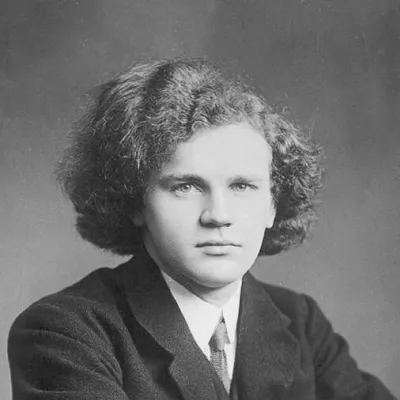
Wilhelm Backhaus
Human Design Chart
Biography
Died on 5 July 1969, Villach, Austria.
What does Projector 3/5 mean for Wilhelm Backhaus?
Projector 3/5 — Design at a Glance
Wilhelm Backhaus was characterized by an aura that seemed like a bright flashlight, instantly recognizing systemic errors. His design inclined him to directly identify weaknesses in others' environments. This focused energy could be perceived as unpleasant by his surroundings when actively used to highlight problems.
The mechanics of his Projector type described this ability to bring 'light into the dark', illuminating the path. Wilhelm Backhaus quickly saw what wasn't working for others. However, direct confrontation with these insights often led the other person to feel attacked – similar to shining a bright light directly in someone's face.
Instead, his charm was strongest when he simply radiated pleasantness and harmony. Others would then come to him on their own accord and ask for his secret tips. The best strategy for him involved waiting for a respectful invitation. By passively glowing and responding to invitations rather than actively illuminating against the will of others, he avoided bitterness. Since his Sacral Center was undefined, he did not have constant intrinsic life energy. He had phases of high activity but needed mandatory rest periods to avoid burning out. Living according to this design rewarded him with success; ignoring it led sooner or later to his Non-Self theme of bitterness.
Splenic Authority
Wilhelm Backhaus displayed an immediate and instinctive reaction to his environment. His design inclined him not to make decisions through prolonged thought, but in the immediate moment of action. This stemmed from his inner authority in the Spleen – a defined center that functioned as a health and alarm system.
This configuration grants precise survival intelligence. Wilhelm Backhaus had spontaneous inner knowledge about whether a situation or person was beneficial for his well-being. The first impulse served directly to protect himself, allowing him to rigorously distance himself from harmful influences. Since the Spleen Center carried this authority, he needed to trust these fleeting signals that only appeared once in the moment.
This mechanism required high vigilance from Wilhelm Backhaus. The intuitive impulse was easy to overlook or overshadowed by external advice. A brief retreat could help him clearly perceive this inner voice. As his knowledge was always anchored in the present, long-term commitments were often counterproductive for him. His design favored flexibility and spontaneity; plans could change at short notice as he only knew what was right for him in the concrete moment. This created a natural need for freedom to avoid being restricted by rigid obligations in his spontaneous adaptability.
The 3/5 Profile — Martyr / Heretic
Wilhelm Backhaus revealed through his design someone who gained knowledge not from books but through personal experimentation. His Profile 3/5, the experimenter and hero, indicated that he mistrusted given rules. He had to experience everything himself to understand it. This attitude strongly stemmed from his Sun in Gate 17, which promoted adaptability and learning through trial and error. For Wilhelm Backhaus, detailed work was indispensable; shortcuts were rejected as they neglected important nuances.
His experiences served him simultaneously as a protective shield. The mechanics of Line 5 required him to use these practical insights for defense and self-protection. He carefully weighed each experiment to avoid being misled and to stick with what worked for him. This self-acquired knowledge made him attractive to others interested in his solutions. Yet, this path carried a risk: the desire to be perceived as a competent helper conflicted with the necessity of publicly making mistakes. Failure was not an end but an indispensable step towards later competence for Wilhelm Backhaus. He learned from every failure to eventually provide practical answers for the collective.
Split Definition — Defined & Open Centers
Wilhelm Backhaus was characterized by a persistent mental structure and reliable expression. His defined Ajna Center ensured consistent thought processes that he could clearly articulate through his defined Throat Center. This connection allowed him to formulate concepts precisely and express opinions as well-founded answers. Simultaneously, his defined Spleen and Root Centers played roles: they endowed him with a stable existential instinct for health and survival, along with a constant inner pressure to act. This combination marked him as someone who intuitively judged and acted with high reliability.
In contrast, his G-, Heart-, Sacral, and Solar Plexus Centers were open. His open G Center meant that his identity and life direction were situationally influenced by the environment; he did not actively seek a fixed 'self', but rather was initiated by places and people around him. The lack of a consistent willpower in his open Heart Center made him vulnerable to the pressure of proving his worth or making promises he could not keep. His open Sacral Center led to fluctuating vital energy; he absorbed foreign energies and tended to neglect boundaries until exhaustion set in. Additionally, his open Solar Plexus took on emotions from the environment without owning them as his own, which made him emotionally vulnerable. His open Head Center left him free of constant inspiration so that he did not have to solve mental questions for others. This openness allowed him to adapt to various environments but also required mindfulness against conditioning influences.
Channels for mental order, sharp analysis and ambitious transformation.
Wilhelm Backhaus was marked by a permanent internal logic machine that translated all impressions into structured opinions. His design imposed an uninterrupted pressure to verbally express these complex details as soon as the timing was right, resulting from Channel Accepting 17-62, which connected visual pattern recognition of the right eye (Gate 17) with linguistic structuring (Gate 62). Only information that he could integrate into his internal mental system was accepted and understood by him; everything else remained incomprehensible. This connection also fostered a particular ability for organization and training through higher perception.
Alongside this dominant personality level, other mechanisms were at work. Channel Judgment 58-18 drove a desire to question and correct patterns to improve life in the collective. Here, vitality (Gate 58) connected with correction (Gate 18), leading Wilhelm Backhaus to introduce solutions only when explicitly asked for, to avoid energy waste and resistance.
Channel Transformation 54-32 added an ambition driven by constant effort and a desire for recognition within the clan. Gate 54 (Ambition) and Gate 32 (Continuity) created a dynamic where personal advancement was closely linked with support from the community; success was experienced as mutual dependence, where talents were recognized and rewarded.
Additionally, individual Gates shaped his attitude: Gate 52 demanded focused silence for pattern correction, while Gate 23 offered the ability for amoral understanding and mutation. Gate 50 acted as a conservative reflex to protect clan values, and Gate 41 propelled evolutionary development through emotional experiences. Gate 4 sought formulas for future security, while Gates 31, 8, and 20 supported aspects of leadership, individual contribution, and authentic action in the here-and-now. This constellation created a person who poured logically organized details into language, critically examined patterns, and rose through social contexts with ambitious effort.
Collective Circuitry — Circuit Signature
Wilhelm Backhaus was characterized by a tension between individual future-oriented logical clarity and collective resource management. His split definition separated these forces into two parallel streams: Ajna with Throat Center on one side, Spleen with Root Center on the other. This structure required a balance between rational expression and instinctive endurance.
In the Mind Circuit, Channels Accepting (17-62) and Judgment (58-18) were at work. These connected Ajna with Throat Center, giving Wilhelm Backhaus the ability to articulate logical structures and strategic visions free from emotional conditioning. The energy of Accepting dominated here as a primary expression of rational insights shared with others.
Parallel to this, the Ego Circuit worked through Channel Transformation (32-54), which connected Spleen with Root Center. This Clan Circuit focused on cooperation and resource management within a group. Since there was no connection to Sacral Center, constant life force was lacking; instead, rhythmic pauses were necessary to regenerate energy for mutual support. Wilhelm Backhaus navigated between the visual, future-oriented logic of his mind and the conservative, tradition-conscious giving and taking of clan energy, where both systems operated separately but equally effectively.
Right Angle Cross of Service 1
Wilhelm Backhaus' design established an existential orientation towards service. His life found its deepest meaning and fulfillment not in individual recognition but in the act of giving and helping others. This fundamental imprint came from what is known as the 'Right Service Cross'.
This configuration defined the core of his identity: Serving others was not a discretionary hobby or situational engagement, but rather the structural direction of life itself. Regardless of external circumstances or changing life phases, this orientation remained stable. It functioned as an inner compass that made clear where he needed to invest his energy to feel whole and fulfilled.
For Wilhelm Backhaus, this meant that his sense of value was closely tied to his ability to be useful to others. This was not a moral obligation or self-sacrifice but rather the natural expression of his energy. When he served, he lived in alignment with his design. This mechanism created a clear focus: The life task consisted of living out this serving attitude and recognizing it as a central element of his existence. It was the basis on which his actions rested and gave him orientation in an often unclear world.
Saturn Return · Uranus Opposition · Chiron Return · 2nd Saturn Return — Life Cycles
Wilhelm Backhaus' design was characterized by a clear arc from establishing stable foundations to the final overloading of these structures. This path was marked by four planetary cycles that highlighted the tension between security and necessary breaks.
The first Saturn Return around 1910, at age 26, established the foundation: Wilhelm Backhaus married Alma Backhaus née Herzberg. Saturn demands structure and commitment; this marriage formed the stable core on which his further life rested.
When the Uranus Return occurred in 1925, he broke with established patterns. At 41 years old, he taught at the Curtis Institute of Music in Philadelphia. Uranus dissolves and changes; this step marked a new identity phase beyond pure performance, towards teaching abroad.
The Chiron Return around 1934, at age 50, was a fulfillment cycle. Recognized as an honorary member of the Vienna Philharmonic Orchestra, here his life task bloomed: His artistic essence found its highest confirmation and meaning.
However, the second Saturn Return in 1942 brought the collapse of the previously established load structure. At age 58, Wilhelm Backhaus canceled concerts in Berlin due to a nervous breakdown. The stability required by Saturn could no longer be maintained under the pressure of time and his own high demands, revealing the fragility of this constructed security.
Projector · Splenic Authority — Synthesis
Wilhelm Backhaus' life was marked by a deep ability to recognize patterns and convey them precisely – a red thread running through his design. As a projector with a defined mental center (Ajna) and Throat Center, he could detect subtle errors in systems or performances (Gate 17), then explain these details logically (Gate 62). This gift, combined with the Spleen Authority, allowed him to instinctively grasp what was correct and express this authentically. The defined Root Channel points to a constant energy source that enabled him to dedicate himself long-term to a goal as long as he acted in an environment that aligned with his inner values. Repeated events in the realm of musical teaching and honors confirm this ability to pass on knowledge and achieve lasting impact.
Central for Wilhelm Backhaus was, however, the tension between his natural gift to 'bring light into darkness' and the need to act only upon invitation. His design required him not to share observations unasked, yet the defined throat urged him towards communication. This discrepancy between inner precision and the necessity of waiting for external confirmation is reflected in the documented events: professional successes that arose through recognition but also crises when this natural flow was interrupted – as in the case of canceled concerts.
3 Defined Channels
Incarnation Cross - Right Angle Cross of Service 1
Solar Return
The Solar Return shows the moment when the sun returns to its exact birth position - your personal solar year.
Life Cycles
Discover the life cycles with a detailed triple view (birth chart, cycle chart, composite).
Human Design Profile
- Type
- Projector
- Strategy
- Wait for the respectful invitation
- Authority
- Splenic Authority
- Profile
- 3/5 - Martyr / Heretic
- Definition
- Split Definition
- Incarnation Cross
- Right Angle Cross of Service 1
- Date of Birth
- 26.03.1884 10:30
- Place of Birth
- Leipzig, Germany
Frequently Asked Questions
What Human Design type was Wilhelm Backhaus?
What Profiles did Wilhelm Backhaus have?
What Authority did Wilhelm Backhaus have?
What incarnation cross did Wilhelm Backhaus have?
When was Wilhelm Backhaus born?
Discover your own Human Design
Are you also a Projector? Find out in a personal reading how to unfold your leadership qualities and recognize the right invitations.
More Personalities
Back to overviewSissy Spacek

Aaliyah

Alain-Fournier

Alexia

Alizée

Anémone
