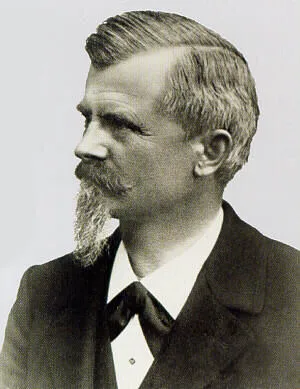
Wilhelm Maybach
Human Design Chart
Biography
From the late 19th century Wilhelm Maybach, together with Gottlieb Daimler, developed light, high-speed internal combustion engines suitable for land, water, and air use. These were fitted to the world's first motorcycle, motorboat, and after Daimler's death, a new automobile introduced in late 1902, the Mercedes model, built to the specifications of Emil Jellinek.
Maybach rose to become technical director of the Daimler Motoren Gesellschaft (DMG) but did not get along with its chairmen. As a result, Maybach left DMG in 1907 to found Maybach-Motorenbau GmbH together with his son Karl in 1909; they manufactured Zeppelin engines. After the signing of the Versailles Treaty in 1919 the company started producing large luxury vehicles, branded as "Maybach". He died in 1929 and was succeeded by his son Karl Maybach. From around 1936 Maybach-Motorenbau designed and made almost all the engines fitted in German tanks and half-tracks used during World War 2, including those for the Panther, Tiger I and Tiger II heavy tanks.
Continuing after the war, Maybach Motorenbau remained a subsidiary of Luftschiffbau Zeppelin, making diesel engines. During the 1960s Maybach came under the control of Daimler-Benz and was renamed MTU Friedrichshafen.
Wilhelm Maybach as a Projector 2/4 in Human Design
Projector 2/4 — Design at a Glance
Wilhelm Maybach's design had a tendency towards precise diagnosis: He immediately saw what was wrong in systems. As a projector, his aura worked like a focused flashlight that brought light into the dark and revealed weaknesses. This ability to find errors in the system was his natural drive.
Since projectors do not have a constant internal energy source but must alternate phases of high activity with necessary rest periods, his work style was rhythmically structured. He could work quickly and intensively but needed breaks to avoid burning out. A continuous, steady pace would have been unnatural for him.
His strategy involved waiting for an honest invitation. Instead of presenting his observations directly and possibly as aggressive, it was more elegant to attract others through his own harmony. When he showed a harmonious path himself, people came to him voluntarily to seek advice. This attraction was the key to his effectiveness.
Living by this principle – that is, waiting for recognition and invitation from others – Wilhelm Maybach was rewarded with success. Ignoring this strategy and trying to impose his insights against the will of his surroundings led sooner or later to his non-self theme: bitterness. His design required patience and trust in the right invitation to fully unleash his potential.
Emotional Authority
Wilhelm Maybach displayed a basic attitude characterized by emotional wave movements. His inner guidance came from the defined Solar Plexus Center, making him an emotional authority. This configuration meant that his feelings constantly fluctuated; he saw the world colored by his current mood state. What appeared inspiring in one moment could turn negative in the next. However, his immediate feeling was only a provisional snapshot and not necessarily his deeper truth. Quick, spontaneous decisions made from emotional heat often proved problematic for him.
The mechanics of his authority required patience. The more time he took to let a decision mature, the clearer the situation became. He had to learn to rethink important steps multiple times and sleep on them. Only when intense feelings subsided and an emotional distance emerged did calmness set in. This process was crucial for long-term realignments that shaped his life path sustainably. Emotional authority always took precedence over other defined centers in his design, regardless of further configurations. Wilhelm Maybach's path involved acknowledging this inner rhythm structure and making decisions only when the emotional wave had subsided and clarity returned.
The 2/4 Profile — Hermit / Opportunist
Wilhelm Maybach's design leaned towards a pendulum dynamic: between the deep need for withdrawal to internal clarification and the urge to move within familiar circles. As a 2/4 profile, he constantly oscillated between these poles – Line 2 demanded solitude to condense knowledge; Line 4 required community to maintain connections. This tension necessitated clear communication of his needs: When did he withdraw, when did he seek company? Only in this way could he effectively reflect networked knowledge and transform it into brilliant ideas.
His second line from Gate 49 shaped a selective stance: He carefully examined every possibility before acting, ready for deep changes or revolutions – always with the awareness that sacrifices were inevitable. At the same time, through Gate 43, Line 4, there was a transpersonal fixation on profound knowledge. However, conveying this knowledge was often hindered by rigidity in communication. Linguistic skills were crucial to overcome these barriers and make his insights understandable. Without such adaptation, his knowledge remained present but difficult for others to access. Thus, Wilhelm Maybach lived in the tension field of withdrawal and exchange, of selectivity and knowledge transmission – a person who had to learn to harmoniously integrate both aspects.
Split Definition — Defined & Open Centers
Wilhelm Maybach was characterized by a design marked by constant mental and communicative structure. His defined Ajna Center ensured reliable, independent conceptual thinking; he processed data and creativity in the same way, unaffected by external opinions. This mental stability flowed directly into his also defined Throat Center, allowing him to articulate conceptual knowledge clearly and reliably. His voice served as a pivot point for translating internal processes into external communication.
In addition to this cognitive firmness, Maybach possessed deep emotional intelligence through his defined Solar Plexus Center. This was his inner authority: He was designed to wait out the waves of his feelings before acting. Emotional clarity only came after a period of calm, which would have countered impulsive decisions. His defined G Center also gave him stable self-identity and clear direction without being dependent on others. The constant pressure of his defined Root Center propelled him forward, while he dealt with stress in a specific, set way.
In contrast, his vulnerability was revealed in the undefined centers. His open Head Center made him receptive to mental inspirations from the environment; prone to taking foreign questions as his own, this led to confusion and pressure to find answers that were not his. The open Heart Center lacked consistent willpower; here there was a risk of getting caught in a cycle of promises and disappointment to prove one's worth rather than trusting inner guidance. His open Sacral Center had no constant energy flow; Maybach needed to protect himself from being overwhelmed by the generative energy of others, taking breaks as he wasn't designed for continuous work. Finally, his undefined Spleen Center revealed a sensitivity to well-being; spontaneous decisions here were risky, often driven by conditioned fears or false security rather than true intuition.
Channels for focused recognition, inspiration, acceptance, synthesis and structure.
Wilhelm Maybach's design inclined towards creative public expression that did not rely on words but instead worked through the living example of his individual identity. The Channel of Inspiration 1-8 connected his G Center with the Throat Center; he was designed to draw attention by demonstrating his unique direction, inspiring others to live out their own creativity. This effect relied on authentic inner authority rather than social adaptability.
Parallel to this, there was a precise logical structuring of his thinking. The Channel of Accepting 17-62 connected the Ajna Center with the Throat Center and pushed him to mentally organize visual patterns into detailed language. He sought logical coherence; anything he could not integrate into his inner image remained incomprehensible. This channel gave him the gift of clearly explaining complex information, provided he waited for the right timing and receptivity from listeners.
His innovative thinking was shaped by the Channel of Structuring 23-43, which transformed spontaneous insights from the Ajna Center into assimilated expressions in the Throat Center. Maybach developed techniques to increase efficiency; his knowledge often felt like it was ahead of its time. The challenge lay in letting go of control and waiting for his unique perspectives to be recognized by the collective rather than imposing them.
Emotionally, he was marked by the Channel of Synthesis 19-49 between Root and Solar Plexus Centers, creating an emotional glue for belonging and tribal connection based on loyalty and resource protection. Maybach sought balance between feasibility and fairness within his community.
Additionally, Gates like Gate 4 (Formulating Logical Processes for Future Security) and Gate 58 (Experimenting and Perfecting in the Root Center) supported his drive to recognize patterns and correct them to create a secure foundation for his work.
Collective Circuitry — Circuit Signature
Wilhelm Maybach's design inclined towards structured innovative expression. The Knowledge Circuit connected his Ajna, Throat, and Identity Centers directly. This allowed him to grasp new insights through the Channel of Inspiration (Gates 1-8) and clearly formulate them via the Channel of Structuring (Gates 23-43). His unique identity was evident in his ability to bring creative impulses into tangible forms.
Parallel to this, the Understanding Circuit worked. Here he connected Ajna and Throat Centers through the Channel of Accepting (Gates 17-62), fostering a logical rational approach to problems separate from emotional waves. He could think strategically and share these insights, emphasizing cool reason.
A third aspect was the Meaning Circuit. This linked Solar Plexus and Root Centers via the Channel of Recognizing (Gates 30-41). Here it was about reflecting on past experiences. Emotional cycles from the Solar Plexus were connected with the energy of the Root to draw meaning from the past, integrating these learning experiences.
Finally, the Ego Circuit also operated between Solar Plexus and Root Centers this time via the Channel of Synthesis (Gates 19-49). This emphasized cooperation in creating resources. As there was no connection to the Sacral Center, pauses were necessary to regenerate energy for these supportive processes. These separate groups – on one hand Head/Ajna/Throat/Identity, and on the other Solar Plexus/Root – existed as parallel forces without direct energetic flow between them.
Right Angle Cross of Explanation 1
Wilhelm Maybach's design indicated a tendency towards clear and explanatory power. He was someone who not only understood complex relationships but also conveyed them in understandable forms. This attitude stemmed from the right cross of explanation 1 in his Human Design chart.
This cross connects the center of self with the head center through specific channels, creating an internal structure designed to organize perceptions and intuitions and express them clearly. Wilhelm Maybach had a natural talent for making the invisible visible and conveying it to others in a comprehensible way. His approach to explaining things was not just informative but carried a certain authority and clarity.
The mechanics of this design promoted the ability to speak from within, thereby building trust. Wilhelm Maybach used this energy to precisely formulate his ideas. It was a constructive force that helped him not only keep his visions in his head but also make them effective in the outside world. Through this configuration, he became an influential figure through clear words and explanations. His work was characterized by this ability to uncover the hidden and present it in such a way that others could accept it. This shaped his interactions and contributions to his environment sustainably.
Saturn Return · Uranus Opposition · Chiron Return · 2nd Saturn Return — Life Cycles
Wilhelm Maybach's design indicated a tendency towards structural anchoring, often manifesting as entering stable professional frameworks. This attitude corresponded with the mechanics of the first Saturn return, a cycle where inner maturity meets outer responsibility and long-term commitments are taken on. For Wilhelm Maybach, this process began in 1873 when he became an employee at the Gasmotoren-Fabrik Deutz in Cologne at age 27. This event marked not only a career step but also the moment his personal potential condensed into a stable institution. The Saturn return functions here as a catalyst for taking on permanence; Wilhelm Maybach sought and found a position where his technical skills did not remain theoretical but became effective within an established system. His choice of Deuts underscores the need for a solid foundation to build upon further. Rather than losing himself in temporary projects, he anchored himself where structure and craftsmanship met. This step shaped his subsequent development by giving him room to operate within clear boundaries and laying the groundwork for future creations. The mechanics clearly show how external structures can shape and stabilize internal competencies.
Projector · Emotional Authority — Synthesis
Wilhelm Maybach lived an inner continuity between recognizing potential and wanting to transform it. His projector design predisposed him to analyze systems (Gate 1) and identify areas where improvement was possible. This ability, coupled with emotional authority, allowed him to gain deep insights that he then sought to express through the channel of inspiration (1-8), always mindful of contributing and inspiring others. The profile as a natural talent/networker reinforced this drive towards connection and exchange, while Line 2 provided times for withdrawal into inner clarity before rejoining the community.
Maybach's design showed a central paradox between his need for recognition of his innovative perspectives (Channel 1-8) and the inherent challenge of a projector whose 'projected' light can be perceived as intrusive by others. He possessed the ability to shape concepts and inspire others to think (defined Ajna), yet his emotional wave required time for decision maturation, possibly in the tension field between quickly recognizing problems and the need for patient expression. An event marking the beginning of his career suggests an early readiness to put this knowledge into practice.
5 Defined Channels
Incarnation Cross - Right Angle Cross of Explanation 1
Solar Return
The Solar Return shows the moment when the sun returns to its exact birth position - your personal solar year.
Life Cycles
Discover the life cycles with a detailed triple view (birth chart, cycle chart, composite).
Human Design Profile
- Type
- Projector
- Strategy
- Wait for the respectful invitation
- Authority
- Emotional Authority
- Profile
- 2/4 - Hermit / Opportunist
- Definition
- Split Definition
- Incarnation Cross
- Right Angle Cross of Explanation 1
- Date of Birth
- 09.02.1846 01:30
- Place of Birth
- Heilbronn, Germany
Frequently Asked Questions
What was Wilhelm Maybach's Human Design type?
What Profile did Wilhelm Maybach have in Human Design?
What Authority did Wilhelm Maybach have?
Which incarnation cross was active for Wilhelm Maybach?
When was Wilhelm Maybach born?
Discover your own Human Design
Are you also a Projector? Find out in a personal reading how to unfold your leadership qualities and recognize the right invitations.
More Personalities
Back to overviewSissy Spacek

Alain-Fournier

Anémone

Ann-Margret

Bourvil
Hergé